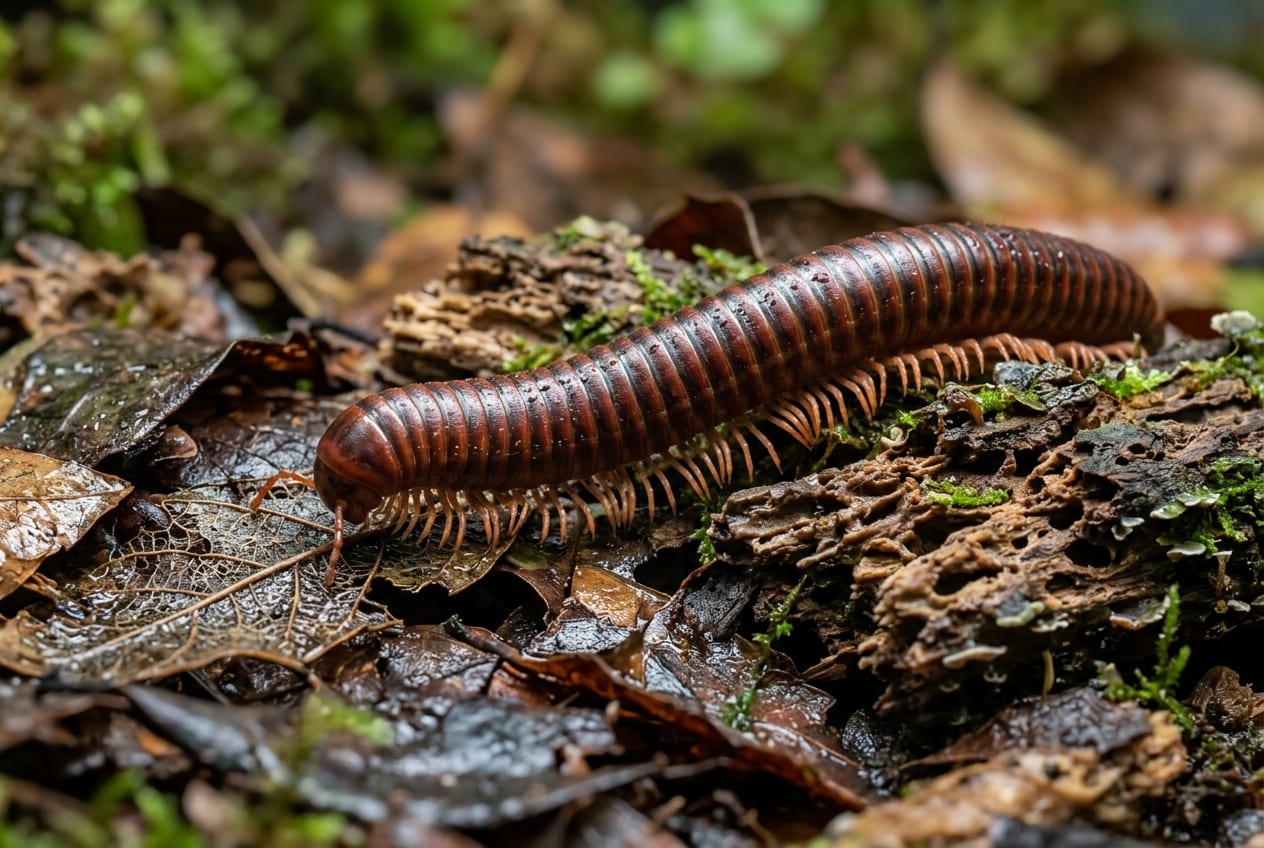
Nigerian Giant Millipede
The Nigerian Giant Millipede is a large species native to the savannas of West Africa. Its glossy body, ranging from deep chocolate brown to reddish-brown, grows to an impressive 25-26cm as an adult. Despite its size, this species is known for its calm temperament and tends to stay active above ground, making it easy and rewarding to observe. Slow-moving and low in aggression, it's considered manageable even for first-time keepers once basic care routines are understood. With a lifespan of 7-10 years, it makes a long-term companion. Watching it burrow and break down leaf litter and decaying wood offers a fascinating glimpse into a miniature ecosystem at work.
View Nigerian Giant Millipede encyclopedia →Breeder Wanted!
List on BreederDirect and sell directly to customers nationwide!
BreederDirect's 5 Transparency Commitments
When listing Exotic Invertebrates, Breeders disclose the following. We guarantee transparency on growth stage and breeding unit.
- Real Photos
- Breeding Unit
- Generation Info
- Body Length (mm)
- Country of Origin
Browse all 286 breeds
No listings match your filters
Adjust your filters, or get notified when new listings arrive.
Getting alerts is free with a member account. When new listings match your saved search, we'll notify you by email and in-app.
Browse other categories
Verified breeders (preview)
Are you raising exotic invertebrates?
Register as a breeder and connect with buyers directly.
Apply as a breederNigerian Giant Millipede key facts
- Care level
- Beginner-friendly
- Lifespan
- 7-10 years
- Size
- 25-26cm
- Temperature
- 22〜26℃
- Humidity
- 70〜75%
- Diet
- Rotting hardwood and decayed leaf litter as the bulk of the diet, with soft fruit and vegetables in moderation, occasional protein, and permanent calcium such as cuttlebone
- Temperature & Humidity
- 22-26C, assuming supplementary heat in winter. Hold 70-75% humidity by day and higher at night, and keep the substrate damp all the way through, not just on top.
- Enclosure
- At least 15cm of substrate for adults, worked through with white-rotted hardwood and covered with hardwood leaf litter. Favour floor space, add sturdy cork bark and branches, and use a secure lid.
- Diet & Feeding
- Rotting hardwood and decayed leaf litter are the staple and should always be available. Soft fruit and vegetables in moderation, with cuttlebone or crushed shell in permanently.
- Temperament & Venom
- Placid, and it neither bites nor stings. It coils when startled and can release a defensive fluid that stains and irritates skin and burns an eye.
- Notes
- Wash hands with soap after handling and keep them away from your face. Most failed moults trace to a calcium shortfall. At seven to ten years this is a long commitment. In Europe it is sold as the African Giant Chocolate Millipede. The Ghana chocolate millipede (Mardonius parilis) trades under a similar chocolate name but belongs to a different genus, so check the scientific name.
About Nigerian Giant Millipede
A large West African millipede reaching 25-26cm, known for its calm temperament and beginner-friendly care. Lifespan of 7-10 years.
7 things to know before welcoming a Nigerian Giant Millipede
1Needs a Spacious Enclosure
Since adults reach 25-26cm in length, prepare an enclosure with enough floor space and substrate depth to match their size. Because they like to burrow, make sure the substrate layer is sufficiently thick.
2Humidity Is the Key Factor
Although native to savanna habitats, it is vulnerable to dehydration, so the substrate should be kept consistently moist. Regular misting helps maintain the humidity level it needs to stay healthy.
3Calm and Easy to Handle
For a large species, it has a notably low level of aggression and moves slowly. It also tends to spend a lot of time above ground, making daily observation one of its appeal points.
4Diet and Feeding Tips
As a decomposer, it feeds on decaying wood, leaf litter, and vegetable scraps. Offering a balanced diet with a calcium source helps support healthy molting.
5Avoid Disturbing It During Molting
It molts repeatedly as it grows, and during this process it becomes extremely vulnerable. Avoid changing the enclosure environment or handling it during this period, and simply observe from a distance.
6A Long Lifespan of 7-10 Years
In captivity, it typically lives 7-10 years, making it a long-term companion. Since long-term care is expected, plan ahead for a placement where stable temperature and humidity can be maintained.
7Be Aware of Its Defensive Response
When strongly disturbed, it may curl into a ball or release a defensive secretion. Make it a habit to wash your hands after handling as a basic hygiene precaution.
Frequently asked questions about Nigerian Giant Millipede
- Q.Is this species suitable for beginners?
- A.Yes, it is considered beginner-friendly. Its calm movements make it manageable for a large species, and keepers who maintain basic humidity and feeding routines can start without much difficulty.
- Q.How large does it grow?
- A.Adults reach approximately 25-26cm in length. When starting to keep one, it's best to prepare an enclosure sized appropriately for this length from the outset.
- Q.How long can it be kept as a pet?
- A.Its lifespan is roughly 7-10 years, making it a relatively long-term companion. It's worth setting up its environment with long-term care in mind.
- Q.Is this species subject to any regulations?
- A.The Nigerian Giant Millipede is not subject to CITES.
- Q.What is its typical daily behavior like?
- A.It tends to spend a lot of time above ground, often seen slowly moving across the substrate. Its habit of feeding on decaying wood and leaf litter makes it easy to observe throughout the day.
Learn more about Nigerian Giant Millipede in the encyclopedia
View Nigerian Giant Millipede encyclopedia entry →
Care difficulty, lifespan, size and diet — all basics covered.
More in this category
Can't find the one you're looking for?
Post your wishes for free and breeders with matching animals will contact you with introductions.