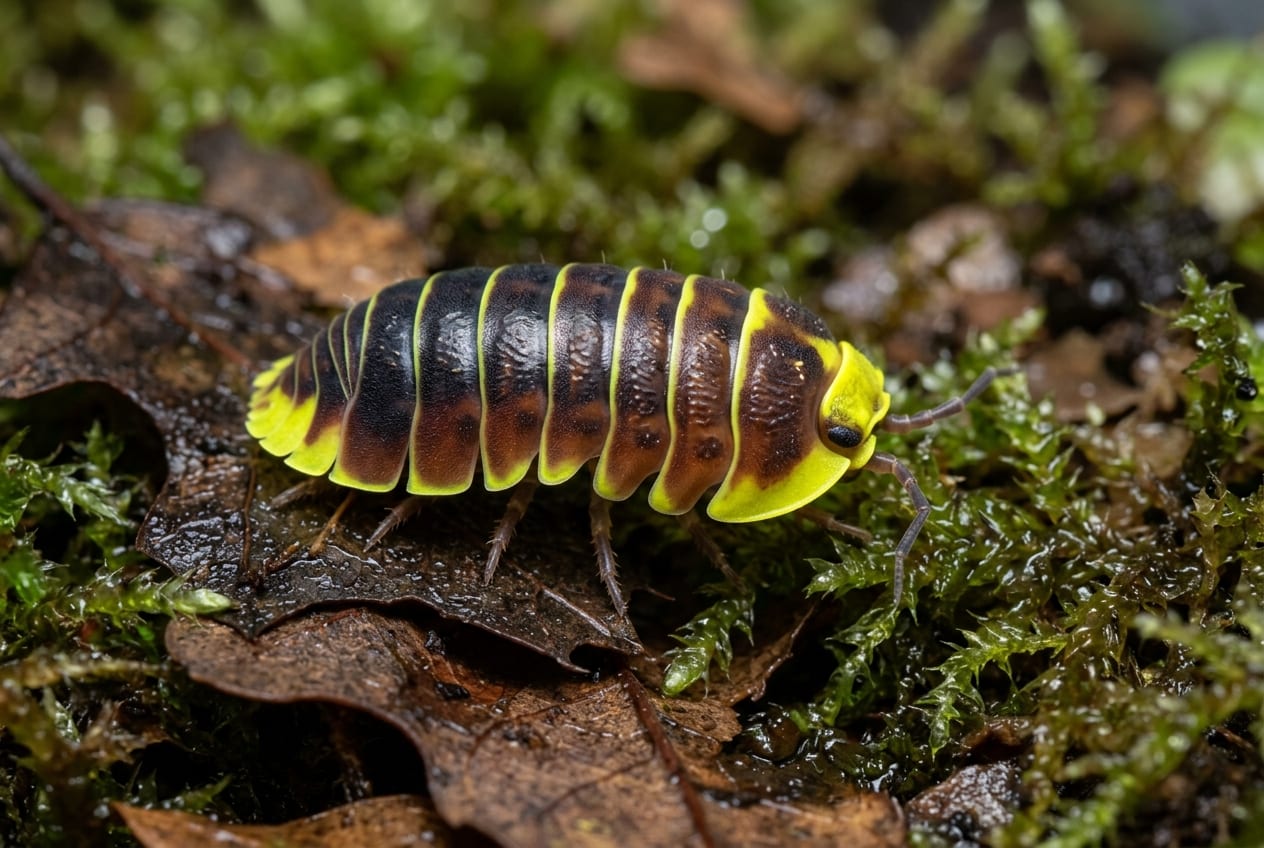
Jupiter Isopod
Jupiter Isopods are a strikingly patterned, yet-undescribed species with a brown-to-black body edged in yellow along each segment. The yellow markings intensify toward the head and tail, giving each individual a distinctive, almost starlit look. Reaching just 15–20mm as adults, they belong to the cave-dwelling Cubaris group and are considered one of its hardier members, making them a good match for keepers with some isopod experience. They move calmly and, for a Cubaris, show themselves fairly often, so they reward quiet observation. Among invertebrate keepers, they're valued for combining eye-catching color with manageable care.
View Jupiter Isopod encyclopedia →Breeder Wanted!
List on BreederDirect and sell directly to customers nationwide!
BreederDirect's 5 Transparency Commitments
When listing Exotic Invertebrates, Breeders disclose the following. We guarantee transparency on growth stage and breeding unit.
- Real Photos
- Breeding Unit
- Generation Info
- Body Length (mm)
- Country of Origin
Browse all 286 breeds
No listings match your filters
Adjust your filters, or get notified when new listings arrive.
Getting alerts is free with a member account. When new listings match your saved search, we'll notify you by email and in-app.
Browse other categories
Verified breeders (preview)
Are you raising exotic invertebrates?
Register as a breeder and connect with buyers directly.
Apply as a breederJupiter Isopod key facts
- Care level
- Intermediate
- Lifespan
- 2-4 years
- Size
- 15-20mm
- Temperature
- 22〜26℃
- Humidity
- 70〜80%
- Diet
- Leaf litter and white-rotted hardwood as the base, with small amounts of vegetable, fruit and mushroom and the occasional pinch of fish flake or dried shrimp; cuttlebone stays in permanently
- Temperature & Humidity
- 22-26C and 70-80% humidity. Keep about a third of the enclosure damp and let the rest run drier.
- Enclosure
- Build the substrate on flake soil, white-rotted hardwood and topsoil with limestone through it, and put vents on opposing sides.
- Diet & Feeding
- Keep leaf litter and white-rotted wood topped up. Small amounts of vegetable, fruit and mushroom, with occasional protein; carotenoid-rich veg may help the colour.
- Temperament & Venom
- Harmless to people and conglobates when startled. Calm, and reasonably visible for a Cubaris.
- Notes
- Lift uneaten food within a day or two. Breeding is slow, so resist digging after them, and keep a springtail culture alongside.
About Jupiter Isopod
A yet-undescribed isopod with a brown-to-black body edged in yellow, reaching 15–20mm. Considered a hardier Cubaris species, best suited to intermediate keepers.
7 things to know before welcoming a Jupiter Isopod
1Build a Moisture Gradient
Aim for 22–26°C and 70–80% humidity. Keep about a third of the enclosure moist and the rest dry to create a gradient. Use a substrate of flake soil, white-rot wood and garden soil mixed with limestone, and provide vents on opposite sides of the enclosure to keep air moving and hold mold down.
2Calm and Fairly Visible
They move calmly and, for a Cubaris, tend to show themselves. They roll up when startled, so observe them gently. Breeding is slow, so avoid digging through the substrate to look for them.
3Striking Color Pattern
Their brown-to-black bodies are edged in yellow along each segment, with the color intensifying toward the head and tail. The exact pattern varies from individual to individual, which is part of the fun of keeping them.
4Hardy for Its Group
Within the cave-dwelling Cubaris group, this species is considered relatively hardy, and with basic environmental care its difficulty level sits at intermediate. That said, extremes of dryness or excess moisture should still be avoided.
5Feeding Basics
They're omnivores that mainly eat plant matter such as leaf litter, decaying wood, and prepared isopod food. Leftover food should be removed regularly to prevent mold.
6Signs of Good Health
Use calm, steady movement and feeding traces as your everyday indicators. Substrate that's too wet or too dry can affect their condition, so also check that the moist-side and dry-side gradient is being maintained.
7Before You Bring One Home
Setting up the enclosure, substrate, hides, and a spray bottle for humidity before bringing them home reduces stress on the animals. Aim for a stable temperature and humidity environment from the start.
Frequently asked questions about Jupiter Isopod
- Q.Can beginners keep Jupiter Isopods?
- A.They're considered one of the hardier Cubaris species, but overall care difficulty is rated intermediate. It's best to have a basic understanding of temperature and humidity management before bringing one home.
- Q.How big do Jupiter Isopods get?
- A.Adults reach about 15–20mm in length. That's a comfortable size for observing the yellow edging along each body segment up close.
- Q.Will I be able to see them often?
- A.For a Cubaris, they show themselves fairly often and move calmly, so they're easy to observe. They roll up when startled, so watch them gently.
- Q.Are there any legal restrictions on keeping this species?
- A.It is not subject to CITES.
- Q.Can they be kept together with other species?
- A.Mixing closely related isopod species carries a risk of hybridization, so it's best avoided. Keeping them alone or only with others of the same species is the safer approach.
Learn more about Jupiter Isopod in the encyclopedia
View Jupiter Isopod encyclopedia entry →
Care difficulty, lifespan, size and diet — all basics covered.
More in this category
Can't find the one you're looking for?
Post your wishes for free and breeders with matching animals will contact you with introductions.