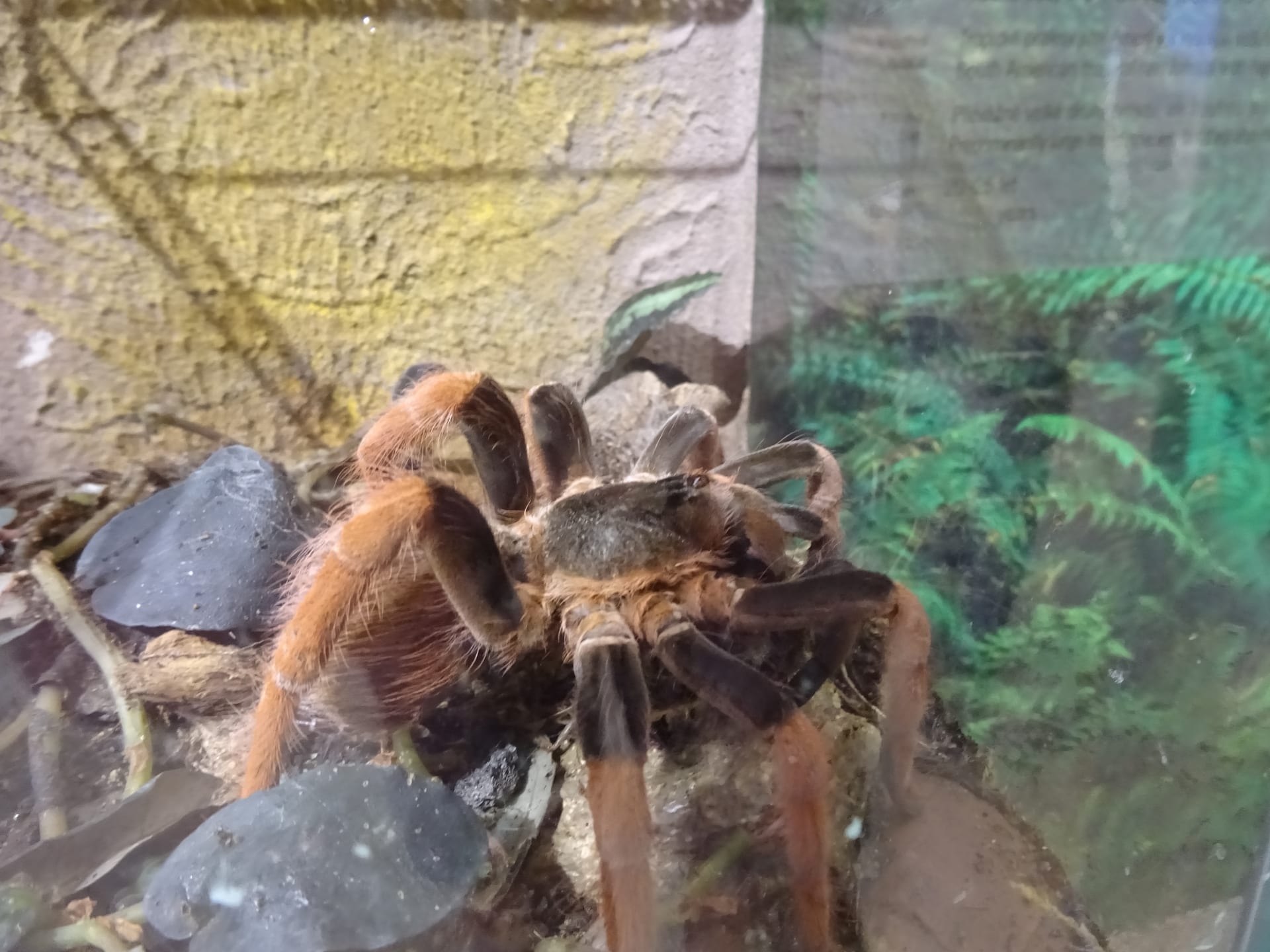
 © Erfil / CC BY-SA 4.0
Colombian Giant Redleg
The Colombian Giant Redleg is a large ground-dwelling tarantula from Colombia, known for its jet-black body and striking orange legs. With a leg span reaching 15 to 20 cm, it has an imposing presence. It is nervous and tends to stay hidden, though bites are rare, and it is rewarding to watch quietly when it becomes active at night. Its most distinctive trait is a set of thick spines on the hind legs, which it uses in a unique defensive spin — whipping its body around to strike with those hind legs when startled. Keeping this species is considered suitable for intermediate keepers who understand humidity management and low-stress handling. Females can live up to around 20 years, making this a long-term companion for anyone drawn to a substantial, striking species.
View Colombian Giant Redleg encyclopedia →Breeder Wanted!
List on BreederDirect and sell directly to customers nationwide!
BreederDirect's 5 Transparency Commitments
When listing Exotic Invertebrates, Breeders disclose the following. We guarantee transparency on growth stage and breeding unit.
- Real Photos
- Breeding Unit
- Generation Info
- Body Length (mm)
- Country of Origin
Browse all 286 breeds
No listings match your filters
Adjust your filters, or get notified when new listings arrive.
Getting alerts is free with a member account. When new listings match your saved search, we'll notify you by email and in-app.
Browse other categories
Verified breeders (preview)
Are you raising exotic invertebrates?
Register as a breeder and connect with buyers directly.
Apply as a breederColombian Giant Redleg key facts
- Care level
- Intermediate
- Lifespan
- Females up to about 20 years
- Size
- 15-20cm leg span
- Temperature
- 20〜26℃
- Humidity
- 70〜80%
- Diet
- Live insects such as crickets and roaches; large individuals also take small lizards and mice
- Temperature & Humidity
- Room temperature of 20-26 C is adequate and extra heating is generally unnecessary. Aim for 70-80% humidity using a permanent water dish and occasional watering of the substrate, while keeping ventilation good.
- Enclosure
- A large, enthusiastic burrower: use a spacious horizontal enclosure with deep substrate. Add cork bark as a log-like hide and leave any burrow it digs undisturbed.
- Diet & Feeding
- Offer live insects such as crickets and roaches; large individuals also take small lizards and mice. Spiderlings feed well and grow fast.
- Temperament & Venom
- Nervous and secretive, but it rarely bites. Besides kicking urticating setae it performs its distinctive spinning defence, striking with the spined hind legs. The venom is weak and no serious effects on humans are known.
- Notes
- The urticating setae are painful if they reach the eyes or nasal membranes, so keep your face away during maintenance. Exports from its home country are closed, so availability is limited.
About Colombian Giant Redleg
A large Colombian tarantula with a jet-black body and vivid orange legs. Leg span of 15–20 cm, suited to intermediate keepers, known for its unique hind-leg defensive display.
7 things to know before welcoming a Colombian Giant Redleg
1Grows to a large adult size
This species reaches a leg span of 15 to 20 cm, placing it among the larger tarantulas kept in the hobby. Enclosures need enough floor space to accommodate this size, and juveniles feed well and grow quickly, so plan for gradual enclosure upgrades if starting with a juvenile.
2Ground-dwelling habits
As a terrestrial species that digs readily rather than an arboreal one, it does best in an enclosure prioritizing floor space over height. A thick substrate layer and a hide help it feel secure, and its burrow should be left undisturbed.
3A distinctive defensive display
The hind legs carry thick spines, and when startled, the spider spins its whole body around to strike with them — a distinctive and fascinating defensive move. Avoid handling or interactions that could startle it.
4Intermediate-level care
This species is considered suitable for intermediate keepers, requiring solid understanding of humidity, temperature, and handling around molting periods. First-time tarantula keepers may want to gain experience with an easier species before taking this one on.
5A commitment to a long lifespan
Females can live up to around 20 years, making this a long-term commitment. Before bringing one home, it's worth considering whether you can maintain care through future changes in your living situation.
6Nervous, so avoid provoking it
It is nervous and tends to hide, though bites are rare. If startled it will display its distinctive hind-leg strike and may also flick irritating hairs. When cleaning the enclosure or feeding, move slowly, avoid sudden vibrations or motions, and keep your face away from the enclosure.
7Preparing the enclosure before arrival
Since this is a terrestrial species that grows large, it's smoothest to set up the enclosure in advance — ample floor space, a deep substrate layer, a hide, and a water dish — along with a location where temperature and humidity can be managed.
Frequently asked questions about Colombian Giant Redleg
- Q.Can beginners keep a Colombian Giant Redleg?
- A.This species is considered suitable for intermediate keepers, requiring knowledge of humidity management and care around molting. First-time tarantula owners may want to start with an easier species and build experience first.
- Q.How large does this species get?
- A.As an adult, the leg span reaches 15 to 20 cm, placing it among the larger tarantula species. The enclosure needs to provide enough floor space to accommodate this size.
- Q.What is the hind-leg spinning behavior?
- A.The species has thick spines on its hind legs and, when startled, spins its whole body around to strike with them as a defensive move. It's important to handle the enclosure calmly to avoid triggering this response.
- Q.How long does this species live?
- A.Females can live up to around 20 years, making this one of the longer-lived tarantula species. It's worth planning for long-term care before bringing one home.
- Q.Are there any legal restrictions on this species?
- A.The Colombian Giant Redleg is not subject to CITES.
Learn more about Colombian Giant Redleg in the encyclopedia
View Colombian Giant Redleg encyclopedia entry →
Care difficulty, lifespan, size and diet — all basics covered.
More in this category
Can't find the one you're looking for?
Post your wishes for free and breeders with matching animals will contact you with introductions.