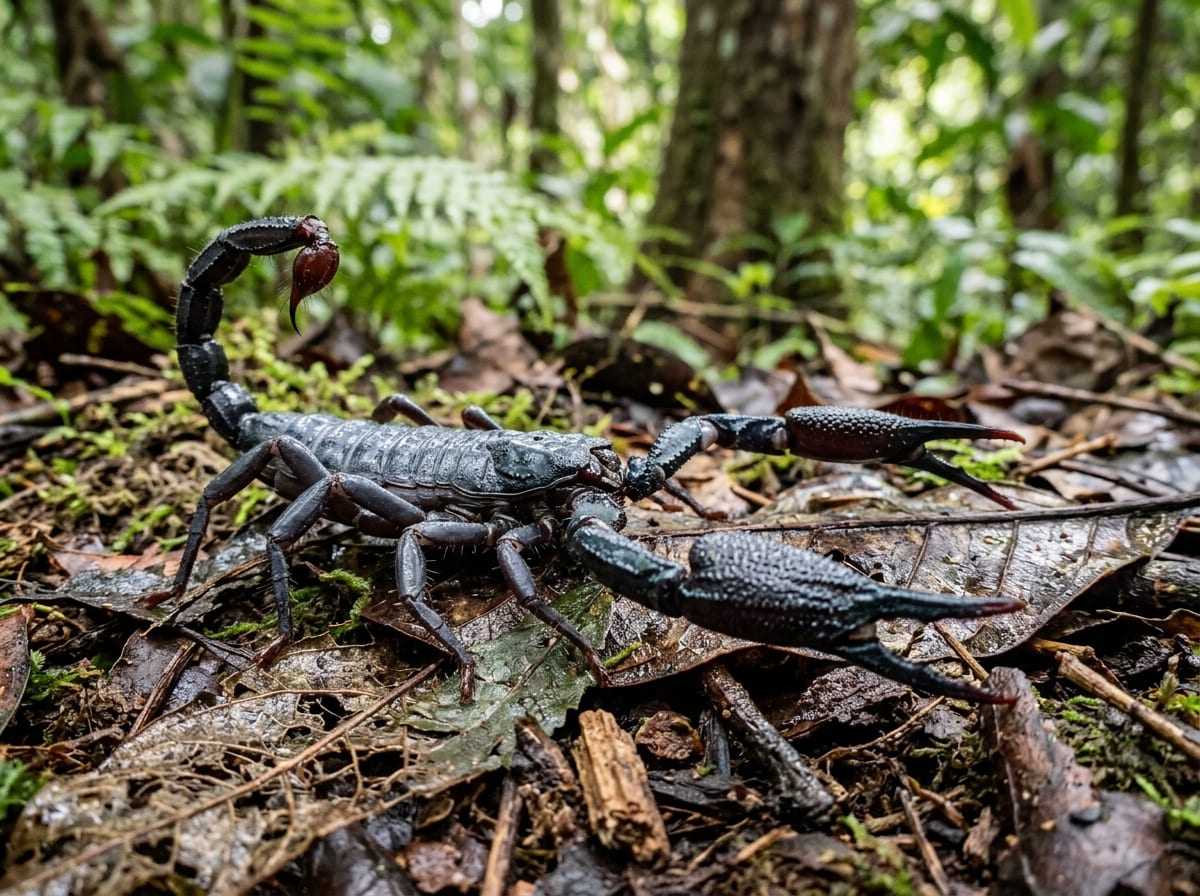
Minotaurus forest scorpion
The Minotaurus forest scorpion is a black scorpion from southern Thailand, easily recognised by its large pedipalp claws lined with long, granular ridges. It was described in 2016 and resembles H. longimanus, though it is slightly smaller and has a shorter tail. The male holotype measured 83 mm in total length. It is rated for intermediate keepers, and its lifespan is not well documented. It suits keepers who enjoy careful observation and are willing to draw on information about close relatives.
View Minotaurus forest scorpion encyclopedia →Breeder Wanted!
List on BreederDirect and sell directly to customers nationwide!
BreederDirect's 5 Transparency Commitments
When listing Exotic Invertebrates, Breeders disclose the following. We guarantee transparency on growth stage and breeding unit.
- Real Photos
- Breeding Unit
- Generation Info
- Body Length (mm)
- Country of Origin
Browse all 286 breeds
No listings match your filters
Adjust your filters, or get notified when new listings arrive.
Getting alerts is free with a member account. When new listings match your saved search, we'll notify you by email and in-app.
Browse other categories
Verified breeders (preview)
Are you raising exotic invertebrates?
Register as a breeder and connect with buyers directly.
Apply as a breederMinotaurus forest scorpion key facts
- Care level
- Intermediate
- Size
- Total length 83 mm (male holotype)
- Diet
- Carnivorous (live insects such as crickets and roaches)
- Enclosure
- The type locality is humid woodland by a stream, so provide a deep layer of damp substrate for burrowing, bark or shelters, and a permanent water dish.
- Temperature & Humidity
- The suitable keeping temperature for this species is not well established. It comes from humid tropical woodland, so avoid winter cold and keep the lower substrate moist while providing enough ventilation to prevent mould.
- Diet & Feeding
- Live prey such as crickets and roaches sized to the scorpion. Remove leftovers the next day.
- Temperament & Venom
- Most of the family are considered relatively harmless, but a serious case has been reported for Heterometrus. Its claws are also strong, so never handle it bare-handed and use long tongs.
- Notes
- Scorpions escape through small gaps and loose lids, so use a container with a lockable lid. It resembles other Heterometrus species, so confirm the scientific name and origin when buying. Never release captive animals.
About Minotaurus forest scorpion
Guide to the Minotaurus forest scorpion, a black scorpion from southern Thailand with large, ridged pincers. Male holotype 83 mm; intermediate difficulty. Traits and care basics.
7 things to know before welcoming a Minotaurus forest scorpion
1For intermediate keepers
The reference data rates this species as suitable for intermediate keepers. It was only described in 2016, so care information, including lifespan, is limited, and research or experience with close relatives helps. If you are new to scorpions, it is reassuring to get used to basic care before bringing one home.
2How to recognise it
Look for the black body and the large pincers with long, granular ridges. It closely resembles H. longimanus but is described as slightly smaller with a shorter tail. Because similar-looking species exist, ask the seller about the locality and how the animal was identified.
3Size guide
The male holotype measured 83 mm in total length. Size varies between individuals, sexes and growth stages, so check the listing for the actual animal. Choose an enclosure with some room to spare so it does not become cramped as the animal grows.
4Enclosure and hides
As a forest scorpion, it is likely to settle better with a layer of substrate and a shelter where it can hide. Scorpions can escape through narrow gaps or a shifted lid, so secure the lid firmly. A simple layout that is easy to clean works well.
5Temperature and humidity
Its home is tropical southern Thailand, so consider heating in winter and avoid stuffy, overheated conditions in summer. Keeping part of the substrate slightly damp, without letting the whole enclosure dry out or turn stuffy, makes care easier. Species-specific temperature data is scarce, so use information on close relatives as a guide and adjust while watching the animal.
6Feeding and moulting
Live food such as crickets is the usual choice, and uneaten prey should be removed promptly. Provide a shallow water dish and keep the water clean. Scorpions may stop eating around a moult, so leave the animal alone and watch quietly during this time.
7Handling and safety
When threatened, scorpions raise their claws and tail to defend themselves. Most scorpions in the family Scorpionidae are regarded as relatively harmless, but severe symptoms have been reported for the genus Heterometrus. The claws are also strong, so do not handle it with bare hands; use long tongs or a cup for moving it and for cleaning. Seek medical advice if symptoms are severe after a sting.
Frequently asked questions about Minotaurus forest scorpion
- Q.Can a beginner keep this scorpion?
- A.The reference data rates it as suitable for intermediate keepers. Care information for this species is limited, so it is safer to get used to basic scorpion care first. It also helps to read up on close relatives beforehand.
- Q.How large does it grow?
- A.The male holotype measured 83 mm in total length. Size varies by individual, sex and growth stage, so check the listing for the actual animal.
- Q.How long does it live?
- A.There is little documentation, so its lifespan is not clearly known. Since the species was only described in 2016, it is wise to plan for a long commitment and have your setup and routine ready before bringing one home.
- Q.How does it differ from similar scorpions?
- A.It resembles H. longimanus, but is described as slightly smaller with a shorter tail. Its black body and large pincers with granular ridges are also distinctive. If you are unsure, ask the seller about the locality and identification.
- Q.Can I keep several in one enclosure?
- A.There is little information on group housing for this species, so keeping one per enclosure is the safer default. Scorpions may fight or eat one another.
Learn more about Minotaurus forest scorpion in the encyclopedia
View Minotaurus forest scorpion encyclopedia entry →
Care difficulty, lifespan, size and diet — all basics covered.
More in this category
Can't find the one you're looking for?
Post your wishes for free and breeders with matching animals will contact you with introductions.