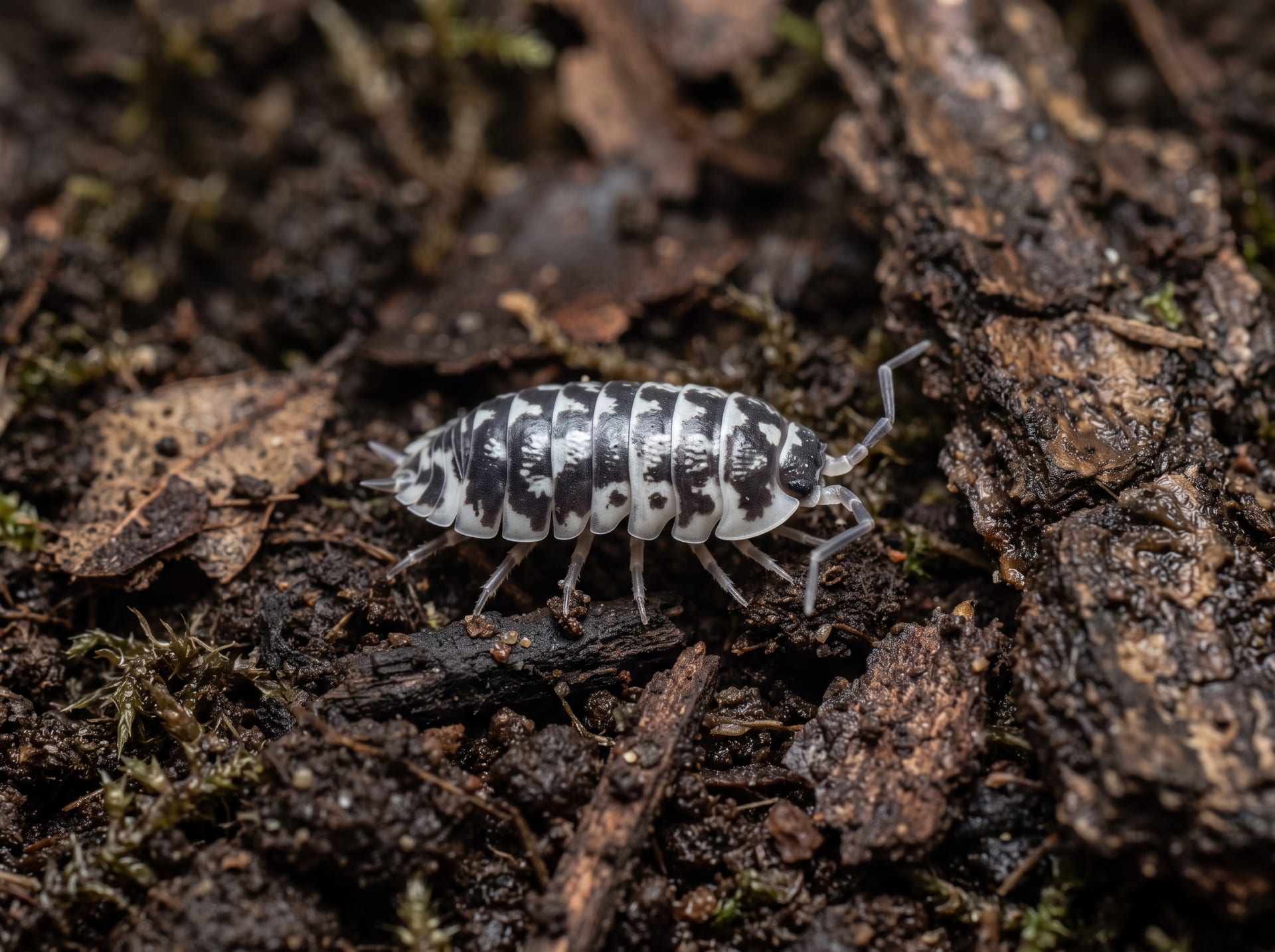
Dairy Cow Isopod
The Dairy Cow Isopod gets its name from the black-spotted, cream-white pattern reminiscent of a dairy cow's hide. A popular color morph of Porcellio laevis, it grows and breeds quickly and adapts well to captive conditions, making it a great choice for anyone new to isopod keeping. As a detritivore, it feeds on decaying leaves and wood, has no bite or venom to worry about, and works well as a cleanup crew member in bioactive setups. Each individual's spot pattern is slightly different and continues to shift as it grows, which makes watching them develop part of the appeal. Their calm, low-maintenance nature also makes them easy to house alongside other species.
View Dairy Cow Isopod encyclopedia →Breeder Wanted!
List on BreederDirect and sell directly to customers nationwide!
BreederDirect's 5 Transparency Commitments
When listing Exotic Invertebrates, Breeders disclose the following. We guarantee transparency on growth stage and breeding unit.
- Real Photos
- Breeding Unit
- Generation Info
- Body Length (mm)
- Country of Origin
Browse all 286 breeds
No listings match your filters
Adjust your filters, or get notified when new listings arrive.
Getting alerts is free with a member account. When new listings match your saved search, we'll notify you by email and in-app.
Browse other categories
Verified breeders (preview)
Are you raising exotic invertebrates?
Register as a breeder and connect with buyers directly.
Apply as a breederDairy Cow Isopod key facts
- Care level
- Beginner-friendly
- Lifespan
- About 1.5-2.5 years
- Size
- About 1.5-2 cm
- Temperature
- 20〜27℃
- Humidity
- 55〜75%
- Diet
- Leaf litter and rotten wood plus, given its appetite, regular protein (e.g., dry feed) and calcium supplementation.
- Habitat
- A well-ventilated tub with leaf litter, wood, and a moist hide.
- Temp & Humidity
- Keep 20-27C with one damp side for a moisture gradient.
- Feeding
- Appetite is high, so keep protein and calcium available.
- Notes
- Multiplies fast and may nibble tender plants; harmless with no venom or bite.
About Dairy Cow Isopod
The Dairy Cow Isopod is a popular Porcellio laevis morph known for its black-and-white dairy cow pattern. Hardy, fast-growing, and easy to breed, it's a great beginner isopod that also works well as a cleanup crew.
7 things to know before welcoming a Dairy Cow Isopod
1Hardy and Beginner-Friendly
This is a robust species well suited to first-time keepers, tolerating some fluctuation in temperature and humidity. Its fast growth and breeding rate mean you'll see new generations relatively quickly after starting a colony.
2Enclosure and Substrate
Keep them at about 20–27°C and 55–75% humidity; they adapt even to somewhat drier conditions. Use a well-ventilated enclosure with leaf litter soil and rotting wood, and moisten only one side to create a moisture gradient. Also provide a damp hide.
3The Pattern Behind the Name
Their name comes from the black-spotted, cream-white pattern that resembles a dairy cow's coat. Spot patterns vary between individuals and continue to shift as they grow.
4Diet and Cleanup Role
As detritivores, they feed on fallen leaves, decaying wood, and dead plant matter, and have no bite or venom to worry about. They also help break down leftover food and waste, making them useful cleanup crew members.
5Typical Lifespan
Their lifespan is roughly 1.5 to 2.5 years. Because they breed quickly, you can keep the colony going across multiple generations.
6Adult Size
Adults typically reach about 1.5 to 2cm in length, so they don't take up much space. This also means the enclosure itself can stay fairly compact.
7Before You Bring One Home
Before bringing them home, prepare a well-ventilated enclosure with moisture-retentive substrate. If you're considering housing them with other species that share similar conditions, check compatibility in advance.
Frequently asked questions about Dairy Cow Isopod
- Q.Does the Dairy Cow Isopod bite or have venom?
- A.No, it doesn't bite and has no venom, and its temperament is calm. It poses essentially no risk to handle, making it a comfortable first isopod for beginners.
- Q.Can it be kept with other species?
- A.Being a calm detritivore, it generally cohabits well with species that enjoy similar conditions. That said, some combinations carry a risk of predation, so it's worth checking compatibility beforehand.
- Q.What does it eat?
- A.Humus from fallen leaves and decaying wood is the basis of its diet. It has a big appetite, so also supplement regularly with protein (such as dry food) and calcium. No special live food is needed.
- Q.How big does it get, and how long does it live?
- A.Adults reach about 1.5 to 2cm, with a lifespan of roughly 1.5 to 2.5 years. Since it breeds quickly, you can enjoy the colony across multiple generations.
- Q.Are there any legal regulations to be aware of?
- A.The Dairy Cow Isopod is not subject to CITES.
Learn more about Dairy Cow Isopod in the encyclopedia
View Dairy Cow Isopod encyclopedia entry →
Care difficulty, lifespan, size and diet — all basics covered.
More in this category
Can't find the one you're looking for?
Post your wishes for free and breeders with matching animals will contact you with introductions.