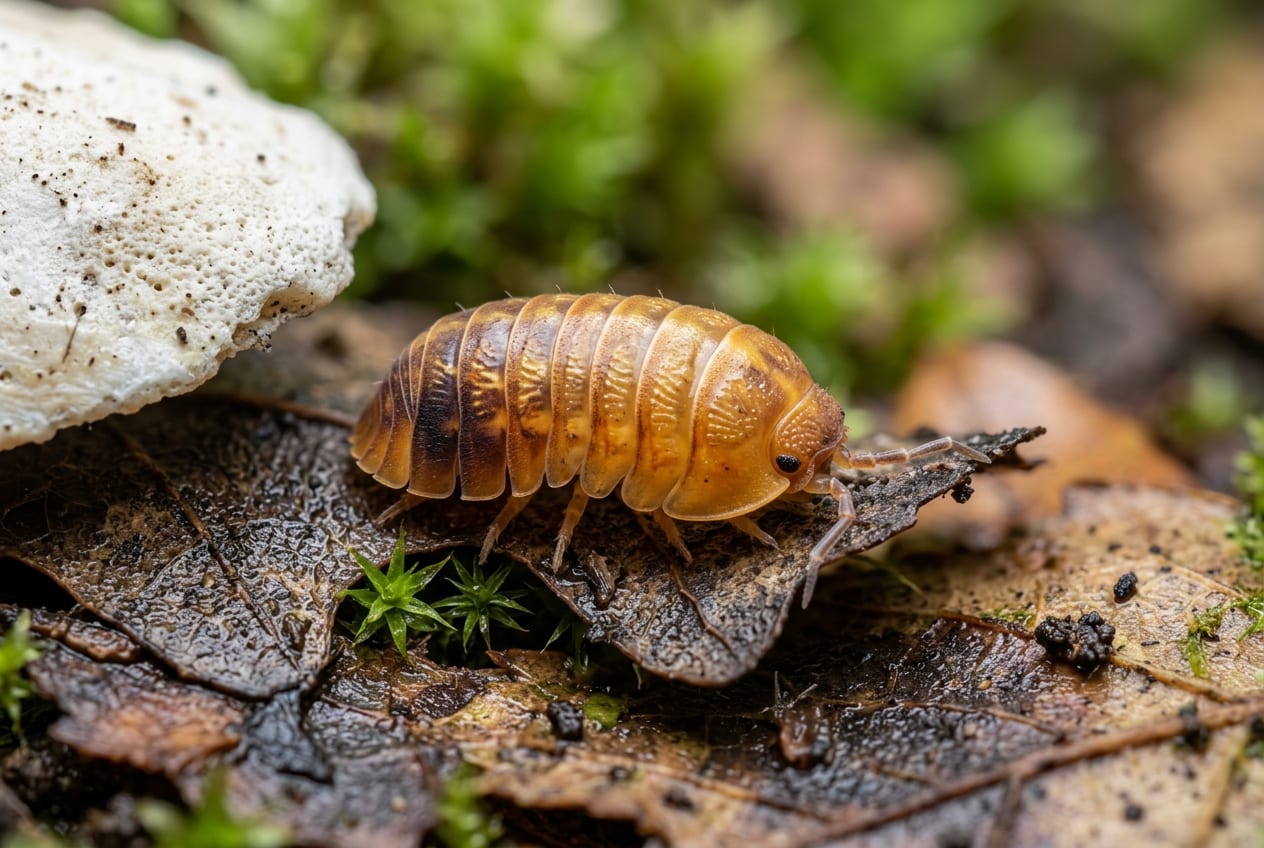
Amber Ducky Isopod
The Amber Ducky Isopod is an undescribed species in the genus Cubaris, prized for its warm coloration that shifts from honey to gold to orange, deepening toward the rear segments for a striking gradient effect. Within Cubaris, it breeds relatively readily and tolerates minor lapses in husbandry, which has earned it a reputation as a good entry point into the genus. That said, isopod keeping in general calls for some background knowledge, so it's rated as suited to intermediate keepers. Given a well-balanced enclosure with steady humidity and airflow, these isopods venture out from cover often enough to make for an engaging, display-worthy colony.
View Amber Ducky Isopod encyclopedia →Breeder Wanted!
List on BreederDirect and sell directly to customers nationwide!
BreederDirect's 5 Transparency Commitments
When listing Exotic Invertebrates, Breeders disclose the following. We guarantee transparency on growth stage and breeding unit.
- Real Photos
- Breeding Unit
- Generation Info
- Body Length (mm)
- Country of Origin
Browse all 286 breeds
No listings match your filters
Adjust your filters, or get notified when new listings arrive.
Getting alerts is free with a member account. When new listings match your saved search, we'll notify you by email and in-app.
Browse other categories
Verified breeders (preview)
Are you raising exotic invertebrates?
Register as a breeder and connect with buyers directly.
Apply as a breederAmber Ducky Isopod key facts
- Care level
- Intermediate
- Lifespan
- 2-3 years
- Diet
- Decaying hardwood and leaf litter as the base, with a little dried shrimp or fish flake weekly and occasional vegetable; cuttlebone stays in permanently
- Temperature & Humidity
- Keep it consistently warm and humid as a gradient, never a uniformly soaked tub. Stagnant wet conditions are the main cause of losses.
- Enclosure
- Lay 7-10cm of substrate and cover the surface with hardwood leaf litter, adding cork bark and a piece of limestone. Keep ventilation modest.
- Diet & Feeding
- Decaying wood and leaf litter are the diet, with a little dried shrimp or fish flake weekly and occasional vegetable. Remove leftovers.
- Temperament & Venom
- Harmless to people. Bolder than most Cubaris and quick to conglobate when disturbed. Kept in groups.
- Notes
- Never let the cuttlebone run out. Leave a new colony dark, warm and undisturbed for a fortnight, and seed springtails from day one.
About Amber Ducky Isopod
Amber Ducky Isopod (Cubaris sp.), an undescribed species with a honey-to-orange gradient coloration. Known for breeding easily and tolerating minor care lapses, making it a popular entry point into Cubaris — though isopod keeping overall suits intermediate keepers.
7 things to know before welcoming a Amber Ducky Isopod
1Amber Gradient Coloring
The standout feature is its warm color range — honey through gold to orange — deepening toward the rear segments. Keeping a group together really shows off this gradient and the natural variation between individuals.
2A Cubaris Starter Species
Within the genus Cubaris, this species breeds relatively easily and tolerates minor husbandry lapses, making it a favored starting point into the genus. That said, isopod keeping overall requires some baseline knowledge, so it's rated intermediate.
3Prefers to Stay Hidden
During the day, they typically tuck themselves under driftwood, leaf litter, or cork bark. Providing plenty of hiding material helps them settle in and feel secure.
4Balancing Humidity and Airflow
They like a warm, humid setup, but soaking the whole enclosure leads to stagnant, overly damp air, which is the biggest cause of failure. Create a humidity gradient by keeping part of the substrate moist. Some ventilation is needed, but too much lets humidity escape, so keep it modest.
5Breeding and Colony Care
Given suitable conditions, this species reproduces readily on its own. If the colony becomes crowded, consider splitting it into additional enclosures to prevent substrate breakdown and stress among individuals.
6Substrate and Feeding Setup
Use a hardwood-based fermented substrate or leaf mold (avoiding conifer material) laid deep, 7–10 cm, and cover the surface with hardwood leaf litter. Their staple diet is rotting wood and leaf litter, with a small amount of dried shrimp or fish flakes weekly and vegetables now and then. Their exoskeleton is heavily calcified, so keep cuttlebone available at all times.
7Prepping the Enclosure Before Arrival
Before bringing them home, set up an enclosure with modest ventilation, substrate, hiding spots, and misted humidity in advance for a smooth transition. For the first two weeks after arrival, leave them untouched in a dark, warm place to settle in.
Frequently asked questions about Amber Ducky Isopod
- Q.Is this species suitable for beginners?
- A.It's rated as an intermediate-level species, so some prior isopod or invertebrate keeping experience helps. Within Cubaris it breeds readily and tolerates minor care lapses, but managing the humidity and airflow balance does take some know-how.
- Q.How quickly does it reproduce?
- A.It's generally considered a species that breeds fairly readily once conditions are right, though the actual pace varies by individual and setup. Keep an eye on substrate condition and population density as numbers grow to avoid overcrowding.
- Q.Can it be kept with other isopod species?
- A.It's best kept on its own to avoid hybridization or species mix-ups. Even with other Cubaris species, it's recommended to house them in separate enclosures.
- Q.What does it eat?
- A.Its staple diet is rotting wood and leaf litter. Give a small amount of dried shrimp or fish flakes weekly and vegetables occasionally, and remove leftovers. Because its exoskeleton is heavily calcified, keep cuttlebone available at all times and replace it as it is eaten.
- Q.Will fungus gnats or other pests show up in the enclosure?
- A.Excess moisture or a buildup of uneaten organic matter can encourage gnats and similar pests. Regular substrate maintenance, good ventilation, and avoiding overfeeding help keep them in check.
Learn more about Amber Ducky Isopod in the encyclopedia
View Amber Ducky Isopod encyclopedia entry →
Care difficulty, lifespan, size and diet — all basics covered.
More in this category
Can't find the one you're looking for?
Post your wishes for free and breeders with matching animals will contact you with introductions.