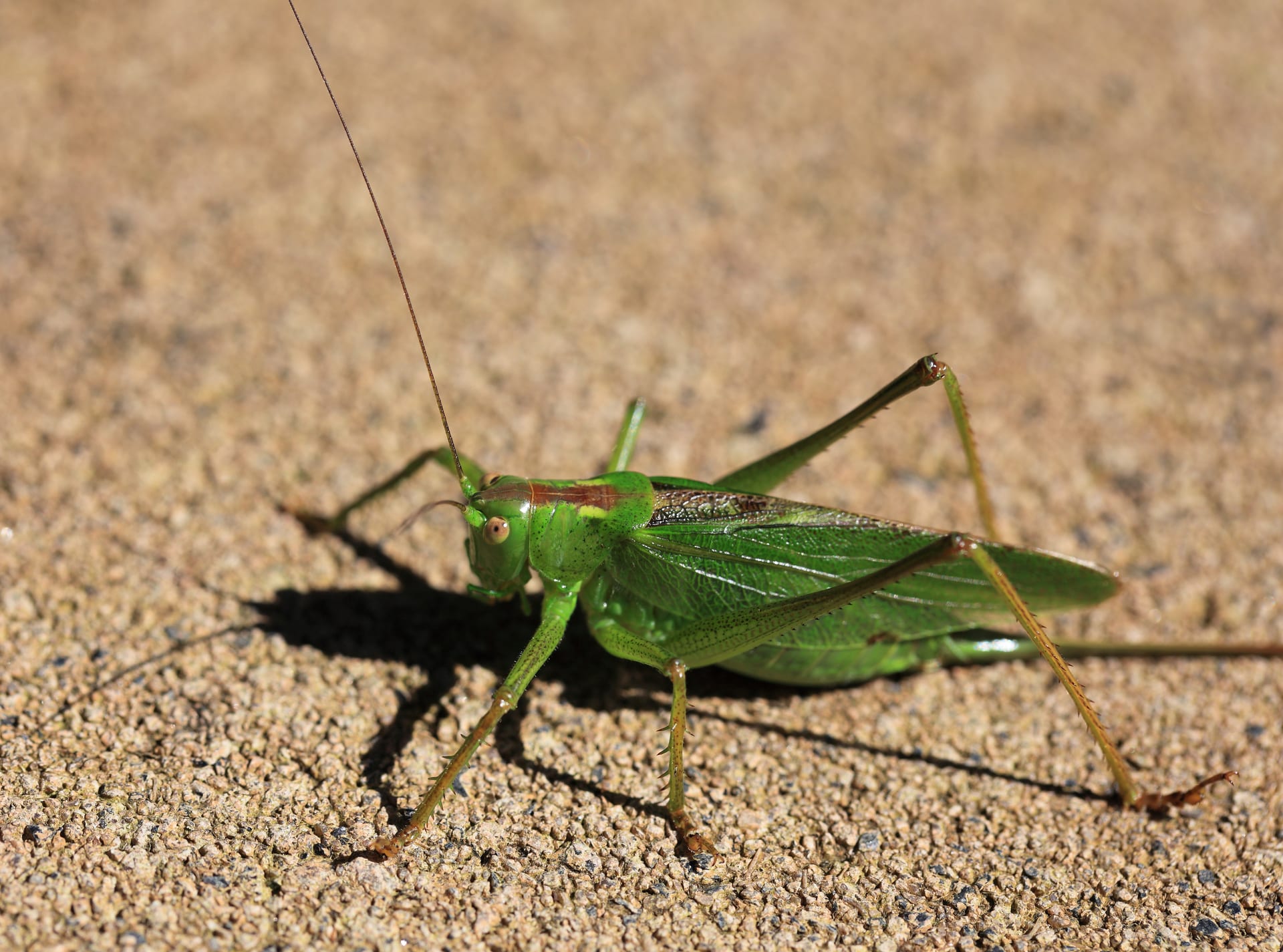
 © TANAKA Juuyoh (田中十洋) / CC BY 2.0
Japanese bush cricket
The Japanese bush cricket (yabukiri) is a green relative of the katydid that grows to about 45-55mm from head to wingtip, marked by a single brown stripe running down its back. Its slender frame is built for life in the trees, and while young nymphs will nibble on plant matter, adults become increasingly predatory, striking without hesitation at insects their own size. Known for its distinctive call, it's a familiar sound of summer in Japan's fields and woodlands. Handling calls for some care given its speed and strong jaws, but that same intensity makes for a fascinating close-up view of active predatory behavior.
View Japanese bush cricket encyclopedia →0% commission on your first sales!Register by September 30, 2026 and your first 2 sales are commission-free!
Breeder Wanted!
List on BreederDirect and sell directly to customers nationwide!
BreederDirect's 6 Transparency Commitments
When listing Insects, Breeders disclose the following. We guarantee transparency on growth stage and breeding unit.
- Life Stage Clarity
- Generation Info
- Real Photos
- Breeding Unit
- Country of Origin
- Body Length (mm)
Browse all 336 breeds
No listings match your filters
Adjust your filters, or get notified when new listings arrive.
Getting alerts is free with a member account. When new listings match your saved search, we'll notify you by email and in-app.
Browse other categories
Verified breeders (preview)
Japanese bush cricket key facts
- Care level
- Intermediate
- Lifespan
- Adults usually about 2 months (captives may live past the new year)
- Size
- About 45-55mm from head to wingtip
- Diet
- Omnivorous, increasingly carnivorous with age (insects, leaves, fruit, pollen)
- Enclosure
- It lives mainly in trees, so provide branches and foliage and a tall container. It avoids permanently muddy and very dry places, so avoid both stuffiness and excessive dryness.
- Food & Feeding
- It eats almost anything, from insects and other small animals to leaves, fruit and buds. Young nymphs eat pollen and petals and become more carnivorous as they grow, so add live prey. Avoid salty food and one-sided diets.
- Cohabitation
- Females and late nymphs are especially voracious and may pounce on and eat animals as large as themselves or larger, so keep them singly.
- Breeding & Egg-laying
- Females come down to the ground and lay eggs one at a time in soil with the ovipositor. Some eggs overwinter twice before hatching. Eggs hatch around April, and nymphs usually moult six times.
- Lifespan & Rearing Period
- Nymphs take about two months, maturing in the Kanto region around mid rainy season. Males take about ten days after the final moult to start singing properly. Adults usually live about two months, but captives may survive past the new year.
- Health & Notes
- It is often confused with Gampsocleis and Hexacentrus, but the brown dorsal stripe and the similar wing shape in both sexes set it apart. As a native species, never release captives away from where they came from.
About Japanese bush cricket
A green katydid relative with a brown back stripe, the Japanese bush cricket grows more predatory with age and will strike at insects its own size. Suited to intermediate keepers; adults typically live about two months.
7 things to know before welcoming a Japanese bush cricket
1Grows More Predatory
Young nymphs eat some plant matter, but as they mature they rely more on animal prey and may lunge at insects their own size. Keeping them singly is the safest approach.
2Needs a Tall Enclosure
Built for life in the trees, this species does better in a tall enclosure than a wide one. Add branches or leafy perches to give it footholds and places to hide.
3Watch for Cannibalism
Because of its strong predatory drive, housing multiple individuals together can lead to cannibalism. Keep them separately, or provide plenty of hiding spots if housing more than one.
4Mix Insect and Plant Food
Adults favor animal prey, while nymphs will also eat plant leaves. If offering live insects, choose prey no larger than the cricket itself.
5Adults Live About 2 Months
Adult lifespan is typically around two months, though some individuals survive into the following year under good care. Its short life makes day-to-day changes easy to observe.
6Fast, Strong-Jawed Mover
As it matures, it becomes quick and has powerful jaws, so handle it carefully to avoid a pinch. Tweezers or a small container make moving it easier and safer.
7Listen for Its Call
Beyond the brown stripe down its back and its darting hunting style, its distinctive call is part of the appeal. Many individuals become more active from evening into night.
Frequently asked questions about Japanese bush cricket
- Q.What kind of setup does a Japanese bush cricket need?
- A.A tall enclosure with perches or leafy branches works well, mimicking its tree-dwelling habits. Keep it well ventilated while avoiding direct sunlight and excessive dryness.
- Q.Can I keep several together in one enclosure?
- A.Because it's strongly predatory, housing several together can lead to cannibalism. It's best kept alone, and if you do keep more than one, provide plenty of hiding spots.
- Q.What should I feed it?
- A.Adults favor animal prey, so offering insects smaller than itself is the basic approach. Nymphs will also eat plant leaves, so adjust the diet as it grows.
- Q.How long does a Japanese bush cricket live?
- A.Adults typically live around two months. In some cases, though, they can survive into the following year depending on care conditions.
- Q.Are there any legal restrictions on keeping this species?
- A.The Japanese bush cricket is not subject to CITES. Not covered by CITES or the Invasive Alien Species Act. It is a native species, so follow local rules when collecting and never release captives away from their place of origin.
Useful tools for Japanese bush cricket care
Learn more about Japanese bush cricket in the encyclopedia
View Japanese bush cricket encyclopedia entry →
Care difficulty, lifespan, size and diet — all basics covered.
More in this category
Can't find the one you're looking for?
Post your wishes for free and breeders with matching animals will contact you with introductions.