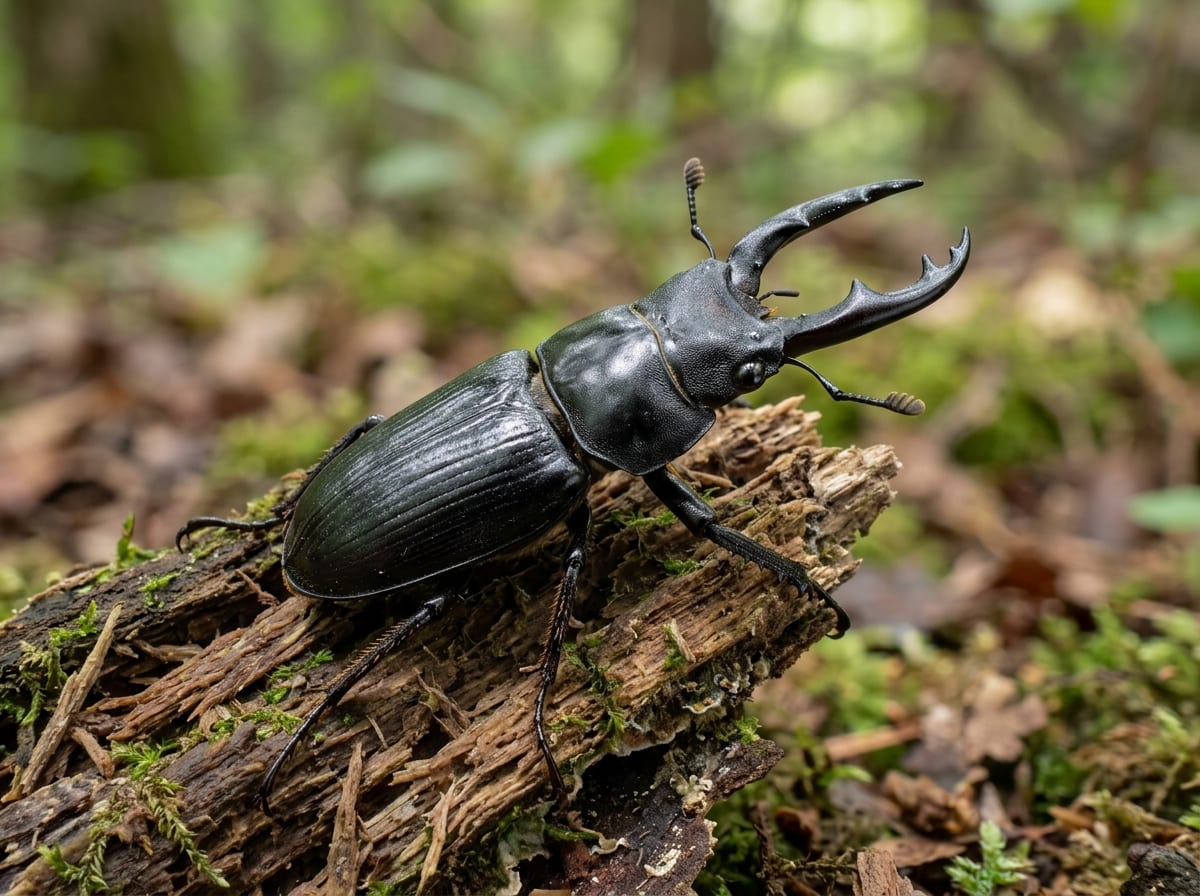
Lewis's horned hyoutan stag beetle
Lewis's Horned Hyoutan Stag Beetle is a small, glossy black stag beetle measuring around 12 to 18mm in body length. Its most distinctive feature is the largest inner tooth of its mandible, which curves upward like a horn, giving the species its Japanese name. Unlike most stag beetles, it lives communally as larvae and adults inside rotting wood and is carnivorous, preying on other insects. Keeping this species is generally considered suitable for intermediate keepers, but the reward is a rare chance to observe its social lifestyle and unusual mandible shape up close. It's a compelling choice for anyone ready to take stag beetle keeping further.
View Lewis's horned hyoutan stag beetle encyclopedia →0% commission on your first sales!Register by September 30, 2026 and your first 2 sales are commission-free!
Breeder Wanted!
List on BreederDirect and sell directly to customers nationwide!
BreederDirect's 6 Transparency Commitments
When listing Insects, Breeders disclose the following. We guarantee transparency on growth stage and breeding unit.
- Life Stage Clarity
- Generation Info
- Real Photos
- Breeding Unit
- Country of Origin
- Body Length (mm)
Browse all 336 breeds
No listings match your filters
Adjust your filters, or get notified when new listings arrive.
Getting alerts is free with a member account. When new listings match your saved search, we'll notify you by email and in-app.
Browse other categories
Verified breeders (preview)
Lewis's horned hyoutan stag beetle key facts
- Care level
- Intermediate
- Lifespan
- Little data
- Size
- 12-18mm long
- Diet
- Predatory (other insects; dog food or mealworms in captivity); larvae eat wood chewed up by the adults
- Enclosure
- Adults live inside rotten wood with several larvae as a family group, so keep them in the log and do not needlessly separate adults from larvae.
- Food & Feeding
- It is predatory, taking other insects; captives are fed dog food and mealworms.
- Breeding & Egg-laying
- Adults are said to chew up rotten wood to feed the larvae, which grow up alongside their parents. Newly eclosed beetles take time to turn fully black, so leave them undisturbed until they harden.
- Lifespan & Rearing Period
- Adult lifespan is poorly documented.
- Health & Notes
- Capture is regulated in the special areas of Yoshino-Kumano National Park (Wakayama coast). Follow local rules and never release captives away from where they came from. The standard Japanese name includes tsuno, so confirm the scientific name Nigidius lewisi when buying.
About Lewis's horned hyoutan stag beetle
Lewis's Horned Hyoutan Stag Beetle is a glossy black species, 12–18mm long, known for its upward-curving horn-like mandible tooth and communal, carnivorous lifestyle in rotting wood. An intermediate-level care guide.
7 things to know before welcoming a Lewis's horned hyoutan stag beetle
1Living in Groups
Unlike most stag beetles, adults and larvae of this species live together in groups inside rotting wood. You may be able to house multiple individuals together, but watch closely for conflicts, since compatibility can vary between individuals.
2A Carnivorous Diet
This species is carnivorous, preying on other insects rather than relying solely on plant-based food. In addition to insect jelly, you'll need to provide animal-based food, which differs from the diet of most other stag beetles.
3The Distinctive Horn
The largest inner tooth of the mandible curves upward like a horn, giving the species its Japanese name. This unusual mandible shape is one of the most distinctive features to observe up close.
4Best for Intermediate Keepers
Keeping this species is generally considered suitable for intermediate keepers. Managing its carnivorous diet and group housing requires more attention than typical stag beetle care, so it helps to research husbandry in advance.
5Small, 12–18mm Body
Adults reach a small body length of about 12 to 18mm, with a glossy black coloration. This compact size makes it manageable even in limited enclosure space.
6Limited Lifespan Data
There is limited documented information about this species' lifespan. Keeping careful observation notes as you care for your beetle can help you learn more about it over time.
7Prepare the Habitat First
Given its habit of living communally in rotting wood, prepare a suitable enclosure with rotting wood or fungal substrate before bringing one home. It's also worth planning a feeding approach suited to its carnivorous diet in advance.
Frequently asked questions about Lewis's horned hyoutan stag beetle
- Q.Can I keep multiple individuals together?
- A.Since this species naturally lives in groups inside rotting wood, keeping multiple individuals together is generally possible. That said, conflicts can occur depending on the number of beetles and enclosure space, so monitor them closely.
- Q.What should I feed this species?
- A.Being carnivorous, it requires animal-based food in addition to insect jelly, unlike most other stag beetles. Relying on jelly alone may lead to an unbalanced diet, so research feeding approaches suited to carnivorous species beforehand.
- Q.How long does this species live?
- A.There isn't much documented data on this species' lifespan, so a precise figure isn't established. Observing and recording your beetle's condition over time can help you learn more.
- Q.Is this species suitable for beginners?
- A.Keeping this species is generally considered suitable for intermediate keepers. Given the extra care needed for its carnivorous diet and group housing, it's best approached after gaining some prior stag beetle keeping experience.
- Q.Are there any legal regulations to be aware of?
- A.This species is not subject to CITES. In Yoshino-Kumano National Park (Wakayama coast) it is a designated animal whose capture is regulated in special areas, owing to declines from overcollecting and destruction of breeding logs. It is not covered by CITES or the Invasive Alien Species Act and is not a nationally rare species (Ministry of the Environment lists, September 2026). Follow local rules and never release captives away from their place of origin.
Useful tools for Lewis's horned hyoutan stag beetle care
Learn more about Lewis's horned hyoutan stag beetle in the encyclopedia
View Lewis's horned hyoutan stag beetle encyclopedia entry →
Care difficulty, lifespan, size and diet — all basics covered.
More in this category
Can't find the one you're looking for?
Post your wishes for free and breeders with matching animals will contact you with introductions.