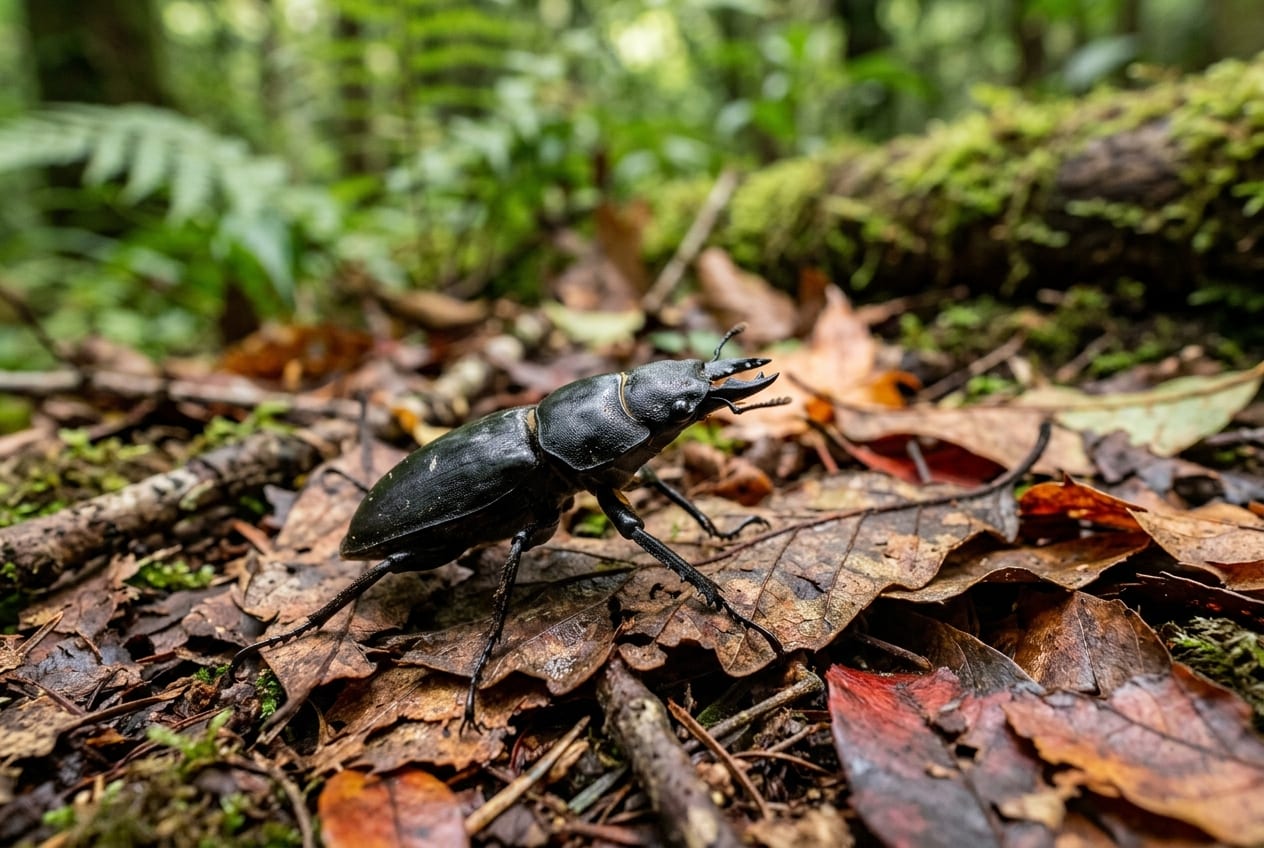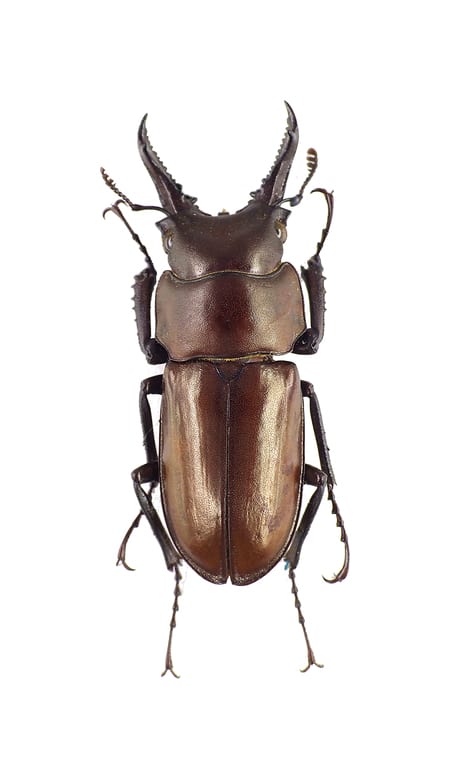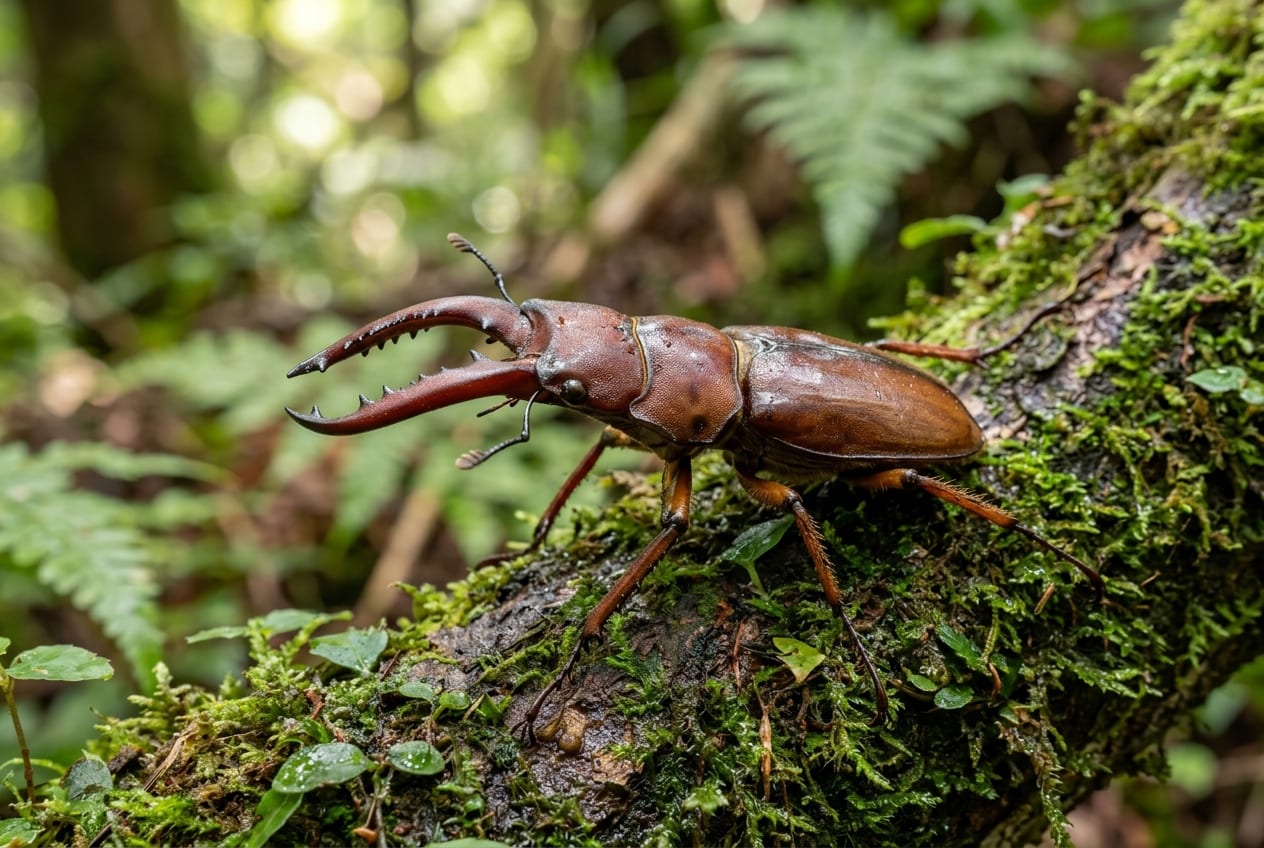
AI-generated image
Lewis's horned hyoutan stag beetle
IntermediateNigidius lewisi
Adults and larvae live together in rotten wood and prey on other insects. Its standard Japanese name adds tsuno (horned).
Difficulty
Intermediate
Temperature
20〜28℃ (typical for Insect)
Size
12-18mm long
Humidity
60〜80%
Diet
Predatory (other insects; dog food or mealworms in captivity); larvae eat wood chewed up by the adults
About
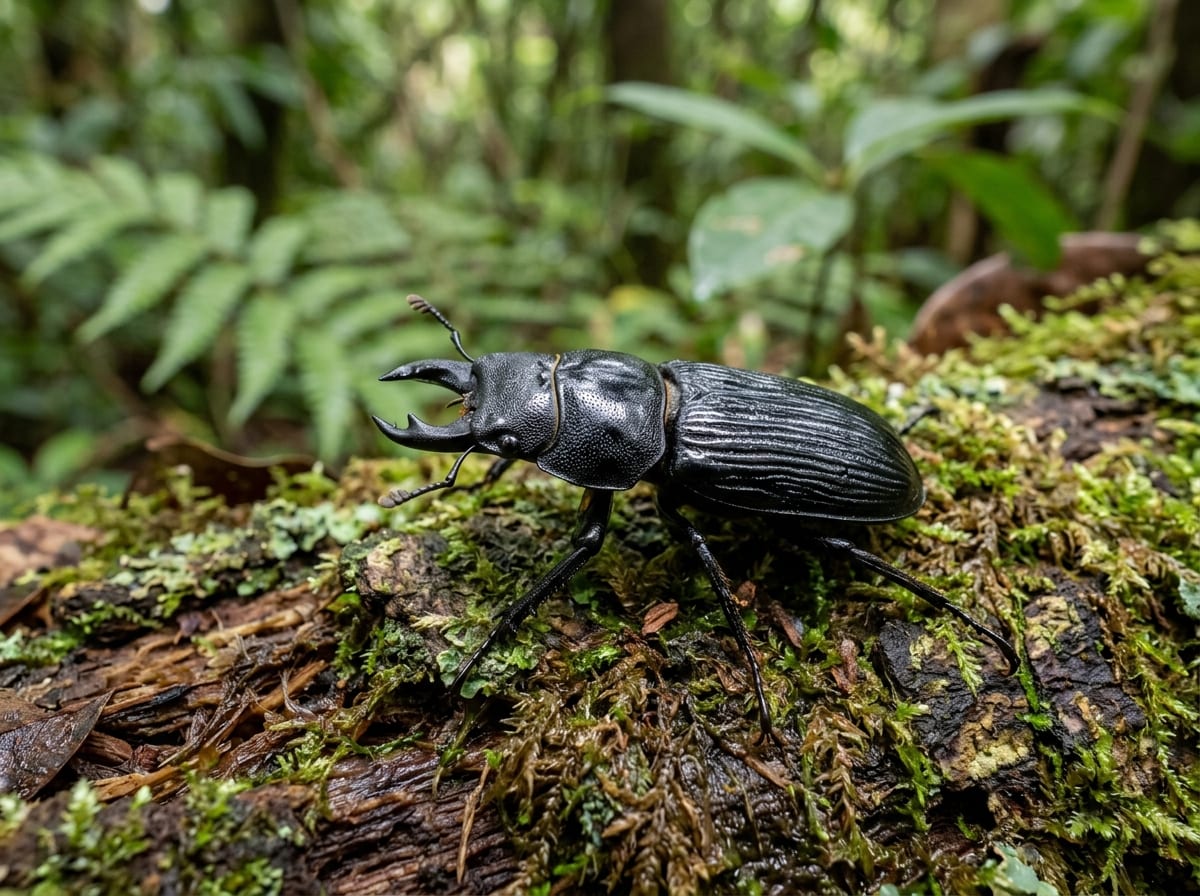
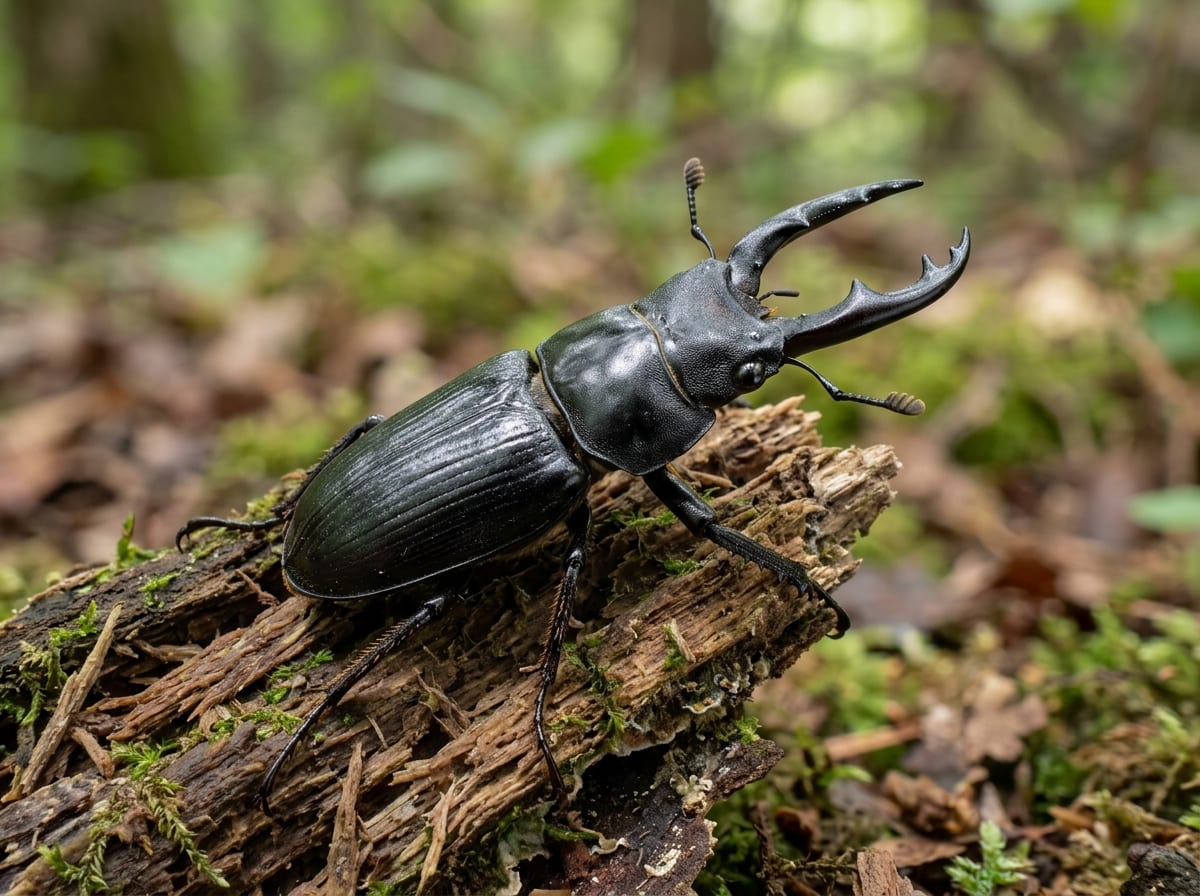
Nigidius lewisi Boileau, 1905, whose standard Japanese name is Rui-su-tsuno-hyoutan-kuwagata, is a stag beetle 12-18mm long. It is glossy black all over, and the largest tooth of each mandible is about as long as the jaw itself and curves upward and outward, hence the horned name. Mandible length and shape do not differ between the sexes, and the projection at the front of the pronotum is clearer in males. The wing cases bear deep punctures in rows. In Japan it occurs on the Wakayama coast (the northern limit), the Pacific coast of Kyushu, Tsushima, Yakushima, Tanegashima, the Tokara Islands, Amami-Oshima, Tokunoshima and Okinawa, and abroad on Green Island off Taiwan and on Hainan. GBIF records are mostly from Kagoshima and Okinawa, with some from Wakayama. Adults live in rotten wood with several larvae as a family group, and the adults are said to chew up wood to feed the larvae. It is predatory, taking other insects, and captives are fed dog food and mealworms. After eclosion it takes some time to turn fully black. In Yoshino-Kumano National Park in Wakayama, overcollecting and destruction of breeding logs have reduced numbers, and capture is regulated in the park's special areas.
Source: Wikipedia (CC BY-SA 4.0)
Size of the Lewis's horned hyoutan stag beetle
The Lewis's horned hyoutan stag beetle grows to 12-18mm long.
Basic Info
Origin
Wakayama coast, the Pacific coast of Kyushu, Tsushima, Osumi and Tokara Islands, Amami Islands, Okinawa, Green Island (Taiwan) and Hainan
Size
12-18mm long
Temperature
20〜28℃ (typical for Insect)
References & Sources
Edited & verified by: BreederDirect editorial team
The taxonomic, regulatory, and husbandry data on this page are compiled and verified against the authoritative primary sources below.
Taxonomy & Authority
Regulations & Conservation Status
Not CITES-listed
In Yoshino-Kumano National Park (Wakayama coast) it is a designated animal whose capture is regulated in special areas, owing to declines from overcollecting and destruction of breeding logs. It is not covered by CITES or the Invasive Alien Species Act and is not a nationally rare species (Ministry of the Environment lists, September 2026). Follow local rules and never release captives away from their place of origin.
Sources: Ministry of the Environment: Animals whose capture is regulated in special areas (Nigidius lewisi) / Ministry of the Environment: Nationally rare species list (JA) / Species+ CITES query (no listing)
Regulations may change. Always verify the latest information with the relevant authorities.
Lewis's horned hyoutan stag beetle Listings
Loading latest listingsFind listings for this species