Source: Wikimedia Commons
Daurian stag beetle
AdvancedPrismognathus dauricus
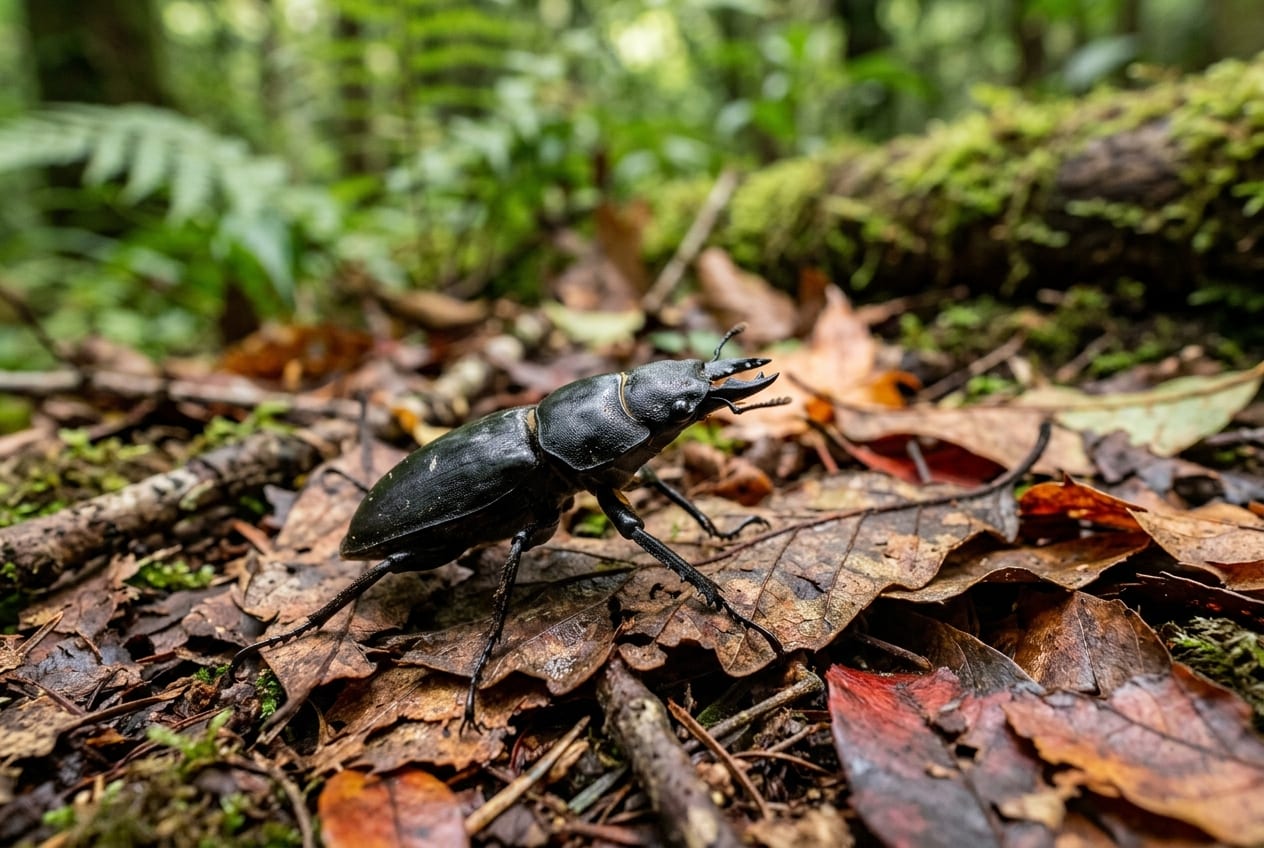
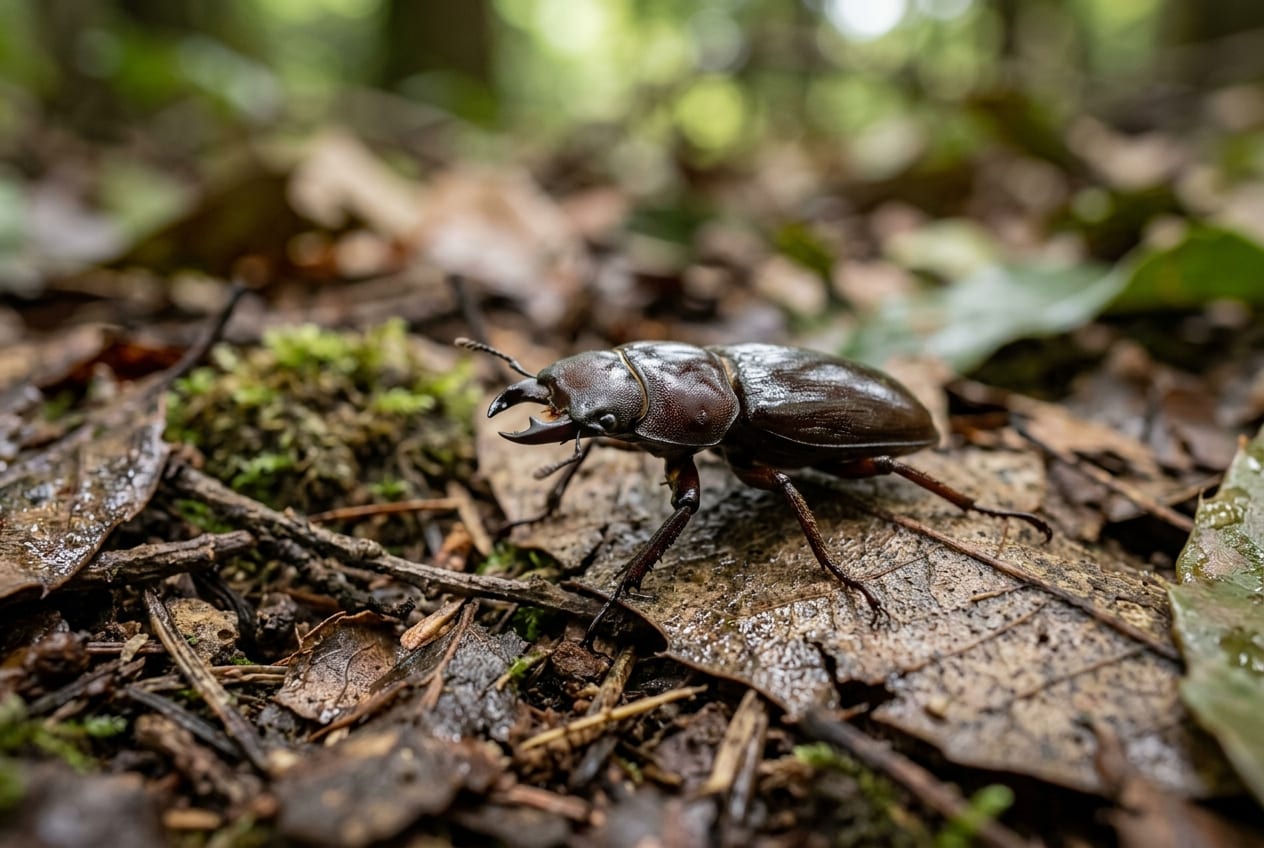
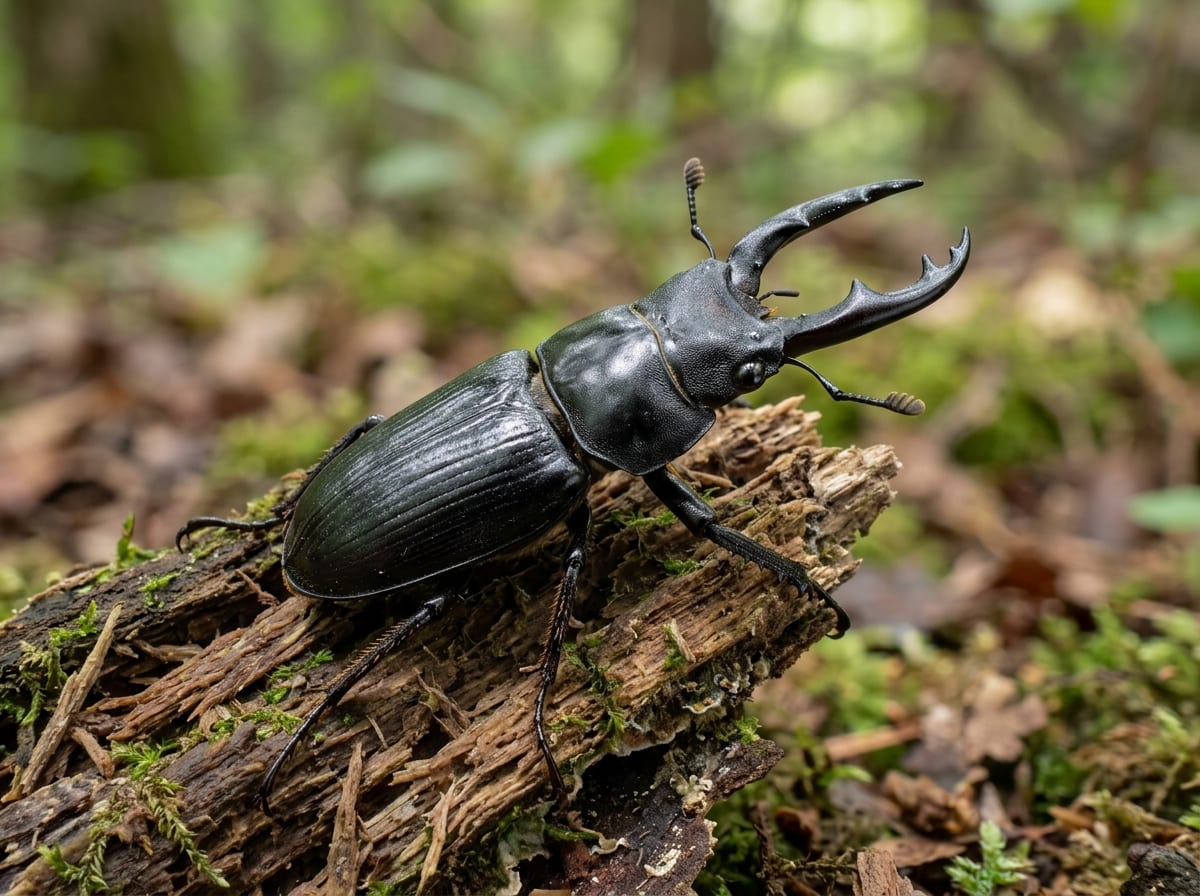
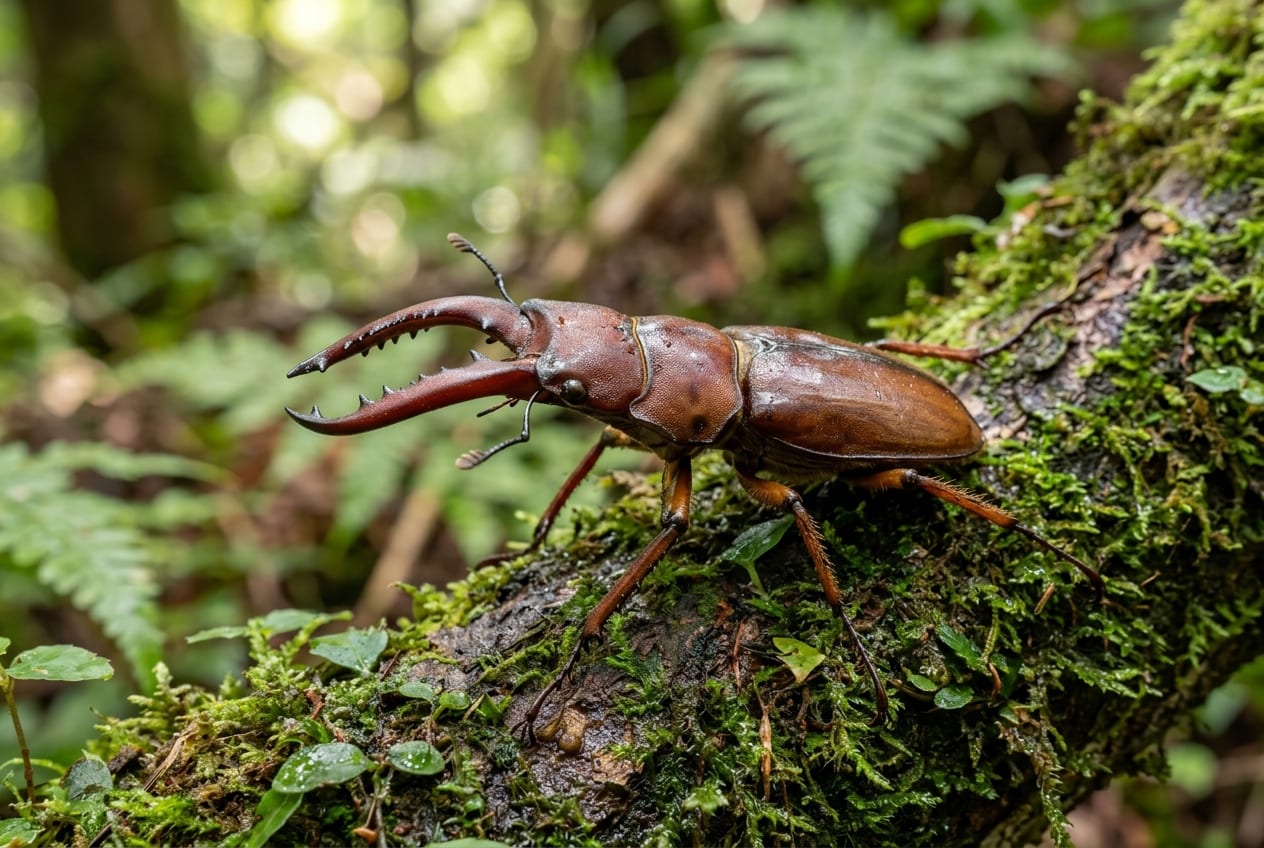
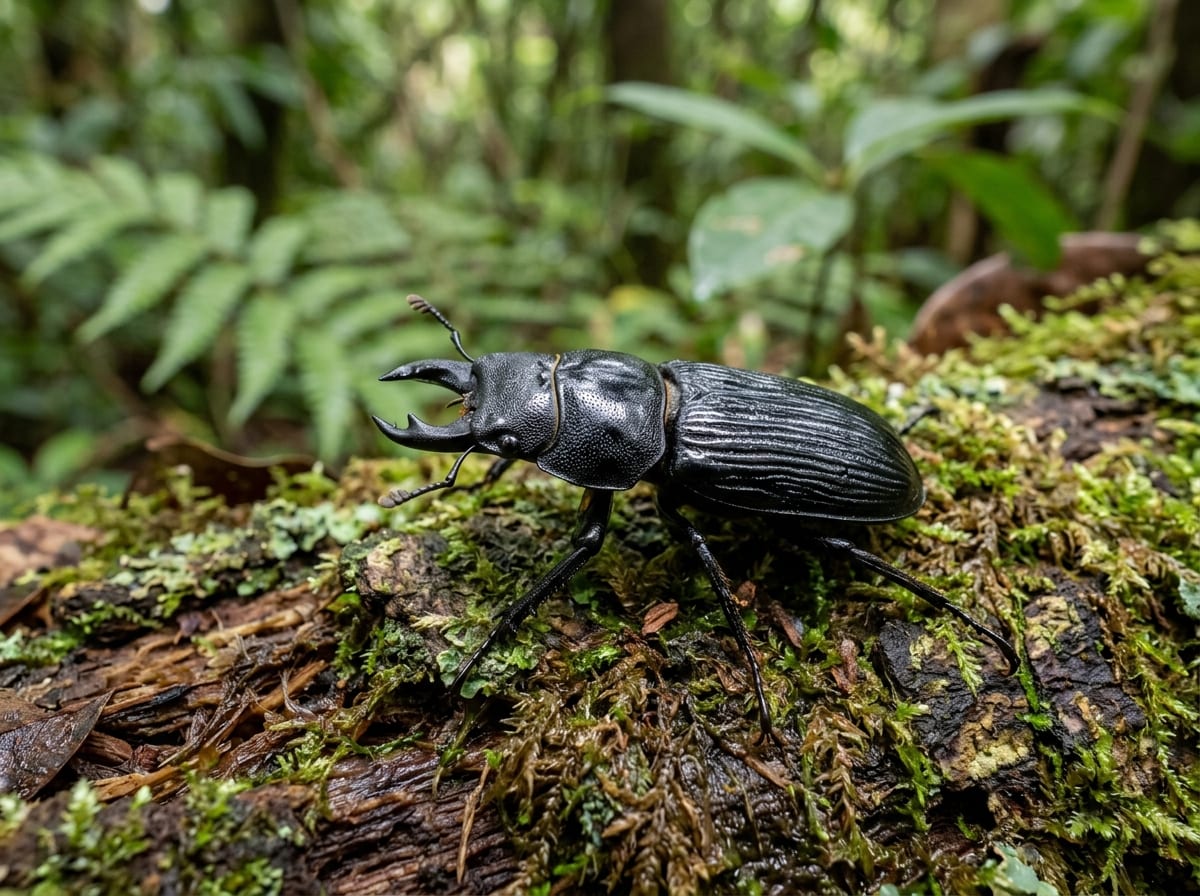
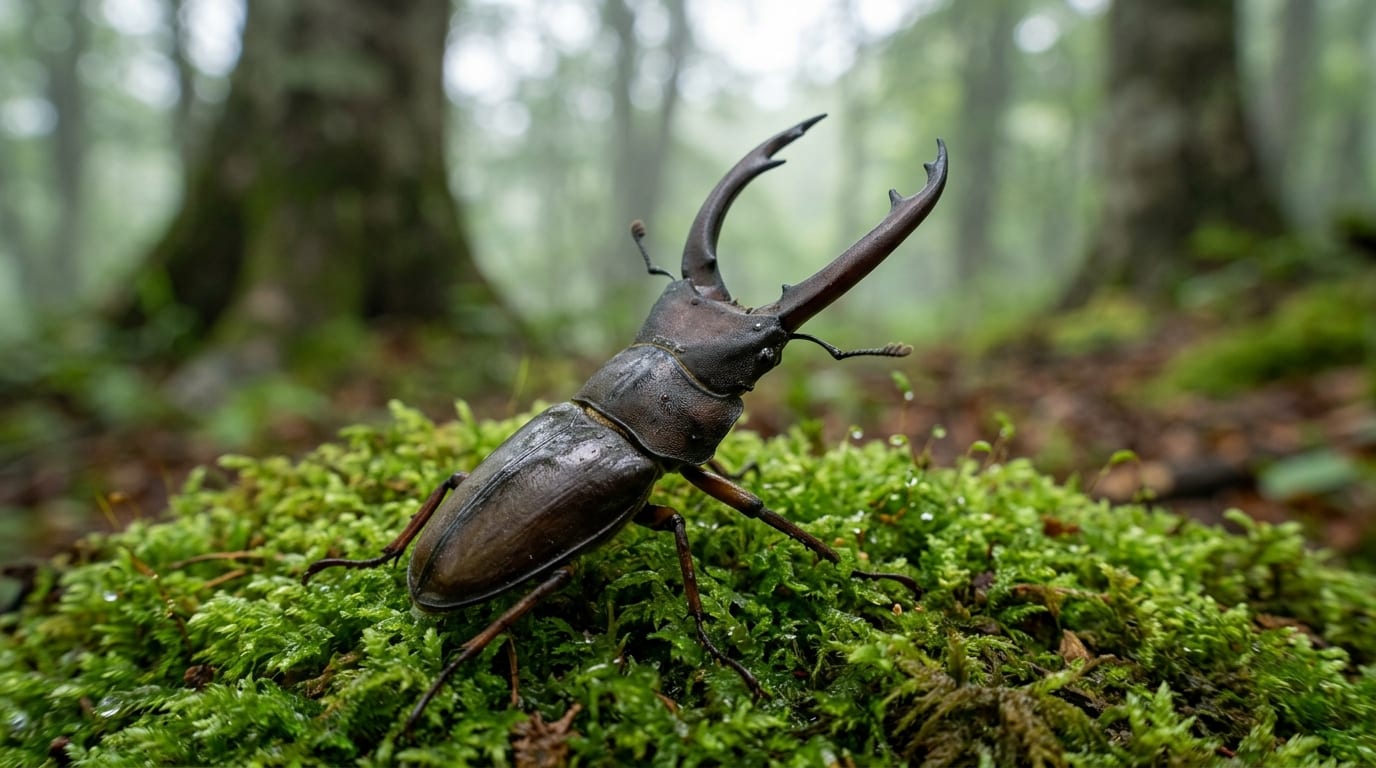
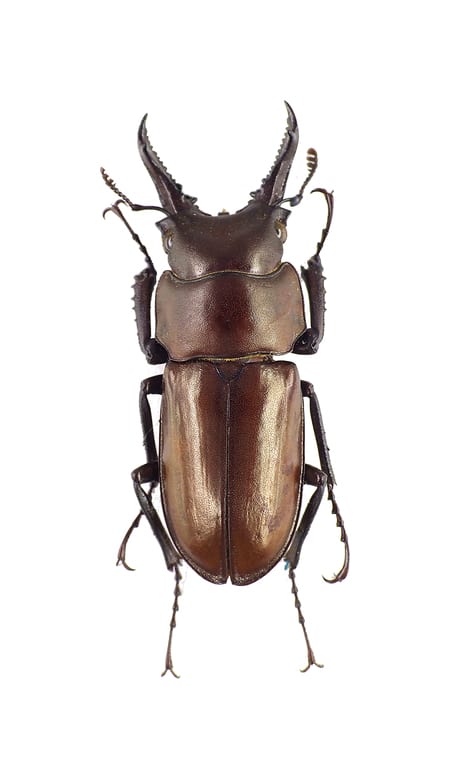
The largest Prismognathus, found in Japan only on Tsushima. It is glossy, with mandibles that are long and straight for the genus, and despite its Japanese name it is not gold. Near Threatened on Japan's national Red List.
Difficulty
Advanced
Temperature
20〜28℃
Lifespan
Said to be very short-lived (ecology poorly known)
Size
Captive record 41.3mm, wild record 38.8mm
Humidity
60〜80%
Diet
Adults are said to feed little; larvae eat moist, soft rotten wood
About
Prismognathus dauricus (Motschulsky, 1860) ranges through eastern Siberia, northeast China, the Korean peninsula and Jeju Island, and in Japan lives only on Tsushima. GBIF records are most numerous from South Korea, with others from Russia, China and Japan. In Prismognathus the sexes differ only modestly and male mandibles curve straight upwards. This is the largest species of the genus, bigger than P. angularis, with mandibles that are long and straight for the group. Its Japanese name suggests gold, but it is merely glossy and nothing like the golden Allotopus. It is said to be very short-lived and not to visit sap, but its ecology is poorly known. On Tsushima its food trees are disappearing fast as cedar and cypress plantations spread, and it is listed as Near Threatened on the Ministry of the Environment Red List. The BE-KUWA 2025 edition gives a captive record of 41.3mm and a wild record of 38.8mm. In Japan captive-bred stock from Tsushima or the mainland appears only occasionally at specialist shops.
Source: Wikipedia (CC BY-SA 4.0)
Size of the Daurian stag beetle
The Daurian stag beetle grows to Captive record 41.3mm, wild record 38.8mm.
Basic Info
Origin
Eastern Siberia, northeast China, Korean peninsula, Jeju Island and Japan (Tsushima)
Lifespan
Said to be very short-lived (ecology poorly known)
Size
Captive record 41.3mm, wild record 38.8mm
Temperature
20〜28℃
References & Sources
Edited & verified by: BreederDirect editorial team
The taxonomic, regulatory, and husbandry data on this page are compiled and verified against the authoritative primary sources below.
Taxonomy & Authority
Regulations & Conservation Status
Not CITES-listed
It is Near Threatened on the Ministry of the Environment Red List but not designated a nationally rare species (Ministry of the Environment list, September 2026). The Tsushima population is declining with the loss of its food trees, so choose captive-bred stock and never release captive beetles.
Sources: Prismognathus - Wikipedia (JA), noting Near Threatened status / Ministry of the Environment: Nationally rare species list (JA) / Species+ CITES query (no listing)
Regulations may change. Always verify the latest information with the relevant authorities.
Daurian stag beetle Listings
Loading latest listingsFind listings for this species