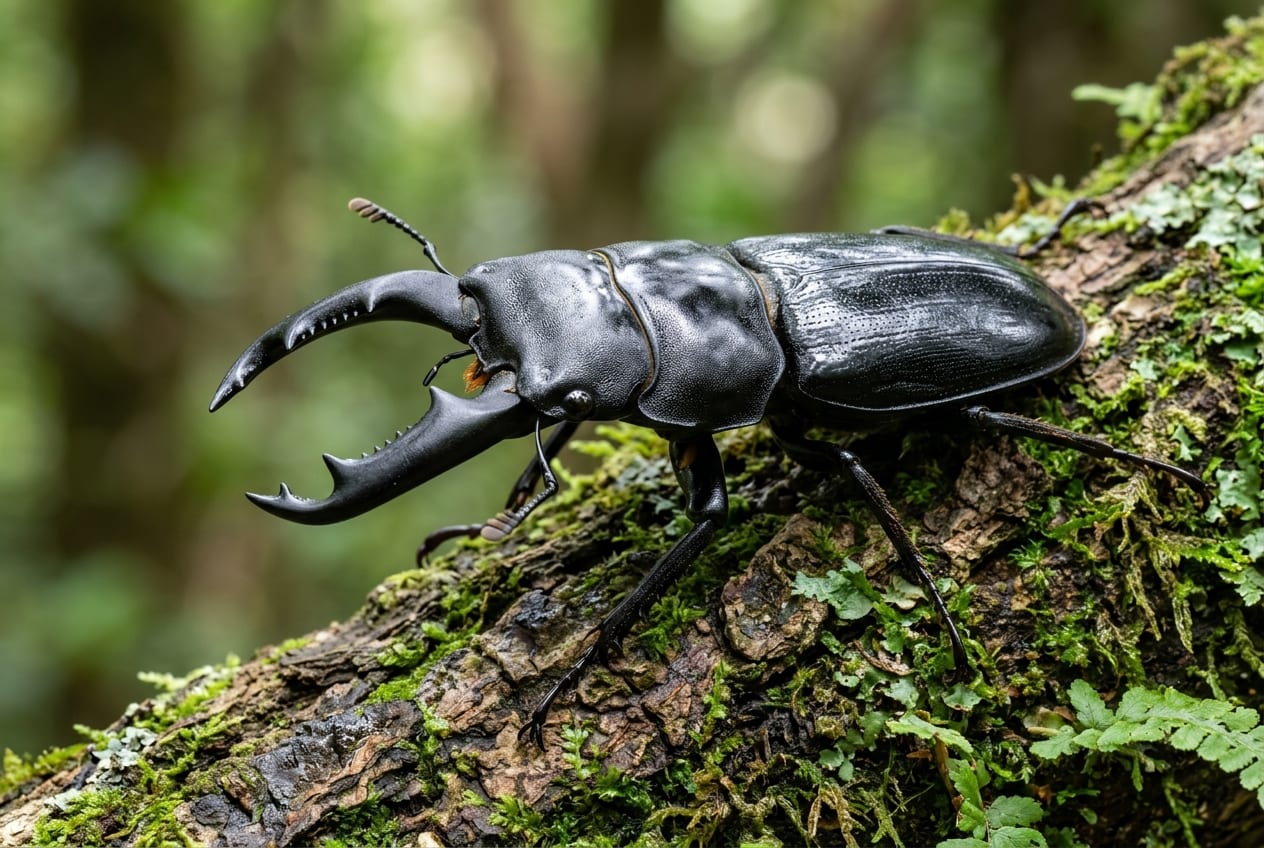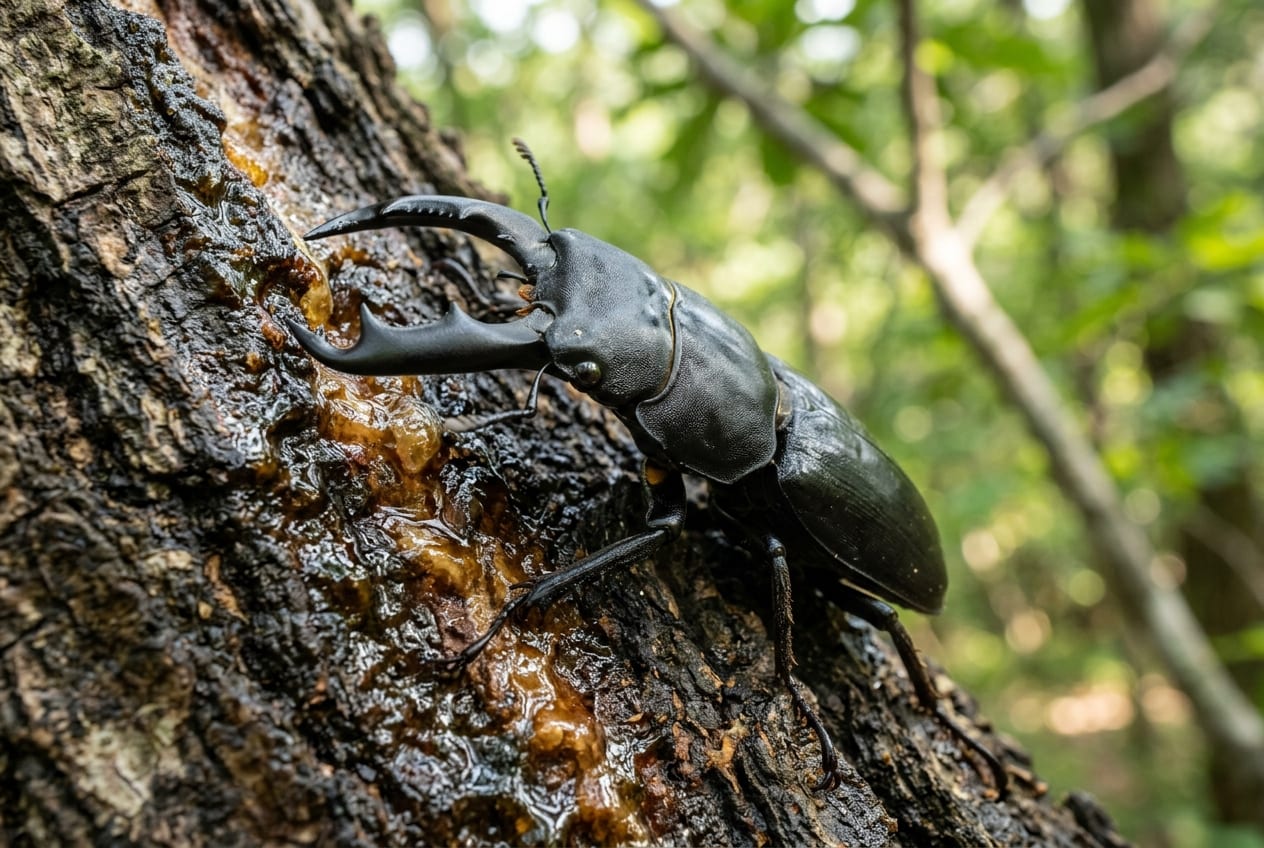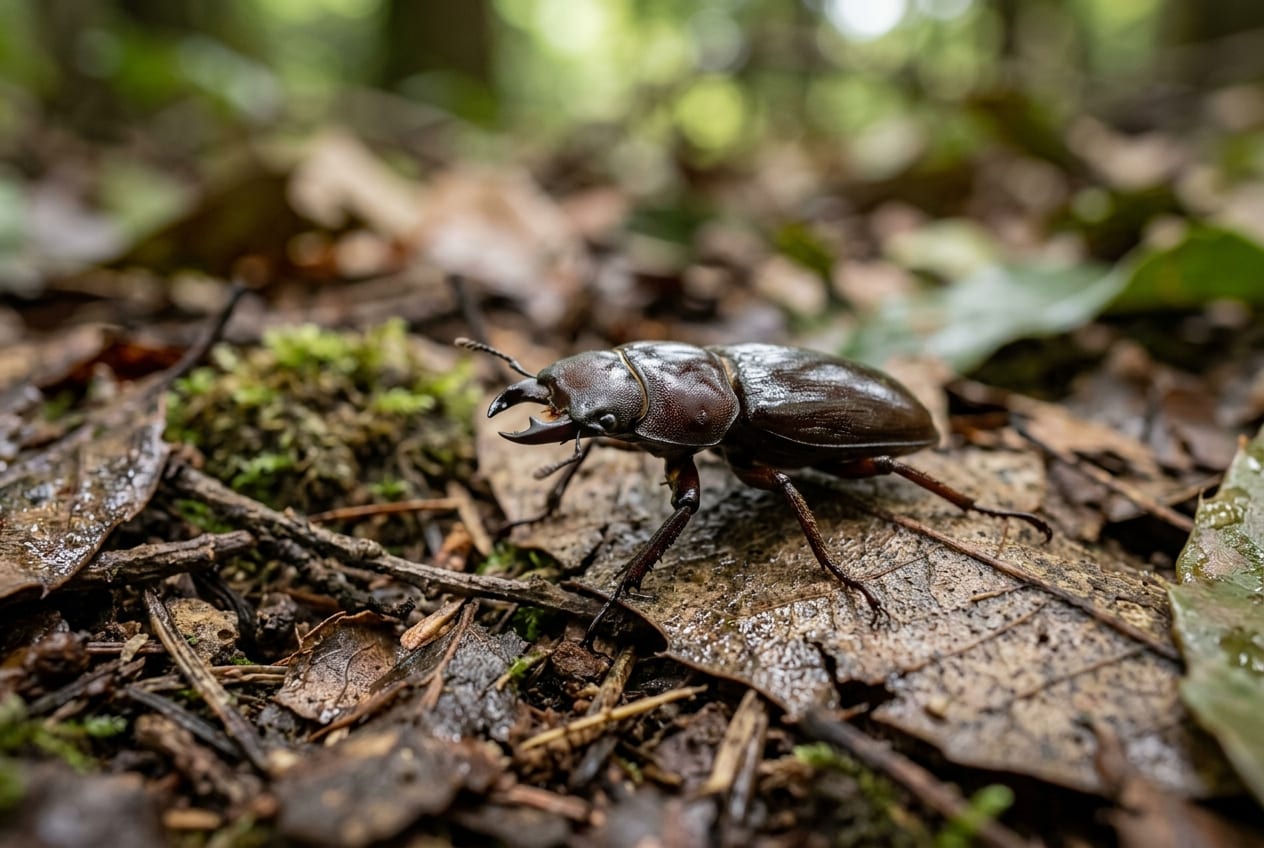
AI-generated image
Korean Flat Stag Beetle
IntermediateDorcus consentaneus
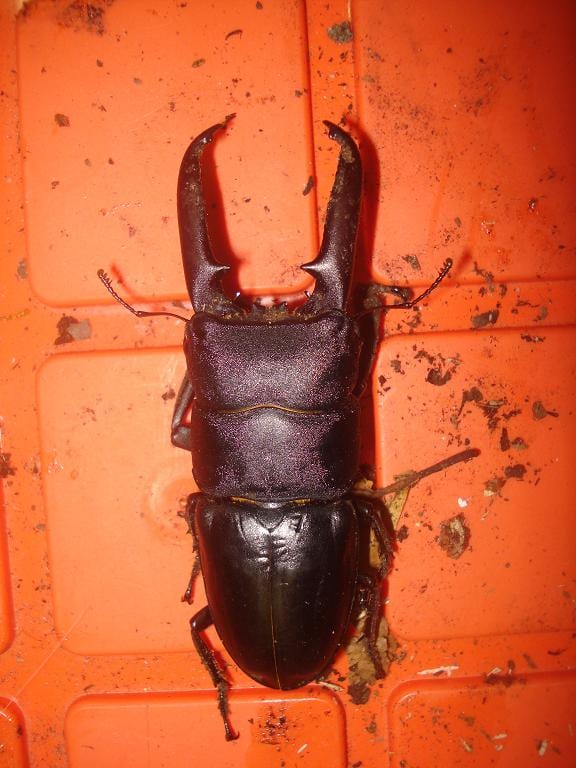
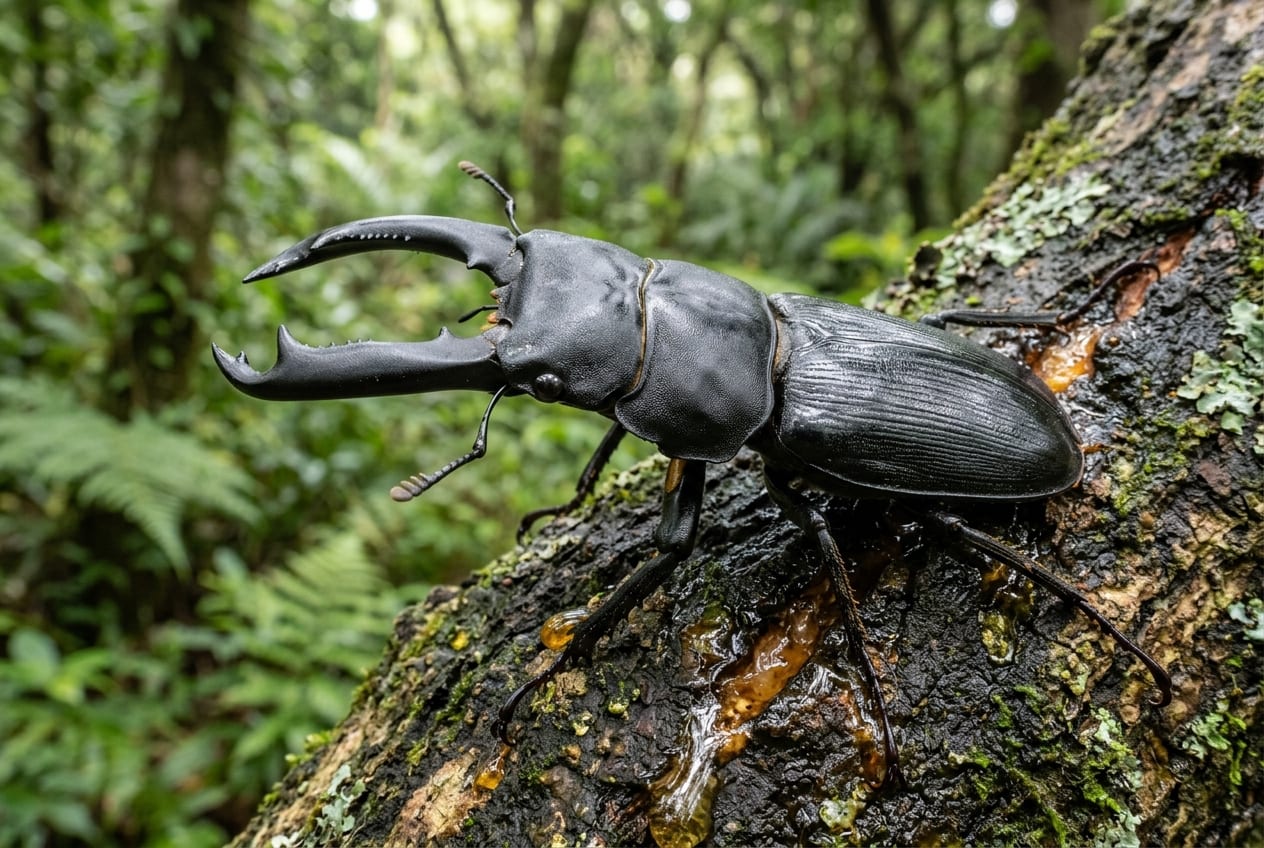
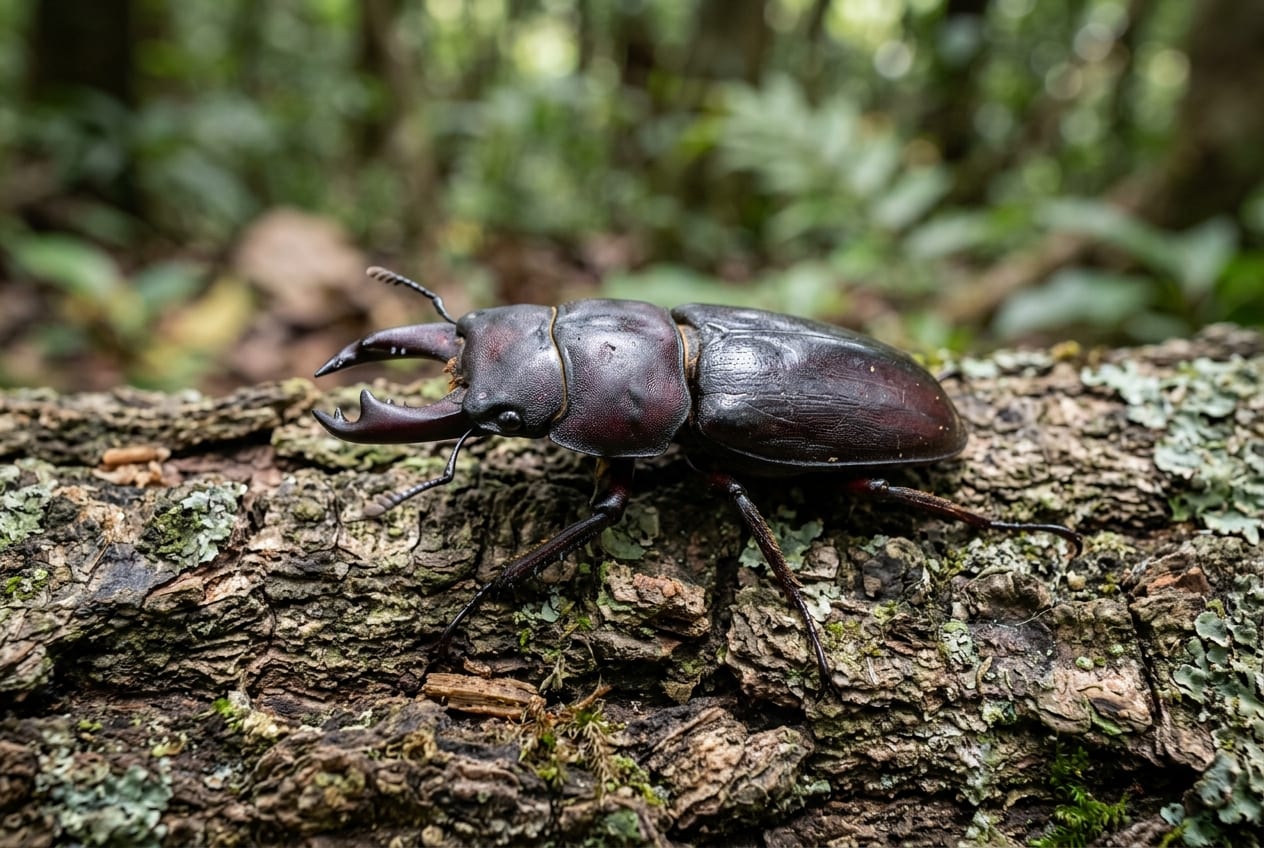
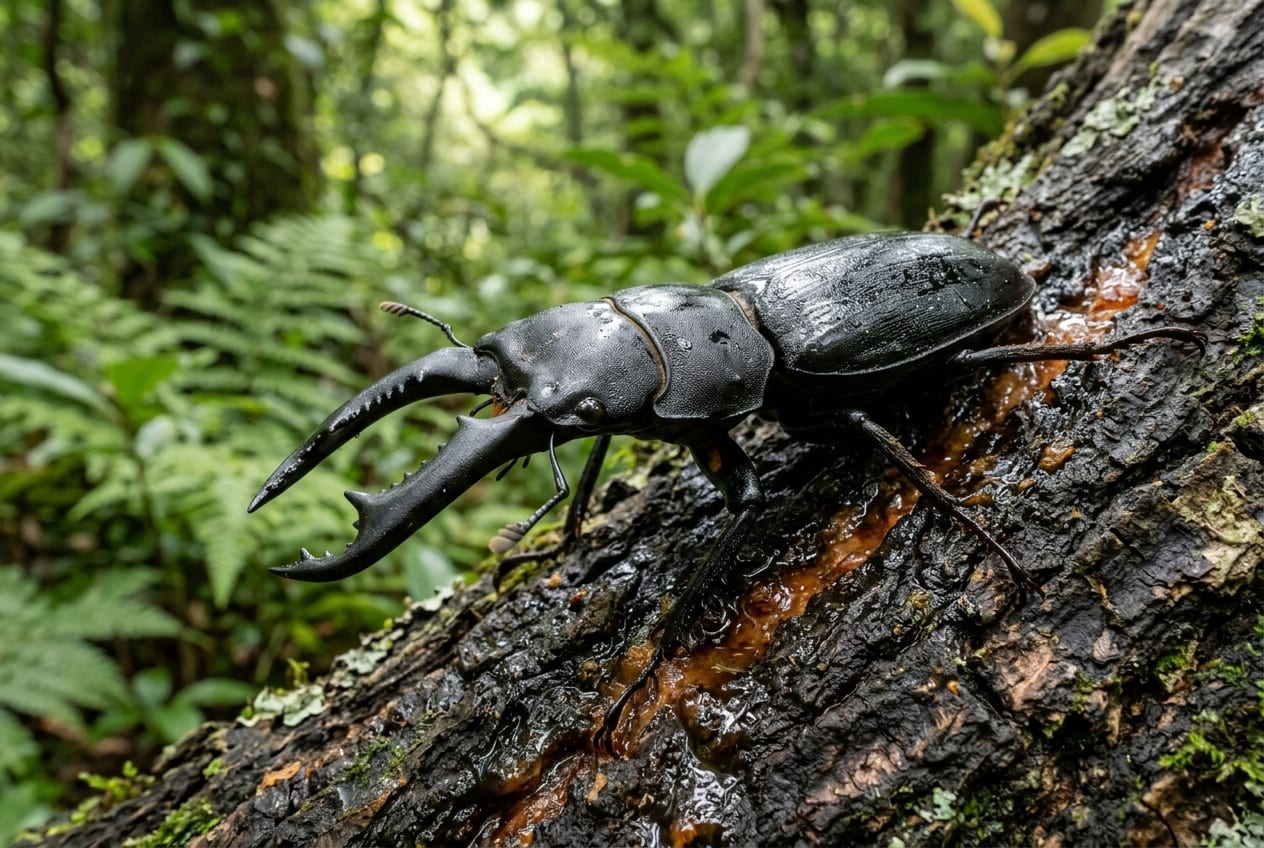
A small flat stag that in Japan occurs only on Tsushima. It walks about near the ground, rarely flies and does not come to lights. Pushed aside by the larger Dorcus titanus castanicolor, it is scarce and locally distributed.
Difficulty
Intermediate
Temperature
18〜24℃
Lifespan
Adults 6 months to 2 years
Size
Males 24.3-62.5 mm / females 20-29 mm (the nominate subspecies on Tsushima: males 24.3-53.9 mm, females 20-26 mm)
Humidity
60〜80%
Diet
Tree sap (sawtooth oak, konara oak, Castanopsis and others), beetle jelly
About
The Korean flat stag (Dorcus consentaneus) ranges over Tsushima, the Korean Peninsula, Jeju, Jindo and China, and in Japan lives only on Tsushima in Nagasaki Prefecture. Males measure 24.3-62.5 mm and females 20-29 mm, though Tsushima stock is mostly 25-35 mm. It is told from Dorcus titanus by the gently curved outer edge of the mandibles, by the indistinct small teeth even on large males, and by the lack of a notch in the middle of the clypeus. It lives in lowland broadleaf forest, appears from June to September, moves about on foot near the ground, and rarely flies or comes to lights. On Tsushima the better habitat is taken by the larger Dorcus titanus castanicolor, so it is commonest in poor coastal woodland and its distribution is local. Females lay in damp leaf mould or in the soil beside rotten wood. In captivity egg-laying is confined to April through June and beetles do not lay in the year they emerge, only after overwintering, so it has a reputation for being reluctant to breed.
Source: Wikipedia (CC BY-SA 4.0)
Lifespan of the Korean Flat Stag Beetle
The Korean Flat Stag Beetle lives Adults 6 months to 2 years.
Size of the Korean Flat Stag Beetle
The Korean Flat Stag Beetle grows to Males 24.3-62.5 mm / females 20-29 mm (the nominate subspecies on Tsushima: males 24.3-53.9 mm, females 20-26 mm).
Temperature & humidity for the Korean Flat Stag Beetle
The ideal temperature for the Korean Flat Stag Beetle is 18〜24℃.
Basic Info
Origin
Japan (Tsushima, Nagasaki), the Korean Peninsula, Jeju Island, Jindo Island and China
Care Specifications
SolitaryBreeding: Moderate
Sources: Mushinavi - Korean flat stag (JA) / Tsukiyono Kinokoen rearing report DB - Korean flat stag, Tsushima stock (18-24 C, 50.3 mm from a single 350 cc fungus bottle) / Tsukiyono Kinokoen egg-laying report DB - Korean flat stag (33 eggs in two weeks from overwintered stock) / Dorcus consentaneus - Wikipedia (JA)
Breeding Records & Localities
Captive record (♂)
60.6 mm
Wild record (♂)
53.9 mm
Record source: BE-KUWA 2025 edition (Korean flat stag, captive 60.6 mm, わたくわ 2023 / wild 53.9 mm, 塚脇智成; projected maximum 64 mm. Females: captive 36.0 mm, 沢村和巳 2012 / wild 29.6 mm, 木崎庸雅 2010)
Notable localities
Tsushima (Nagasaki)Korean PeninsulaJeju IslandJindo Island
Regional subspecies
- Dorcus consentaneus consentaneus — Korean Peninsula, Jeju, Jindo and Tsushima (males 24.3-53.9 mm, females 20-26 mm, Tsushima stock)
- Dorcus consentaneus akahorii — China (Sichuan, Hubei, Hunan); males 29-62.5 mm, females 21.5-29 mm, with rounder mandibles that are broader in the middle
Two hybrids with the sympatric Dorcus titanus castanicolor have been reported on Tsushima.
Generation codes
- WD
- Wild-caught
- WF1
- Offspring of a wild-caught female
- F1〜
References & Sources
Edited & verified by: BreederDirect editorial team
The taxonomic, regulatory, and husbandry data on this page are compiled and verified against the authoritative primary sources below.
Primary sources
- Wikipedia
- CITES Appendix (checklist.cites.org)
- Mushinavi - Korean flat stag (JA)
- Tsukiyono Kinokoen rearing report DB - Korean flat stag, Tsushima stock (18-24 C, 50.3 mm from a single 350 cc fungus bottle)
- Tsukiyono Kinokoen egg-laying report DB - Korean flat stag (33 eggs in two weeks from overwintered stock)
- BE-KUWA Certified Breeding Records (Mushi-sha, FY2025 edition PDF, JA)
- GBIF
Taxonomy & Authority
Accepted name: Dorcus consentaneus (Albers, 1886)
Synonyms: Serrognathus consentaneus, Dorcus (Serrognathus) consentaneus
Authority databases: GBIF
Nomenclature follows global taxonomic authority databases.
Regulations & Conservation Status
Not CITES-listed
Sources: CITES Appendix (checklist.cites.org)
Regulations may change. Always verify the latest information with the relevant authorities.
Korean Flat Stag Beetle Listings
Loading latest listingsFind listings for this species