Source: Wikimedia Commons
Tsushima Flat Stag Beetle
IntermediateDorcus titanus castanicolor
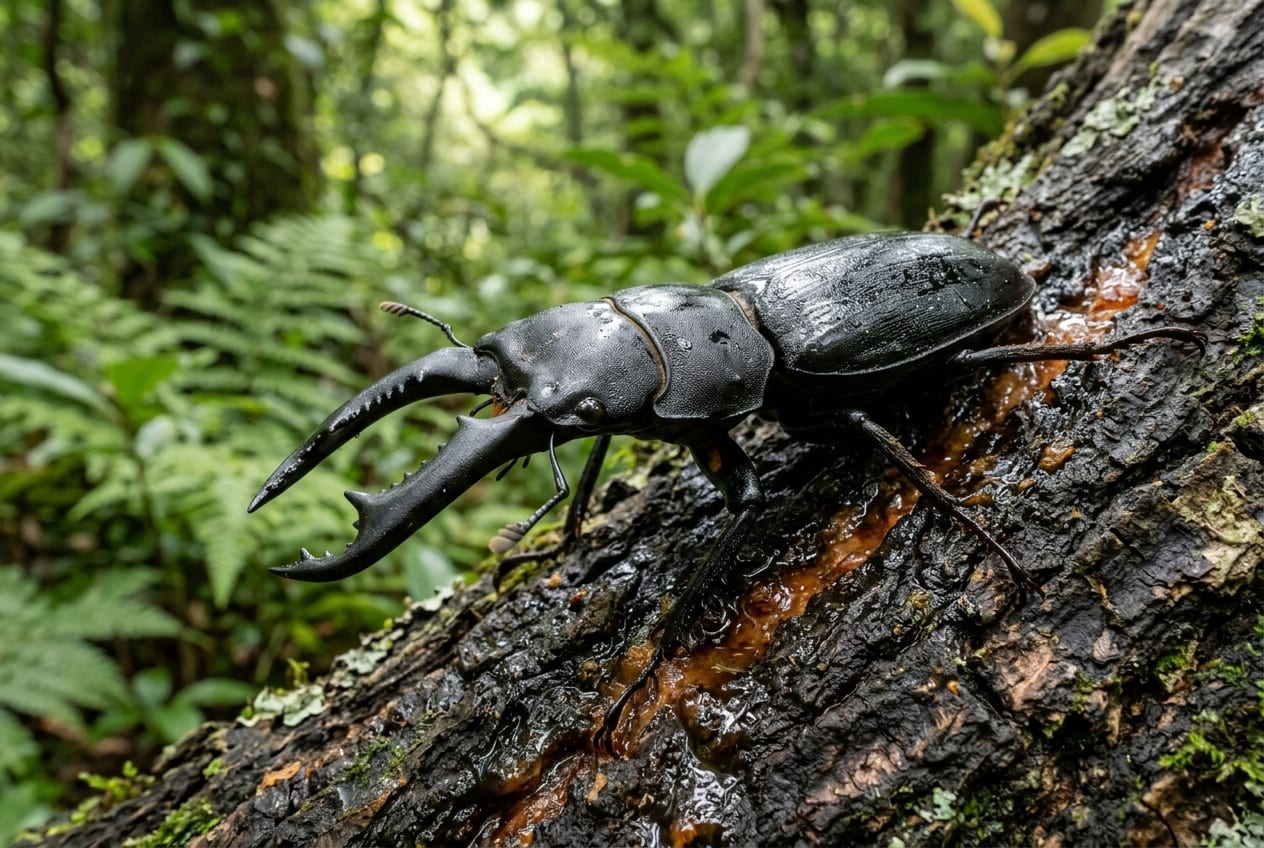
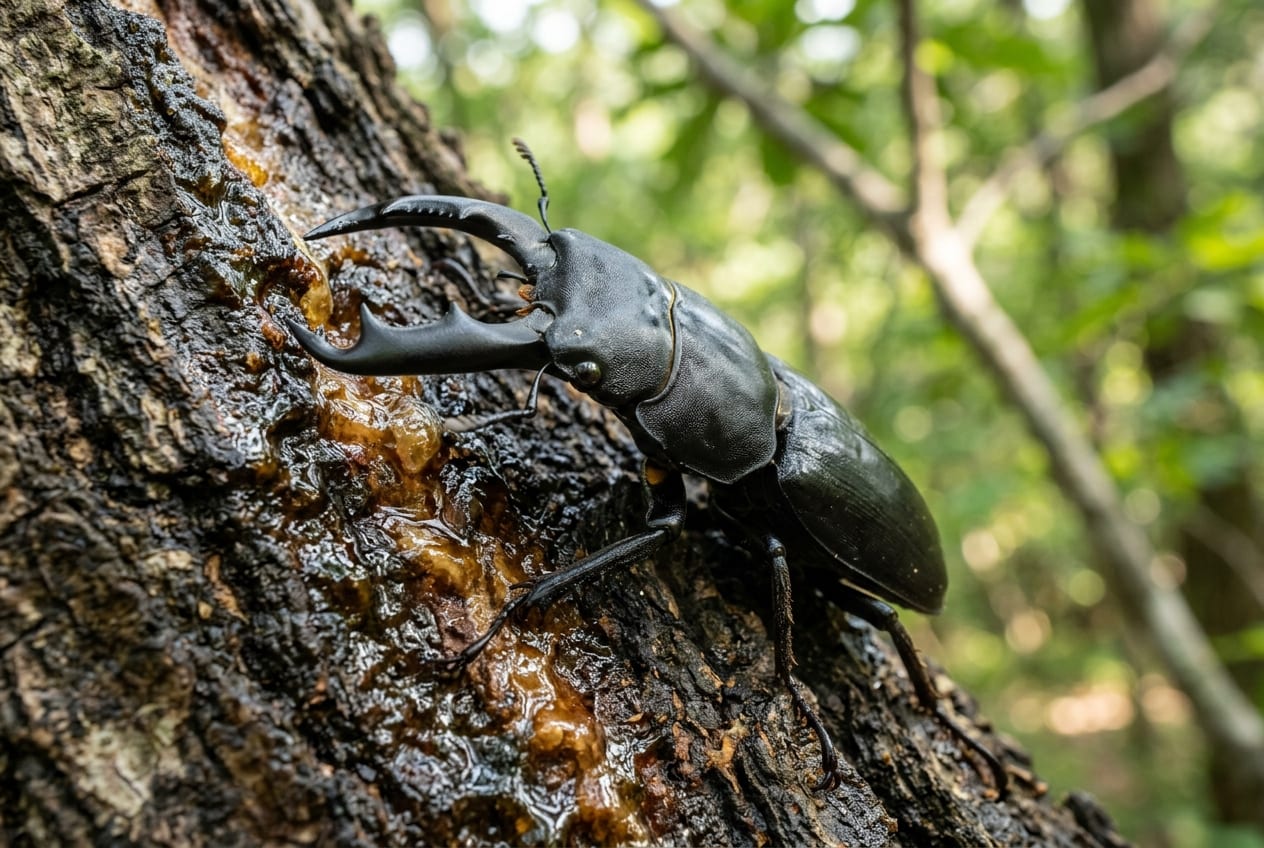
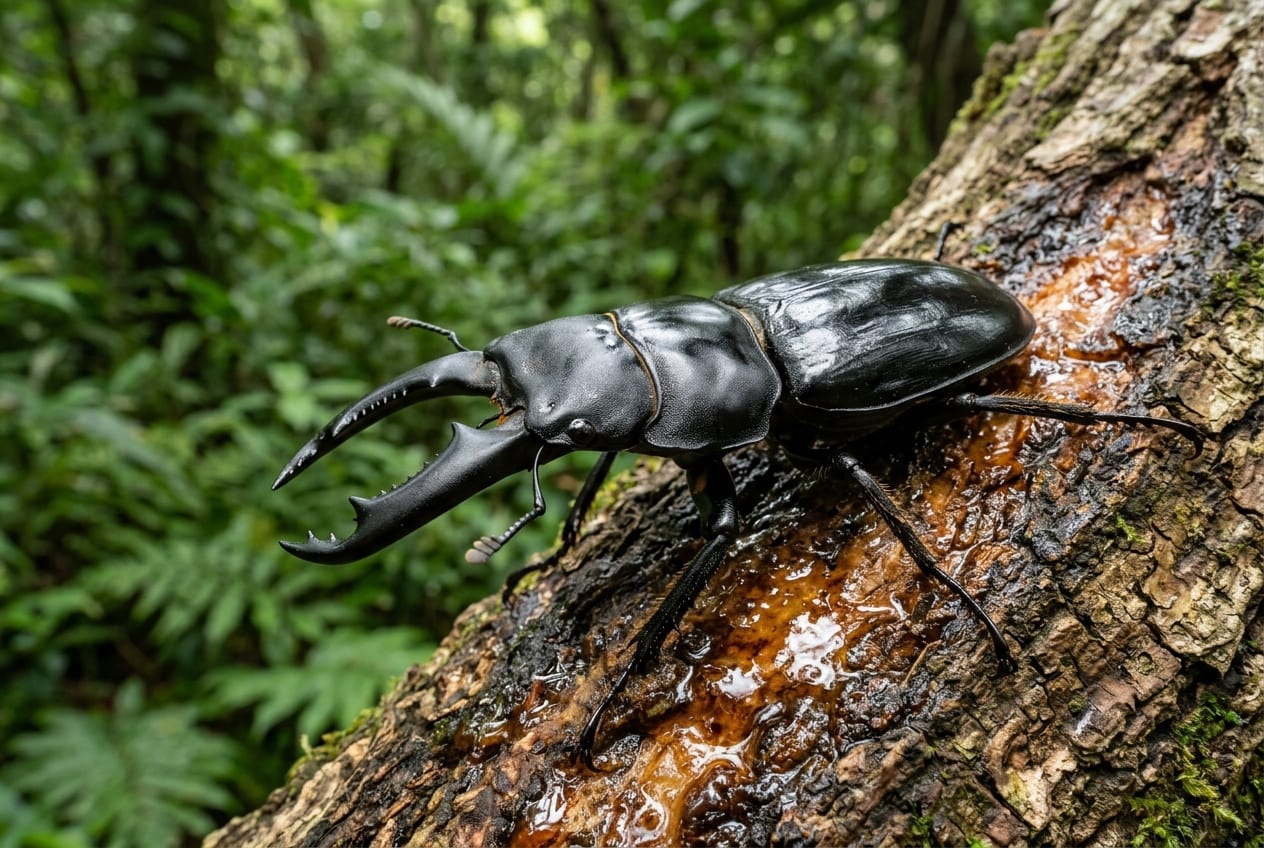
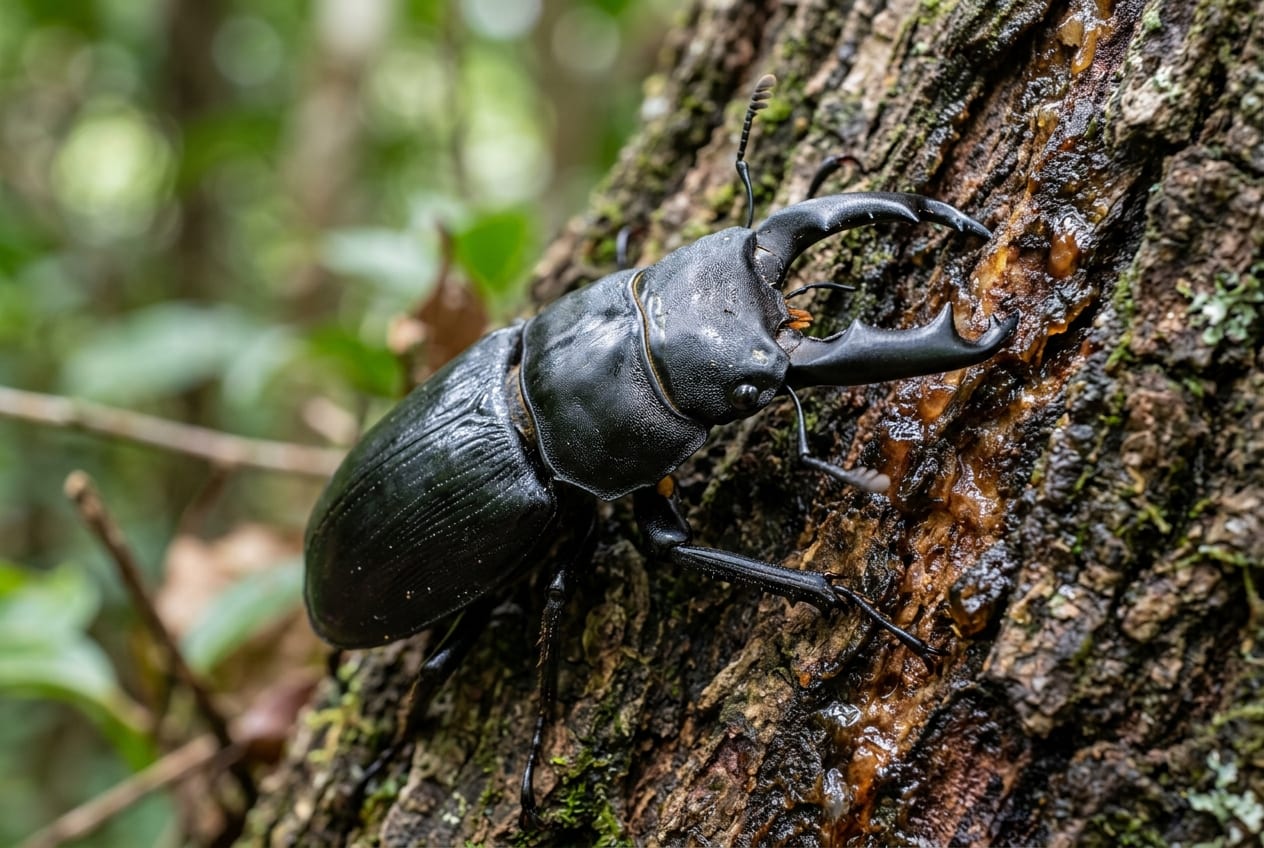
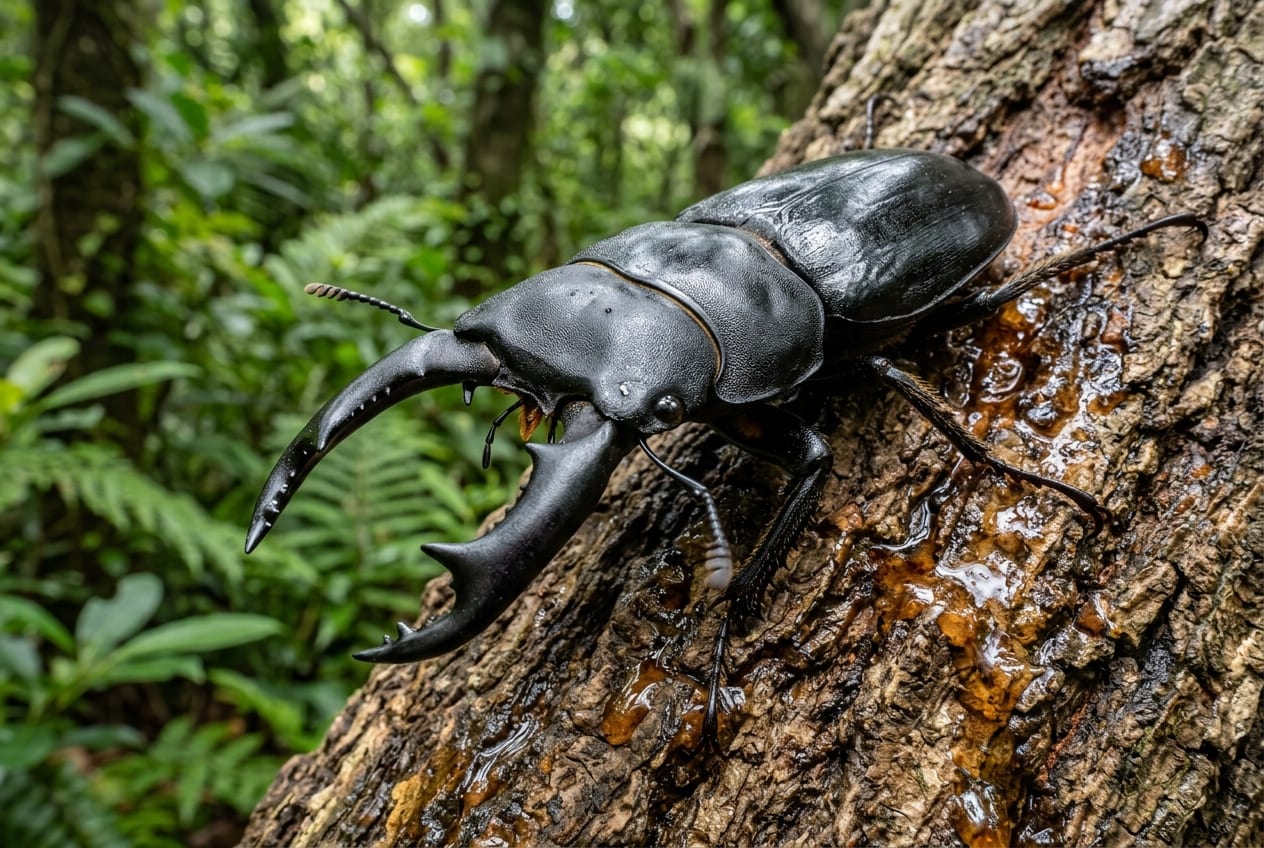
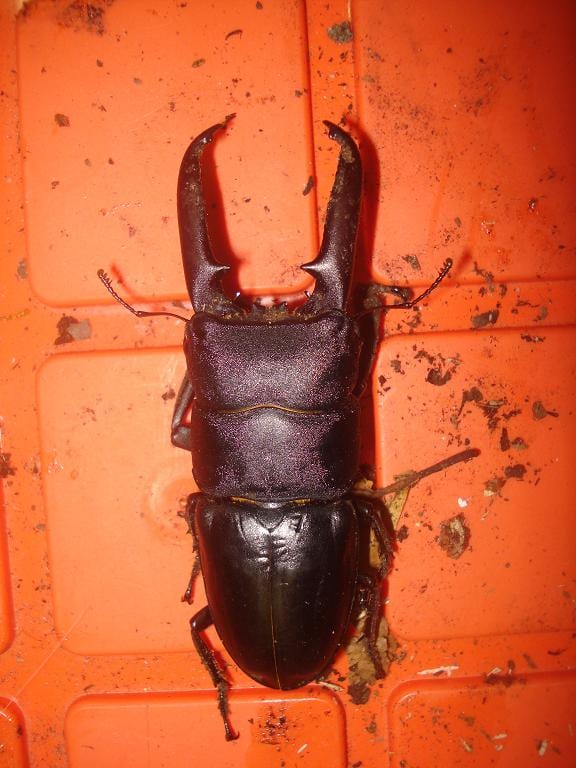
A subspecies of Dorcus titanus from Tsushima (Nagasaki) plus the Korean Peninsula and northern China. Its long, straight mandibles push wild males past 80 mm, making it Japan's longest stag beetle.
Difficulty
Intermediate
Temperature
20〜26℃
Lifespan
Adults 2-3 years
Size
Males 50-87.4 mm / females 25-40 mm
Humidity
60〜80%
Diet
Tree sap, beetle jelly
About
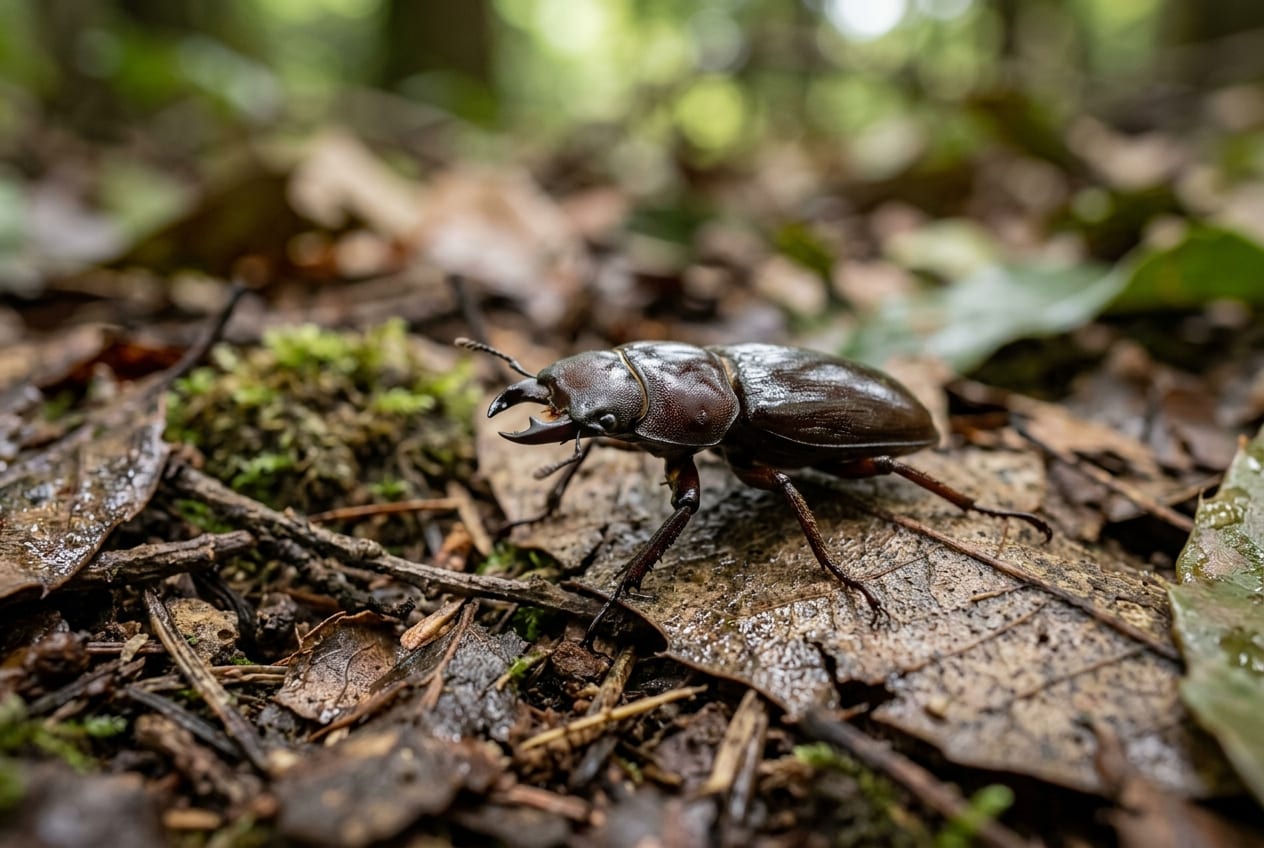
The Tsushima flat stag (Dorcus titanus castanicolor) occurs on Tsushima in Nagasaki Prefecture and on the Korean Peninsula, Jeju, Jindo and Liaoning in northern China; the name means "chestnut-coloured", and some beetles have chestnut-tinged elytra. Males measure 50-87.4 mm and females 25-40 mm. Wild males are mostly 50-65 mm, but an 84 mm beetle has been recorded, making it the longest wild stag beetle in Japan. The mandibles are longer and straighter than in other Japanese flat stags and the body is relatively narrow, with the first inner tooth about one fifth from the base. It is the commonest stag on Tsushima, living in broadleaf forest from lowland to hills and gathering at sap of Mallotus, evergreen oaks and Quercus acutissima from May to October; it is nocturnal and comes to lights. Adults live 2-3 years and larvae take about a year. Keep at about 20-26 C; it breeds easily with logs and substrate. It is very aggressive and males often kill females, so keep singly except for pairing. Korean stock is sold as the same subspecies, and genetic contamination from released beetles is a concern. The BE-KUWA captive record is 87.4 mm (2018; wild 84.0 mm).
Source: Wikipedia (CC BY-SA 4.0)
Lifespan of the Tsushima Flat Stag Beetle
The Tsushima Flat Stag Beetle lives Adults 2-3 years.
Size of the Tsushima Flat Stag Beetle
The Tsushima Flat Stag Beetle grows to Males 50-87.4 mm / females 25-40 mm.
Temperature & humidity for the Tsushima Flat Stag Beetle
The ideal temperature for the Tsushima Flat Stag Beetle is 20〜26℃.
Basic Info
Origin
Care Specifications
Breeding Records & Localities
Captive record (♂)
87.4 mm
Wild record (♂)
84 mm
Record source: BE-KUWA 2025 edition (Tsushima flat stag, captive 87.4 mm, Motoki Nakagawa 2018 / wild 84.0 mm, Ryoichi Matsuo)
Notable localities
Tsushima (Nagasaki)Korean Peninsula (Korean stock sold as the same subspecies)
Regional subspecies
- Dorcus titanus castanicolor — Tsushima, Korean Peninsula, Jeju, Jindo, northern China (Liaoning)
Japan's longest flat stag subspecies in the wild; genetic contamination from released beetles is a concern.
Generation codes
- WD
- Wild-caught
- WF1
- Offspring of a wild-caught female
- F1〜
- Captive generations (same locality)
- CBF1
- Cross-locality captive-bred (reset)
Sources: BE-KUWA Certified Breeding Records (Mushi-sha, FY2025 edition PDF, JA)
References & Sources
Edited & verified by: BreederDirect editorial team
The taxonomic, regulatory, and husbandry data on this page are compiled and verified against the authoritative primary sources below.
Primary sources
- Wikipedia
- Ministry of the Environment, Invasive Species Act: "Guidance for Those Importing Live Insects in Scarabaeoidea"
- CITES Appendix (checklist.cites.org)
- beetlebreeding.ch - The Breeding/Rearing of Dorcus titanus palawanicus by Kay (species-level guidance for D. titanus)
- Dorcus titanus - Wikipedia (JA)
- BE-KUWA Certified Breeding Records (Mushi-sha, FY2025 edition PDF, JA)
Taxonomy & Authority
Accepted name: Dorcus titanus castanicolor Motschulsky, 1861
Synonyms: Serrognathus titanus castanicolor
Nomenclature follows global taxonomic authority databases.
Regulations & Conservation Status
Not CITES-listed
Plant Protection Act: When importing live specimens of Scarabaeoidea (including rhinoceros beetles, stag beetles, flower beetles, etc.), a species identification certificate issued by the exporting country government agency or equivalent must be attached in accordance with the Invasive Species Act (import ports are limited to Narita, Chubu, Kansai, Fukuoka, and Kagoshima airports). This species itself is not a designated invasive species, and import is possible upon submission of the certificate.
Sources: Ministry of the Environment, Invasive Species Act: "Guidance for Those Importing Live Insects in Scarabaeoidea" / CITES Appendix (checklist.cites.org)
Regulations may change. Always verify the latest information with the relevant authorities.
Tsushima Flat Stag Beetle Listings
Loading latest listingsFind listings for this species