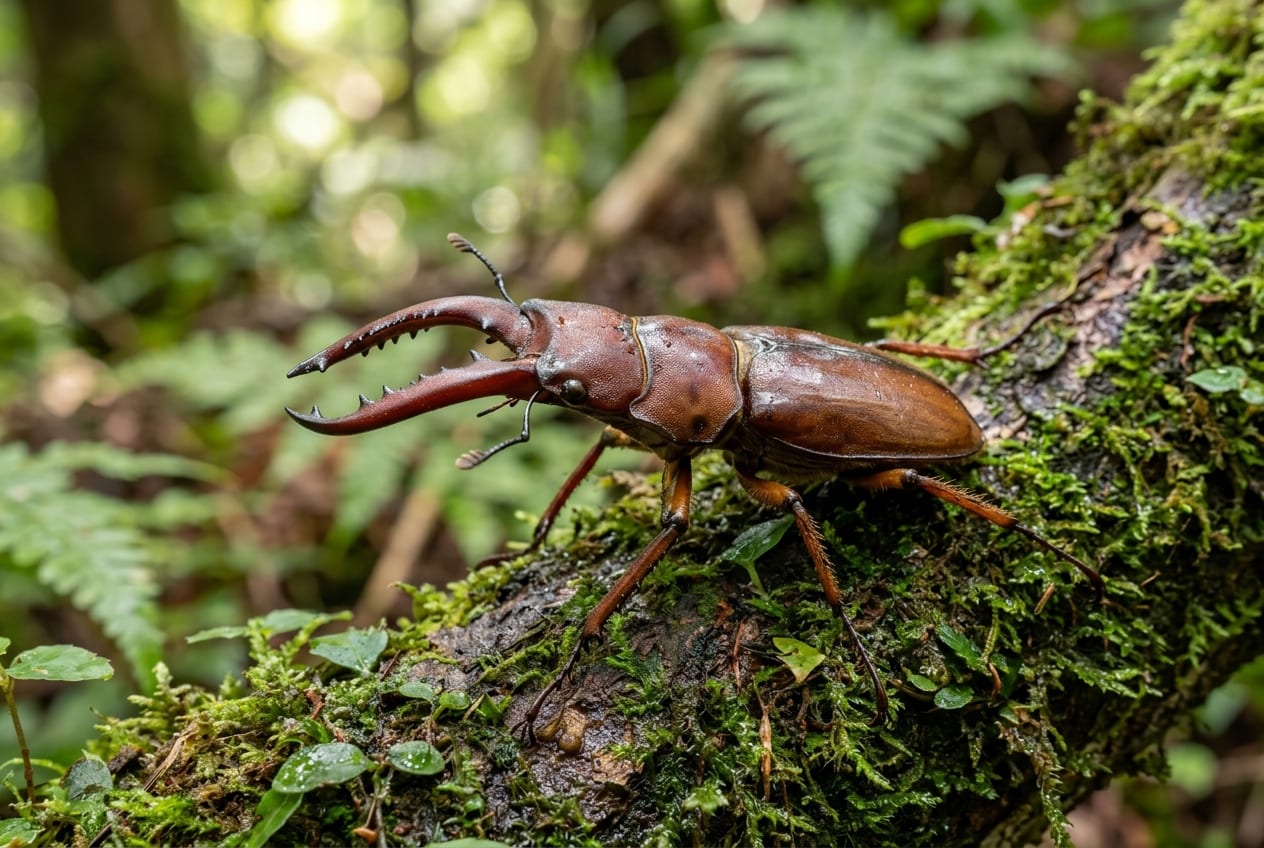
AI-generated image
Ogasawara stag beetle
IntermediateAegus ogasawarensis
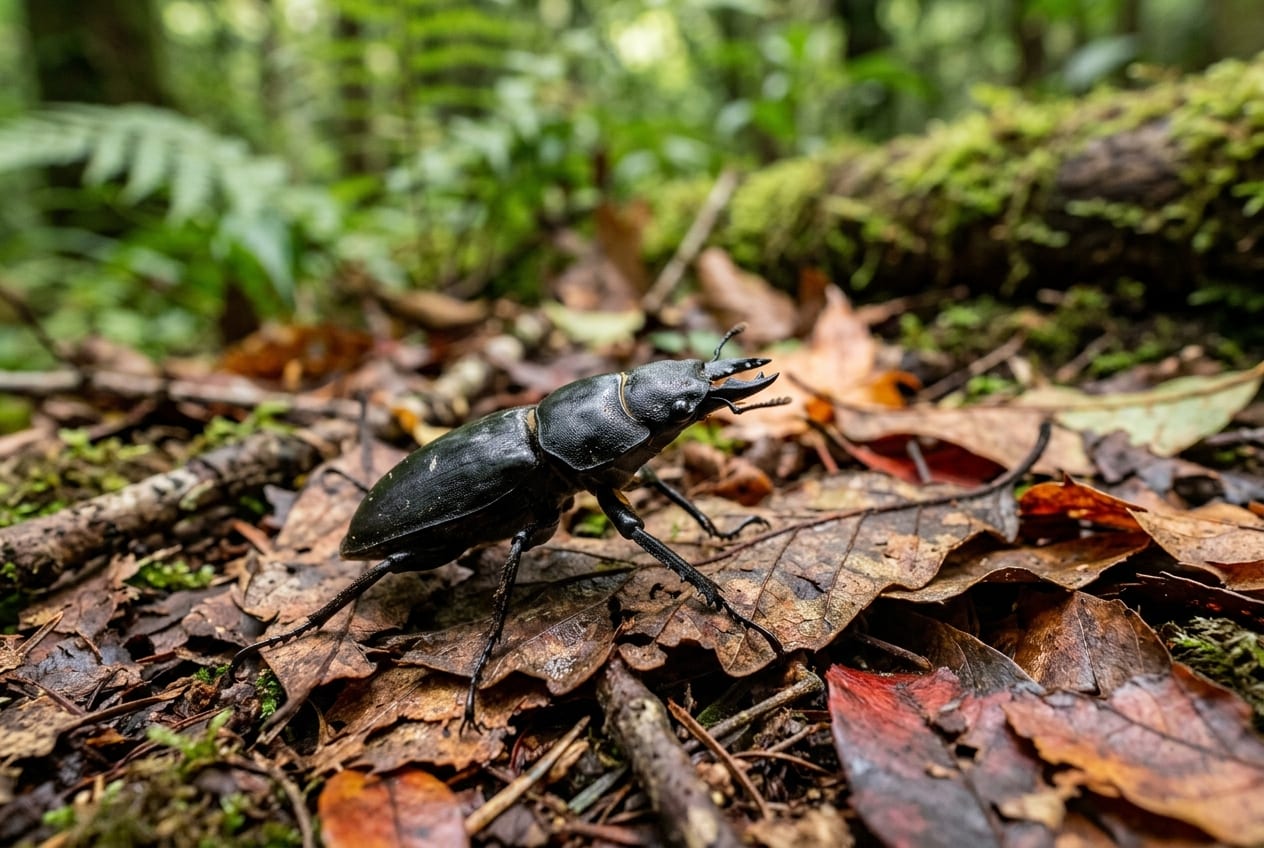
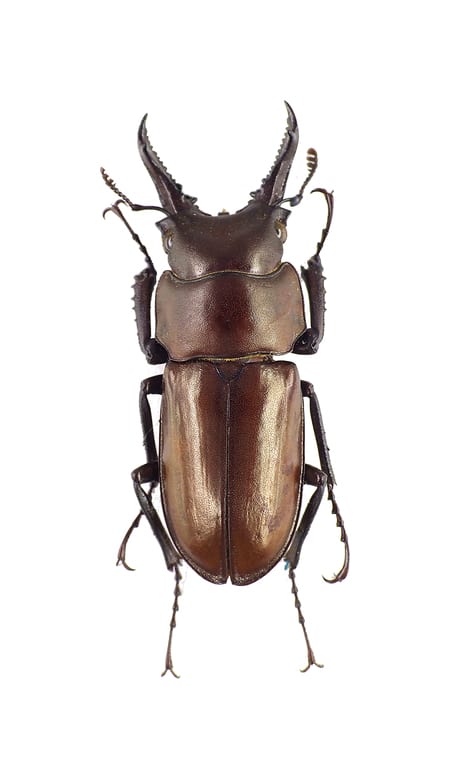
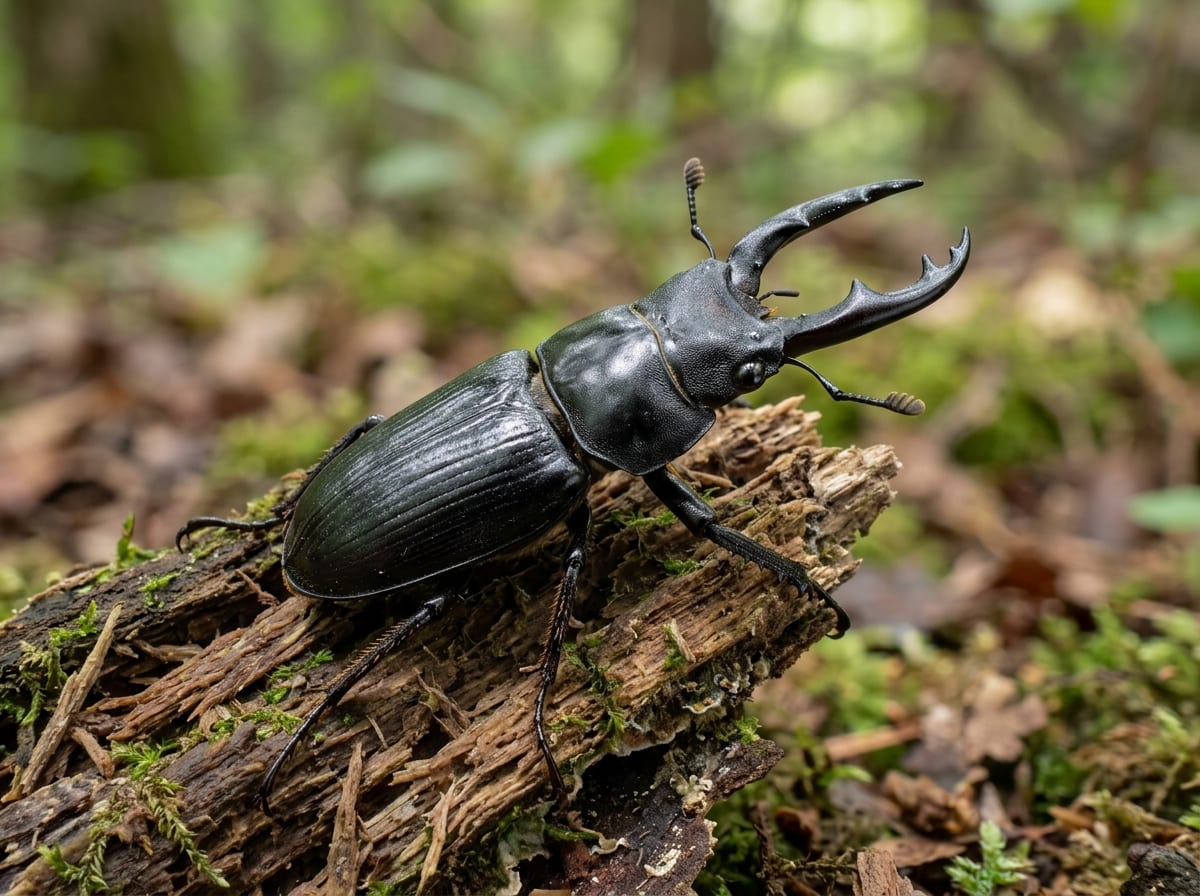
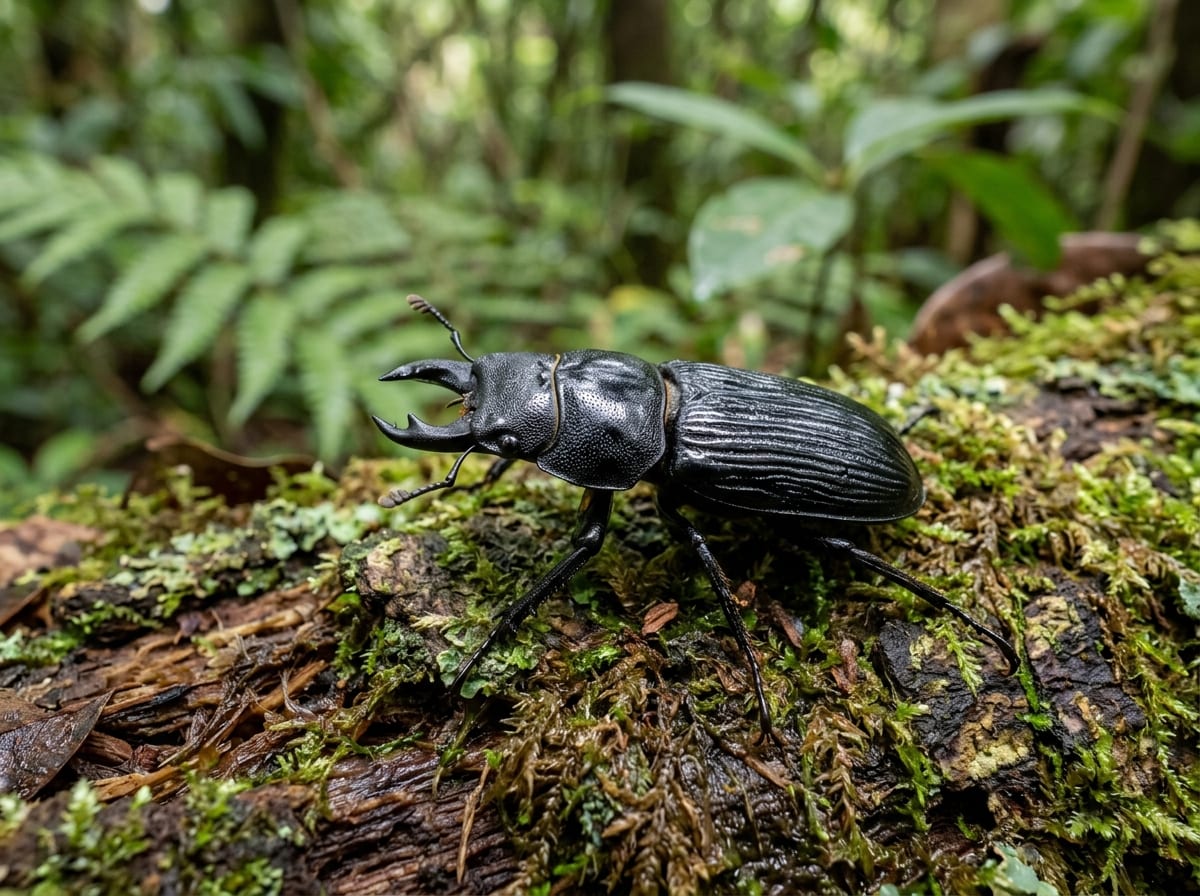
A black Aegus stag beetle found only in the Ogasawara (Bonin) Islands, with thick-based mandibles and heavy grooves on the wing cases. The Chichijima population is a separate subspecies, so stock is kept by island.
Difficulty
Intermediate
Temperature
20〜28℃ (typical for Insect)
Size
Captive record 28.7mm (male), wild record 26.0mm (nominate subspecies)
Humidity
60〜80%
Diet
Adults take sap or beetle jelly; larvae eat well-decayed wood and humus-rich substrate
About
Aegus ogasawarensis Okajima & Kobayashi, 1975 is a stag beetle endemic to the Ogasawara (Bonin) Islands. Aegus is a large genus of more than 200 species centred on Southeast Asia; almost all are black, with thick-based mandibles and heavy longitudinal grooves on the wing cases. The species is split into the nominate subspecies and A. o. chichijimaensis from Chichijima. Aegus larvae are thought to have evolved to feed on the soil-like humus left when termites break down dead wood, and in the related A. laevicollis adults live only one to a few months in the wild. The BE-KUWA 2025 edition lists 28.7mm captive and 26.0mm wild for the nominate form, and 28.0mm captive and 24.0mm wild for the Chichijima subspecies. GBIF holds only a dozen or so records, all from Japan, and much about its ecology in the wild remains unclear. In Japan, captive-bred lines labelled by island appear only occasionally at specialist shops, and keeping stock from different islands apart is the basic rule.
Source: Wikipedia (CC BY-SA 4.0)
Size of the Ogasawara stag beetle
The Ogasawara stag beetle grows to Captive record 28.7mm (male), wild record 26.0mm (nominate subspecies).
Basic Info
Origin
Ogasawara (Bonin) Islands, Japan; the Chichijima population is a separate subspecies
Size
Captive record 28.7mm (male), wild record 26.0mm (nominate subspecies)
Temperature
20〜28℃ (typical for Insect)
Humidity
60〜80%
References & Sources
Edited & verified by: BreederDirect editorial team
The taxonomic, regulatory, and husbandry data on this page are compiled and verified against the authoritative primary sources below.
Primary sources
Taxonomy & Authority
Regulations & Conservation Status
Not CITES-listed
It is neither a nationally rare species nor a designated invasive species (Ministry of the Environment lists, September 2026). As an Ogasawara endemic, never release captive beetles and never cross stock from different islands.
Sources: Ministry of the Environment: Nationally rare species list (JA) / Ministry of the Environment: List of invasive alien species (JA) / Species+ CITES query (no listing)
Regulations may change. Always verify the latest information with the relevant authorities.
Ogasawara stag beetle Listings
Loading latest listingsFind listings for this species