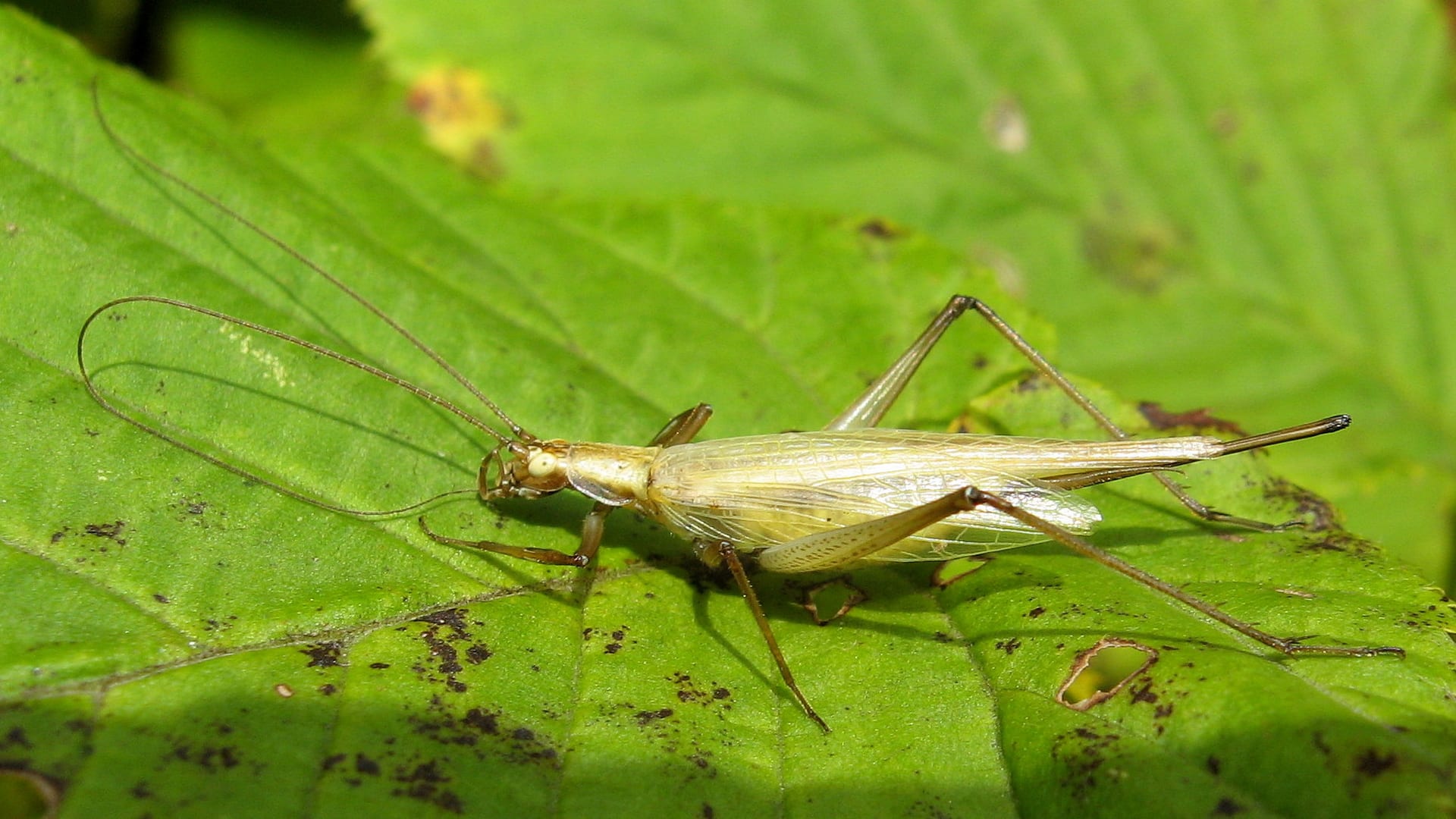
 © alexey_tat / CC0
Kantan tree cricket
The Kantan tree cricket is a delicate, pale yellow insect with a slender body and long antennae, growing to about 11–20mm in length. From late summer into autumn, it produces a continuous, cool-sounding "ru-ru-ru-ru" call. At night, males can be seen singing with their heads peeking out through holes or notches in leaves. It's also a strong flier and will quickly escape from any enclosure without a secure lid, so good ventilation paired with reliable escape-proofing is essential. With its refined appearance and soothing song, the Kantan is best suited to keepers with some prior experience.
View Kantan tree cricket encyclopedia →0% commission on your first sales!Register by September 30, 2026 and your first 2 sales are commission-free!
Breeder Wanted!
List on BreederDirect and sell directly to customers nationwide!
BreederDirect's 6 Transparency Commitments
When listing Insects, Breeders disclose the following. We guarantee transparency on growth stage and breeding unit.
- Life Stage Clarity
- Generation Info
- Real Photos
- Breeding Unit
- Country of Origin
- Body Length (mm)
Browse all 336 breeds
No listings match your filters
Adjust your filters, or get notified when new listings arrive.
Getting alerts is free with a member account. When new listings match your saved search, we'll notify you by email and in-app.
Browse other categories
Verified breeders (preview)
Kantan tree cricket key facts
- Care level
- Intermediate
- Lifespan
- Adults August to November (individual adults are short-lived)
- Size
- 11-20mm long
- Diet
- Omnivorous (aphids and other small insects, mugwort and kudzu leaves; nymphs also pollen and petals)
- Enclosure
- Keep males in separate containers. Within a dozen or so centimetres of each other, or in the same container, they stop singing and fight. They sing best with some air movement rather than in still air.
- Food & Feeding
- An omnivore leaning to meat, it loves aphids, also eats mugwort and kudzu, and nymphs like pollen and petals. Captives do fine on fish food or dog food, better with a little honey mixed in. Without enough sugar and animal food nymphs stop growing and many die.
- Breeding & Egg-laying
- From mid-September females bite into living stems of mugwort and similar plants 5-8mm across and insert a few eggs at a time. Eggs hatch the next mid-June, so provide live mugwort plants for laying.
- Lifespan & Rearing Period
- Adults occur from August to November and song lasts about two months from late summer to late autumn, but each adult lives only a short time.
- Health & Notes
- It flies unusually well for a cricket and escapes at once from uncovered containers. Among Japan's five Oecanthus species only this one has a black abdominal underside (some lack it), a useful check when buying.
About Kantan tree cricket
The Kantan tree cricket (11–20mm) sings a continuous, cool "ru-ru-ru" call at night. A strong flier prone to escaping, it needs a well-ventilated yet securely enclosed habitat.
7 things to know before welcoming a Kantan tree cricket
1Escape-Proofing Is Essential
Kantans are powerful fliers and will dart out through the smallest gap or an uncovered container. Use a case with a tightly fitting, fine-mesh lid, and stay alert whenever you open it.
2Nocturnal Singer
Kantans stay quietly hidden among leaves during the day and become active singers at night. Their call is a continuous, cool "ru-ru-ru-ru" sound, making them a companion best enjoyed in the evening.
3Short Adult Lifespan
Adults are typically seen from August through November, and each individual's adult life is relatively short. If you want to enjoy the song over a longer stretch, plan ahead for generational turnover.
4Sings From Holes in Leaves
At night, males sing with their heads peeking out through holes or notches in leaves. Providing leaves or plants such as kudzu or mugwort in the enclosure gives them places to sing and makes this natural behavior easier to observe.
5Good Ventilation Matters
Kantans are sensitive to poor airflow, so a well-ventilated case is important. At the same time, that ventilation needs to be balanced with secure escape-proofing.
6Best for Intermediate Keepers
Caring for a Kantan is considered an intermediate-level task. It suits keepers who already have a handle on basic temperature, humidity, and escape-proofing needs; first-timers with singing insects might want to start with an easier species.
7Prepare the Enclosure First
Before bringing a Kantan home, prepare a lidded case with fine mesh for escape prevention, along with leaves or a plant to serve as a singing perch. Having the environment ready in advance helps it settle in quickly.
Frequently asked questions about Kantan tree cricket
- Q.What does the Kantan's call sound like?
- A.It produces a continuous, cool, and pleasant "ru-ru-ru-ru" sound. It tends to sing most actively at night.
- Q.Can I hear it singing during the day?
- A.Kantans mostly stay hidden and quiet during the day, singing mainly at night. If you want to enjoy the call in full, observing them in the evening is best.
- Q.Is the Kantan suitable for beginners?
- A.Kantan care is considered intermediate-level. Since they're strong fliers prone to escaping, some basic prior knowledge helps you keep them safely.
- Q.How long can I see the adult Kantan?
- A.Adults are mainly seen from around August through November, and each individual's adult life is relatively short. Once this period passes, adults are no longer around.
- Q.How can I prevent it from escaping?
- A.Because Kantans are powerful fliers, use a case sealed with a fine-mesh lid to contain them securely. Be careful of gaps whenever you open or close the case.
Useful tools for Kantan tree cricket care
Learn more about Kantan tree cricket in the encyclopedia
View Kantan tree cricket encyclopedia entry →
Care difficulty, lifespan, size and diet — all basics covered.
More in this category
Can't find the one you're looking for?
Post your wishes for free and breeders with matching animals will contact you with introductions.