Source: Wikimedia Commons
Kantan tree cricket
IntermediateOecanthus longicauda
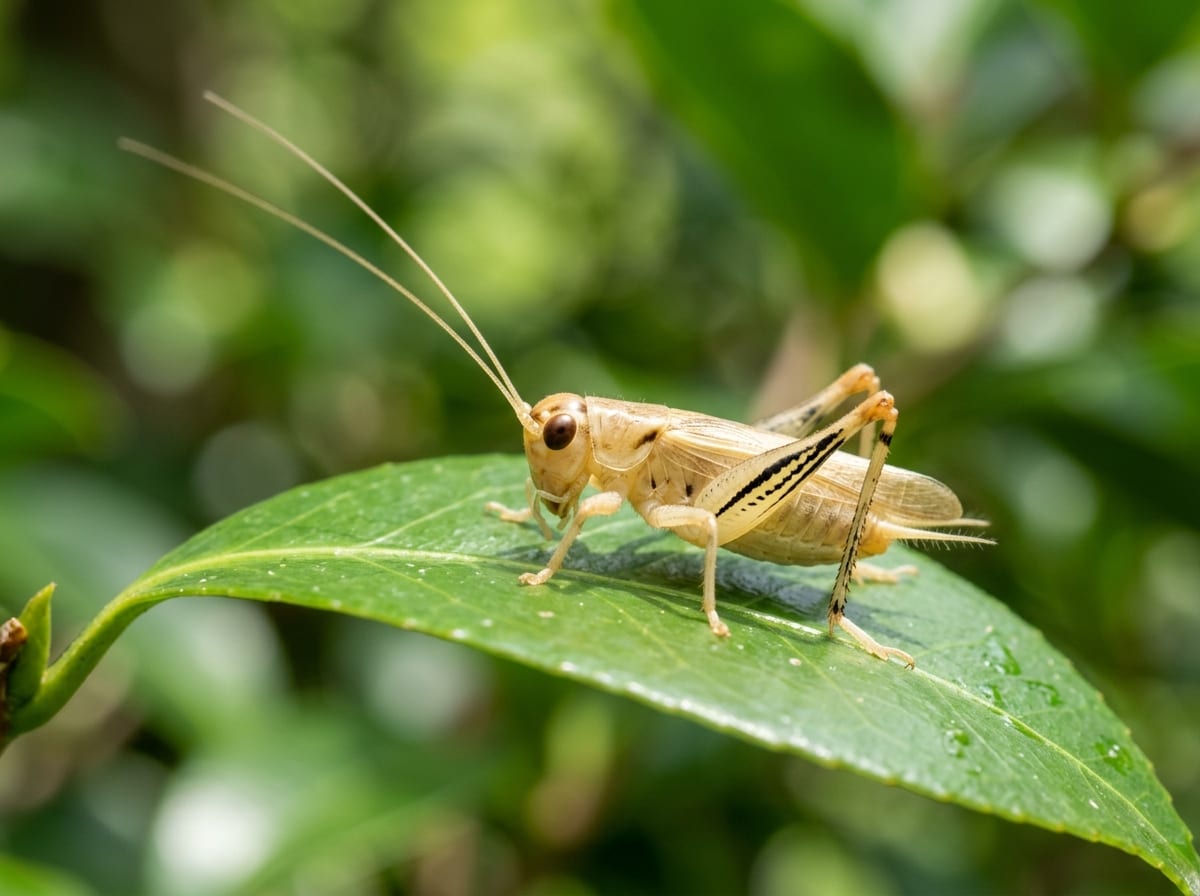
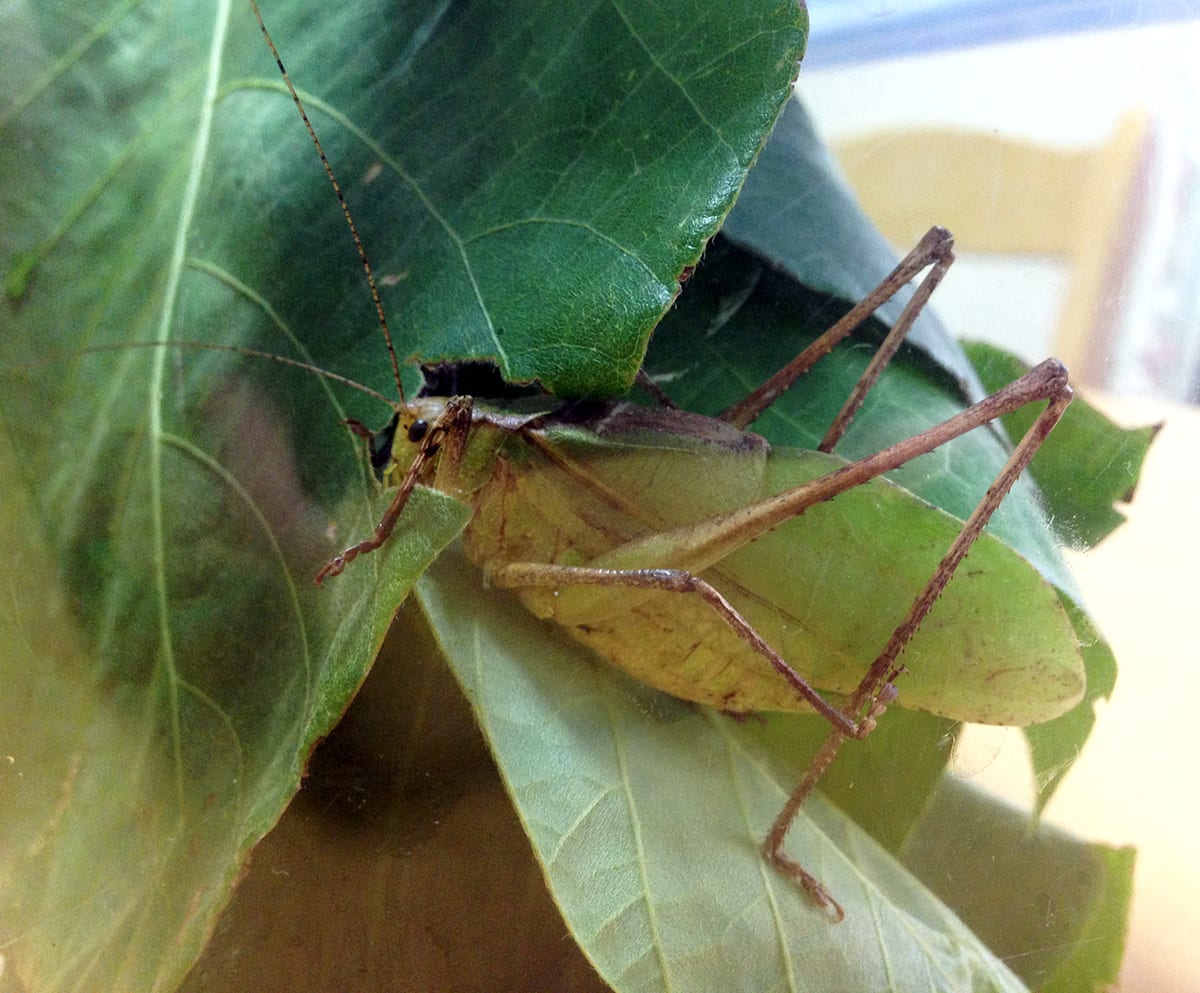
At night it peers through holes in leaves and trills continuously. It flies well and quickly escapes from uncovered containers.
Difficulty
Intermediate
Temperature
20〜28℃
Lifespan
Adults August to November (individual adults are short-lived)
Size
11-20mm long
Humidity
60〜80%
Diet
Omnivorous (aphids and other small insects, mugwort and kudzu leaves; nymphs also pollen and petals)
About
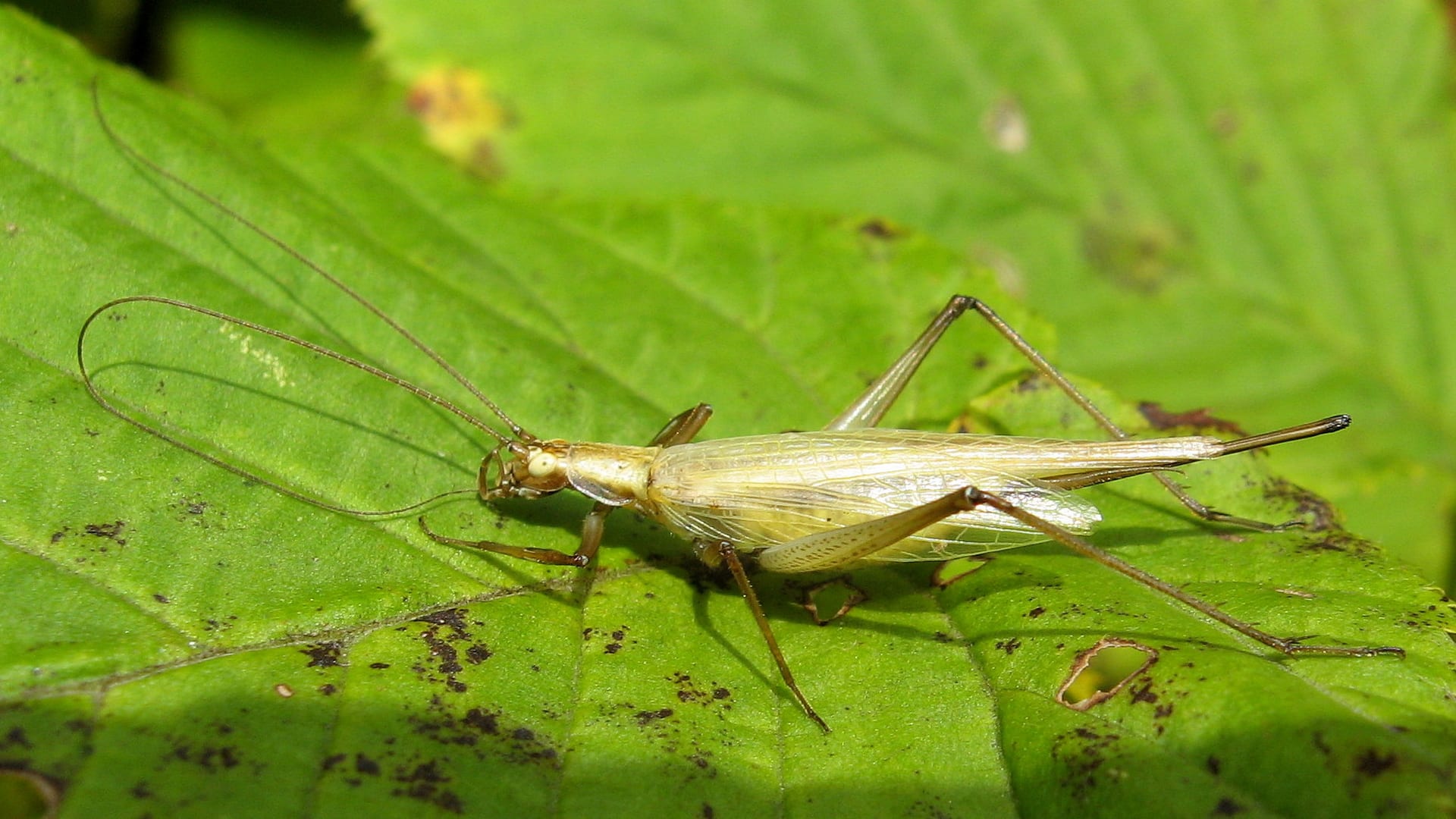
Oecanthus longicauda Matsumura, 1904 is a tree cricket (Oecanthidae) of the Russian Far East and Siberia, Japan (Hokkaido, Honshu, Shikoku, Kyushu), Korea and China. The name appears in Meiji-era texts, and the kanji for Handan are a phonetic borrowing. It is 11-20mm long, about the size of the bell cricket, slender and pale yellow with long antennae, and adults usually have a black underside to the abdomen. Japan's five Oecanthus species are much alike, but only this one has the black abdominal underside, a useful clue though some individuals lack it. It favours humid, dense stands of kudzu, mugwort and pampas grass and is common on riverbanks. Adults occur from August to November; males sing a continuous trill at night with the head poking through a hole or notch in a leaf. Song can be heard for about two months from late summer to late autumn, but individual adults are short-lived. It is an omnivore leaning to meat, fond of aphids, and also eats mugwort and kudzu leaves. From mid-September it lays in the living stems of mugwort and similar plants, and eggs hatch the next mid-June. It is the official insect of Asahikawa. In Japan live insects are sold in autumn by singing-insect specialists.
Source: Wikipedia (CC BY-SA 4.0)
Size of the Kantan tree cricket
The Kantan tree cricket grows to 11-20mm long.
Basic Info
Origin
Russia (Primorye, Siberia), Japan (Hokkaido, Honshu, Shikoku, Kyushu), Korea and China
Lifespan
Adults August to November (individual adults are short-lived)
Size
11-20mm long
Temperature
References & Sources
Edited & verified by: BreederDirect editorial team
The taxonomic, regulatory, and husbandry data on this page are compiled and verified against the authoritative primary sources below.
Taxonomy & Authority
Regulations & Conservation Status
Not CITES-listed
Not covered by CITES or the Invasive Alien Species Act. It is a native species, so follow local rules when collecting and never release captives away from their place of origin.
Sources: Ministry of the Environment: List of invasive alien species (JA) / Species+ CITES query (no listing)
Regulations may change. Always verify the latest information with the relevant authorities.
Kantan tree cricket Listings
Loading latest listingsFind listings for this species