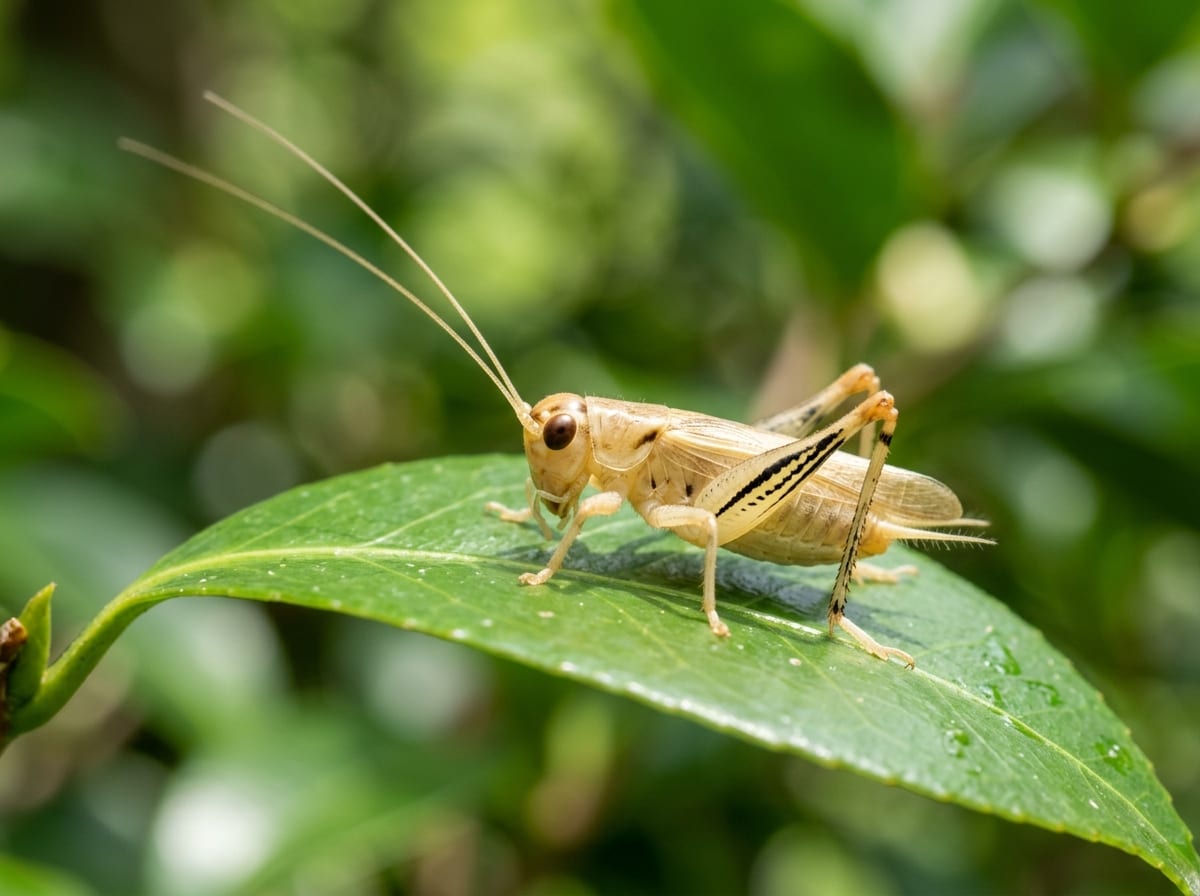
AI-generated image
Kusa-hibari cricket
IntermediateSvistella bifasciata
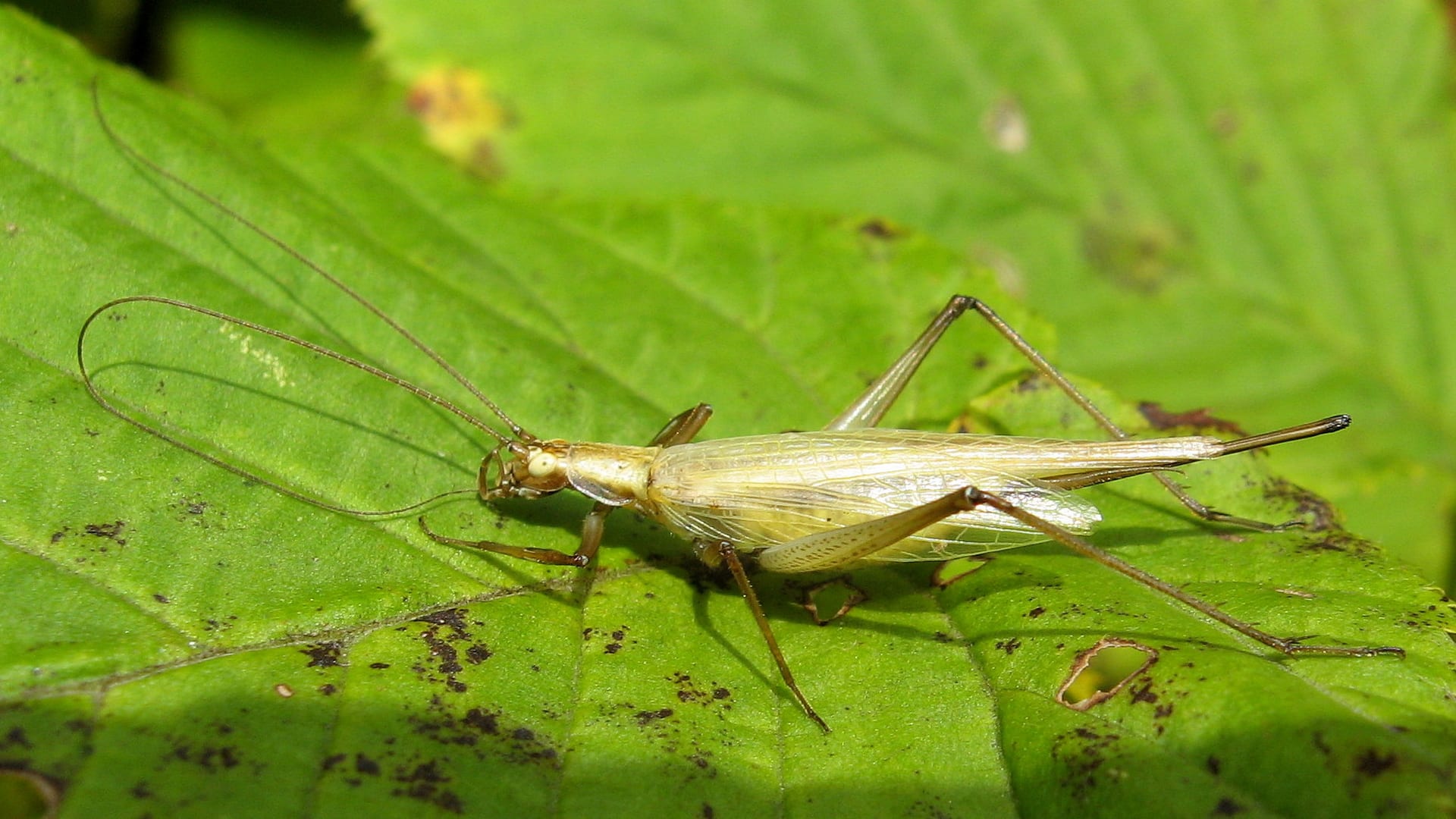
A tiny singing cricket about 7-8mm long that trills a clear, high 'firiririri' day and night from thickets at woodland edges. Also called asa-suzu for its dawn singing. The hind femur bears two black stripes.
Difficulty
Intermediate
Temperature
20〜28℃
Lifespan
Adults from early August to early November
Size
6.9-8mm long
Humidity
60〜80%
Diet
Wild diet poorly documented
About
Svistella bifasciata (Shiraki, 1911) is a small singing cricket of the family Trigonidiidae, about 6.9-8mm long. In Japan it occurs on Honshu, Shikoku, Kyushu, the Izu Islands and the Nansei Islands, and GBIF also holds many records from Korea, China and Taiwan. It lives in shrubs at woodland edges and dense thickets on riverbanks, and also in open grassland. Adults appear from early August to early November and sing a high, beautiful 'firiririri' day and night; its habit of singing at dawn earned it the name asa-suzu, and its song has long been admired. Small, quick and usually hidden in thickets, it is hard to see. The hind femur has two black stripes and the wing veins are finely edged; females are rounded and sturdy. Females insert the ovipositor into tree trunks or shrub stems to lay and then plaster the hole shut with soil, an unusual behaviour among Orthoptera. It can be mistaken for Usugumo-suzu by appearance and for Higeshiro-suzu by song. Little is recorded about its diet in the wild. In Japan singing-insect specialists sell adults in season.
Size of the Kusa-hibari cricket
The Kusa-hibari cricket grows to 6.9-8mm long.
Basic Info
Origin
Honshu, Shikoku, Kyushu, Izu and Nansei Islands, Korea, China and Taiwan
Lifespan
Adults from early August to early November
Size
6.9-8mm long
Temperature
20〜28℃
Humidity
60〜80%
Diet
References & Sources
Edited & verified by: BreederDirect editorial team
The taxonomic, regulatory, and husbandry data on this page are compiled and verified against the authoritative primary sources below.
Taxonomy & Authority
Regulations & Conservation Status
Not CITES-listed
Not covered by CITES or the Invasive Alien Species Act. It is a native species, so follow local rules when collecting and never release captives away from their place of origin.
Sources: Ministry of the Environment: List of invasive alien species (JA) / Species+ CITES query (no listing)
Regulations may change. Always verify the latest information with the relevant authorities.
Kusa-hibari cricket Listings
Loading latest listingsFind listings for this species