Source: Wikimedia Commons
Kutsuwamushi
IntermediateMecopoda niponensis
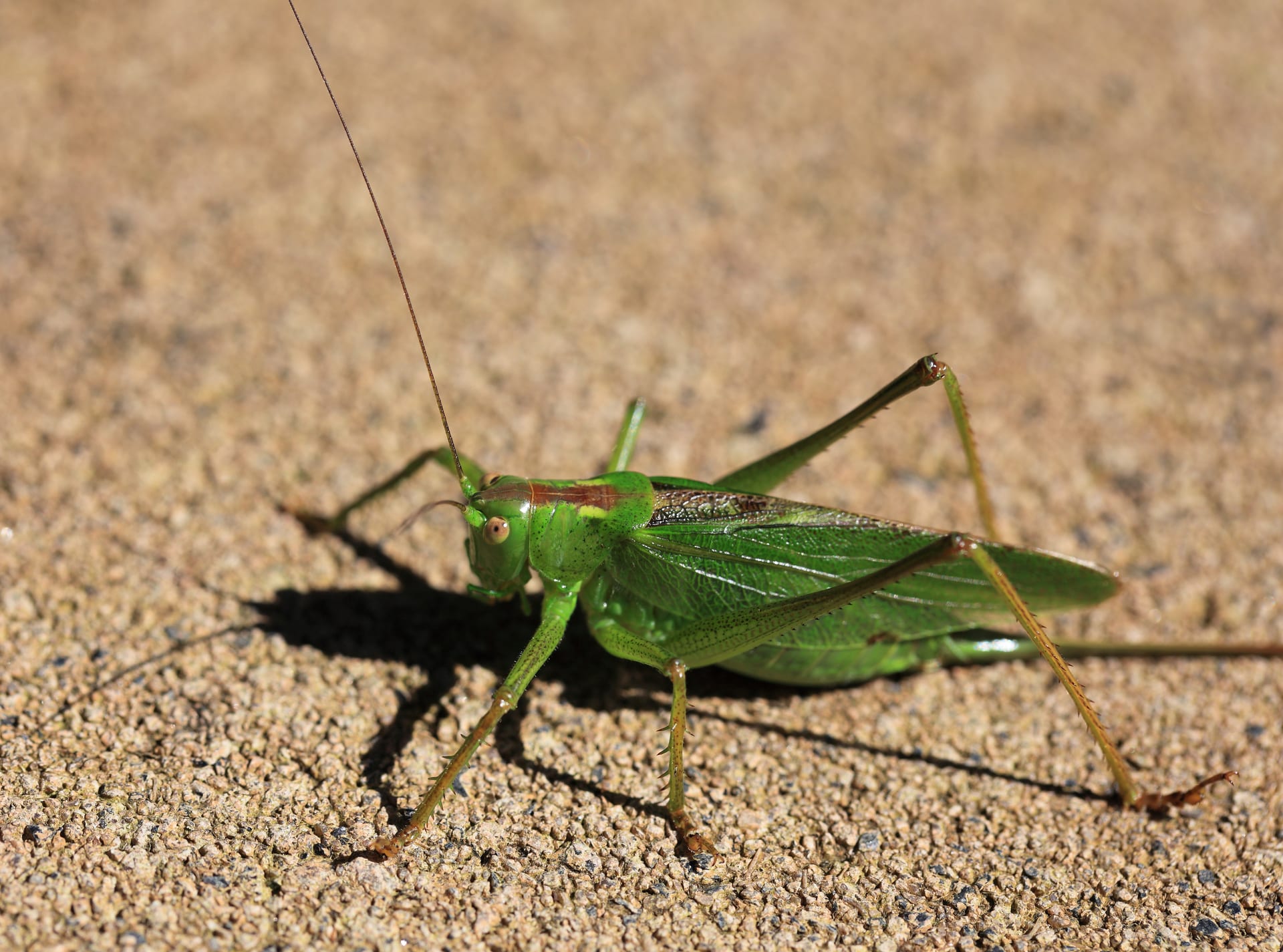
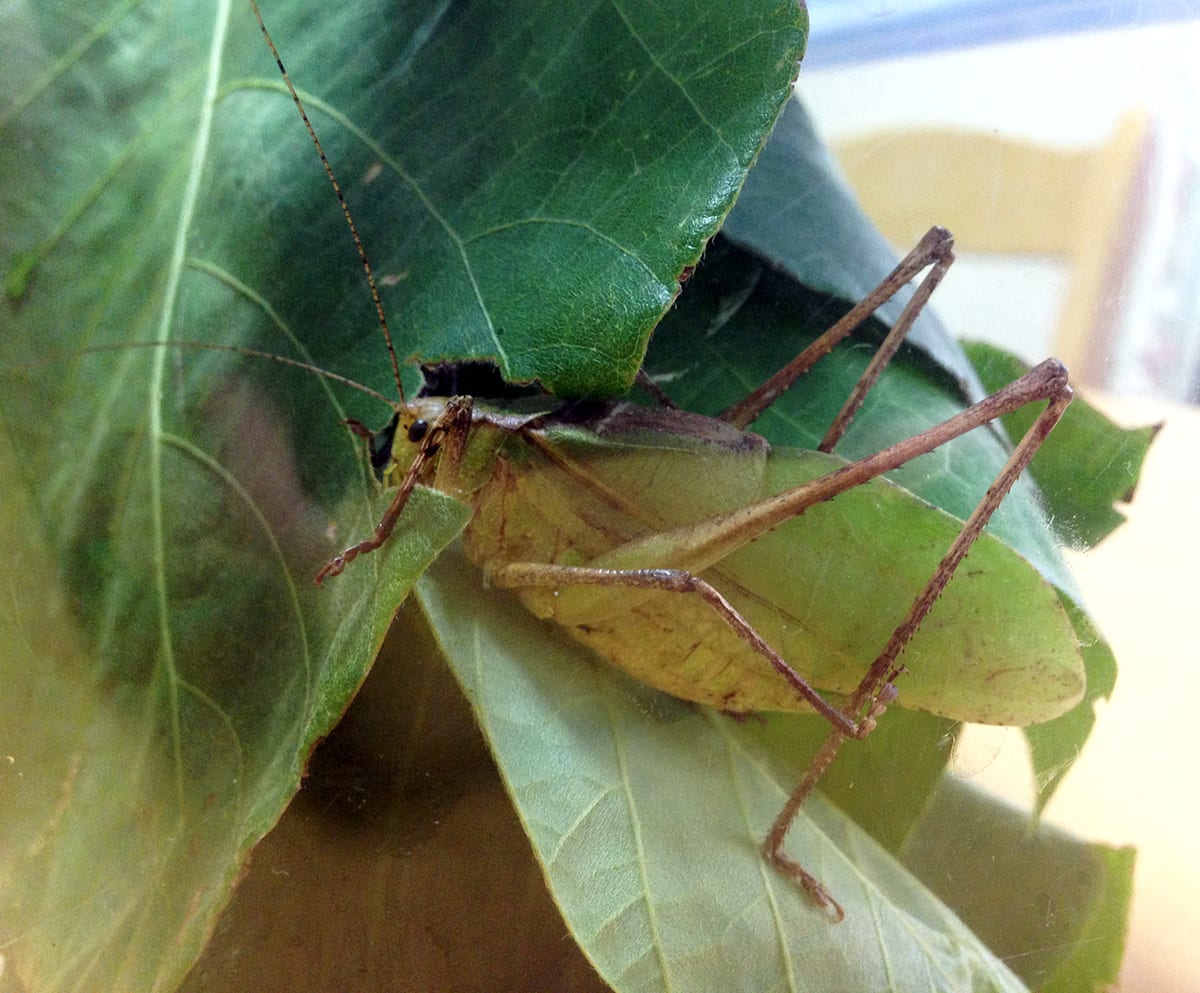
A tall, bulky katydid in green or brown forms that calls a loud 'gacha-gacha' at night. Unusually for its predatory relatives, in the wild it eats almost nothing but kudzu leaves.
Difficulty
Intermediate
Temperature
20〜28℃
Lifespan
Adults from late July to October (captives have lived until February)
Size
Up to about 70mm
Humidity
60〜80%
Diet
Herbivorous (mainly kudzu and other legume leaves)
About
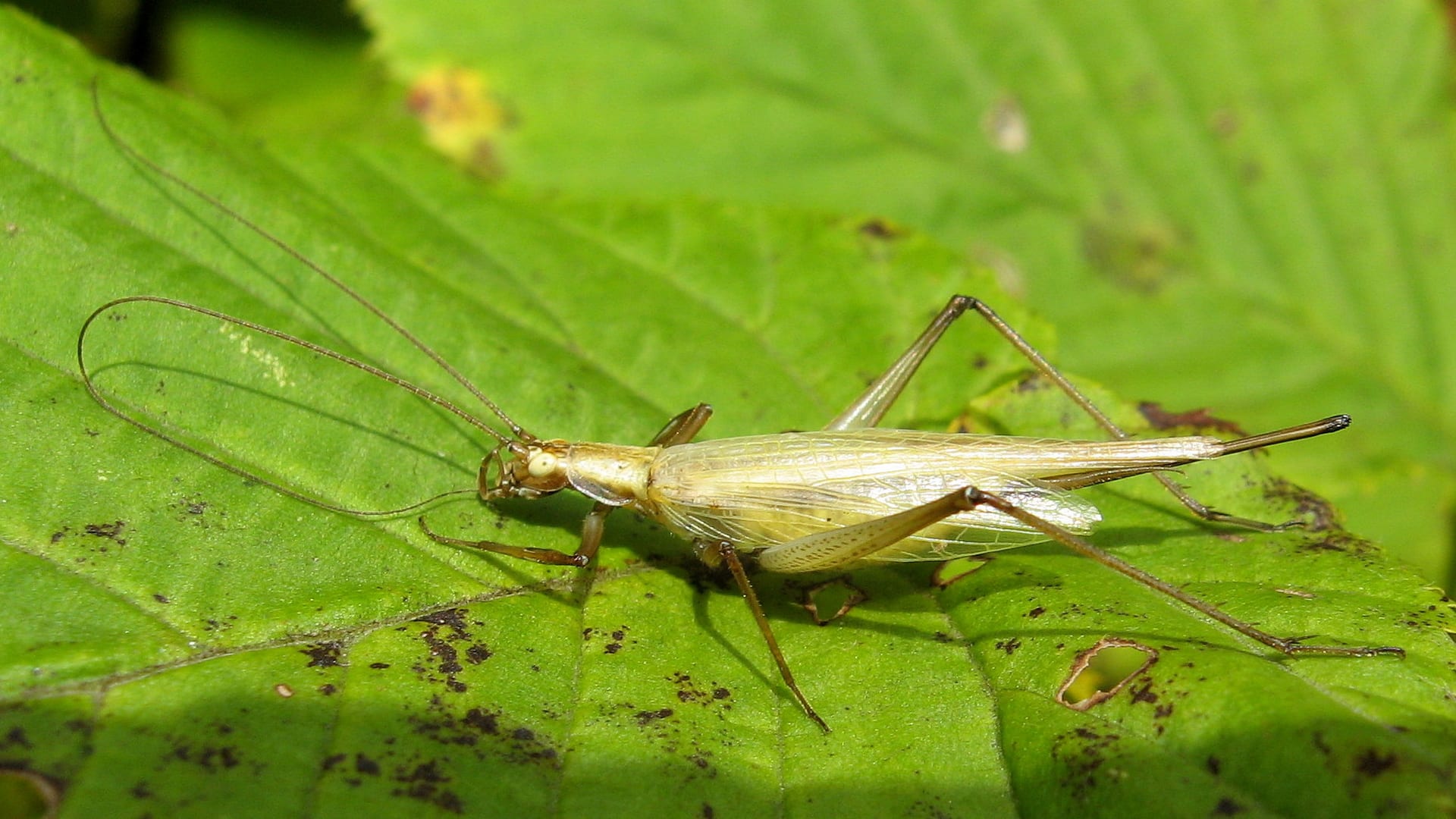
Mecopoda niponensis (Haan, 1843) is a katydid (Tettigoniidae) of Honshu from Ibaraki and Niigata southward, Awaji, Shikoku, Kyushu, Oki and Tsushima, as well as Korea and eastern China. It is big, tall and bulky, with the largest side profile of any Japanese katydid, growing to about 70mm. Green and brown individuals occur side by side. It is nocturnal with a very loud call, avoids open ground and lives in undergrowth at woodland edges. Unusually for this carnivorous group it is a herbivore, favouring legumes, especially kudzu, and it grows perfectly well on kudzu alone. Adults appear from late July and are heard in the wild until the end of October. Females lay in soil with a sword-shaped ovipositor, and nymphs hatch the following year from late April to early June. Tied to kudzu thickets, slow-moving and a poor flier, it is vulnerable to habitat loss and is declining, with local populations dying out in many places. It is told from the related M. elongata by wing shape and a darkened pronotum. In Japan live insects are sold in autumn, mainly by shops specialising in singing insects.
Source: Wikipedia (CC BY-SA 4.0)
Size of the Kutsuwamushi
The Kutsuwamushi grows to Up to about 70mm.
Basic Info
Origin
Honshu (from Ibaraki and Niigata south), Shikoku, Kyushu, Oki, Tsushima, Korea and eastern China
Lifespan
Adults from late July to October (captives have lived until February)
Size
Up to about 70mm
Temperature
20〜28℃
References & Sources
Edited & verified by: BreederDirect editorial team
The taxonomic, regulatory, and husbandry data on this page are compiled and verified against the authoritative primary sources below.
Taxonomy & Authority
Regulations & Conservation Status
Not CITES-listed
Not covered by CITES or the Invasive Alien Species Act. It is a native species declining with habitat loss, so follow local rules when collecting and never release captives away from their place of origin.
Sources: Ministry of the Environment: List of invasive alien species (JA) / Species+ CITES query (no listing)
Regulations may change. Always verify the latest information with the relevant authorities.
Kutsuwamushi Listings
Loading latest listingsFind listings for this species