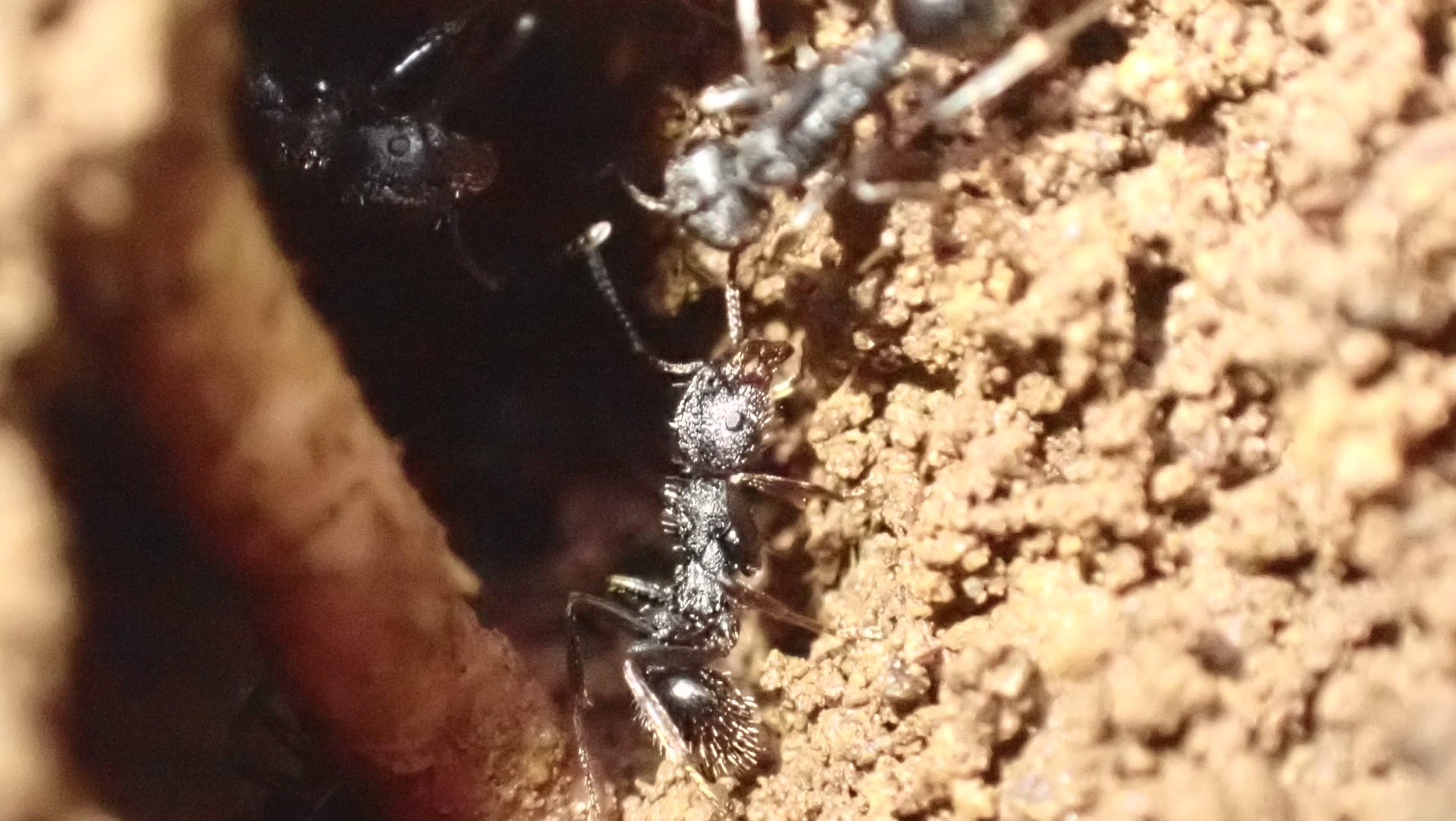
 © Ant moon / CC BY-SA 4.0
Japanese Harvester Ant
The Japanese harvester ant is a native seed-collecting species that gathers grass seeds and stores them inside its nest. Its most distinctive trait is that workers only appear above ground during brief windows in spring and autumn, spending the rest of the year quietly underground. Because they thrive on plant seeds rather than live insect prey, they require less hands-on feeding effort than many other ant species, making them a popular entry point into ant keeping. Workers measure just 4-5mm, while the queen reaches around 10mm, offering an intimate view of colony life centered on her. Rated beginner-friendly, this species suits anyone who enjoys watching a colony grow at its own quiet pace.
View Japanese Harvester Ant encyclopedia →Breeder Wanted!
List on BreederDirect and sell directly to customers nationwide!
BreederDirect's 6 Transparency Commitments
When listing Insects, Breeders disclose the following. We guarantee transparency on growth stage and breeding unit.
- Life Stage Clarity
- Generation Info
- Real Photos
- Breeding Unit
- Country of Origin
- Body Length (mm)
Browse all 336 breeds
No listings match your filters
Adjust your filters, or get notified when new listings arrive.
Getting alerts is free with a member account. When new listings match your saved search, we'll notify you by email and in-app.
Browse other categories
Verified breeders (preview)
Japanese Harvester Ant key facts
- Care level
- Beginner-friendly
- Size
- Workers 4-5mm, queens about 10mm
- Temperature
- 23-25°C (avoid 30°C or above)
- Diet
- Grass and other plant seeds (granivorous); small amounts of insects
- Temperature & Humidity
- Keep at 23-25C, never above 30C. Honshu stock overwinters indoors unheated. A deep soil nester sensitive to drying; keep the plaster or test tube watered.
- Breeding & Egg-laying
- Alates fly in April-May. Because queens found nests together, several new queens collected at the same site can be placed in one test tube to co-found.
- Cohabitation
- Founding queens are amicable with each other, but workers from other colonies or other species cannot be mixed in.
- Lifespan & Rearing Period
- In the wild it is active in spring and autumn and stays underground in midsummer and winter. Activity slows at times in captivity too, so adjust feeding to consumption.
- Health & Notes
- Because it stores seeds, an overly damp nest lets stored seeds sprout or mold. Offer seeds in a dry foraging area and watch any carried into moist chambers.
About Japanese Harvester Ant
A Japanese seed-harvesting ant, active above ground only in spring and autumn. Fed on seeds, making it a beginner-friendly species.
7 things to know before welcoming a Japanese Harvester Ant
1Active Only in Spring and Autumn
Japanese harvester ants stay underground during summer and winter, rarely appearing above ground. If you want to observe activity, plan to check in during their spring and autumn active periods.
2Diet Centers on Grass Seeds
In the wild, they gather grass seeds and store them in the nest, eating gradually over time. This means less ongoing need to supply live insect prey, making feeding relatively manageable.
3Workers Are Small at 4-5mm
Workers measure roughly 4-5mm in length. Using a magnifying glass can help you appreciate the finer details of their activity inside the nest.
4The Queen Reaches About 10mm
The queen is noticeably larger than the workers, growing to around 10mm. Spotting her at the center of the colony is one of the rewarding parts of observation.
5Considered Beginner-Friendly
Thanks to its manageable seed-based diet, this species is often positioned as an entry point into ant keeping, approachable even for first-time keepers.
6Prepare a Suitable Enclosure
Before bringing them home, prepare an ant-keeping enclosure that separates the nest chamber from a foraging area. Leaving room for seed storage will make ongoing care smoother.
7Manage Temperature Through the Seasons
Since activity naturally shifts with the seasons, pay attention to the temperature of the enclosure's location. Avoiding sudden temperature swings helps keep the colony settled.
Frequently asked questions about Japanese Harvester Ant
- Q.Can beginners keep Japanese harvester ants?
- A.Yes, this species is generally considered beginner-friendly. Its seed-based diet is relatively easy to manage, making it approachable for first-time ant keepers.
- Q.Can I observe them above ground year-round?
- A.No, above-ground activity is mainly seen in spring and autumn. During summer and winter they remain underground, so visible activity is limited.
- Q.What should I feed them?
- A.They are mainly fed grass-type seeds. In the wild they naturally gather and store seeds in their nest, meaning less need to continually supply live insects.
- Q.How can I tell the queen apart from workers?
- A.The queen measures around 10mm, noticeably larger than the 4-5mm workers, so size difference is the main way to tell them apart.
- Q.Are there any legal regulations to be aware of?
- A.Japanese harvester ants are not subject to CITES. There is no special procedure to be concerned about on this point.
Useful tools for Japanese Harvester Ant care
Learn more about Japanese Harvester Ant in the encyclopedia
View Japanese Harvester Ant encyclopedia entry →
Care difficulty, lifespan, size and diet — all basics covered.
More in this category
Can't find the one you're looking for?
Post your wishes for free and breeders with matching animals will contact you with introductions.