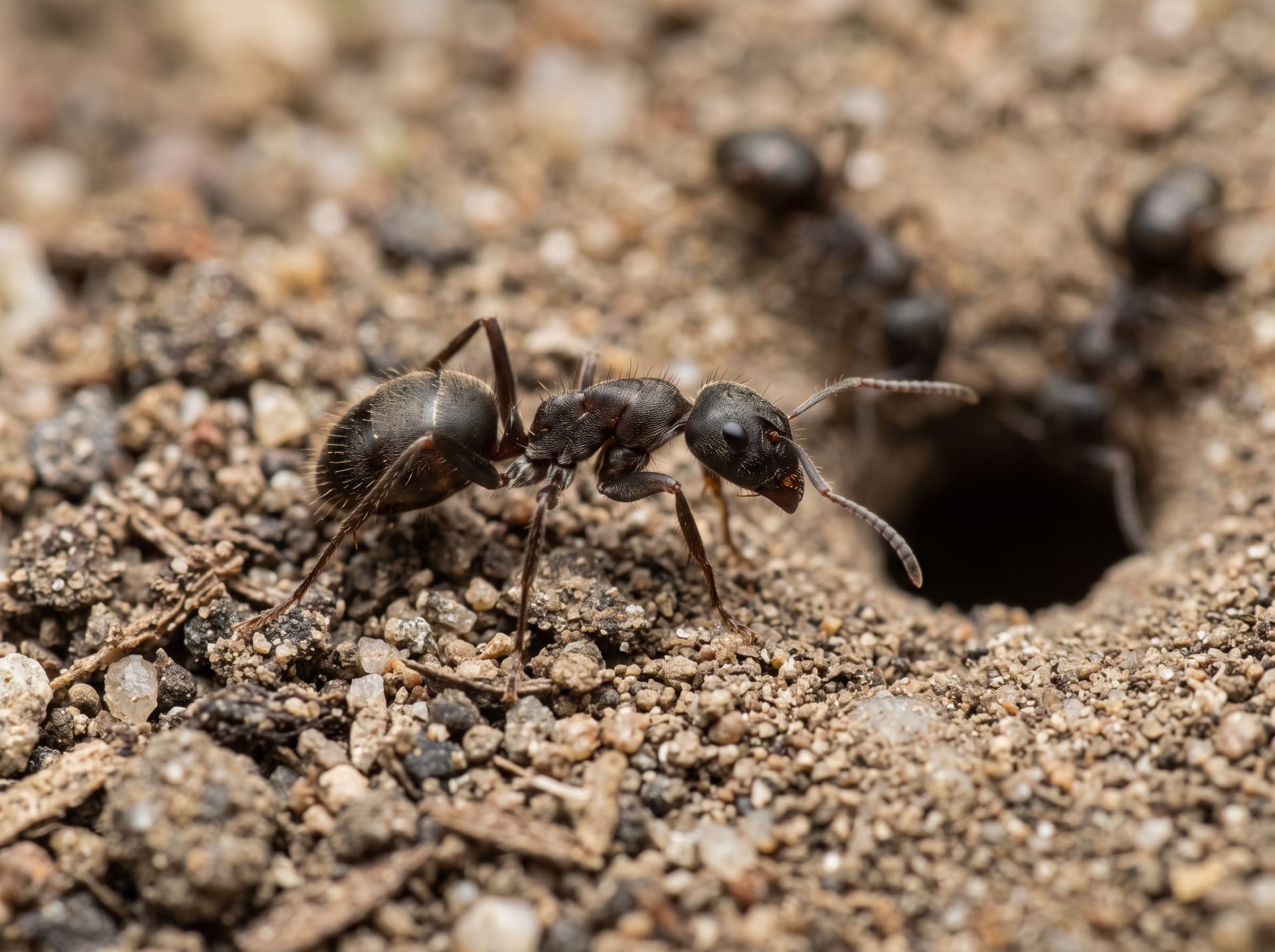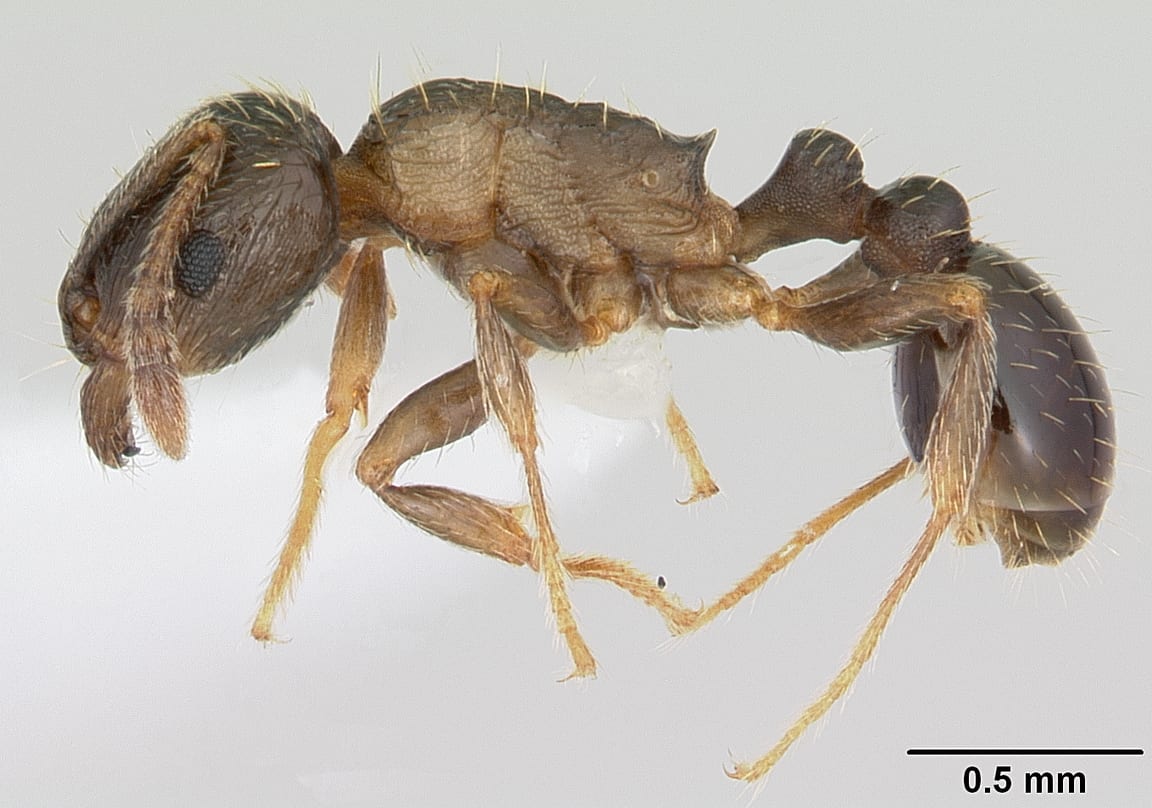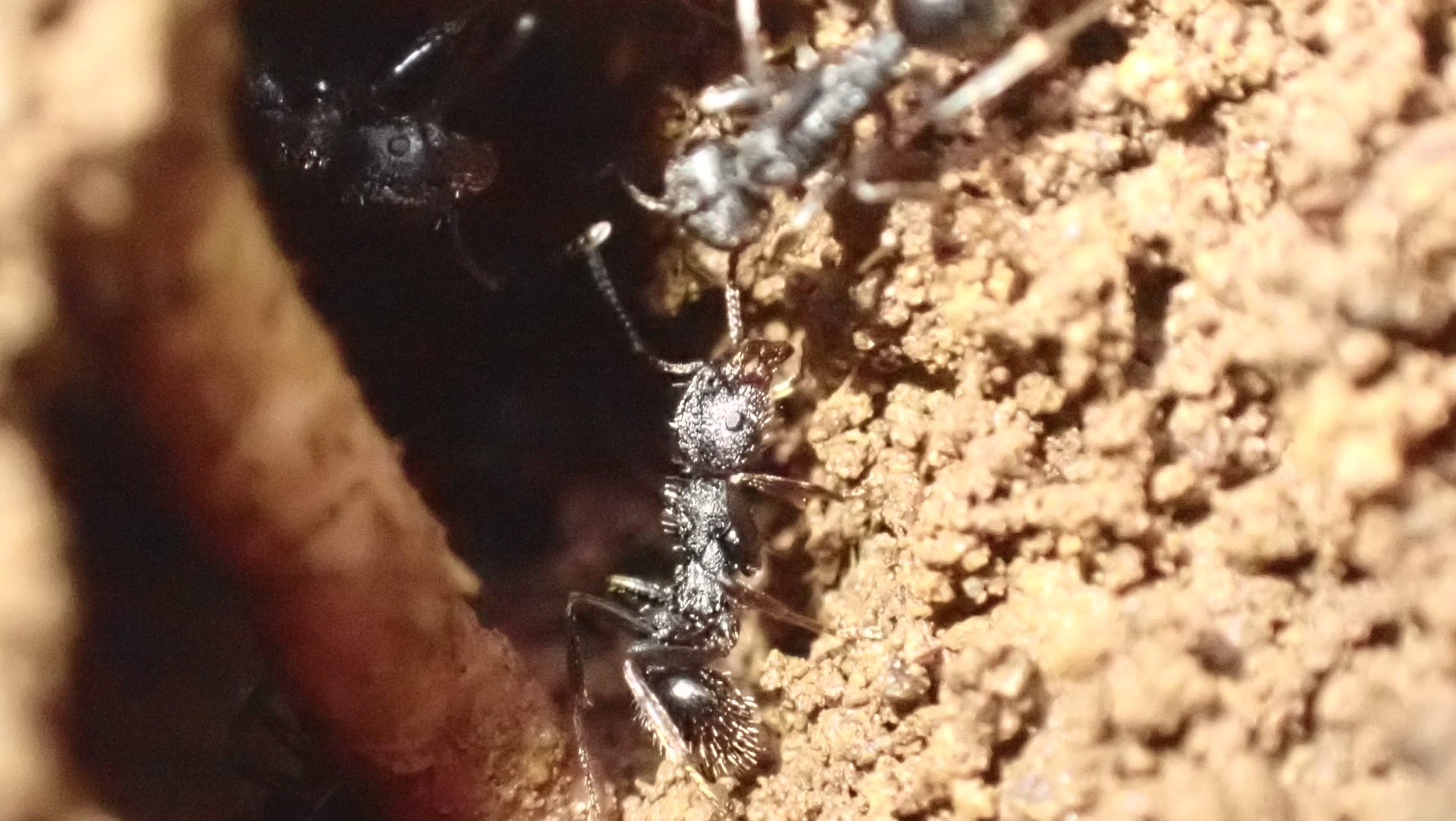
Source: Wikimedia Commons
Japanese Harvester Ant
BeginnerMessor aciculatus
Japan's seed-harvesting ant, which collects and stores grass seeds. Active above ground only in spring and autumn; can be kept on seeds, making feeding simple.
Difficulty
Beginner
Temperature
23〜25℃
Size
Workers 4-5mm, queens about 10mm
Humidity
60〜80%
Diet
Grass and other plant seeds (granivorous); small amounts of insects
About
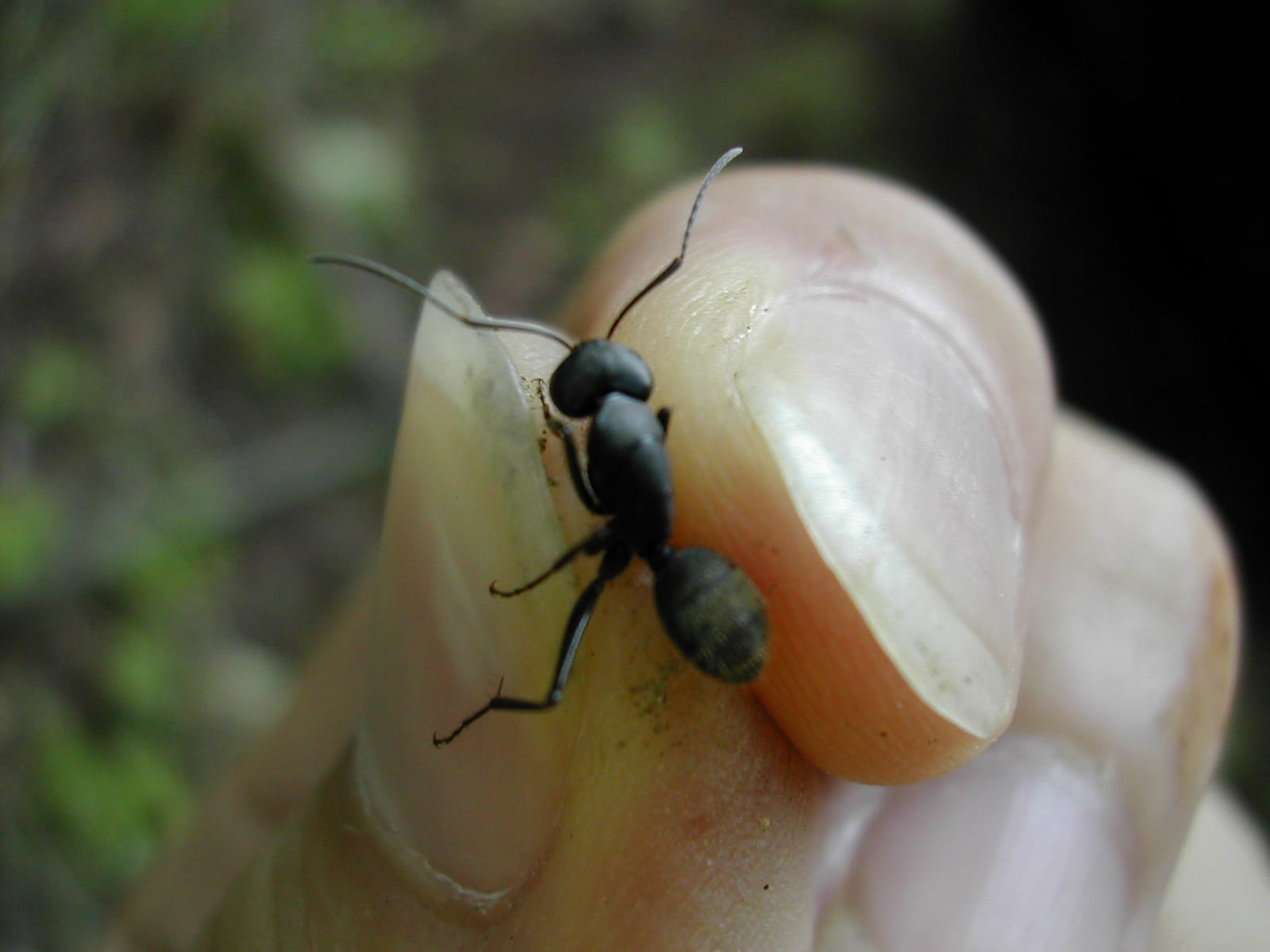
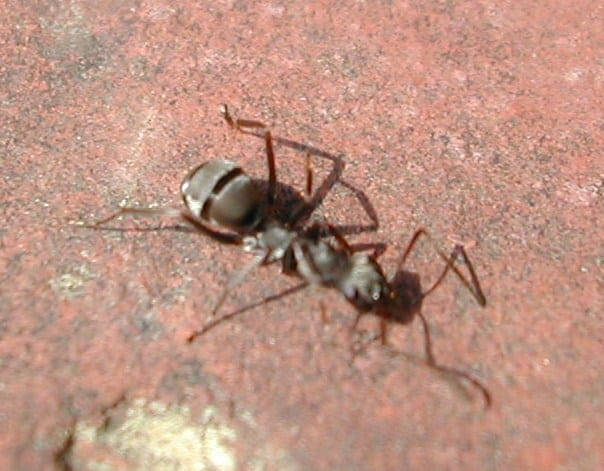
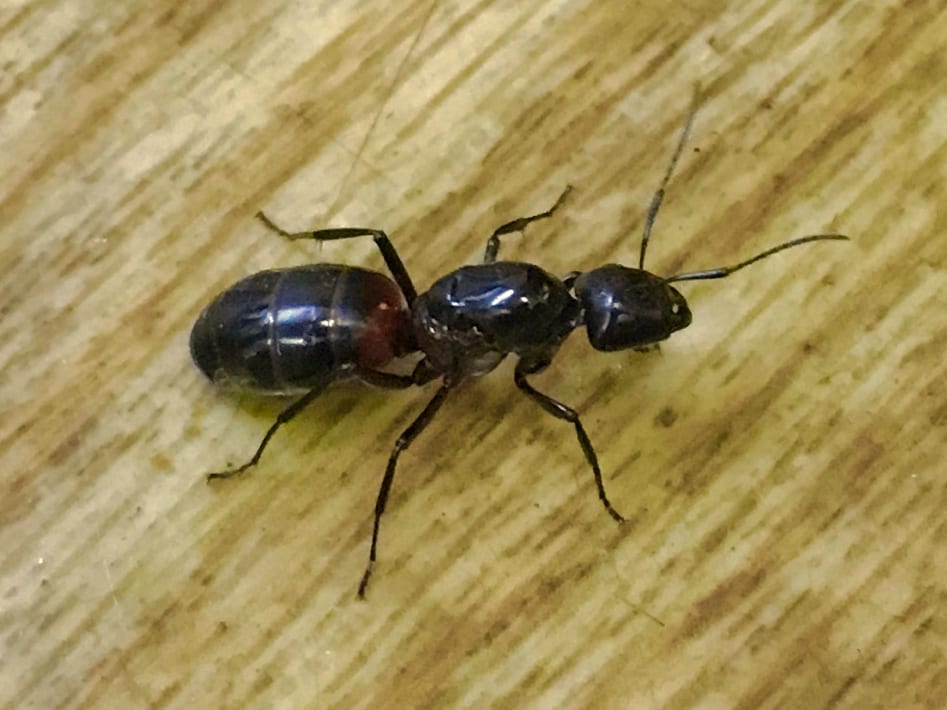
Messor aciculatus is a myrmicine harvester ant distributed in Honshu from Iwate southward to Yakushima, and abroad in China, the Korean Peninsula and Mongolia. Workers measure 4-5mm and queens about 10mm; the body is black. It nests in bare ground or open grassland near grasses; the nest consists of an almost vertical shaft with many chambers and can exceed 4m in depth. In autumn it collects and stores seeds of grasses and other plants, foraging above ground in spring and autumn and remaining underground in midsummer and winter. Alates fly on hot, humid, clear days in April-May, and several dealated queens often found a nest together (pleometrosis). Colony founding by dealated queens in captivity has been documented, and because the ants can be kept on seeds alone, keepers are rarely troubled by spoiled food. It offers an easy way to observe seed-harvesting behaviour, which is unusual among Japanese ants.
Source: Wikipedia (CC BY-SA 4.0)
Size of the Japanese Harvester Ant
The Japanese Harvester Ant grows to Workers 4-5mm, queens about 10mm.
Temperature & humidity for the Japanese Harvester Ant
The ideal temperature for the Japanese Harvester Ant is 23〜25℃.
Basic Info
Origin
Honshu (south of Iwate), Shikoku, Kyushu, Yakushima; China, Korean Peninsula, Mongolia
Size
Workers 4-5mm, queens about 10mm
Temperature
23〜25℃
Care Specifications
PeacefulGroupBreeding: Easy
Sources: AntRoom: How to keep ants (JP) / Wikipedia (ja): クロナガアリ / Japanese Ant Image Database (クロナガアリ)
References & Sources
Edited & verified by: BreederDirect editorial team
The taxonomic, regulatory, and husbandry data on this page are compiled and verified against the authoritative primary sources below.
Taxonomy & Authority
Accepted name: Messor aciculatus (Smith, 1874)
Authority databases: GBIF
Nomenclature follows global taxonomic authority databases.
Regulations & Conservation Status
Not CITES-listed
Sources: CITES Appendices (species not listed)
Regulations may change. Always verify the latest information with the relevant authorities.
Japanese Harvester Ant Listings
Loading latest listingsFind listings for this species