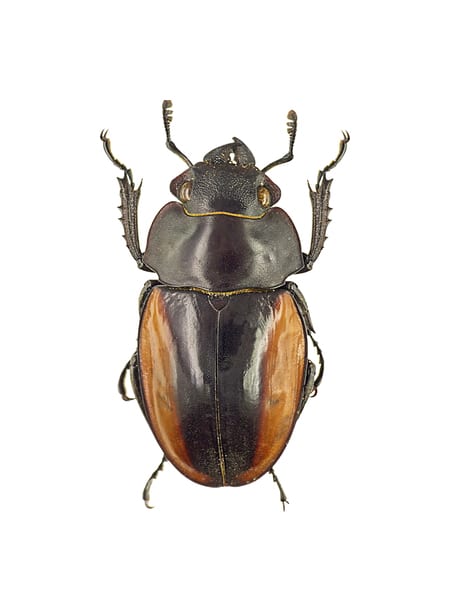
 © Noël Mal / CC BY-SA 4.0
Gazella shining stag beetle
The Gazella shining stag beetle is a striking member of the Odontolabis genus, known for the pronounced asymmetry of the male's mandibles — the left jaw is always the larger of the two. This gives the species its Japanese nickname, "nail-puller stag beetle." Its forewings range from yellowish-brown to brown, with a smooth, glossy sheen across the body. Native to the Malay Peninsula, Sumatra, and Borneo, this beetle is generally considered a good match for intermediate keepers. With the right setup, it rewards patient care with a genuinely one-of-a-kind look.
View Gazella shining stag beetle encyclopedia →0% commission on your first sales!Register by September 30, 2026 and your first 2 sales are commission-free!
Breeder Wanted!
List on BreederDirect and sell directly to customers nationwide!
BreederDirect's 6 Transparency Commitments
When listing Insects, Breeders disclose the following. We guarantee transparency on growth stage and breeding unit.
- Life Stage Clarity
- Generation Info
- Real Photos
- Breeding Unit
- Country of Origin
- Body Length (mm)
Browse all 336 breeds
No listings match your filters
Adjust your filters, or get notified when new listings arrive.
Getting alerts is free with a member account. When new listings match your saved search, we'll notify you by email and in-app.
Browse other categories
Verified breeders (preview)
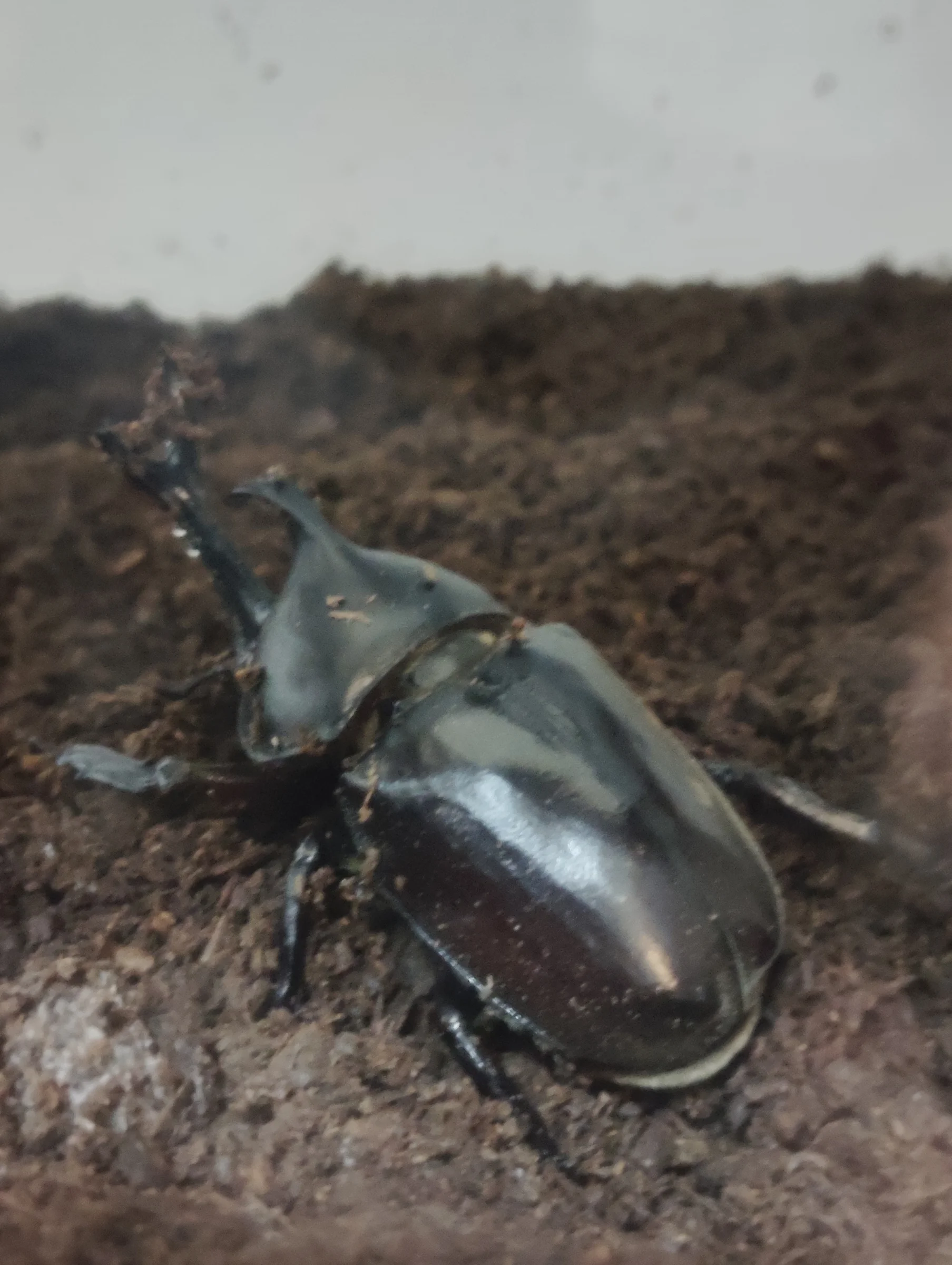
Gazella shining stag beetle key facts
- Care level
- Intermediate
- Lifespan
- Adults a few months (genus accounts); 1-2 years from hatching to pupation
- Size
- Males about 60mm, females about 40mm (captive records 70.5mm male, 48.0mm female)
- Diet
- Adults take sap or beetle jelly; larvae eat well-decayed hardwood flake or fermented substrate
- Temperature & Humidity
- Odontolabis adults and larvae are cold-sensitive and cannot survive winter temperatures in mainland Japan, so always heat them in winter.
- Breeding & Egg-laying
- Larvae live in and feed on hardwood decayed to half-soil flake. They defend their tunnels and may attack other larvae, so rear them in separate containers.
- Lifespan & Rearing Period
- It takes about one to two years from hatching to pupation. Adults live a few months, and about six weeks after becoming active their tarsi and antennae start to die back, so pair them soon after they become active.
- Cohabitation
- Many male Odontolabis are aggressive and may kill an incompatible female, so supervise pairings.
- Health & Notes
- It is also sold as kuginuki-kuwagata. Importing foreign stag and rhinoceros beetles is regulated by the Plant Protection Act and the Invasive Alien Species Act (species-name certificate), with each species needing clearance from the Plant Protection Station, so domestically bred stock is the safe choice. Never release captive beetles.
About Gazella shining stag beetle
Gazella shining stag beetle: a stag beetle known for its asymmetric mandibles, with the male's left jaw always larger. Native to the Malay Peninsula, Sumatra, and Borneo; suited to intermediate keepers.
7 things to know before welcoming a Gazella shining stag beetle
1Asymmetric Mandibles
Male Gazella shining stag beetles are known for a mandible asymmetry: the left jaw is always larger than the right. This isn't a deformity — it's a defining trait of the species. It is also sold under the Japanese name Kuginuki-kuwagata. The exact curve and size of the mandible varies from beetle to beetle, which is part of the fun of observing them.
2Suited to Intermediate Keepers
This species is generally considered suitable for intermediate keepers. Some comfort with basic temperature and humidity management, as well as routine feeding, will make the daily care easier. First-time keepers may want to research care requirements before bringing one home.
3Adult Lifespan of a Few Months
Adults typically live for a few months. Since this is much shorter than the larval stage, it's worth observing your beetle closely once it reaches adulthood. Setting up a comfortable environment matters even more given this limited window.
4Larval Stage Lasts 1–2 Years
From hatching to pupation typically takes one to two years — far longer than the adult stage. During this period, keep an eye on substrate moisture and condition, and be patient as the larva develops. That long wait makes the eventual emergence of the adult especially rewarding.
5Temperature and Humidity Matter
Native to the Malay Peninsula, Sumatra, and Borneo — all warm, humid regions — this species needs careful temperature and humidity management in captivity. Avoid letting the substrate dry out or the enclosure get too cold, and check conditions regularly. Choose a location away from direct sunlight and sudden temperature swings.
6Handle the Mandibles with Care
Despite their asymmetry, the male's mandibles have real gripping strength, so handle beetles carefully to avoid getting pinched. Support the body fully when picking one up and keep fingers away from the jaws. Because males can fight when housed together, it's best to keep them separately.
7Prepare Your Setup in Advance
Before bringing one home, gather the basics — insect substrate, a climbing branch, and insect jelly for adults, plus appropriate substrate for larvae. Deciding on enclosure size and placement ahead of time lets you start off with a settled environment from day one. Checking care requirements in advance makes for a smoother, longer relationship with your beetle.
Frequently asked questions about Gazella shining stag beetle
- Q.How can I tell males and females apart?
- A.Males are reported to reach about 60mm and females about 40mm, so males are larger. Males also have asymmetric mandibles, with the left jaw always bigger than the right, so size and jaw shape are good clues.
- Q.Why is the mandible so asymmetric?
- A.In this species, males naturally develop a larger left mandible than right as a defining trait of the species. It isn't an individual deformity — it's a characteristic shared across the species.
- Q.Can beginners keep this species?
- A.Since this species is generally rated for intermediate keepers, it helps to have some basic stag beetle keeping experience first. With the fundamentals of temperature and humidity management in place, it's a rewarding species to work with.
- Q.How long does the larval stage last?
- A.From hatching to pupation typically takes one to two years. That's considerably longer than the adult stage, which lasts only a few months.
- Q.Are there any legal regulations on this species?
- A.The Gazella shining stag beetle is not subject to CITES. Many live foreign Scarabaeoidea (stag beetles, rhinoceros beetles, flower chafers and relatives) are quarantine pests whose import is banned under Japan's Plant Protection Act, and even importable species require a species-name certificate from a foreign government body under the Invasive Alien Species Act (entry only via designated airports, never by international post). Whether a species may enter must be checked with the Plant Protection Station in advance, so choose domestically bred stock and never release captive beetles.
Useful tools for Gazella shining stag beetle care
Learn more about Gazella shining stag beetle in the encyclopedia
View Gazella shining stag beetle encyclopedia entry →
Care difficulty, lifespan, size and diet — all basics covered.
More in this category
Can't find the one you're looking for?
Post your wishes for free and breeders with matching animals will contact you with introductions.