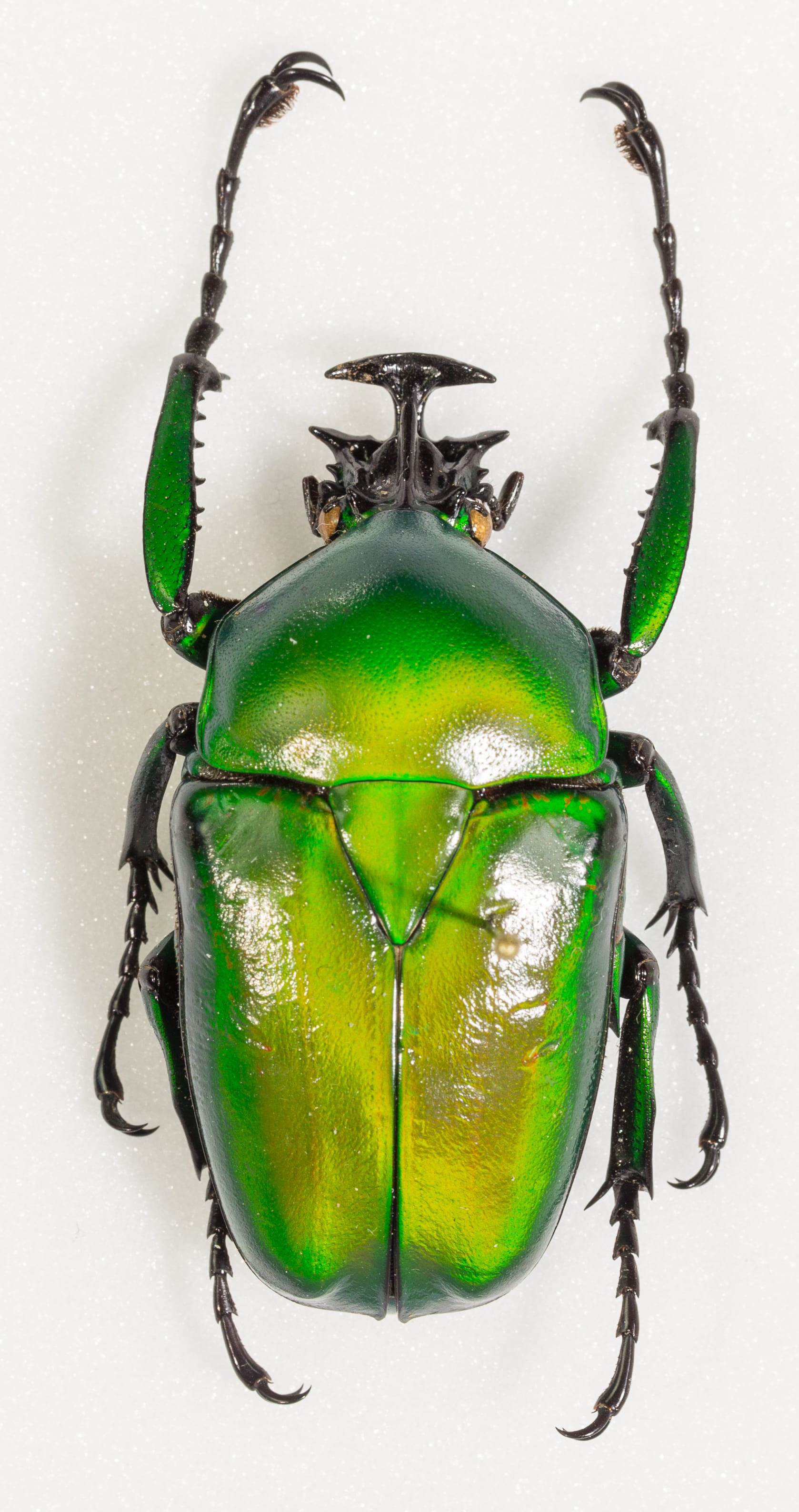
 © Pymouss / CC BY-SA 4.0
Micans flower beetle
The Micans flower beetle is a large flower beetle whose whole body carries a metallic green sheen touched with gold and blue. It's the largest species in its genus, and males are distinguished by a flat, T-shaped horn on the head that females lack. Native to tropical forests in Africa, its color shifts subtly with the light, making it rewarding to observe up close. Considered suitable for keepers with some experience, it lives as an adult for about three months, with a full life cycle from egg to adult spanning roughly ten months.
View Micans flower beetle encyclopedia →0% commission on your first sales!Register by September 30, 2026 and your first 2 sales are commission-free!
Breeder Wanted!
List on BreederDirect and sell directly to customers nationwide!
6 Transparency Standards You Can Trust
When listing Insects, Breeders disclose the following. We guarantee transparency on growth stage and breeding unit.
- Life Stage Clarity
- Generation Info
- Real Photos
- Breeding Unit
- Country of Origin
- Body Length (mm)
Browse all 336 breeds
No listings match your filters
Adjust your filters, or get notified when new listings arrive.
Getting alerts is free with a member account. When new listings match your saved search, we'll notify you by email and in-app.
Browse other categories
Verified breeders (preview)
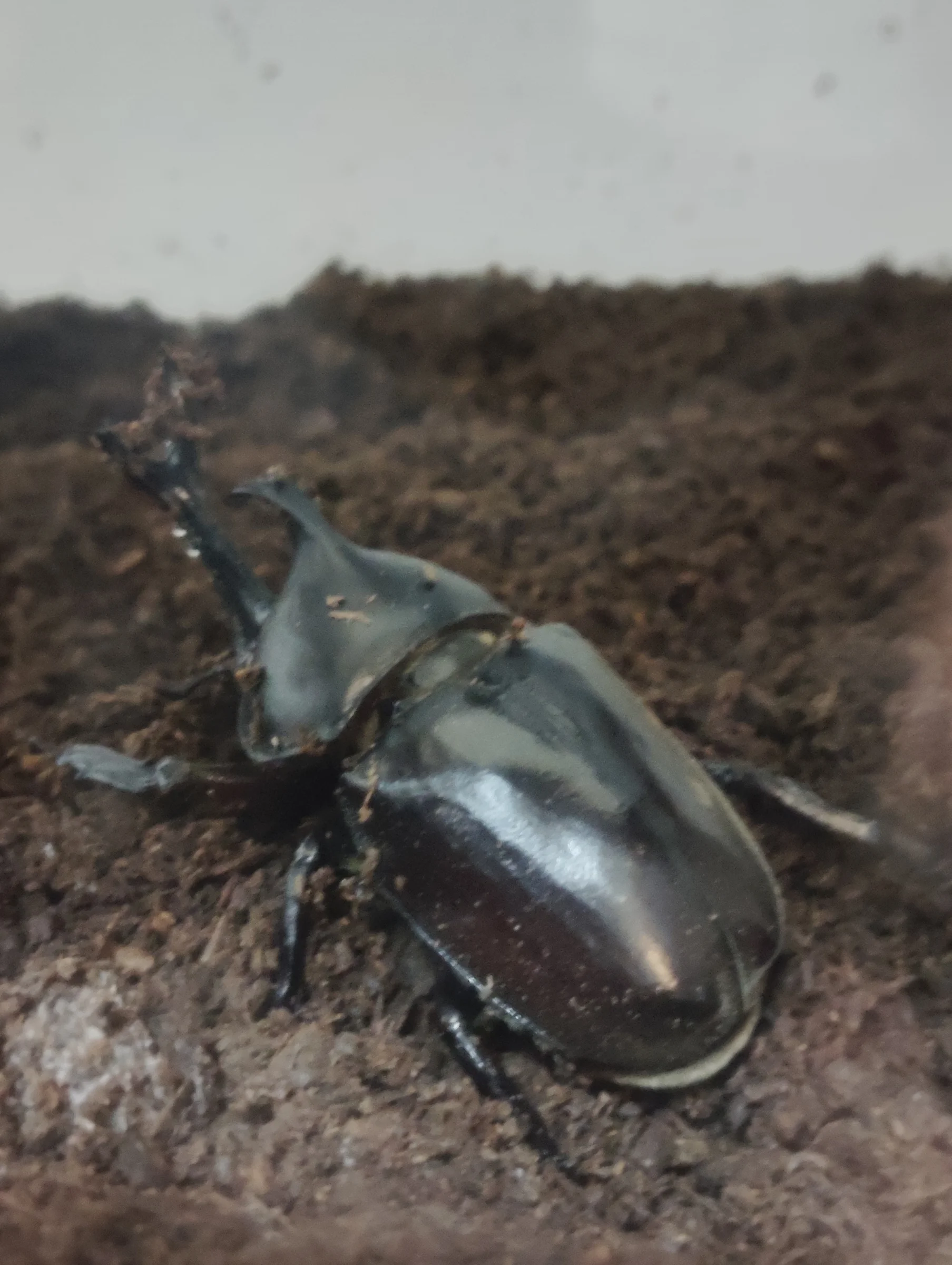
Micans flower beetle key facts
- Care level
- Intermediate
- Lifespan
- Adults about 3 months (about 10 months per generation)
- Size
- Males 40-60mm, females 40-50mm
- Diet
- Adults take nectar and ripe fruit; larvae eat humus-rich substrate
- Temperature & Humidity
- There is little numeric temperature data for this species. Being from tropical Africa, keep it out of winter cold and do not let the substrate dry out.
- Enclosure
- Adults are active in the daytime, so use a well-ventilated enclosure with climbing wood and perches.
- Food & Feeding
- In the wild adults eat nectar and overripe fruit. Offer beetle jelly or fruit and remove leftovers before they spoil.
- Breeding & Egg-laying
- Females lay in the substrate and larvae hatch in about two weeks. Larvae of the genus grow in soil rich in decaying plant matter, so rear them in well-fermented substrate.
- Lifespan & Rearing Period
- The larval stage lasts about five months and the pupal stage about two, and adults live about three months, giving roughly ten months per generation.
- Health & Notes
- Flower chafers are named among the insects whose live import the Plant Protection Act bans. Importing foreign stag and rhinoceros beetles is regulated by the Plant Protection Act and the Invasive Alien Species Act (species-name certificate), with each species needing clearance from the Plant Protection Station, so domestically bred stock is the safe choice. Never release captive beetles.
About Micans flower beetle
Discover the Micans flower beetle: a large, metallic-green species with a striking T-shaped horn on males. Learn about its lifespan, care difficulty, and what to know before bringing one home.
7 things to know before welcoming a Micans flower beetle
1Largest in Its Group
Among the four species in its group, the Micans flower beetle is the largest. Males grow to 40–60mm and females to 40–50mm, giving it an impressively substantial build for a flower beetle.
2Striking Metallic Coloring
Its greatest appeal is the metallic green sheen tinged with gold and blue that covers its whole body. The color appears to shift with the angle of light, making it a visually rewarding species to keep and observe.
3The Male's T-Shaped Horn
Males have a flat, T-shaped horn on the head, which females lack, making it an easy way to tell the sexes apart. If you keep several together, watch how the individuals are doing and manage them accordingly.
4A Short Adult Stage
Adults are active for roughly three months, which is relatively short compared to many other insects. Since the time you get to observe them as adults is limited, it's important to keep daily temperature and feeding conditions stable from the start.
5A Ten-Month Life Cycle
A full life cycle from egg to adult takes about ten months, reflecting a relatively long larval stage. The adult stage you actually get to enjoy is only part of that span, so it helps to plan your care with a longer time horizon in mind.
6Suited to Experienced Keepers
This species is generally considered suitable for keepers with some experience rather than complete beginners. It's a good idea to be comfortable with the basics of substrate management and temperature control before bringing one home.
7Native to Tropical Africa
Its natural habitat is tropical forest in Africa, so it has evolved to live in a forested environment. When setting up its enclosure, it helps to avoid direct sunlight and choose a location that loosely reflects its native forest conditions.
Frequently asked questions about Micans flower beetle
- Q.How long do adult Micans flower beetles live?
- A.Adults are active for roughly three months. Looking at the full life cycle from egg to adult, the entire process takes about ten months.
- Q.How can you tell males and females apart?
- A.Males have a flat, T-shaped horn on the head, while females do not. Their size also differs slightly, with males reaching 40–60mm and females 40–50mm.
- Q.Is this beetle suitable for beginners?
- A.This species is considered suitable for keepers with some experience rather than complete beginners. If it's your first time keeping insects, it's a good idea to learn the basics of care before bringing one home.
- Q.Can multiple males be kept together?
- A.There isn't much documented information on how males behave toward one another, so if you house several in the same enclosure, keep a close eye on them. If they seem unsettled, separate them into different cases as needed.
- Q.What should it be fed?
- A.Adults are commonly kept on insect jelly as a main food source. Larvae feed on leaf mold or fermented substrate instead, requiring different care than the adult stage.
Useful tools for Micans flower beetle care
Learn more about Micans flower beetle in the encyclopedia
View Micans flower beetle encyclopedia entry →
Care difficulty, lifespan, size and diet — all basics covered.
More in this category
Can't find the one you're looking for?
Post your wishes for free and breeders with matching animals will contact you with introductions.