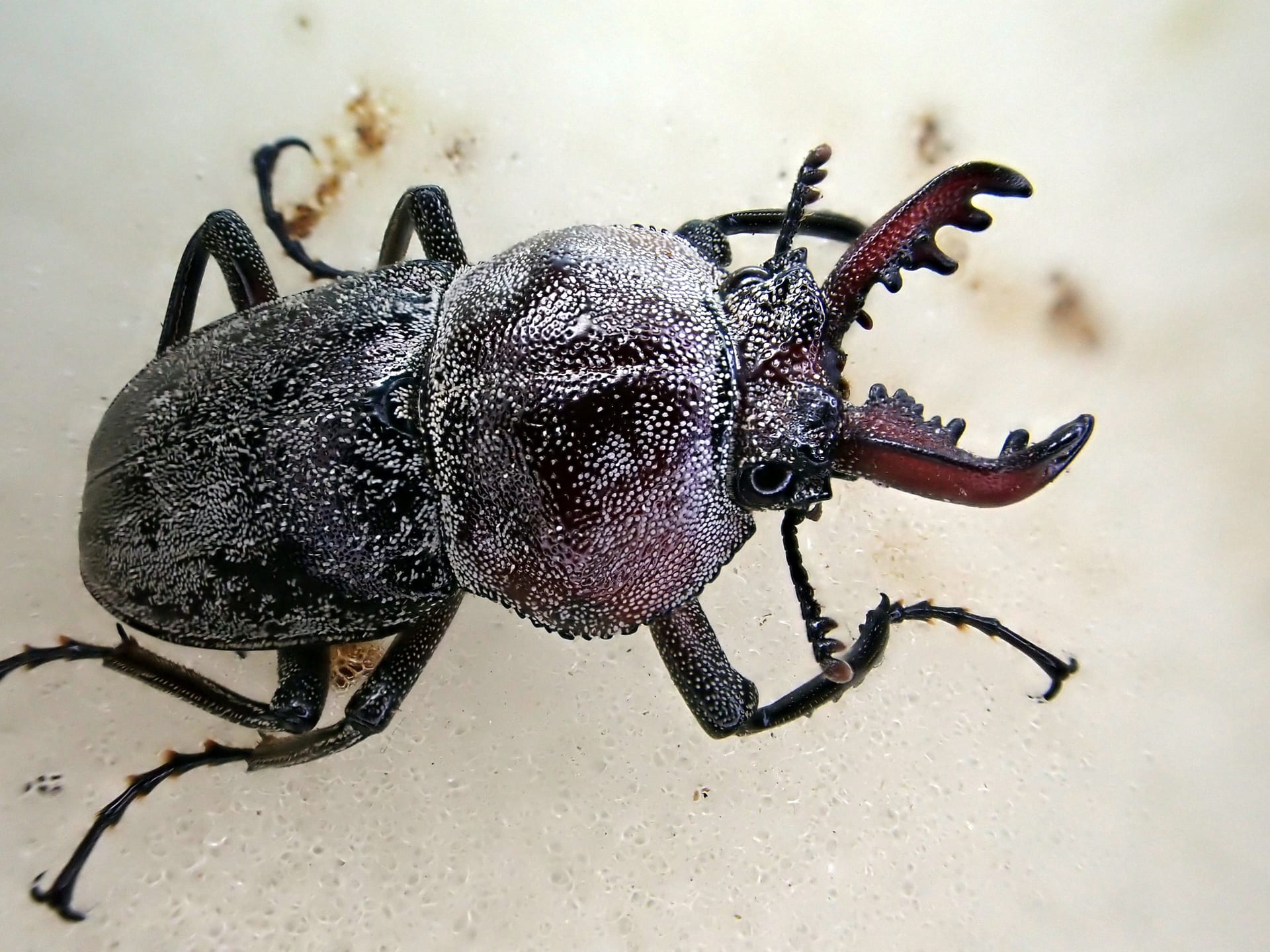
 © Peter T. Rühr / CC BY 4.0
Scaly stag beetle
The scaly stag beetle is a small stag beetle found in the coastal forests of eastern Australia. Males grow to about 25mm, and the species name refers to its scaly appearance. Unusually for a stag beetle, it is active during the day and visits flowers, so you can watch it moving about in daylight. Care information is limited, and the species is rated as intermediate difficulty. It suits keepers who already have a solid grounding in insect care and are happy to observe closely and adjust as they go.
View Scaly stag beetle encyclopedia →0% commission on your first sales!Register by September 30, 2026 and your first 2 sales are commission-free!
Breeder Wanted!
List on BreederDirect and sell directly to customers nationwide!
6 Transparency Standards You Can Trust
When listing Insects, Breeders disclose the following. We guarantee transparency on growth stage and breeding unit.
- Life Stage Clarity
- Generation Info
- Real Photos
- Breeding Unit
- Country of Origin
- Body Length (mm)
Browse all 336 breeds
No listings match your filters
Adjust your filters, or get notified when new listings arrive.
Getting alerts is free with a member account. When new listings match your saved search, we'll notify you by email and in-app.
Browse other categories
Verified breeders (preview)
Scaly stag beetle key facts
- Care level
- Intermediate
- Lifespan
- Little data
- Size
- Males up to about 25mm
- Diet
- Adults visit flowers (beetle jelly in captivity); larvae eat rotten wood
- Temperature & Humidity
- There is little numeric temperature data. Avoid extremes of heat and cold and keep rotten wood and substrate from drying out.
- Enclosure
- Unusually for a stag beetle it is active by day and found on flowers, so provide perches for daytime activity and keep it where daylight hours are not disrupted.
- Breeding & Egg-laying
- Larvae develop in decaying wood like most stag beetles. It has been bred in Japan; provide rotten wood or fermented substrate for laying.
- Lifespan & Rearing Period
- Larval duration and adult lifespan are poorly documented.
- Health & Notes
- Importing foreign stag and rhinoceros beetles is regulated by the Plant Protection Act and the Invasive Alien Species Act (species-name certificate), with each species needing clearance from the Plant Protection Station, so domestically bred stock is the safe choice. Never release captive beetles.
About Scaly stag beetle
The scaly stag beetle is a small, day-active stag beetle from eastern Australia, with males around 25mm. Learn its traits and what to know before bringing one home.
7 things to know before welcoming a Scaly stag beetle
1A day-active stag beetle
Most stag beetles are active at night, but the scaly stag beetle is unusual in being active by day and visiting flowers. Being able to watch it move around in daylight is one of its main attractions.
2Choosing a container
Even males are only about 25mm long. Because the beetle is so small, check that the lid and ventilation openings are fine enough to prevent escapes. A container that is easy to observe and maintain is a sensible choice.
3Intermediate difficulty
This species is rated as intermediate difficulty. Because reference material is limited, you may need to adjust your care based on how the beetle looks and behaves. It is best to have some basic insect-keeping experience first.
4Lifespan is unclear
Little documentation exists on this species' lifespan, so it is not well established. Rather than assuming a fixed period, observe your beetle daily. Keeping notes on the day you brought it home and how well it eats makes changes easier to spot.
5Airflow and humidity
This beetle comes from coastal forests in eastern Australia. It helps to provide good airflow while keeping conditions from drying out completely. Avoid extreme heat and stuffy air, and place the container somewhere calm and out of direct sunlight.
6Feeding clues from flowers
Since this beetle visits flowers, it may make use of sugary foods such as nectar. Start with a common option like insect jelly and adjust depending on how well it feeds. Individuals can differ, so careful observation is important.
7What to check first
On the listing page, check the sex, size, condition, and whether the beetle is captive-bred or where it comes from. After it arrives, let it settle in a quiet spot and observe it before starting routine care.
Frequently asked questions about Scaly stag beetle
- Q.How big is the scaly stag beetle?
- A.Males reach about 25mm, making it a small stag beetle. Because of its size, watch for gaps in the container that it could squeeze through.
- Q.Can beginners keep this species?
- A.It is rated as intermediate difficulty. Since information is limited, it is safer to consider it once you have some experience with insect care.
- Q.How long does it live?
- A.Little documentation exists on its lifespan, so it is not clearly known. Avoid assuming a set period and care for it based on how the individual looks and behaves.
- Q.Is it really active during the day?
- A.Yes, unusually for a stag beetle, it is active in daylight and visits flowers. Watching it move about during the day is part of its appeal.
- Q.Where is it from, and what does its name mean?
- A.It is found in coastal forests of eastern Australia. Its species name means scaly.
Useful tools for Scaly stag beetle care
Learn more about Scaly stag beetle in the encyclopedia
View Scaly stag beetle encyclopedia entry →
Care difficulty, lifespan, size and diet — all basics covered.
More in this category
Can't find the one you're looking for?
Post your wishes for free and breeders with matching animals will contact you with introductions.