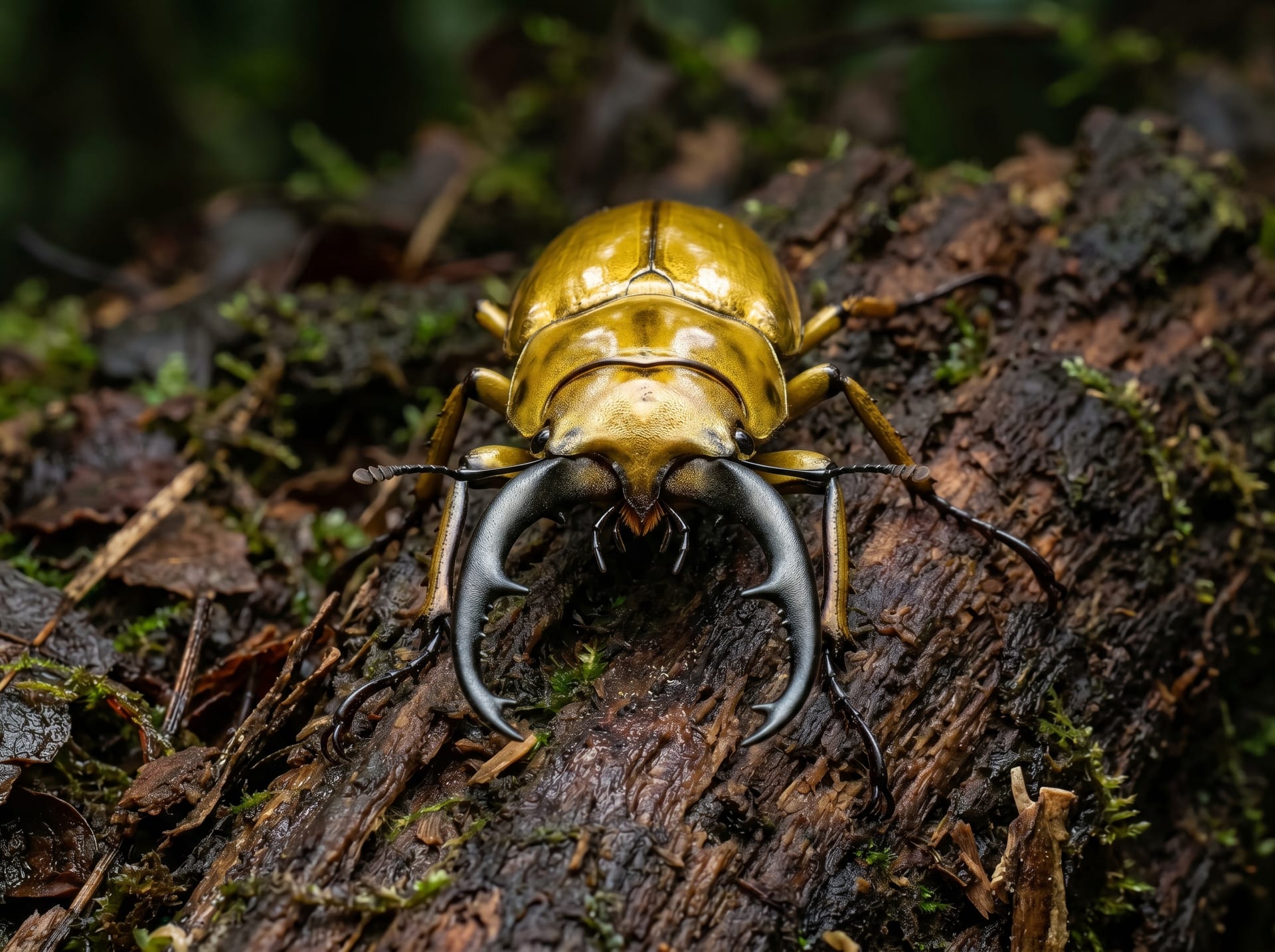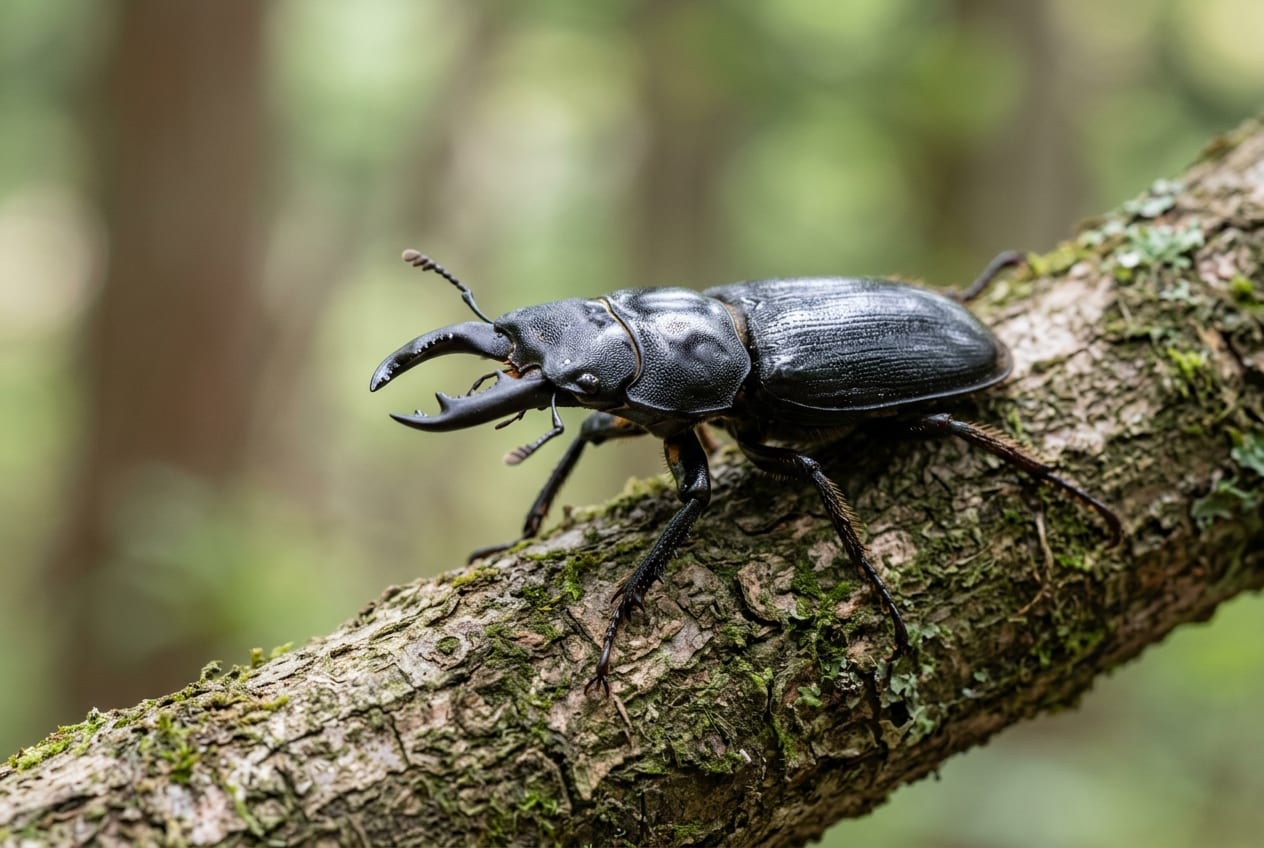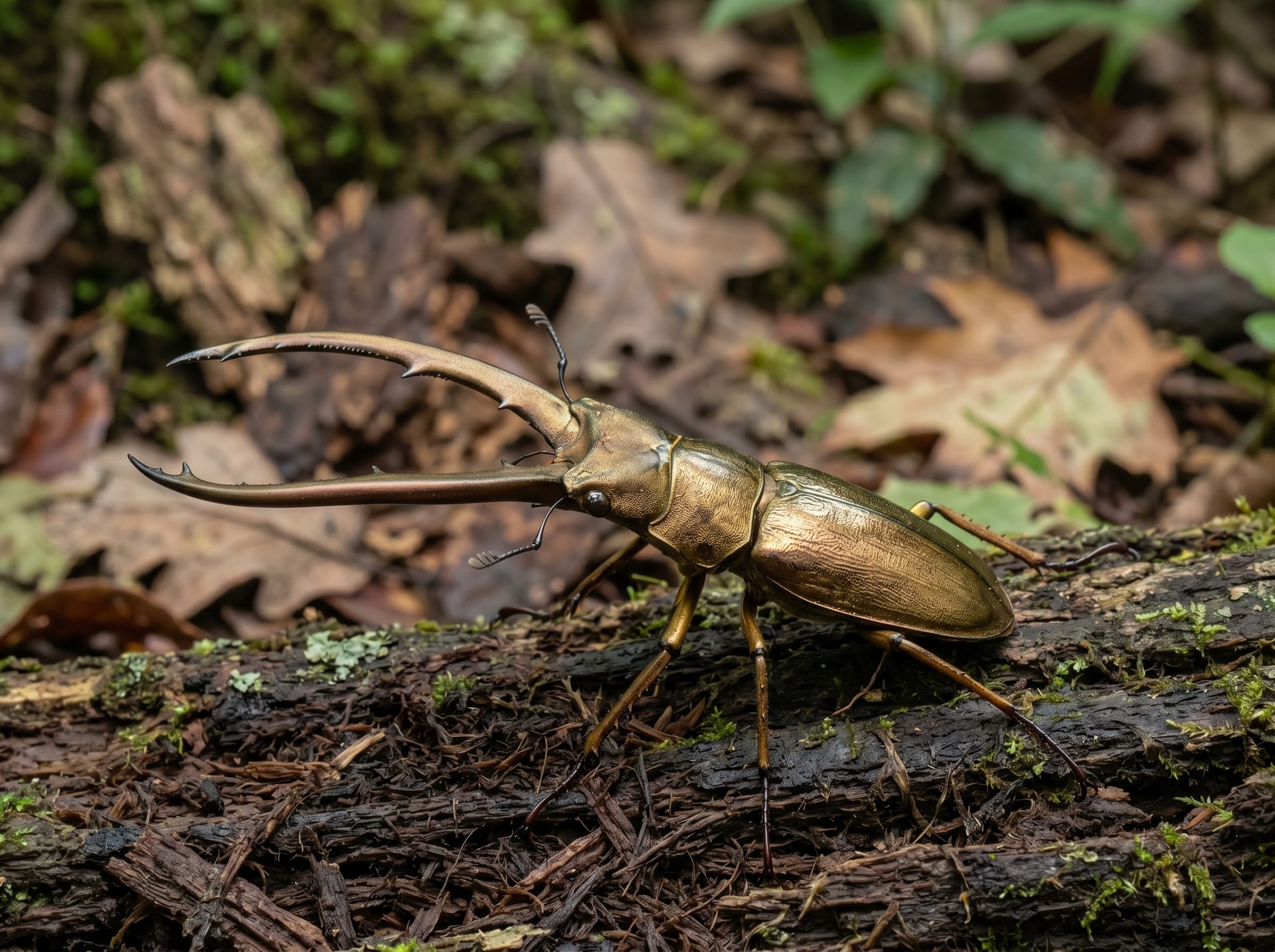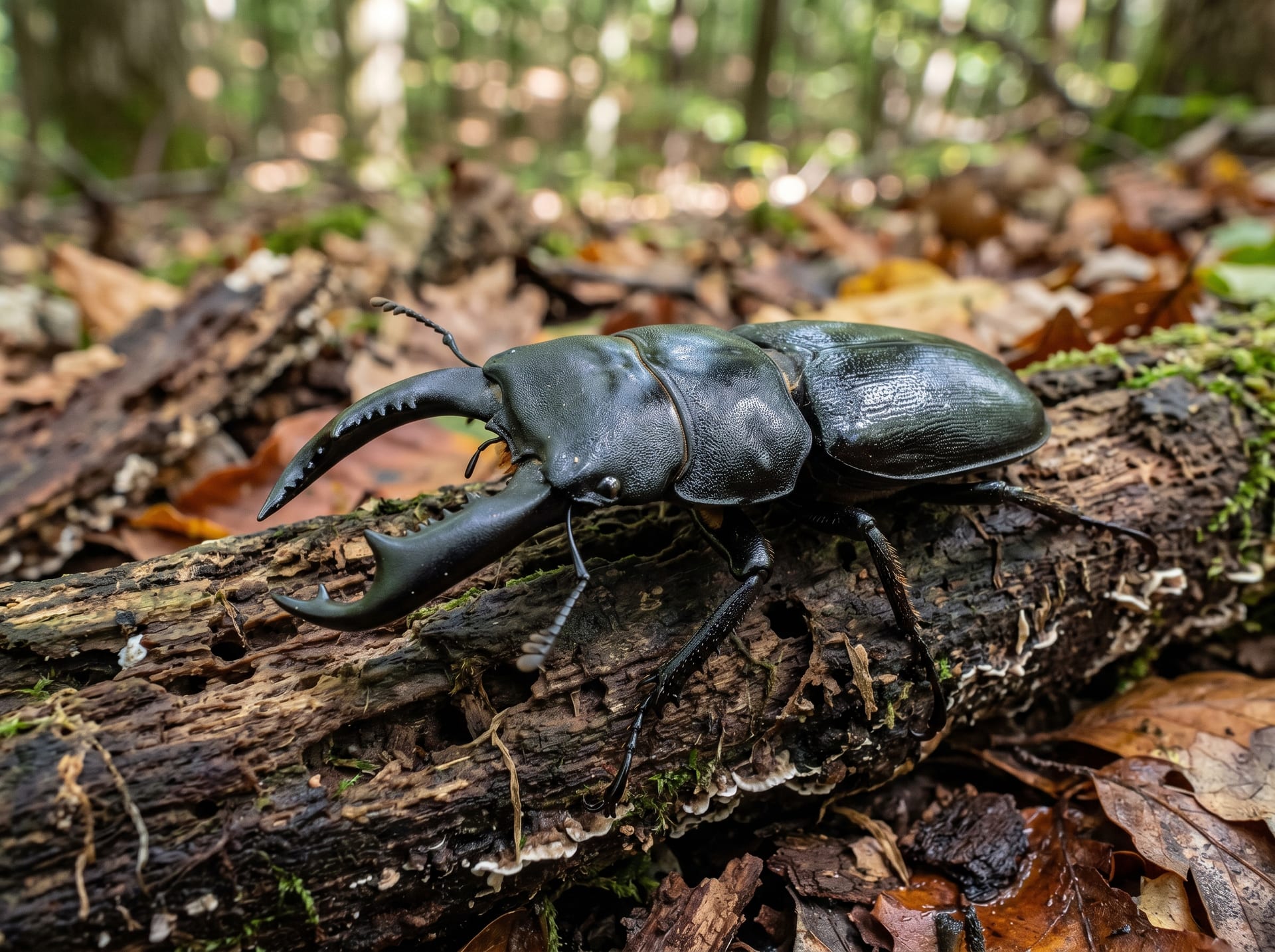
Source: Wikimedia Commons
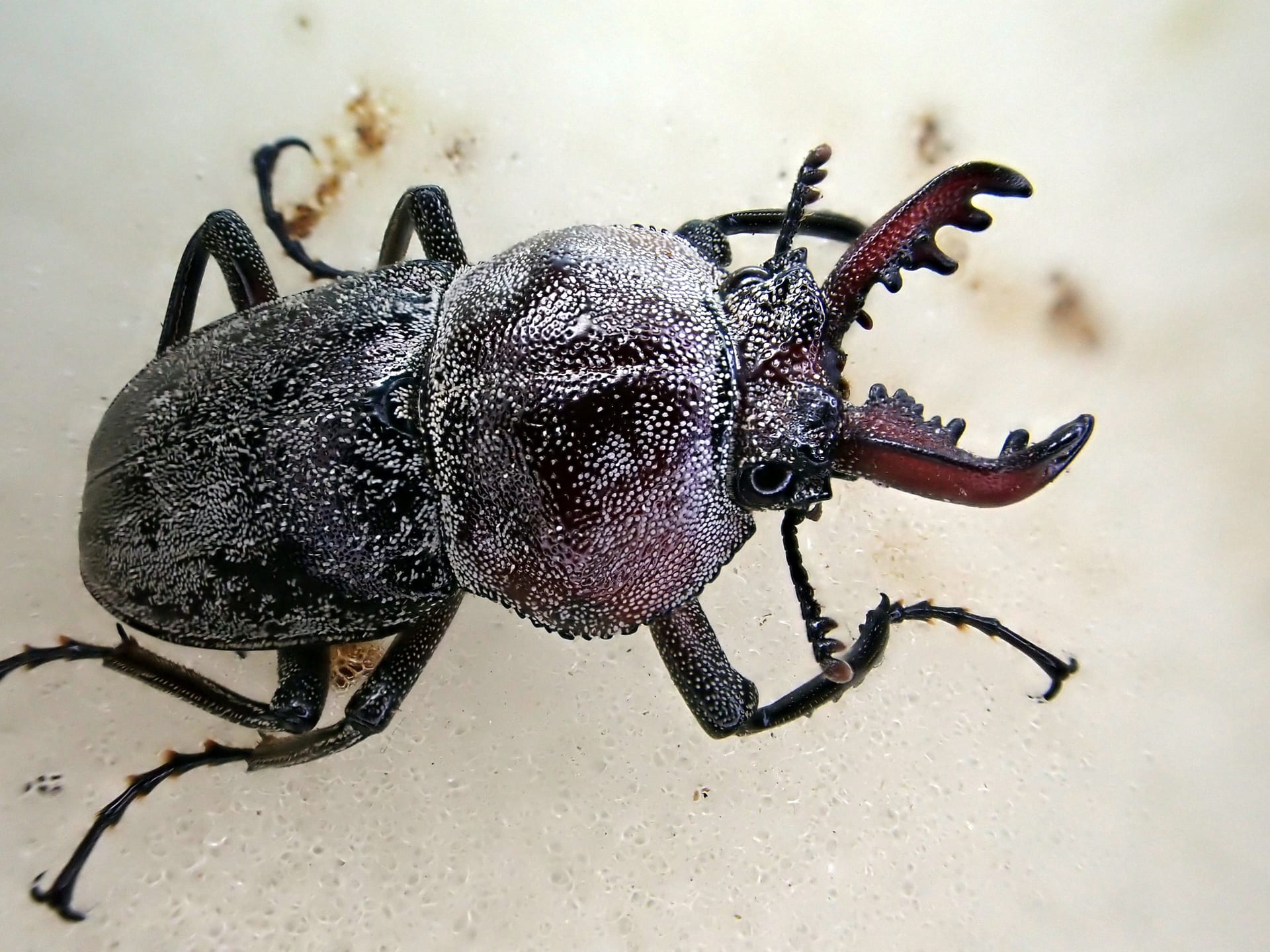
Scaly stag beetle
IntermediateCacostomus squamosus
A small stag beetle of the eastern coastal forests of Australia; males reach about 25mm. The species name means scaly. Unusually for a stag beetle it is active by day and visits flowers.
Difficulty
Intermediate
Temperature
20〜28℃
Lifespan
Little data
Size
Males up to about 25mm
Humidity
60〜80%
Diet
Adults visit flowers (beetle jelly in captivity); larvae eat rotten wood
About
Cacostomus squamosus Newman, 1840 is a small stag beetle from Australia, with males reaching about 25mm. The species name squamosus is Latin for scaly, and Lucanus rotundicollis Westwood, 1842 is treated as a synonym. It lives in the coastal forests of eastern Australia; GBIF records are mostly from Queensland, with some from New South Wales. Unusually for a stag beetle it is diurnal and is found on flowers, while the larvae, like those of most stag beetles, develop in decaying wood. Little has been published on keeping it or on its life history, but stock from northern Queensland has been bred in Japan, and adults and larvae have been sold by specialist shops. Because it is active by day and visits flowers, unlike the typical sap-feeding, nocturnal stag beetle, its set-up should allow for daytime activity. The BE-KUWA 2025 edition has no record for it, and size data are scarce. Stock available in Japan is mainly captive-bred.
Source: Wikipedia (CC BY-SA 4.0)
Size of the Scaly stag beetle
The Scaly stag beetle grows to Males up to about 25mm.
Basic Info
Origin
Eastern Australia (Queensland, New South Wales)
Lifespan
Little data
Size
Males up to about 25mm
Temperature
20〜28℃
Humidity
60〜80%
Diet
References & Sources
Edited & verified by: BreederDirect editorial team
The taxonomic, regulatory, and husbandry data on this page are compiled and verified against the authoritative primary sources below.
Taxonomy & Authority
Regulations & Conservation Status
Not CITES-listed
Many live foreign Scarabaeoidea (stag beetles, rhinoceros beetles, flower chafers and relatives) are quarantine pests whose import is banned under Japan's Plant Protection Act, and even importable species require a species-name certificate from a foreign government body under the Invasive Alien Species Act (entry only via designated airports, never by international post). Whether a species may enter must be checked with the Plant Protection Station in advance, so choose domestically bred stock and never release captive beetles.
Sources: Plant Protection Station: Importing Scarabaeoidea (JA) / Plant Protection Station: Importing live insects (JA) / Ministry of the Environment: List of invasive alien species (JA) / Species+ CITES query (no listing)
Regulations may change. Always verify the latest information with the relevant authorities.
Scaly stag beetle Listings
Loading latest listingsFind listings for this species