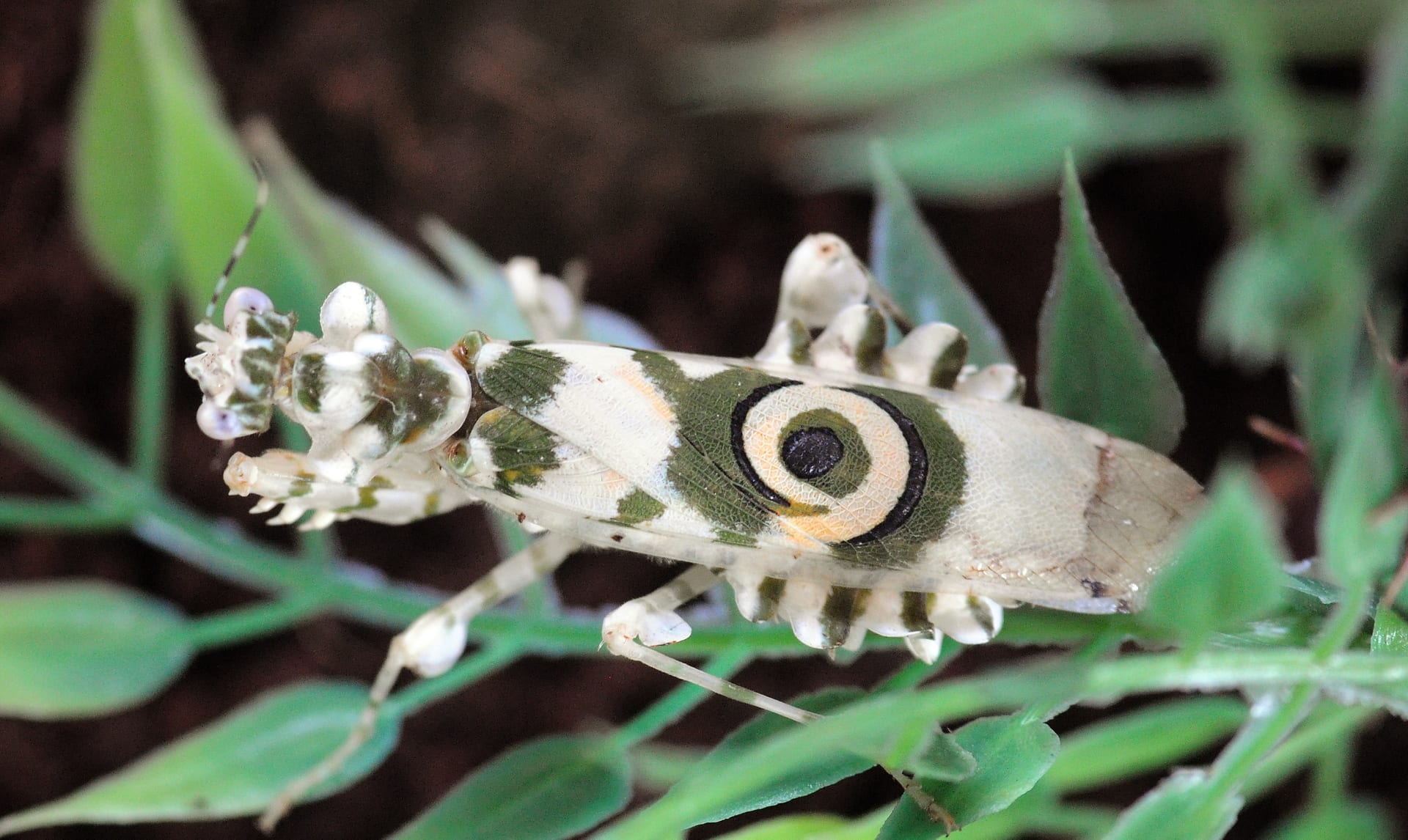
 © Amada44 / CC BY 3.0
Spiny Flower Mantis
The Spiny Flower Mantis is a compact mantis native to southern and eastern Africa, reaching only about 4 cm as an adult. What makes it unforgettable are the bold eyespot markings in black, green, and cream on its forewings — patterns that shift and sharpen as the mantis matures, offering a rewarding show for anyone who enjoys watching an insect grow. Its common name comes from the spiky projections on the underside of its abdomen, a distinctive feature among mantis species. Alert and quick to strike at prey, it's an engaging subject for hobbyists who already have some insect-keeping experience. One caveat: this species is sensitive to excess humidity, so careful moisture control is essential.
View Spiny Flower Mantis encyclopedia →Breeder Wanted!
List on BreederDirect and sell directly to customers nationwide!
BreederDirect's 6 Transparency Commitments
When listing Insects, Breeders disclose the following. We guarantee transparency on growth stage and breeding unit.
- Life Stage Clarity
- Generation Info
- Real Photos
- Breeding Unit
- Country of Origin
- Body Length (mm)
Browse all 336 breeds
No listings match your filters
Adjust your filters, or get notified when new listings arrive.
Getting alerts is free with a member account. When new listings match your saved search, we'll notify you by email and in-app.
Browse other categories
Verified breeders (preview)
Spiny Flower Mantis key facts
- Care level
- Intermediate
- Lifespan
- Adults 2-4 months
- Size
- About 4cm (females larger and broader)
- Temperature
- Around 26°C (25-30°C; 18°C or above at night)
- Humidity
- Around 60%
- Diet
- Flying prey such as moths and flies (fruit flies for nymphs)
- Temperature & Humidity
- Ideal around 26C with a range of 25-30C, and keep nights above 18C. Humidity demands are modest at around 60%. Excess moisture leads to fatal infections, so mist only about three times a week and ventilate well to prevent mould. Adults do better slightly dry than too wet.
- Breeding & Egg-laying
- Breeding is not easy but is possible with experience of other species. Females can turn very aggressive, so feed her well before introducing the male to her enclosure. Keep oothecae in the same conditions as the adults and guard against mould. One ootheca yields 30-55 nymphs.
- Cohabitation
- A cannibalistic species that will eat anything of the right size that moves, including its own kind. Nymphs can be housed together up to the fourth instar, but the risk rises with every moult.
- Lifespan & Rearing Period
- Females mature after seven moults and males after six; females have six or seven abdominal segments and males eight. In adults the female's wings reach nearly to the end of the abdomen while the male's extend past it.
- Health & Notes
- Too small for large prey such as adult locusts; moths and flies suit it better than crickets. The cage needs to be at least 15cm high and 10cm wide, with about 20 x 15 x 15cm preferable. White or yellow artificial flowers show off its camouflage. It drinks from misted droplets, so spraying also waters it.
About Spiny Flower Mantis
Discover the Spiny Flower Mantis, a striking 4cm African mantis with bold eyespot patterns. Learn about its temperament, care difficulty, and what to know before bringing one home.
7 things to know before welcoming a Spiny Flower Mantis
1Intermediate-Level Care
The Spiny Flower Mantis is generally considered suited to keepers with some experience. Because it's sensitive to excess humidity and needs careful ventilation, it's best approached after you've kept insects before.
2Humidity Needs Care
This species dislikes overly humid conditions. Mist sparingly and keep the enclosure well-ventilated so moisture doesn't linger — balancing airflow and humidity is one of the key challenges in keeping this mantis.
3Its Look Changes With Age
As the mantis molts through its nymph stages toward adulthood, its coloring and eyespot markings gradually shift. By adulthood, the bold black, green, and cream eyespots on the forewings become fully visible, making the transformation part of the appeal.
4Separate Them as They Grow
Mantises are prone to cannibalism. Nymphs up to the 4th instar can be kept together, but the risk rises as they grow, so house each individual in its own enclosure once they get older.
5Needs Live Prey
This species eats live flying insects such as moths and flies rather than plant matter or prepared food. It is small and cannot handle large prey, so moths and flies suit it better than crickets. Nymphs take fruit flies.
6Spiky Abdomen, Named for It
The spike-like projections on the underside of the abdomen are exactly where the name "Spiny Flower Mantis" comes from. They're a purely visual feature and pose no danger to keepers.
7Prep the Enclosure First
Before bringing one home, set up a well-ventilated enclosure with branches or mesh the mantis can grip while molting. Adults reach about 4 cm, with females noticeably larger and broader than males.
Frequently asked questions about Spiny Flower Mantis
- Q.Can beginners keep this species?
- A.The Spiny Flower Mantis is generally considered an intermediate-level species. Because it's sensitive to excess humidity and requires careful moisture management, it's best suited to keepers with some prior insect-keeping experience.
- Q.What should I feed it?
- A.Feed it live flying insects such as moths and flies. It is small and cannot handle large prey, so moths and flies suit it better than crickets. Nymphs take fruit flies.
- Q.Can multiple mantises share one enclosure?
- A.Nymphs up to the 4th instar can share an enclosure, but mantises are prone to cannibalism and the risk rises as they grow. Once they are older, keep each one in its own separate enclosure.
- Q.How big does it get as an adult?
- A.Adults reach about 4 cm in length. Females tend to be larger and broader-bodied than males.
- Q.What is the purpose of the eyespots on its wings?
- A.The bold black, green, and cream eyespots on the forewings are displayed when the mantis is startled and spreads its wings. How often it does this varies a great deal from one individual to another.
Useful tools for Spiny Flower Mantis care
Learn more about Spiny Flower Mantis in the encyclopedia
View Spiny Flower Mantis encyclopedia entry →
Care difficulty, lifespan, size and diet — all basics covered.
More in this category
Can't find the one you're looking for?
Post your wishes for free and breeders with matching animals will contact you with introductions.