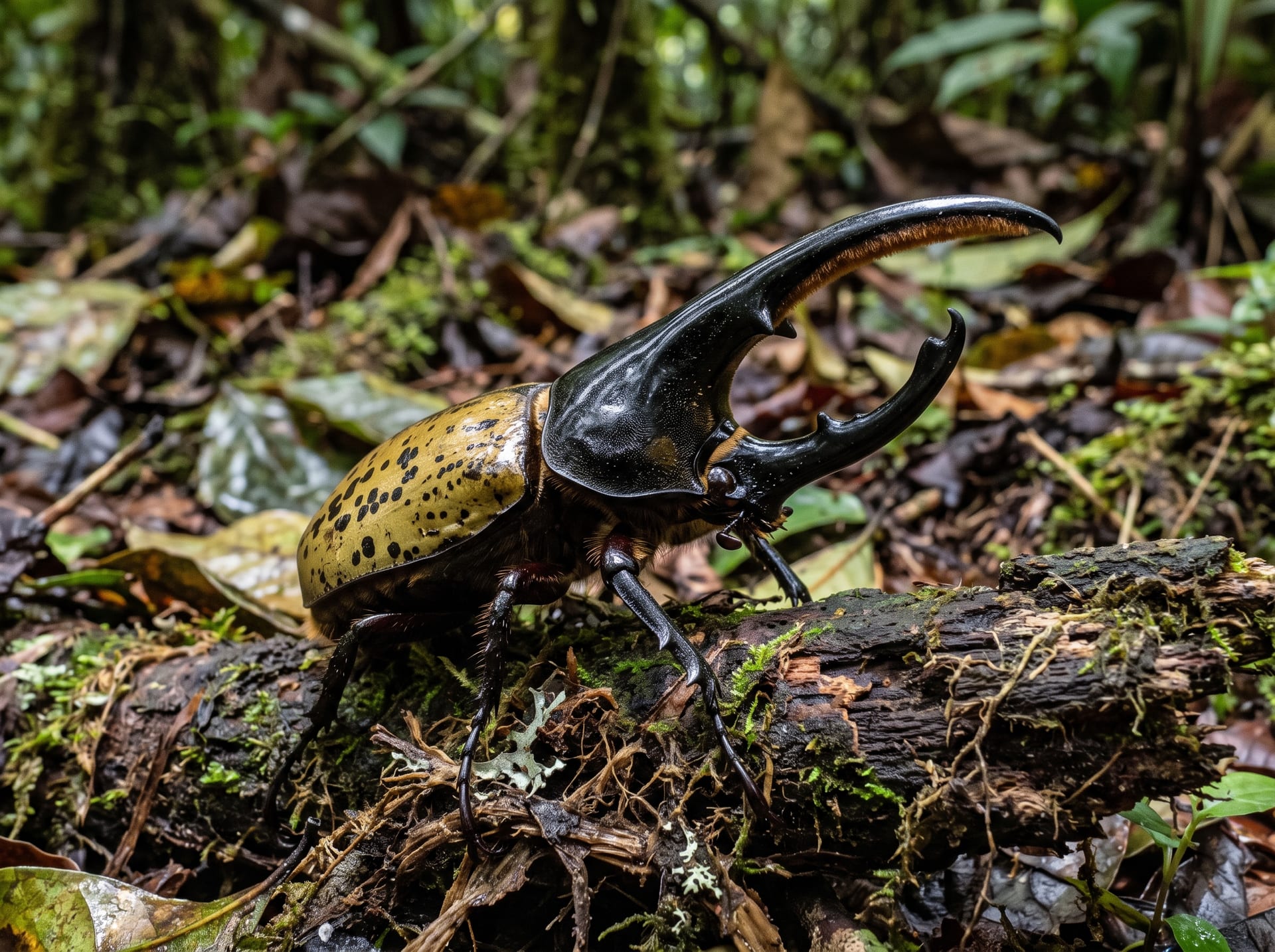
Hercules Takakuwai
The Hercules Takakuwai is a subspecies of Hercules beetle native to Rondônia state in northern Brazil. What sets it apart is its understated horn: among all Hercules beetle subspecies, its horn appendages are the least developed, with almost no basal process at the base of the head horn, giving it a simpler, cleaner silhouette. Its elytra carry a warm, brownish ochre-yellow tone accented by slightly bolder black markings. Adults typically live 8 to 12 months, giving keepers a fairly long stretch of time with their beetle. That said, it's generally considered a subspecies for experienced keepers, so it suits those who already have some background raising large rhinoceros beetles.
View Hercules Takakuwai encyclopedia →Breeder Wanted!
List on BreederDirect and sell directly to customers nationwide!
BreederDirect's 6 Transparency Commitments
When listing Insects, Breeders disclose the following. We guarantee transparency on growth stage and breeding unit.
- Life Stage Clarity
- Generation Info
- Real Photos
- Breeding Unit
- Country of Origin
- Body Length (mm)
Browse all 336 breeds
No listings match your filters
Adjust your filters, or get notified when new listings arrive.
Getting alerts is free with a member account. When new listings match your saved search, we'll notify you by email and in-app.
Browse other categories
Verified breeders (preview)
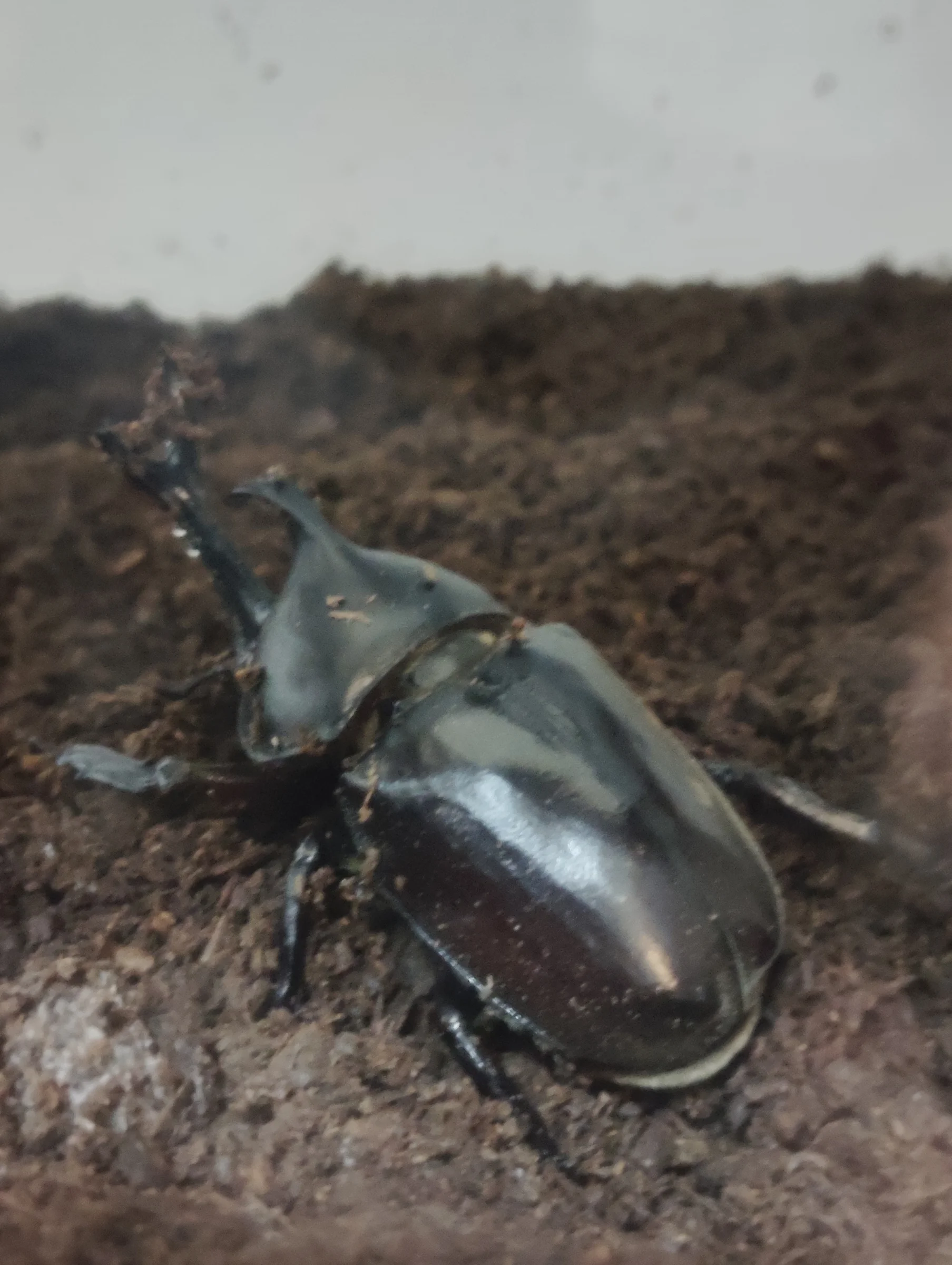
Hercules Takakuwai key facts
- Care level
- Advanced
- Lifespan
- Adults 8-12 months
- Size
- Males 70-142 mm / females 50-65 mm
- Temperature
- 20〜26℃
- Diet
- Beetle jelly, banana
- Temperature & Humidity
- Keep at roughly 20-26 C and avoid Japanese summer heat. From Rondonia, Brazil; it dislikes stuffy heat.
- Breeding & Egg-laying
- Females lay in fermented substrate packed 20 cm or deeper. Rear larvae singly in roughly 10 L containers; the larval period is long, 1-1.5 years for females and 1.5-2 years for males, and shortens at higher temperatures.
- Cohabitation
- Basically mild-tempered, but fights over food, so keep singly. Very rarely a male crushes and kills a female, so never leave a pair unattended.
- Lifespan & Rearing Period
- Adults live about 8-12 months. Egg to emergence takes 1.5-2.5 years, so patience is needed.
- Health & Notes
- The thoracic and cephalic horns pinch very hard, so keep fingers clear. A cramped enclosure stresses males and shortens their life. Long-horned males tip over easily, so add footholds.
About Hercules Takakuwai
The Hercules Takakuwai is a Brazilian Hercules beetle subspecies with an understated horn and brownish elytra. Adults live 8–12 months; best suited to experienced keepers.
7 things to know before welcoming a Hercules Takakuwai
1Housing for a Large Beetle
Larvae need a deep, spacious container to form their pupal chamber. Since males can reach 70–142mm in length, adult enclosures should also be roomy enough for comfortable movement.
2A Subtly Shaped Horn
Among all Hercules beetle subspecies, this one has the least developed horn appendages, with almost no basal process on the head horn. It offers keepers a different look within the same species.
3Keep Adults Separate
This subspecies is generally docile, but adults can fight over food. Avoid group housing and keep each adult in its own enclosure.
4Don't Disturb Pupation
Once a larva begins forming its pupal chamber, avoid vibration or digging around it and let it develop undisturbed. Disturbing this stage can lead to problems during emergence.
5Mind the Adult Lifespan
Adults typically live around 8 to 12 months. Plan your care routine around how long you'll actually get to spend with your beetle after it emerges.
6Insect Jelly Is the Staple
Standard insect jelly sold at pet shops covers most of an adult's dietary needs. Because of its larger body size, it may eat more than smaller species, so check and refresh the jelly regularly.
7Keep Temperature Stable
Aim for a temperature of about 20–26°C and avoid high summer heat and stuffy, humid conditions, which this subspecies tolerates poorly. Keep the enclosure out of direct sunlight as well.
Frequently asked questions about Hercules Takakuwai
- Q.Is this beetle suitable for beginners?
- A.The Hercules Takakuwai is generally considered a subspecies for experienced keepers. It's a good idea to build experience with large rhinoceros beetles before taking one on.
- Q.How long do adults typically live?
- A.Adults usually live for about 8 to 12 months. Keep this in mind when thinking about how long you'll be able to enjoy time with your beetle.
- Q.How much do males and females differ in size?
- A.Males typically reach 70–142mm while females reach 50–65mm, with males growing noticeably larger. The size gap, along with the presence of a horn, makes the sexes easy to tell apart.
- Q.What makes this subspecies visually distinct?
- A.It has the least developed horn appendages of any Hercules beetle subspecies, with almost no basal process on the head horn, giving it a simpler profile. Its elytra are a warm, brownish ochre-yellow with somewhat larger black markings.
- Q.What should I watch for when raising the larvae?
- A.Once a larva starts building its pupal chamber, keep the environment calm and avoid vibration. Digging it up unnecessarily can interfere with successful emergence.
Useful tools for Hercules Takakuwai care
Learn more about Hercules Takakuwai in the encyclopedia
View Hercules Takakuwai encyclopedia entry →
Care difficulty, lifespan, size and diet — all basics covered.
More in this category
Can't find the one you're looking for?
Post your wishes for free and breeders with matching animals will contact you with introductions.