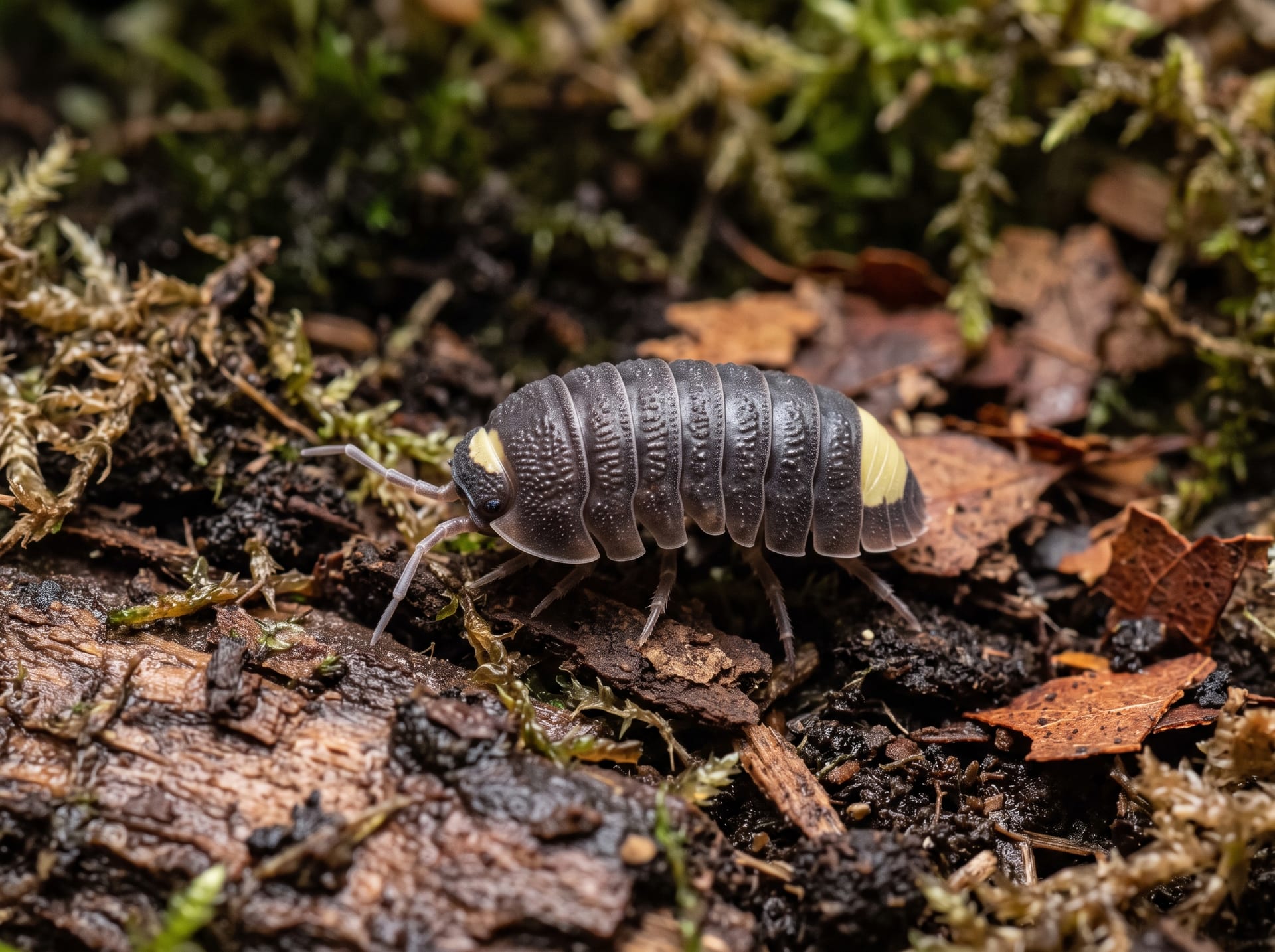
Rubber Ducky Isopod
The Rubber Ducky Isopod is a standout among Cubaris-type woodlice, named for the yellow knobs on its head that resemble a toy rubber duck. It has yet to be formally described by science, so "Cubaris sp." is technically the correct name. This isopod thrives in high humidity and breeds at a slow, steady pace, rewarding patient keepers with gradual colony growth. As a true detritivore, it lives on decaying wood, leaf litter, and other organic matter, and it poses no risk to humans since it doesn't bite. Its distinctive look and calm nature have made it a favorite among isopod and exotic invertebrate enthusiasts.
View Rubber Ducky Isopod encyclopedia →0% commission on your first sales!Register by September 30, 2026 and your first 2 sales are commission-free!
Breeder Wanted!
List on BreederDirect and sell directly to customers nationwide!
5 Transparency Standards You Can Trust
When listing Exotic Invertebrates, Breeders disclose the following. We guarantee transparency on growth stage and breeding unit.
- Real Photos
- Breeding Unit
- Generation Info
- Body Length (mm)
- Country of Origin
Browse all 249 breeds
No listings match your filters
Adjust your filters, or get notified when new listings arrive.
Getting alerts is free with a member account. When new listings match your saved search, we'll notify you by email and in-app.
Browse other categories
Verified breeders (preview)
Are you raising exotic invertebrates?
Register as a breeder and connect with buyers directly.
Apply as a breederRubber Ducky Isopod key facts
- Care level
- Intermediate
- Lifespan
- About 2-3 years
- Size
- About 1-1.5 cm
- Temperature
- 21〜26℃
- Humidity
- 70〜85%
- Diet
- Mainly decaying leaf litter and rotten wood, supplemented with vegetable scraps, occasional protein (e.g., fish flakes), and a calcium source such as cuttlebone or eggshell.
- Habitat
- A ventilated tub with leaf litter, rotten wood, and limestone, plus plenty of hides.
- Temp & Humidity
- Keep 21-26C with high humidity, dampening one side to create a moisture gradient.
- Feeding
- Keep leaf litter available and add small amounts of protein and calcium.
- Notes
- Breeds slowly and is sensitive to drying out; entirely harmless with no bite or venom.
About Rubber Ducky Isopod
A popular Cubaris-type isopod named for its duck-like yellow head knobs. Prefers high humidity, breeds slowly, and is fully detritivorous and harmless to humans. Lifespan is about 2-3 years; suited to intermediate keepers.
7 things to know before welcoming a Rubber Ducky Isopod
1High Humidity Is Essential
This isopod requires consistently high humidity, so substrate moisture management is essential. Use a thick layer of moisture-retentive substrate like sphagnum moss or leaf litter, and mist regularly to prevent drying out. At the same time, ensure adequate ventilation to avoid a stagnant, overly wet environment.
2Breeding Takes Patience
Breeding progresses slowly, so building up a colony takes patience. Success comes from maintaining stable temperature and humidity along with a steady food supply, without disturbing the setup too often. Avoid trying to force rapid population growth.
3Easy Feeding as a Detritivore
As a true detritivore feeding on decaying wood, leaf litter, and fungi, this isopod is relatively low-maintenance when it comes to feeding. It will also accept insect jelly or vegetable scraps, but organic matter within the substrate serves as its main food source.
4Harmless and Safe to Keep
Being a pure detritivore, it never bites and is harmless to handle. That said, frequent handling can stress the animal, so it's best enjoyed mainly through observation rather than regular handling.
5Scientifically Undescribed
This species has not yet been formally described by science, so the technically correct designation is "Cubaris sp." The common name simply reflects its distinctive appearance rather than an official classification.
6Small Adult Size
Adults stay small, reaching only about 1-1.5 cm in length, so they don't take up much visual space in an enclosure. They tend to hide within the substrate and small crevices, so choosing the right timing and lighting helps when you want to observe them closely.
7Prepare the Enclosure First
Before bringing one home, prepare a ventilated, lidded enclosure with moisture-retentive substrate and hiding spots such as decaying wood or leaf litter. Since this species is considered suited to intermediate keepers, it helps to understand the basics of humidity management beforehand.
Frequently asked questions about Rubber Ducky Isopod
- Q.Can beginners keep this isopod?
- A.The Rubber Ducky Isopod is generally considered suited to intermediate keepers. Those with some isopod-keeping experience and a grasp of humidity management can take it on, but complete beginners may want to start with an easier species first.
- Q.How big does it get?
- A.Adults reach only about 1-1.5 cm in length. As a small isopod, it doesn't require a large enclosure.
- Q.What is its lifespan?
- A.The typical lifespan is around 2-3 years. Maintaining stable temperature, humidity, and consistent care helps support a healthy lifespan.
- Q.Does it bite or have venom?
- A.No, it is a pure detritivore and does not bite or possess venom. It lives harmlessly on decaying wood, leaf litter, and other organic matter.
- Q.Can it be bred at home?
- A.Yes, breeding is possible, though it progresses slowly. With stable humidity and a consistent environment, the colony will gradually grow over time with patient care.
Learn more about Rubber Ducky Isopod in the encyclopedia
View Rubber Ducky Isopod encyclopedia entry →
Care difficulty, lifespan, size and diet — all basics covered.
More in this category
Can't find the one you're looking for?
Post your wishes for free and breeders with matching animals will contact you with introductions.