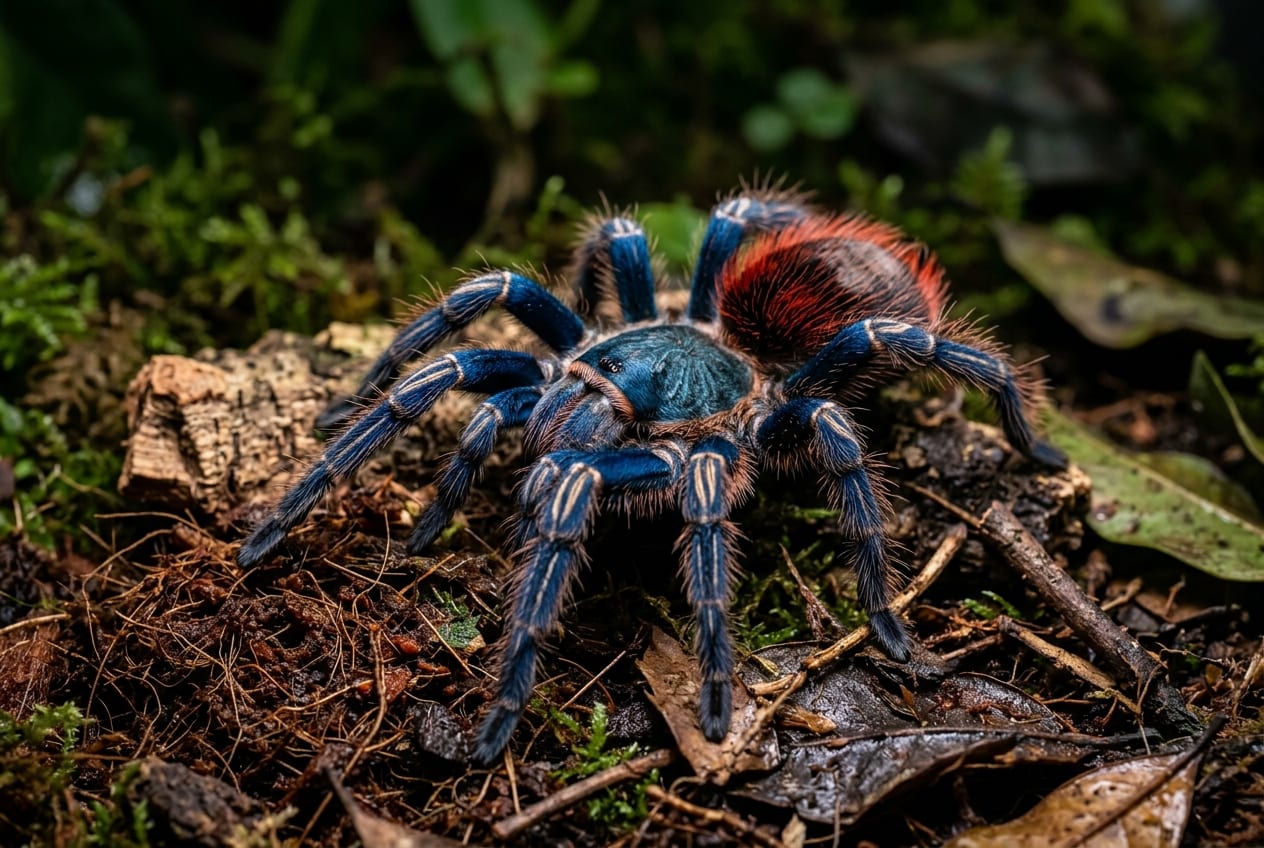
Peruvian Blue Tarantula
The Peruvian Blue Tarantula is a striking terrestrial species native to Peru, prized for its cool blue-toned body accented with cream-colored leg banding and a tuft of reddish hairs on the abdomen. With a leg span of around 12cm, it's on the smaller side for a tarantula, and its calm temperament makes it relatively easy to work with. It thrives under standard terrestrial tarantula husbandry — a secure hideaway plus moderate humidity — and its unhurried movements make it a good fit for keepers who already have some tarantula experience. Its unusual coloration paired with a steady disposition makes it a rewarding species to observe.
View Peruvian Blue Tarantula encyclopedia →0% commission on your first sales!Register by September 30, 2026 and your first 2 sales are commission-free!
Breeder Wanted!
List on BreederDirect and sell directly to customers nationwide!
5 Transparency Standards You Can Trust
When listing Exotic Invertebrates, Breeders disclose the following. We guarantee transparency on growth stage and breeding unit.
- Real Photos
- Breeding Unit
- Generation Info
- Body Length (mm)
- Country of Origin
Browse all 249 breeds
No listings match your filters
Adjust your filters, or get notified when new listings arrive.
Getting alerts is free with a member account. When new listings match your saved search, we'll notify you by email and in-app.
Browse other categories
Verified breeders (preview)
Are you raising exotic invertebrates?
Register as a breeder and connect with buyers directly.
Apply as a breederPeruvian Blue Tarantula key facts
- Care level
- Intermediate
- Lifespan
- Females 12-15 years / males 3-4 years
- Size
- About 12cm leg span
- Temperature
- 20〜24℃
- Humidity
- 70〜80%
- Diet
- Live insects such as crickets and roaches
- Temperature & Humidity
- Keep around 20-24 C and roughly 70-80% humidity, with a permanent water dish and one damp corner of substrate. Ventilate well to prevent mould.
- Enclosure
- Terrestrial, so use a horizontal enclosure with generous substrate. Provide a cork bark hide and leave any burrow it digs undisturbed.
- Diet & Feeding
- Offer live insects such as crickets and roaches, spacing out feedings while the abdomen is plump.
- Temperament & Venom
- Trade sources rate it as easy to handle in husbandry terms. As a New World species it has urticating hairs. No reports on its venom exist.
- Notes
- Its name is in transition and it is sold both as Thrixopelma cyaneolum and as Ewok cyaneolum. Do not confuse it with the larger Homoeomma sp. Blue Large, a different species.
About Peruvian Blue Tarantula
A terrestrial tarantula from Peru with a bluish body, cream leg banding, and reddish abdominal hairs. Leg span about 12cm; calm temperament, suited to intermediate keepers.
7 things to know before welcoming a Peruvian Blue Tarantula
1Burrows in substrate
Peruvian Blues are terrestrial and like to dig into the substrate or retreat into a burrow-like hide. Provide a deep enough substrate layer and a proper hideaway in the enclosure.
2Calm temperament
Compared with some other tarantula species, it's known for a relatively calm temperament and less skittish behavior. That said, the usual tarantula-handling precautions — avoid provoking it and don't handle it bare-handed — still apply.
3Coloring develops with age
The bluish tone and cream leg banding become more pronounced as the spider matures, so juveniles may look less vivid than adults. Patience pays off if you're looking forward to its full coloration.
4Mid-sized leg span
Adults reach a leg span of around 12cm, putting them in the small-to-medium range for tarantulas. This makes cage space requirements more modest than for larger species.
5Handle with care near molting
Before molting, activity may slow and appetite can drop, and right after a molt the exoskeleton is soft and the spider is very vulnerable. Avoid handling or rearranging the enclosure during this period and let it rest undisturbed.
6Humidity balance matters
Following standard terrestrial tarantula setup, keep the substrate moderately humid while maintaining good ventilation. Overly damp conditions can lead to mold or health issues, so balance moisture with a water dish and airflow.
7Prep your setup in advance
Have the enclosure, substrate, hide, and water dish ready before bringing one home. Since this species is considered suited to intermediate keepers, it helps to know the basics of tarantula care — feeding frequency, molt handling, and handling limits — beforehand.
Frequently asked questions about Peruvian Blue Tarantula
- Q.Is the Peruvian Blue suitable for beginners?
- A.It's generally considered a species suited to intermediate keepers. While its temperament is relatively calm, it's best to have some tarantula husbandry basics — temperature/humidity control, molt handling — in place before bringing one home.
- Q.How big do they get?
- A.Adults reach a leg span of about 12cm, placing them in the small-to-medium range among tarantulas.
- Q.Is it safe to handle bare-handed?
- A.It's known for a relatively calm temperament, but as with all tarantulas, bare-handed handling carries some risk. Avoid provoking it, and use appropriate tools when handling is necessary.
- Q.Is it subject to CITES?
- A.The Peruvian Blue Tarantula is not subject to CITES.
- Q.What is its temperament generally like?
- A.It's generally described as calm and can be kept under standard terrestrial tarantula housing conditions. That said, individual personality can vary, so it's best to observe each spider's behavior.
Learn more about Peruvian Blue Tarantula in the encyclopedia
View Peruvian Blue Tarantula encyclopedia entry →
Care difficulty, lifespan, size and diet — all basics covered.
More in this category
Can't find the one you're looking for?
Post your wishes for free and breeders with matching animals will contact you with introductions.