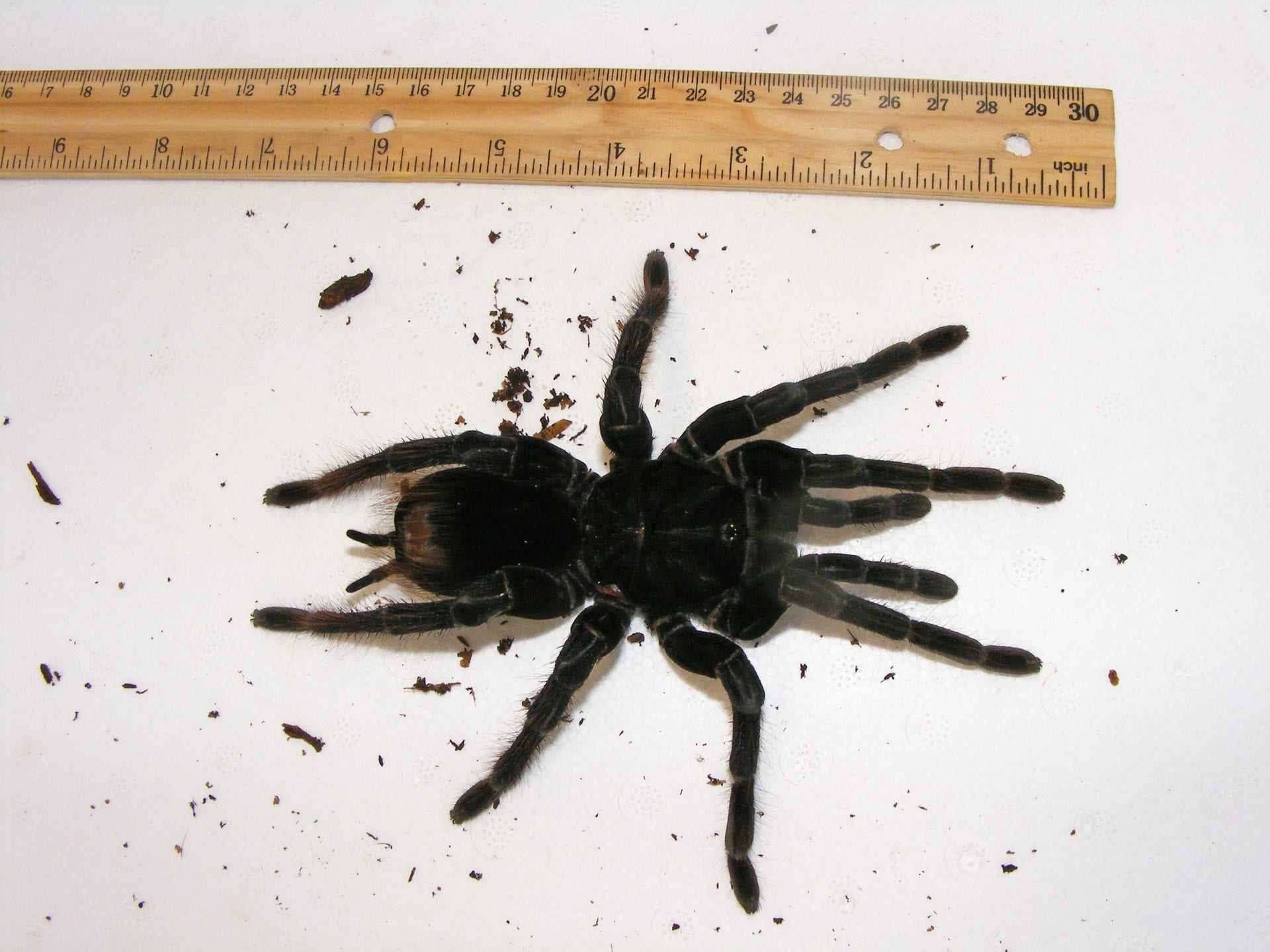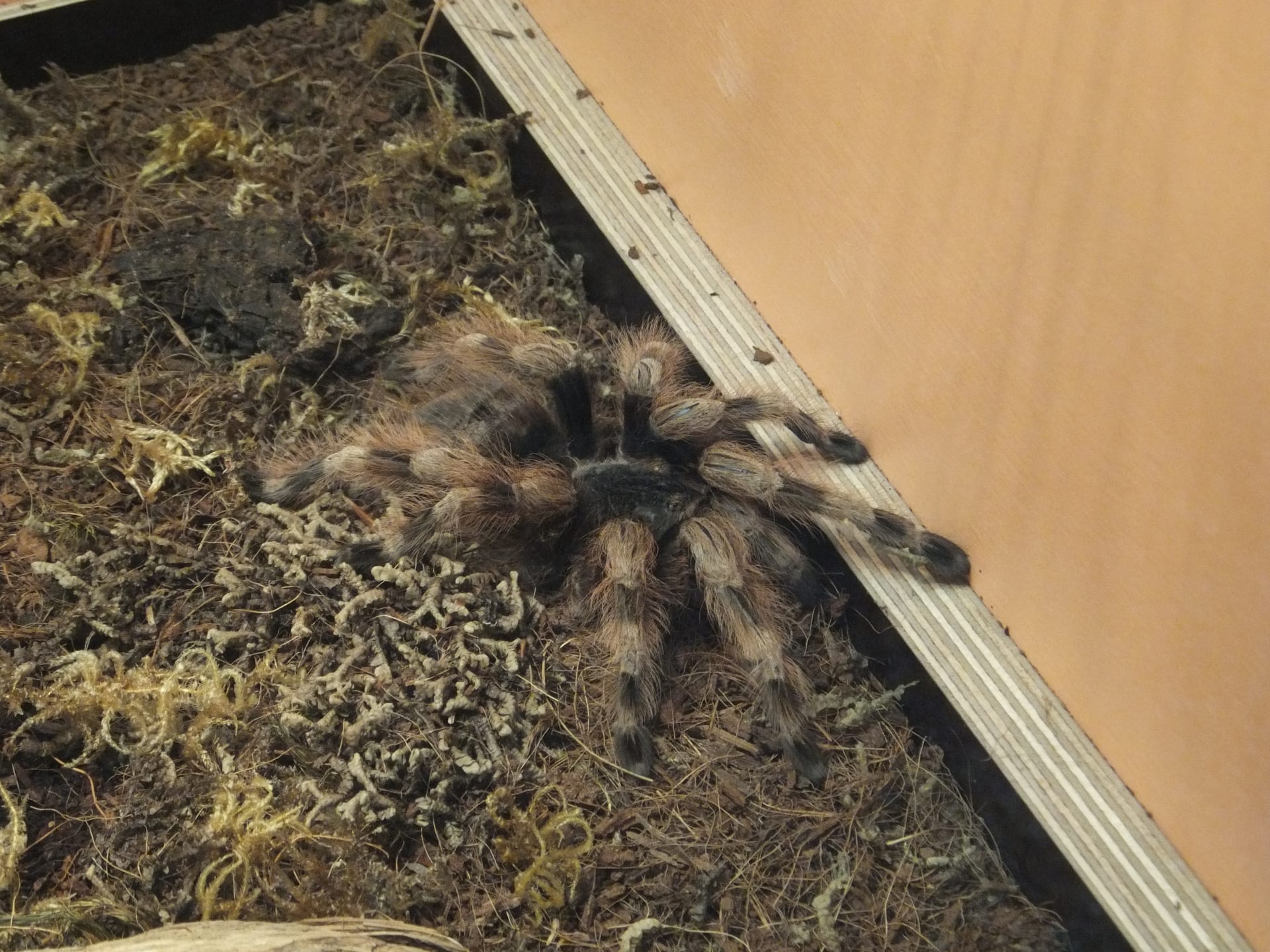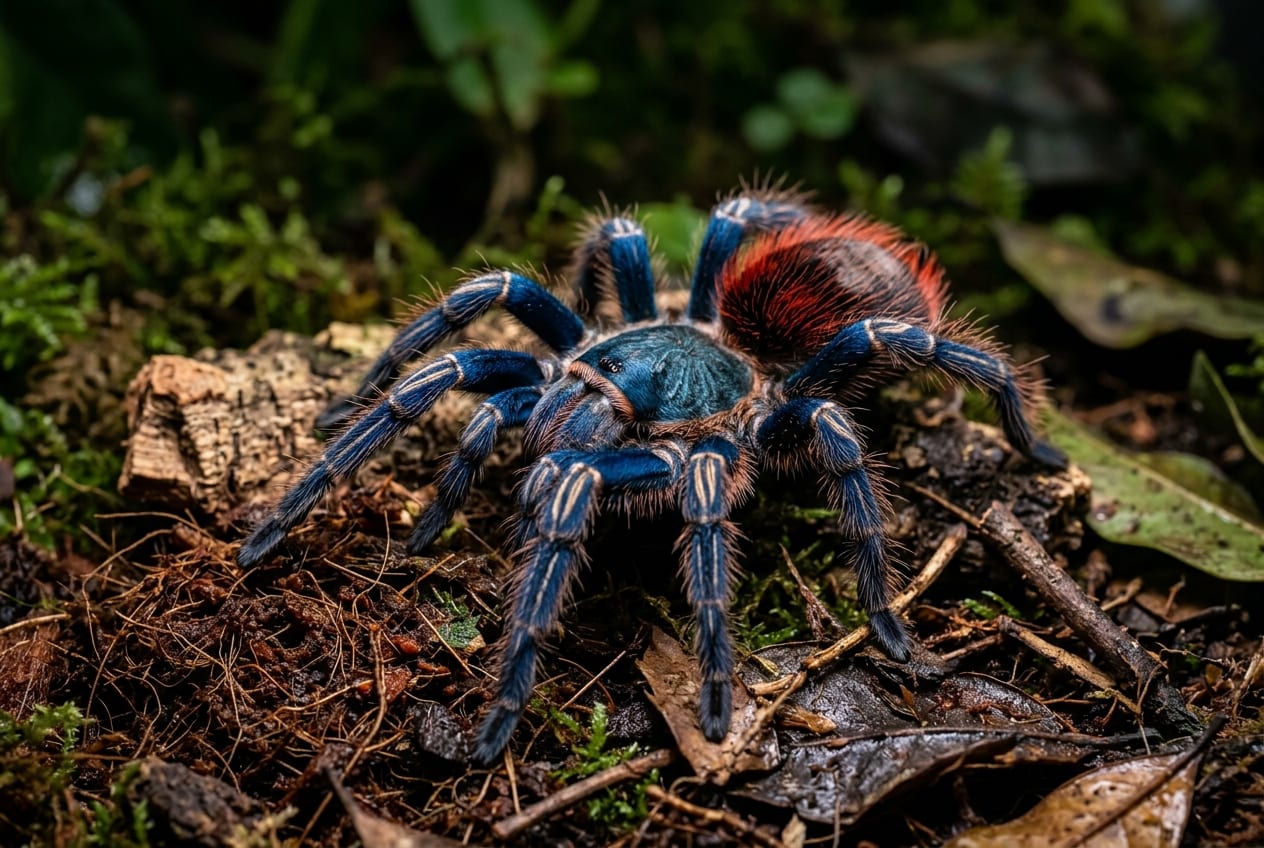
AI-generated image
Peruvian Blue Tarantula
IntermediateThrixopelma cyaneolum
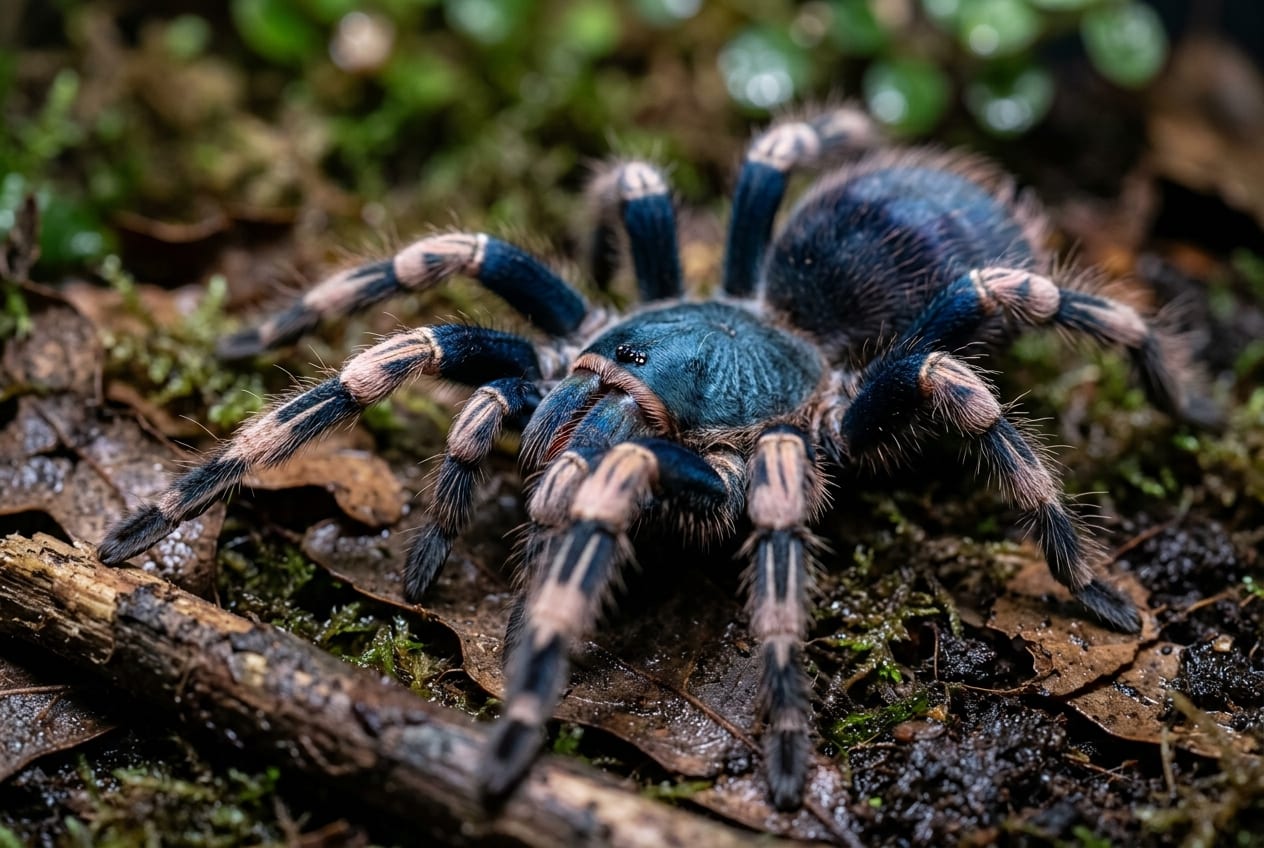
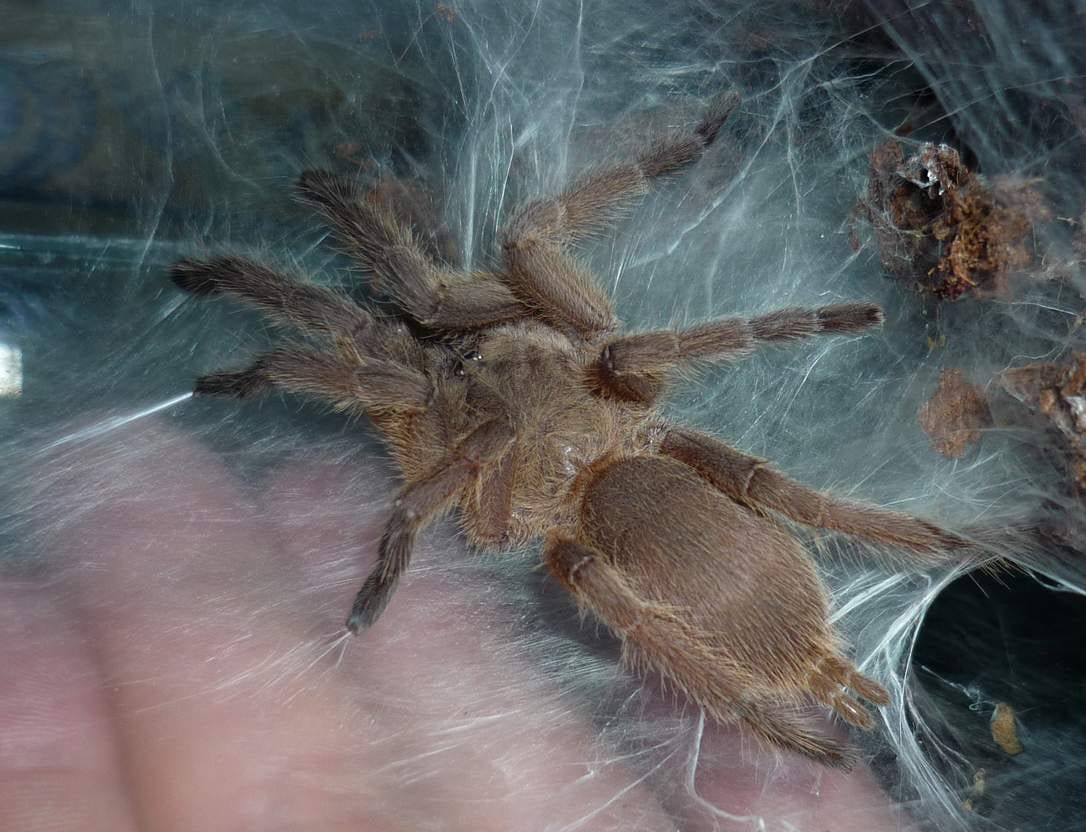
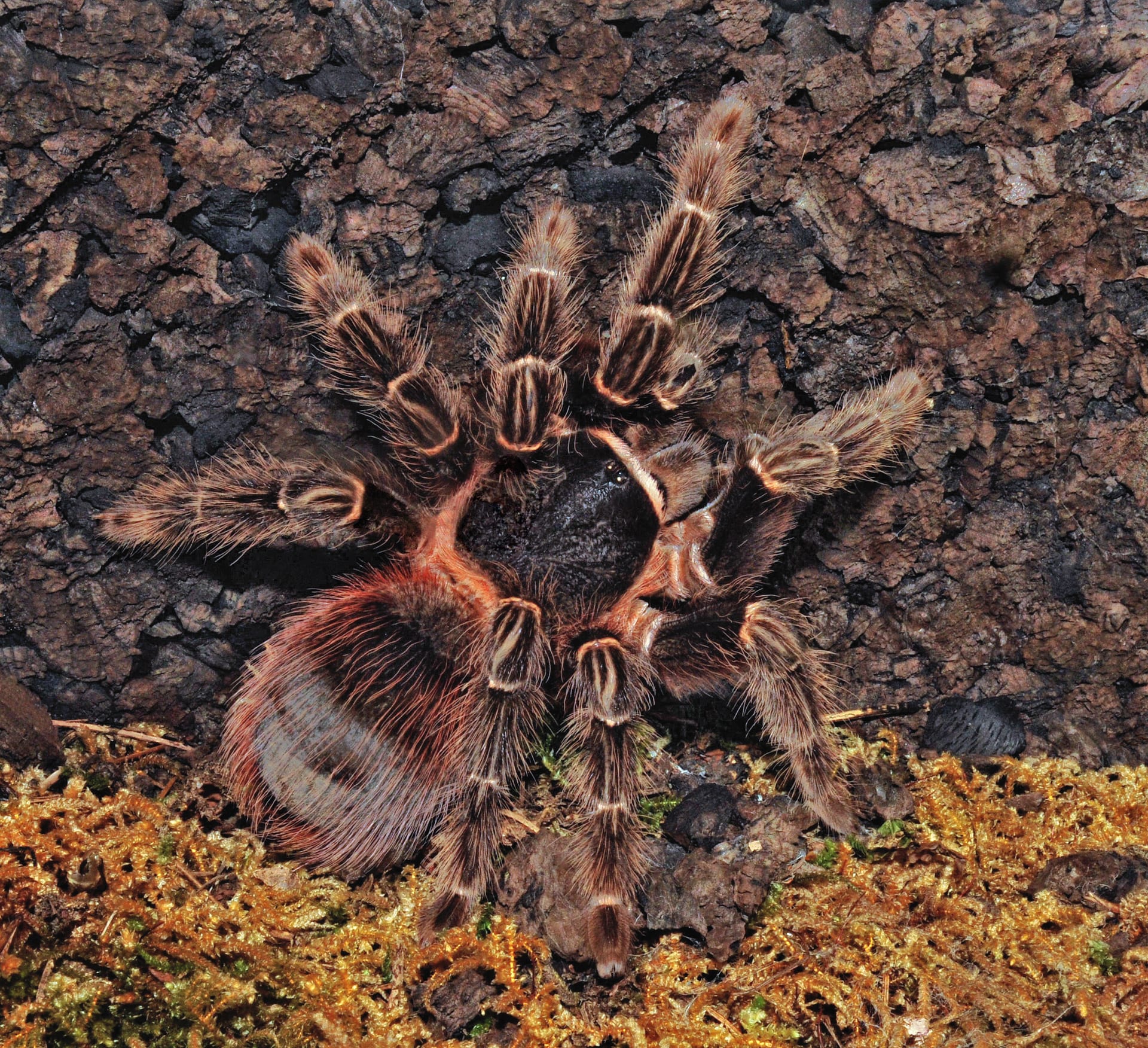
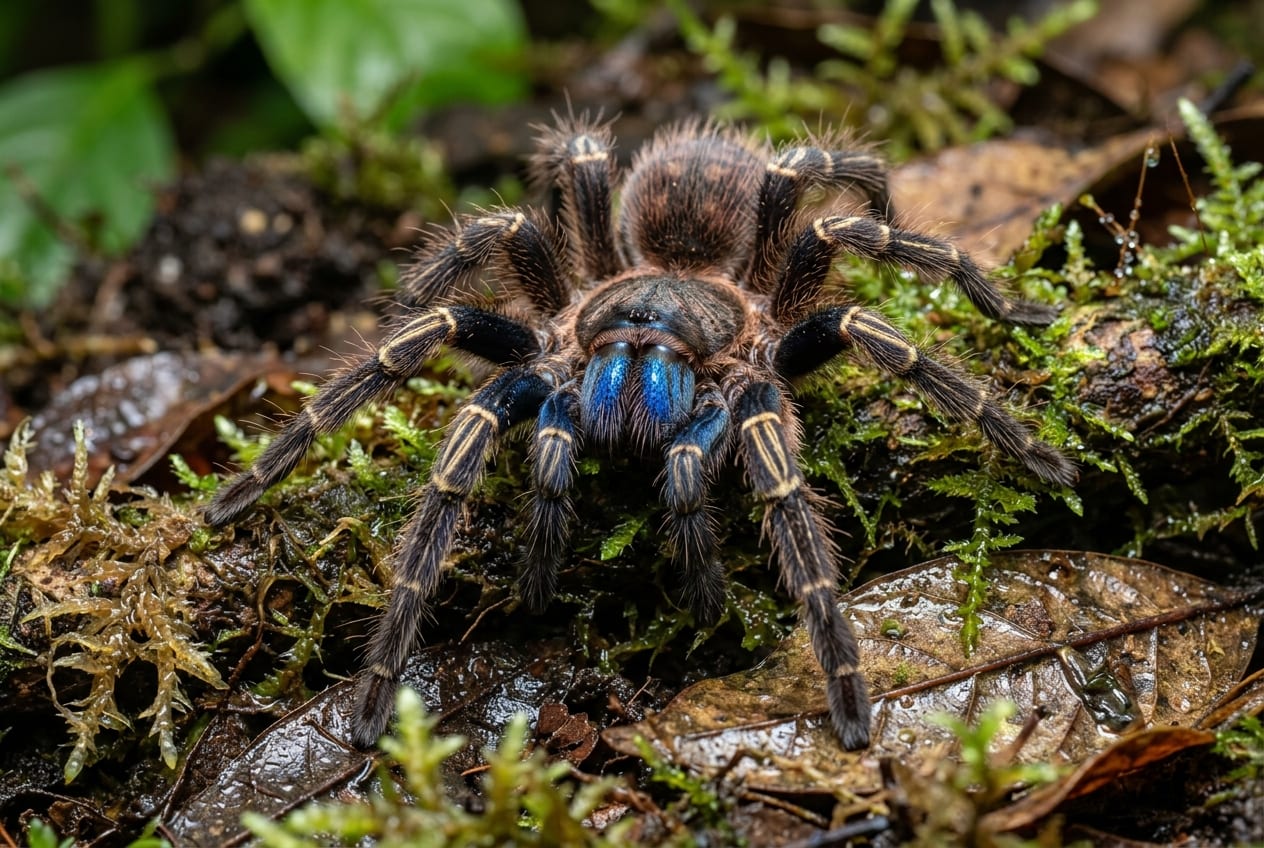
A blue tarantula from Peru, its compact body set off by cream stripes on the legs and red tufts on the abdomen. Leg span is about 12cm. It is terrestrial, even-tempered and not difficult to keep.
Difficulty
Intermediate
Temperature
20〜24℃
Lifespan
Females 12-15 years / males 3-4 years
Size
About 12cm leg span
Humidity
70〜80%
Diet
Live insects such as crickets and roaches
About
Thrixopelma cyaneolum is a terrestrial tarantula described from Peru in 2005 by Schmidt, Friebolin and Friebolin. It is marked by blue coloration with cream stripes on the legs and red tufts on the abdomen, and at about 12 cm leg span it stays small for the group. The original description was published as a paper debating whether the animal was a new species of Homoeomma, so its generic placement was contested from the outset. Sherwood and colleagues moved it to the new genus Ewok in their 2025 revision of the tribe Hapalopini, and sources following the World Spider Catalog now use Ewok cyaneolum. In the hobby it circulated for years as Homoeomma sp. 'Blue, Small' and was confused with the larger 'Blue Large' line. It is even-tempered and can be kept with a standard terrestrial setup.
Source: Wikipedia (CC BY-SA 4.0)
Lifespan of the Peruvian Blue Tarantula
The Peruvian Blue Tarantula lives Females 12-15 years / males 3-4 years.
Size of the Peruvian Blue Tarantula
The Peruvian Blue Tarantula grows to About 12cm leg span.
Temperature & humidity for the Peruvian Blue Tarantula
The ideal temperature for the Peruvian Blue Tarantula is 20〜24℃. Ideal humidity is 70〜80%.
Basic Info
Origin
Peru
Lifespan
Females 12-15 years / males 3-4 years
Care Specifications
PeacefulSolitary
Sources: The Spider Shop: Thrixopelma cyaneolum / Tarantupedia: Ewok cyaneolum / Wikipedia: Thrixopelma / GBIF
References & Sources
Edited & verified by: BreederDirect editorial team
The taxonomic, regulatory, and husbandry data on this page are compiled and verified against the authoritative primary sources below.
Taxonomy & Authority
Accepted name: Thrixopelma cyaneolum Schmidt, Friebolin & Friebolin, 2005
Authority databases: GBIF
Nomenclature follows global taxonomic authority databases.
Regulations & Conservation Status
Not CITES-listed
Sources: CITES Appendices (species not listed)
Regulations may change. Always verify the latest information with the relevant authorities.
Peruvian Blue Tarantula Listings
Loading latest listingsFind listings for this species