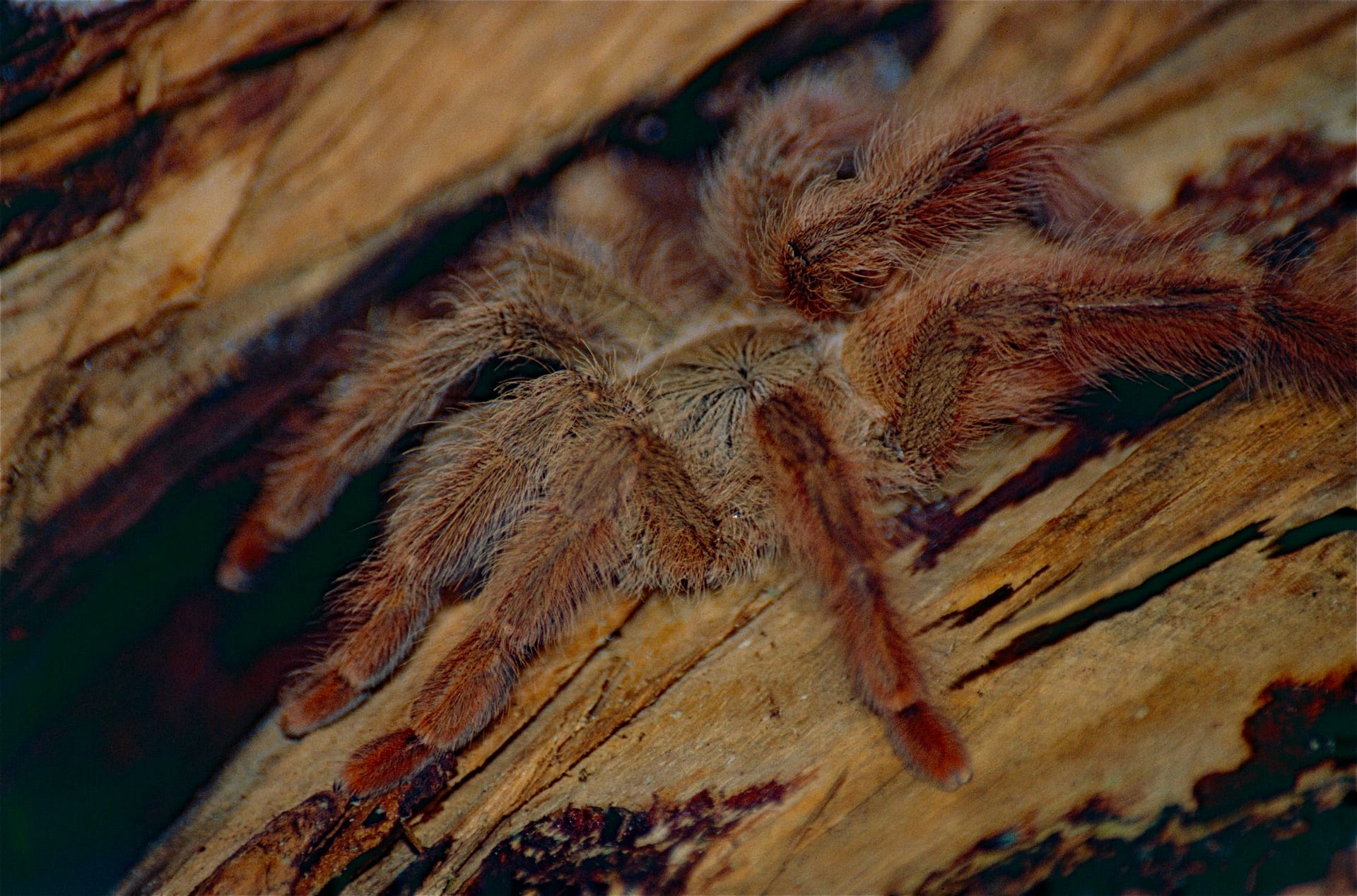
 © Bernard DUPONT / CC BY-SA 2.0
Orange Tree Spider
The Orange Tree Spider is an arboreal tarantula known for its vivid orange body hair and legs shimmering with green and blue metallic tones. In the wild, it lives in the Amazon lowland forest, spinning sac-like webs inside tree bark crevices, and it appreciates a similar vertical setup with climbing branches and hiding spots in captivity. Fast-moving and a strong jumper, it has a wilder, more alert temperament than many terrestrial species, so care is needed to prevent escapes when opening the enclosure. With its striking coloration and lively behavior, it's a popular choice for keepers who already have some tarantula experience under their belt.
View Orange Tree Spider encyclopedia →0% commission on your first sales!Register by September 30, 2026 and your first 2 sales are commission-free!
Breeder Wanted!
List on BreederDirect and sell directly to customers nationwide!
5 Transparency Standards You Can Trust
When listing Exotic Invertebrates, Breeders disclose the following. We guarantee transparency on growth stage and breeding unit.
- Real Photos
- Breeding Unit
- Generation Info
- Body Length (mm)
- Country of Origin
Browse all 249 breeds
No listings match your filters
Adjust your filters, or get notified when new listings arrive.
Getting alerts is free with a member account. When new listings match your saved search, we'll notify you by email and in-app.
Browse other categories
Verified breeders (preview)
Are you raising exotic invertebrates?
Register as a breeder and connect with buyers directly.
Apply as a breederOrange Tree Spider key facts
- Care level
- Intermediate
- Lifespan
- Females 4-5 years; males 2-3 months after maturing
- Size
- Body about 5cm (female)
- Diet
- Active live insects such as crickets and roaches
- Temperature & Humidity
- It comes from lowland Amazon rainforest, so the enclosure should not be allowed to dry out.
- Enclosure
- Use a vertical enclosure with cork bark set upright as an anchor for webbing, and provide a crevice that mimics a tree hollow.
- Diet & Feeding
- Offer active live prey such as crickets and roaches. It feeds readily and will often leave the web to catch prey.
- Temperament & Venom
- It is nervous, sometimes adopts a threat posture, and both jumps and runs fast. The venom is considered weak, but the spider should not be handled.
- Notes
- Females live only 4-5 years, short even for an arboreal, and males die 2-3 months after maturing. Escape during maintenance is the main risk.
About Orange Tree Spider
The Orange Tree Spider is an arboreal tarantula with vivid orange hair and metallic green-blue legs. Learn its traits, temperament, and key care points before bringing one home.
7 things to know before welcoming a Orange Tree Spider
1Vertical, arboreal-style housing
Unlike ground-dwelling species, this spider prefers height over floor space. Adding climbing branches and bark-like hides lets it settle in more naturally, mimicking the crevice nests it builds in the wild.
2Watch for escapes when opening the enclosure
This species is fast and jumps well, so it can dart out the moment the lid is opened. Keep openings small during feeding or cleaning, and work in a space with few escape routes.
3Best suited to keepers with some experience
This is generally considered a species for keepers who already have some tarantula experience, rather than a first pet. It helps to research the care of similar arboreal species beforehand.
4Lifespan differs greatly by sex
Females live around 4 to 5 years, while males live only about 2 to 3 months after reaching maturity. If you want a long-term companion, confirm the sex before bringing one home.
5Humidity and temperature care
Originating from the Amazon lowland forest, this species is not well suited to overly dry conditions. Keep a water dish in the enclosure and use substrate that holds a moderate amount of moisture.
6Temperament is not suited to handling
Like many arboreal species, it tends to flee quickly or display defensive postures when startled. This spider is better suited to watching from a distance than to hands-on handling.
7Give it quiet space around molting
The period around molting is a physically vulnerable time. Appetite may drop during this stage, so avoid unnecessary handling or disturbance and let it molt undisturbed.
Frequently asked questions about Orange Tree Spider
- Q.Can beginners keep this species?
- A.This species is generally considered suitable for intermediate keepers. Since it moves quickly and jumps well, it's best to gain basic experience with another tarantula first.
- Q.How long does it live?
- A.Females live around 4 to 5 years, but males live only about 2 to 3 months after maturing. If you want a long-term pet, checking the sex beforehand matters.
- Q.Can it be handled?
- A.It tends to flee quickly or become defensive when startled, so it's not well suited to active handling. It's best enjoyed as a species to observe rather than touch.
- Q.How large does it grow?
- A.Adult females reach a body length of about 5cm. Growth speed varies between individuals in captivity, so the size at the time of purchase can range from juvenile to subadult.
- Q.Are there any legal restrictions?
- A.This species is not subject to CITES.
Learn more about Orange Tree Spider in the encyclopedia
View Orange Tree Spider encyclopedia entry →
Care difficulty, lifespan, size and diet — all basics covered.
More in this category
Can't find the one you're looking for?
Post your wishes for free and breeders with matching animals will contact you with introductions.