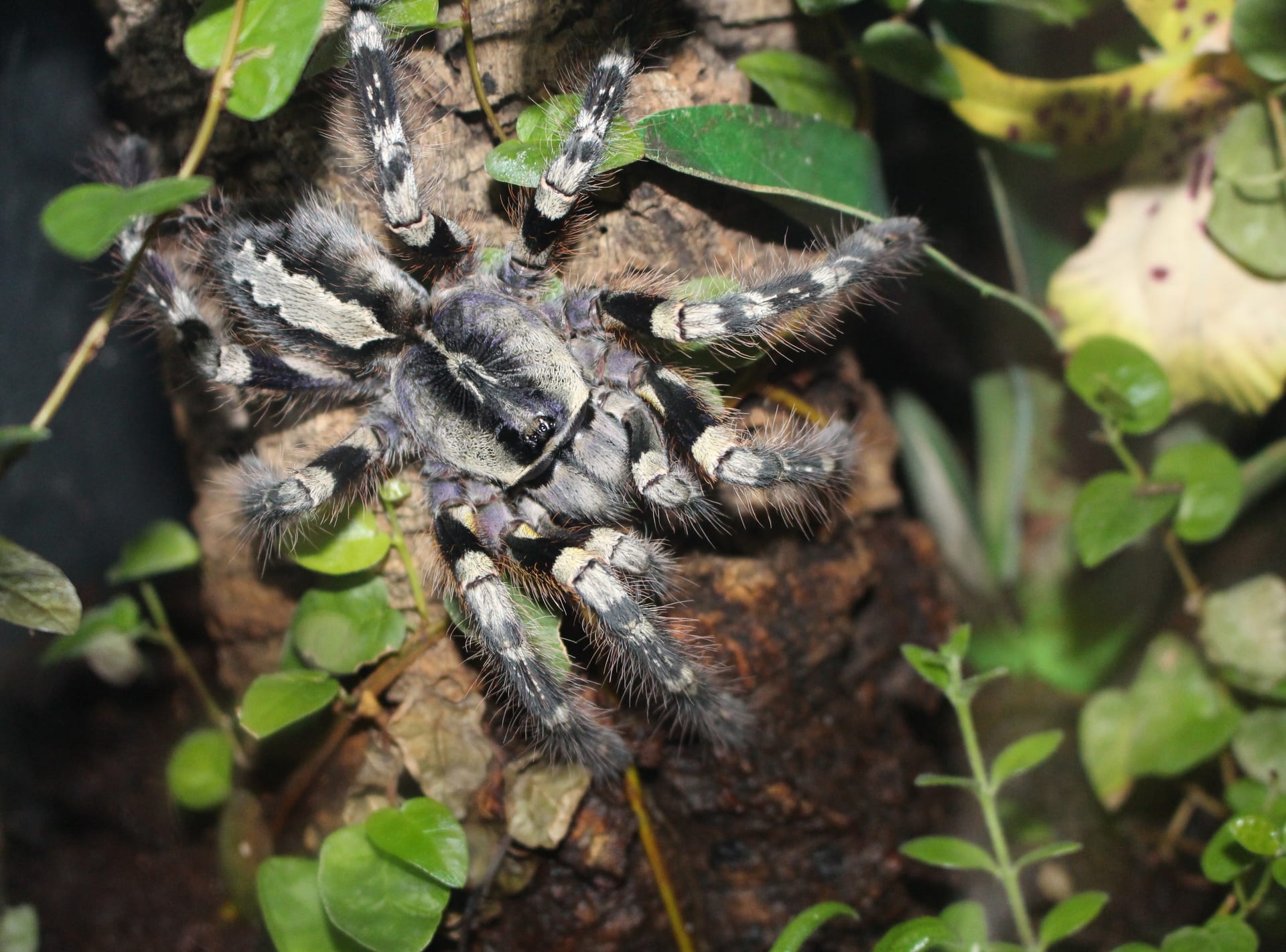
 © Poecilotheria36 / CC BY-SA 4.0
Mysore Ornamental
The Mysore Ornamental is an arboreal tarantula found only in India, prized for its striking pattern and lightning-fast movements. In the wild it lives in deciduous forests at elevations of roughly 500 to 1,000 meters, sheltering in crevices in tree bark. Its habitat has become fragmented, and it now survives in fewer than ten known locations, making captive individuals especially notable. Because it moves quickly and startles easily, handling requires real care, and this species is best suited to experienced keepers. For hobbyists seeking striking looks paired with a thrilling keeping experience, it's a rewarding choice.
View Mysore Ornamental encyclopedia →0% commission on your first sales!Register by September 30, 2026 and your first 2 sales are commission-free!
Breeder Wanted!
List on BreederDirect and sell directly to customers nationwide!
5 Transparency Standards You Can Trust
When listing Exotic Invertebrates, Breeders disclose the following. We guarantee transparency on growth stage and breeding unit.
- Real Photos
- Breeding Unit
- Generation Info
- Body Length (mm)
- Country of Origin
Browse all 249 breeds
No listings match your filters
Adjust your filters, or get notified when new listings arrive.
Getting alerts is free with a member account. When new listings match your saved search, we'll notify you by email and in-app.
Browse other categories
Verified breeders (preview)
Are you raising exotic invertebrates?
Register as a breeder and connect with buyers directly.
Apply as a breederMysore Ornamental key facts
- Care level
- Advanced
- Lifespan
- Females 12-15 years / males 3-4 years
- Temperature
- 24〜27℃
- Humidity
- 65〜75%
- Diet
- Live insects such as crickets and roaches
- Temperature & Humidity
- Care information for the genus gives 24-27 C and 65-75% humidity, with good ventilation needed to prevent mould.
- Enclosure
- Arboreal, so use a tall enclosure. Stand cork bark vertically to imitate a tree hollow and provide a water dish.
- Diet & Feeding
- Offer live insects such as crickets and roaches. It builds no capture web and ambushes prey, so feed live.
- Temperament & Venom
- Fast and defensive, biting when cornered. It has no urticating hairs and relies on venom, which in this genus is regarded as medically significant; do not handle it.
- Notes
- Listed on CITES Appendix II, so international trade requires a permit. It is assessed as Vulnerable on the IUCN Red List and its habitat continues to fragment.
About Mysore Ornamental
The Mysore Ornamental is an India-endemic arboreal tarantula. This guide covers its behavior, habitat, and care essentials — a vulnerable species with striking patterns, prized by experienced keepers for its speed and beauty.
7 things to know before welcoming a Mysore Ornamental
1Needs a Tall Enclosure
This species is arboreal, so a tall enclosure with cork bark or driftwood for climbing works best. Provide a bark-like hide while keeping enough ventilation to prevent excess moisture buildup.
2Fast and Easily Startled
It's highly sensitive to vibration and sound, bolting at surprising speed when startled. Work calmly and carefully during maintenance to avoid an escape.
3Bite Risk Requires Caution
This species carries venom considered medically significant, so it isn't suited to bare-handed contact. Avoid handling and manage the enclosure with tools instead.
4Temperature and Humidity
It originates from deciduous forest at elevations of about 500-1,000 meters, adapted to some temperature variation. Keep moderate humidity in the enclosure while ensuring good airflow to avoid excess moisture.
5Provide Bark-Like Hides
In the wild, this species shelters in crevices in tree bark. Cork tubes or bark-textured hides help it feel secure in captivity.
6Wild Populations Are Scarce
This India-endemic species is considered vulnerable, surviving in fewer than ten fragmented locations in the wild. Individuals in the pet trade carry that context, worth keeping in mind as a keeper.
7Prepare the Setup in Advance
Set up the enclosure, climbing surfaces, and hides before your spider arrives so it can settle in right away. Choose feeder insects sized appropriately for its body.
Frequently asked questions about Mysore Ornamental
- Q.Is the Mysore Ornamental suitable for beginners?
- A.Because it's fast-moving and easily startled, this species is considered better suited to experienced keepers. It's generally recommended for those who already have tarantula-keeping experience.
- Q.How dangerous is its venom if it bites?
- A.This species is thought to carry venom considered medically significant. Avoiding bare-handed contact and managing the enclosure with tools helps minimize the risk.
- Q.What kind of enclosure setup does it need?
- A.As an arboreal species, it needs a tall enclosure with climbing surfaces like cork bark. Aim for moderate humidity and good airflow, similar to its native deciduous forest habitat.
- Q.Can I handle it directly with my hands?
- A.Handling isn't recommended, since it's fast-moving and easily stressed. It's best enjoyed as a species to observe, managed indirectly with tools.
- Q.What is its conservation status in the wild?
- A.It's an India-endemic species considered vulnerable, surviving in only a limited number of fragmented locations. While it does appear in the pet trade, it's a species with a notably scarce wild population.
Learn more about Mysore Ornamental in the encyclopedia
View Mysore Ornamental encyclopedia entry →
Care difficulty, lifespan, size and diet — all basics covered.
More in this category
Can't find the one you're looking for?
Post your wishes for free and breeders with matching animals will contact you with introductions.