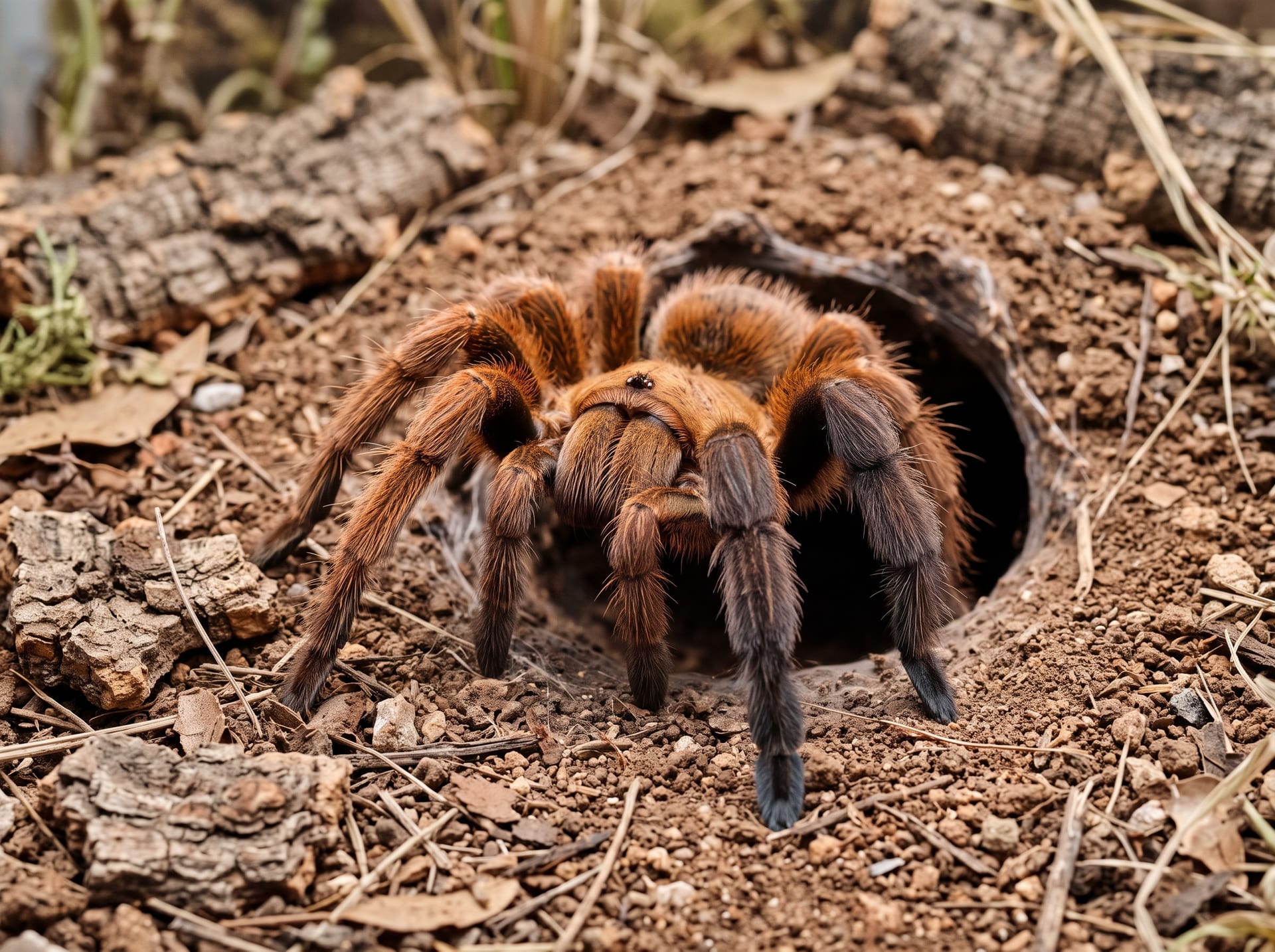
King Baboon
King Baboon spiders are large, burrowing tarantulas native to East Africa, recognized by their heavy, reddish-brown build. Adults can reach a leg span of 18 to 20 cm, giving them an imposing presence among Old World species. They dig deep burrows and spend much of their time hidden underground, but when startled they react defensively and possess a potent venom, so careful handling matters. Growth is extremely slow, yet they are remarkably long-lived — females can live 20 to 25 years, males around 10. This combination of striking looks and life-history depth makes the King Baboon a favorite among experienced keepers.
View King Baboon encyclopedia →0% commission on your first sales!Register by September 30, 2026 and your first 2 sales are commission-free!
Breeder Wanted!
List on BreederDirect and sell directly to customers nationwide!
5 Transparency Standards You Can Trust
When listing Exotic Invertebrates, Breeders disclose the following. We guarantee transparency on growth stage and breeding unit.
- Real Photos
- Breeding Unit
- Generation Info
- Body Length (mm)
- Country of Origin
Browse all 249 breeds
No listings match your filters
Adjust your filters, or get notified when new listings arrive.
Getting alerts is free with a member account. When new listings match your saved search, we'll notify you by email and in-app.
Browse other categories
Verified breeders (preview)
Are you raising exotic invertebrates?
Register as a breeder and connect with buyers directly.
Apply as a breederKing Baboon key facts
- Care level
- Advanced
- Lifespan
- Female 20-25 years / Male around 10 years
- Size
- Leg span 18-20 cm
- Temperature
- 24〜28℃
- Humidity
- 50〜65%
- Diet
- Live insects such as crickets and roaches, offered roughly weekly.
- Habitat
- Fossorial setup with very deep substrate for extensive burrowing.
- Temp & Humidity
- 24-28°C, 50-65% humidity; drier overall with slightly damp burrow base.
- Feeding
- Extremely slow grower; weekly feeding suffices.
- Caution
- No urticating hairs but stridulates defensively; venom is potent—never handle.
About King Baboon
King Baboon tarantula care guide: a large, burrowing East African species with a heavy reddish-brown build, an 18-20 cm adult leg span, potent venom, defensive temperament, and a notably long lifespan.
7 things to know before welcoming a King Baboon
1An Advanced-Level Species
Because of their defensive nature and potent venom, King Baboons are considered suitable for advanced keepers. It's best to have prior tarantula-handling experience before bringing one home.
2Deep Burrowing Habit
This is a fossorial species that spends much of its time in deep burrows dug into the substrate. Provide a deep substrate layer and hiding spots so it can burrow naturally.
3Avoid Direct Handling
When startled or provoked, King Baboons display defensive postures and can bite with potent venom. Use tongs or similar tools for maintenance rather than touching them directly.
4Extremely Slow Growth
Growth is notably slow even compared to other tarantulas. Patience and a long-term mindset are needed when raising one.
5Decades-Long Lifespan
Females live 20 to 25 years and males around 10, making this a remarkably long-lived species. Especially with females, plan for a commitment that can span decades.
6Extra Care Around Molting
Before and after molting, King Baboons are especially sensitive and fragile. Keep the environment quiet and avoid unnecessary handling during this period.
7Housing for Adult Size
Adults reach a leg span of 18 to 20 cm, making them a large species. Plan to upgrade the enclosure as they grow so it can accommodate their eventual full size.
Frequently asked questions about King Baboon
- Q.Can beginners keep a King Baboon?
- A.King Baboons are considered an advanced-level species due to their defensive temperament and potent venom. It's best to gain experience with easier tarantulas before taking one on.
- Q.How large do they get?
- A.Adults reach a leg span of about 18 to 20 cm. They are a large, burrowing member of the baboon spider group native to East Africa.
- Q.How long do they live?
- A.Females typically live 20 to 25 years, while males live around 10 years. Because of this, especially with females, keepers should be prepared for a long-term commitment.
- Q.Is their venom dangerous?
- A.King Baboons are known for having potent venom, and a bite can cause significant symptoms. Avoid direct handling and use tools during maintenance to stay safe.
- Q.Are there any legal restrictions?
- A.King Baboons are not subject to CITES. Before bringing one home, it's a good idea to research their care needs and temperament thoroughly.
Learn more about King Baboon in the encyclopedia
View King Baboon encyclopedia entry →
Care difficulty, lifespan, size and diet — all basics covered.
More in this category
Can't find the one you're looking for?
Post your wishes for free and breeders with matching animals will contact you with introductions.