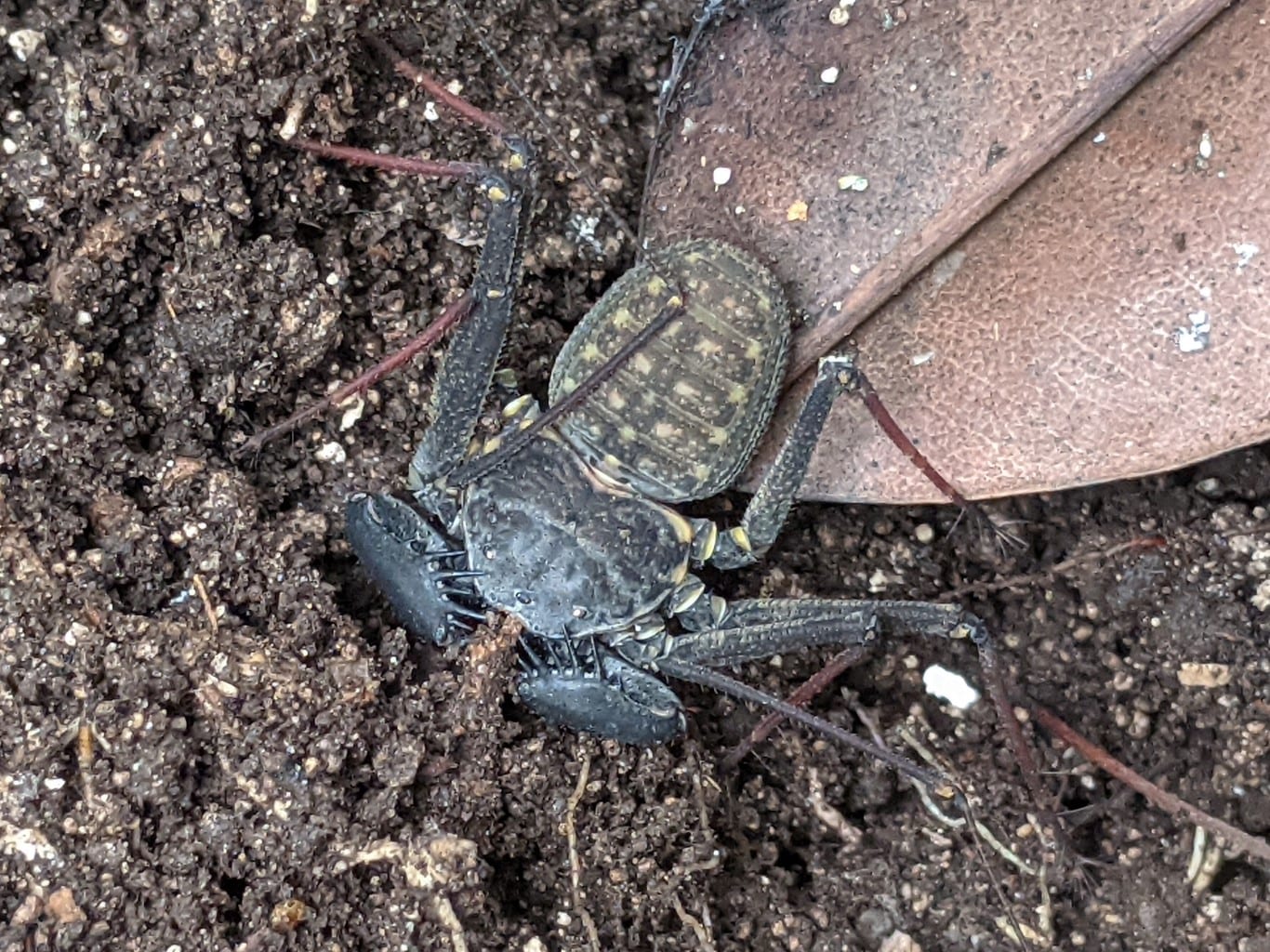
 © Alison Northup / CC BY 4.0
Florida Whip Spider
Native to the southern Florida peninsula and islands of the Caribbean, this small whip spider carries a striking contrast: a body under 2 cm paired with front legs that stretch up to 10 cm, which it uses like antennae to feel out its surroundings in the dark. It has no venom, tends to be calm in temperament, and rarely turns to cannibalism among tankmates, making it one of the easiest whip spiders to keep and breed. It's a great entry point for anyone curious about whip spiders for the first time.
View Florida Whip Spider encyclopedia →0% commission on your first sales!Register by September 30, 2026 and your first 2 sales are commission-free!
Breeder Wanted!
List on BreederDirect and sell directly to customers nationwide!
5 Transparency Standards You Can Trust
When listing Exotic Invertebrates, Breeders disclose the following. We guarantee transparency on growth stage and breeding unit.
- Real Photos
- Breeding Unit
- Generation Info
- Body Length (mm)
- Country of Origin
Browse all 249 breeds
No listings match your filters
Adjust your filters, or get notified when new listings arrive.
Getting alerts is free with a member account. When new listings match your saved search, we'll notify you by email and in-app.
Browse other categories
Verified breeders (preview)
Are you raising exotic invertebrates?
Register as a breeder and connect with buyers directly.
Apply as a breederAbout Florida Whip Spider
A small whip spider with a body under 2cm but front legs reaching 10cm. Venom-free, calm, and beginner-friendly.
7 things to know before welcoming a Florida Whip Spider
1Nocturnal, hides by day
During the day it stays hidden under bark or in shelters, becoming active at night. Providing cork bark or other hiding spots helps it feel secure.
2Front legs work as sensors
The elongated front legs aren't for walking — they act as sensory feelers. Give the enclosure enough space and surface texture for these legs to explore freely.
3Prefers high humidity
Coming from humid habitats, it needs moist substrate and regular misting. Letting the enclosure dry out too much can lead to molting problems.
4Never disturb during molting
Right after molting, the body is extremely soft and vulnerable — even slight disturbance can be fatal. Once you notice signs of an impending molt, just observe and avoid handling for several days.
5Low cannibalism, but solo housing is safer
This species has relatively low cannibalism rates for a whip spider, but the risk isn't zero, especially around molting or when food is scarce. If keeping multiple individuals together, provide plenty of hiding spots.
6Venom-free and calm if not startled
It has no venom and low aggression, but sudden movements from surprise can stress the animal. Observe calmly and move slowly around the enclosure.
7Insect-based diet is easy to manage
It feeds on insects such as crickets, and this manageable diet is one reason the species is considered easy to breed. Make sure you have a reliable source of feeder insects before bringing one home.
Frequently asked questions about Florida Whip Spider
- Q.Does the Florida Whip Spider have venom?
- A.No, it has no venom. Despite its unusual appearance, it poses no venomous threat to people, though it may display a defensive posture if startled.
- Q.Is it suitable for beginners?
- A.Yes, it's considered a beginner-friendly species and one of the easier whip spiders to breed, as long as you keep the basics like humidity in check.
- Q.How large does it grow?
- A.The body stays small, maxing out around 1.8cm, but the front legs can reach up to 10cm, giving it a visual presence larger than its body size suggests.
- Q.Can multiple individuals be housed together?
- A.Since cannibalism is relatively rare in this species, group housing is more feasible than with many other whip spiders, though the risk isn't completely eliminated. Providing multiple hiding spots helps reduce stress between individuals.
- Q.Are there any legal restrictions?
- A.This species is not listed under CITES. There are no such restrictions to be concerned about.
Learn more about Florida Whip Spider in the encyclopedia
View Florida Whip Spider encyclopedia entry →
Care difficulty, lifespan, size and diet — all basics covered.
More in this category
Can't find the one you're looking for?
Post your wishes for free and breeders with matching animals will contact you with introductions.