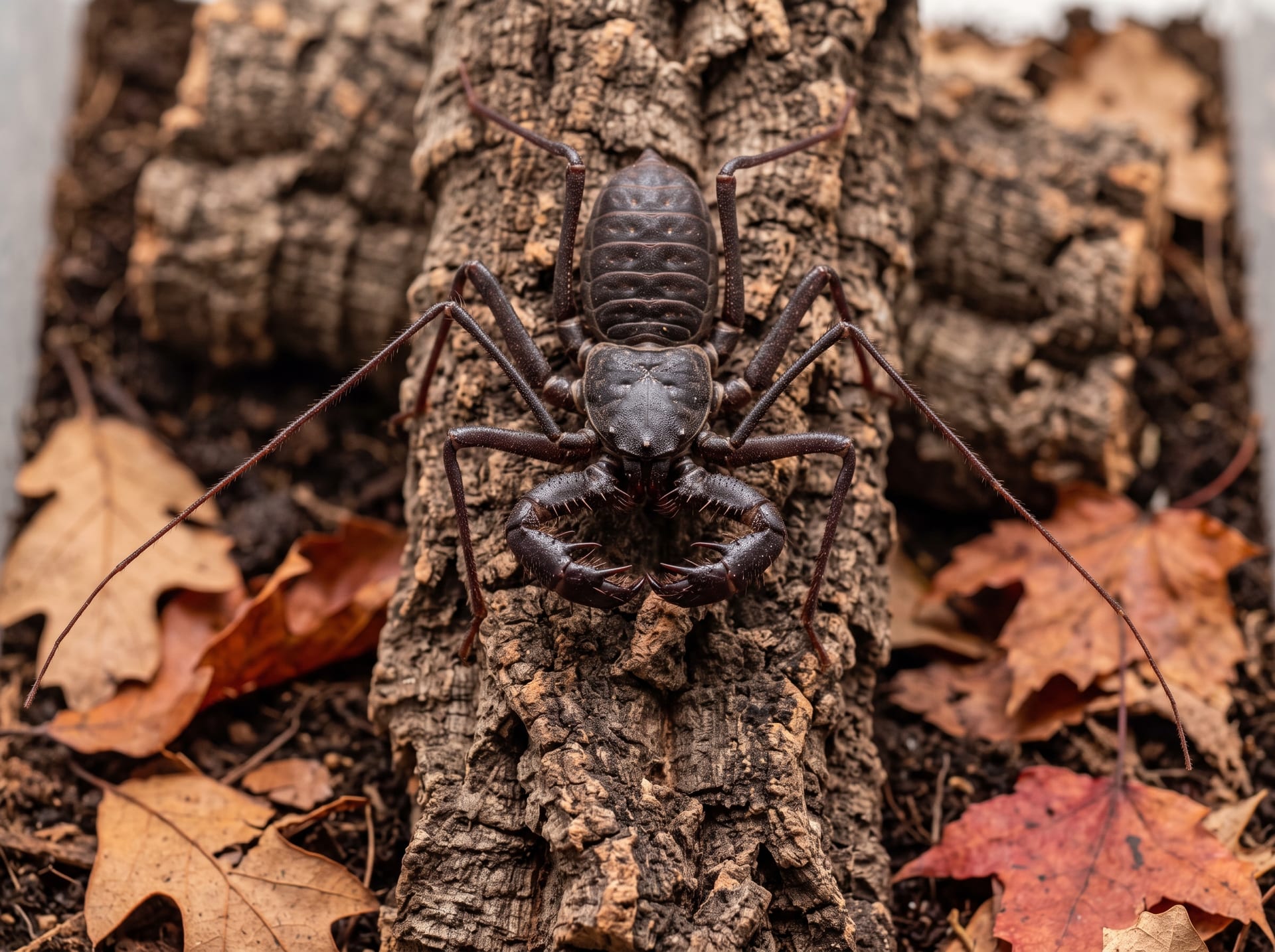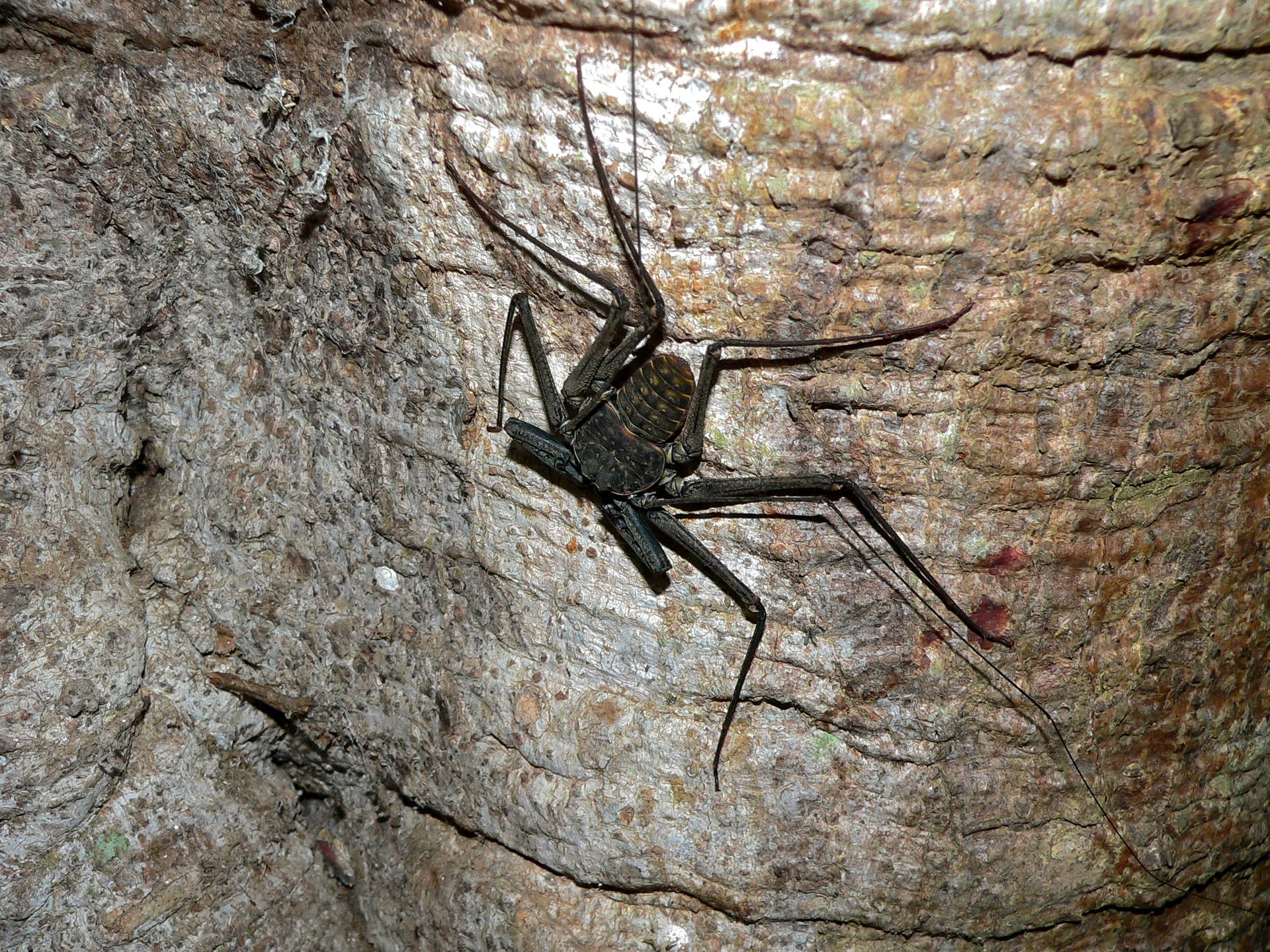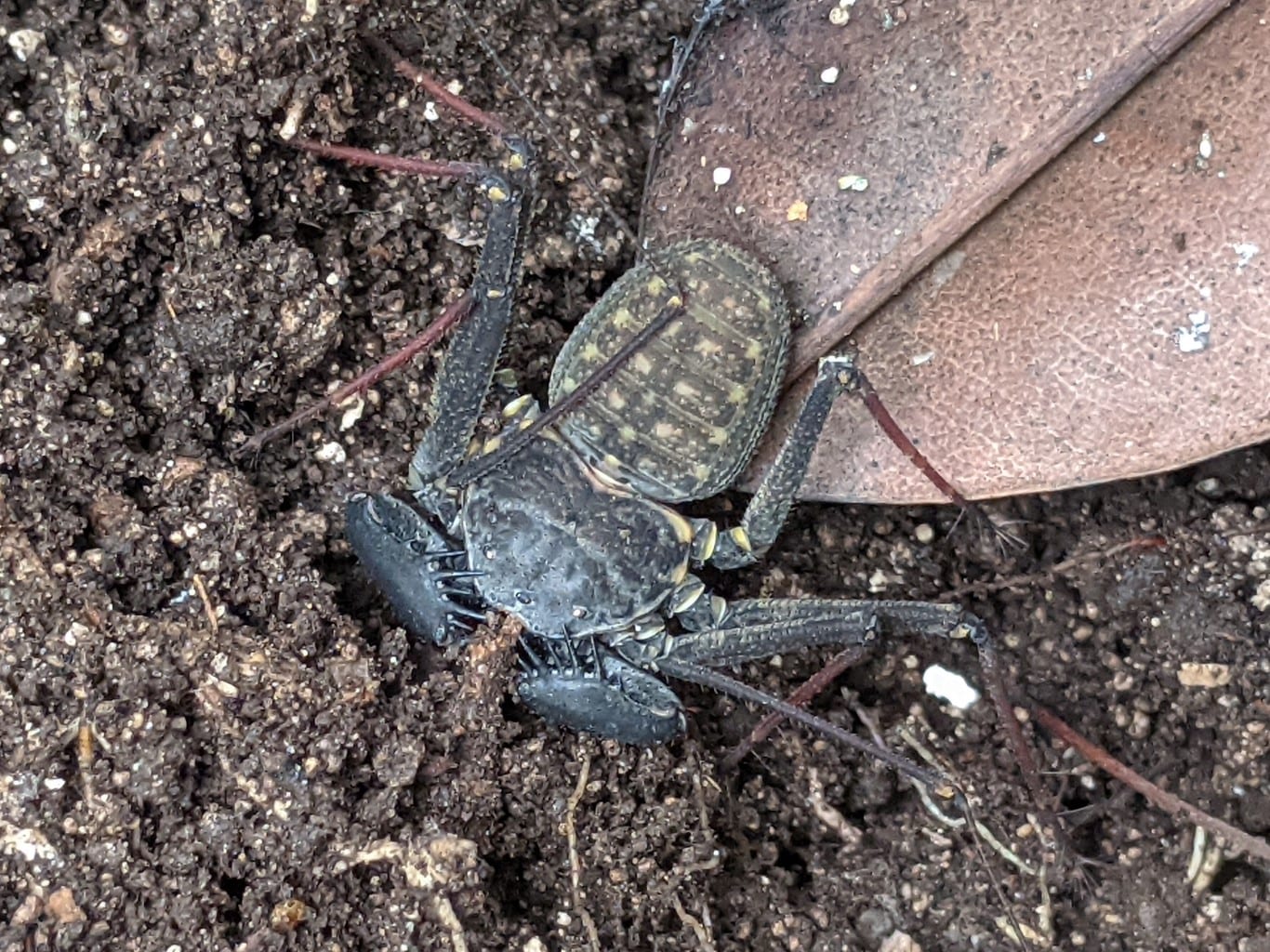
Source: Wikimedia Commons
Florida Whip Spider
BeginnerPhrynus marginemaculatus
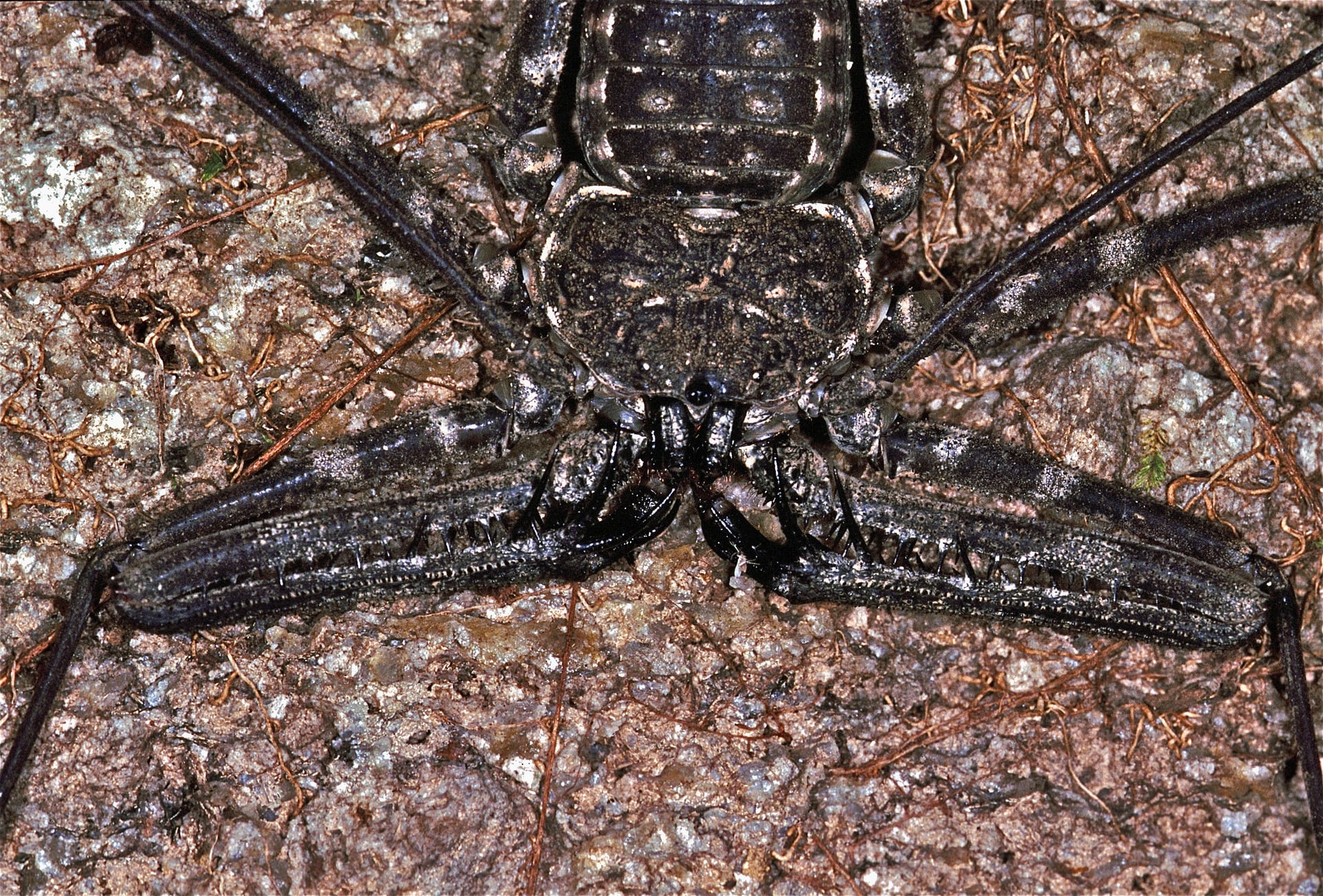
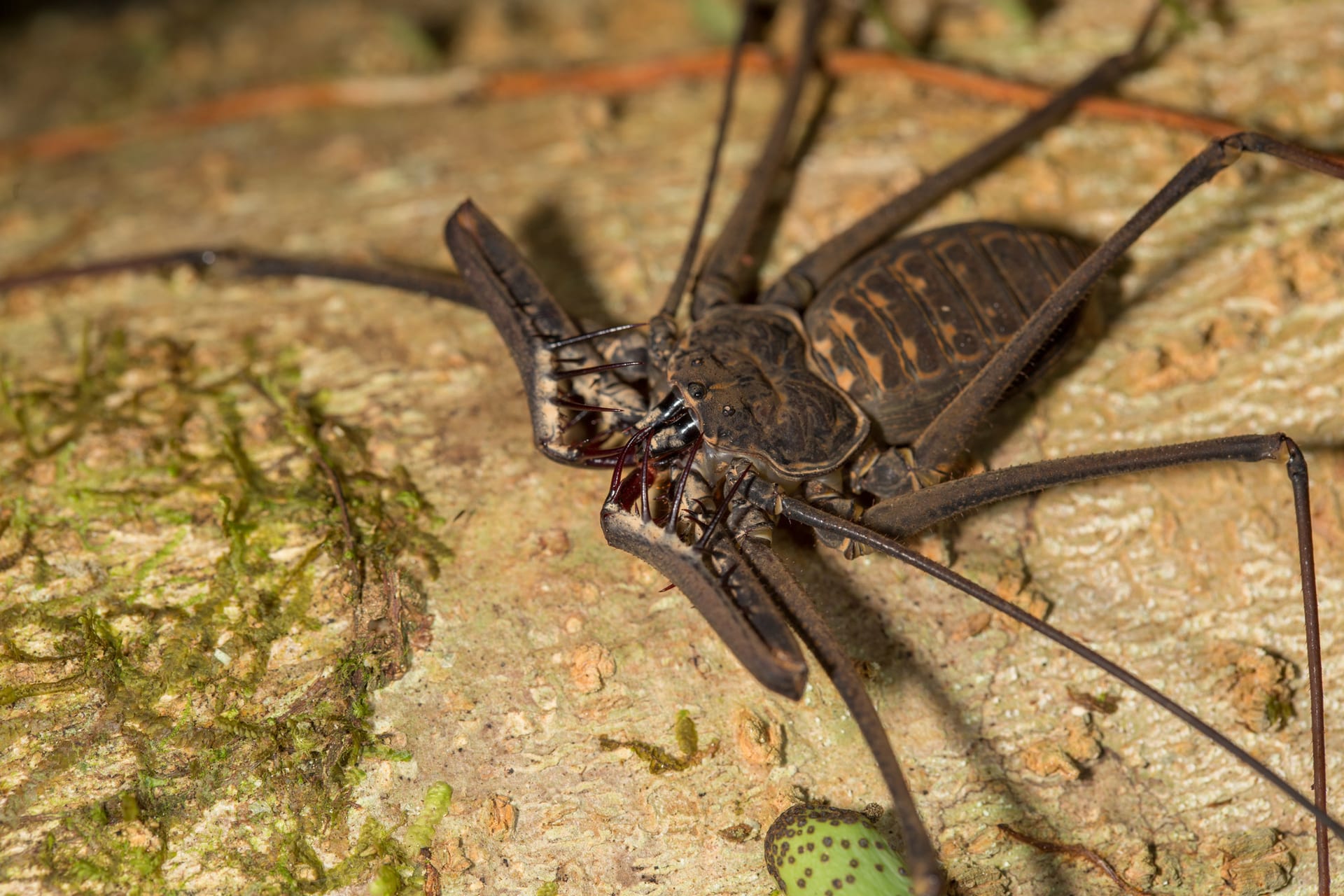
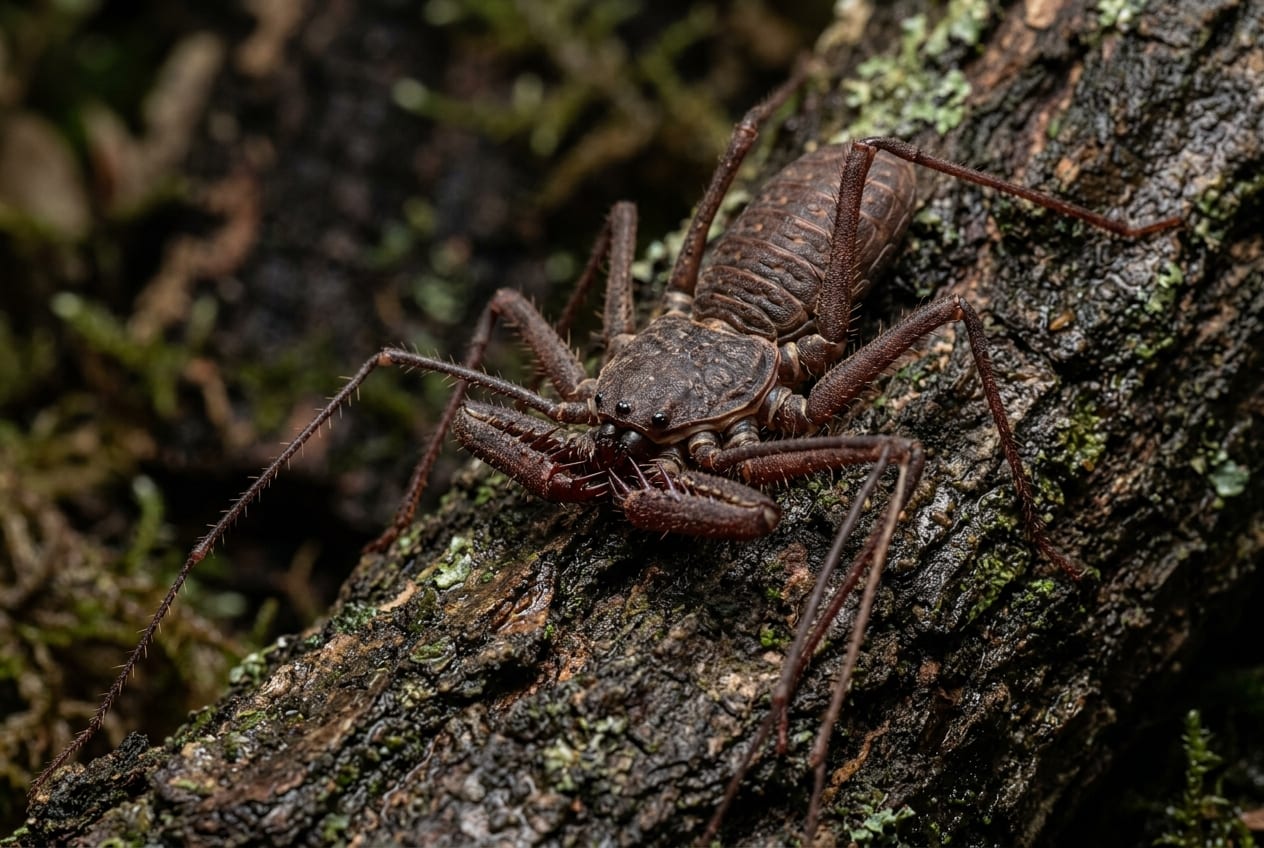
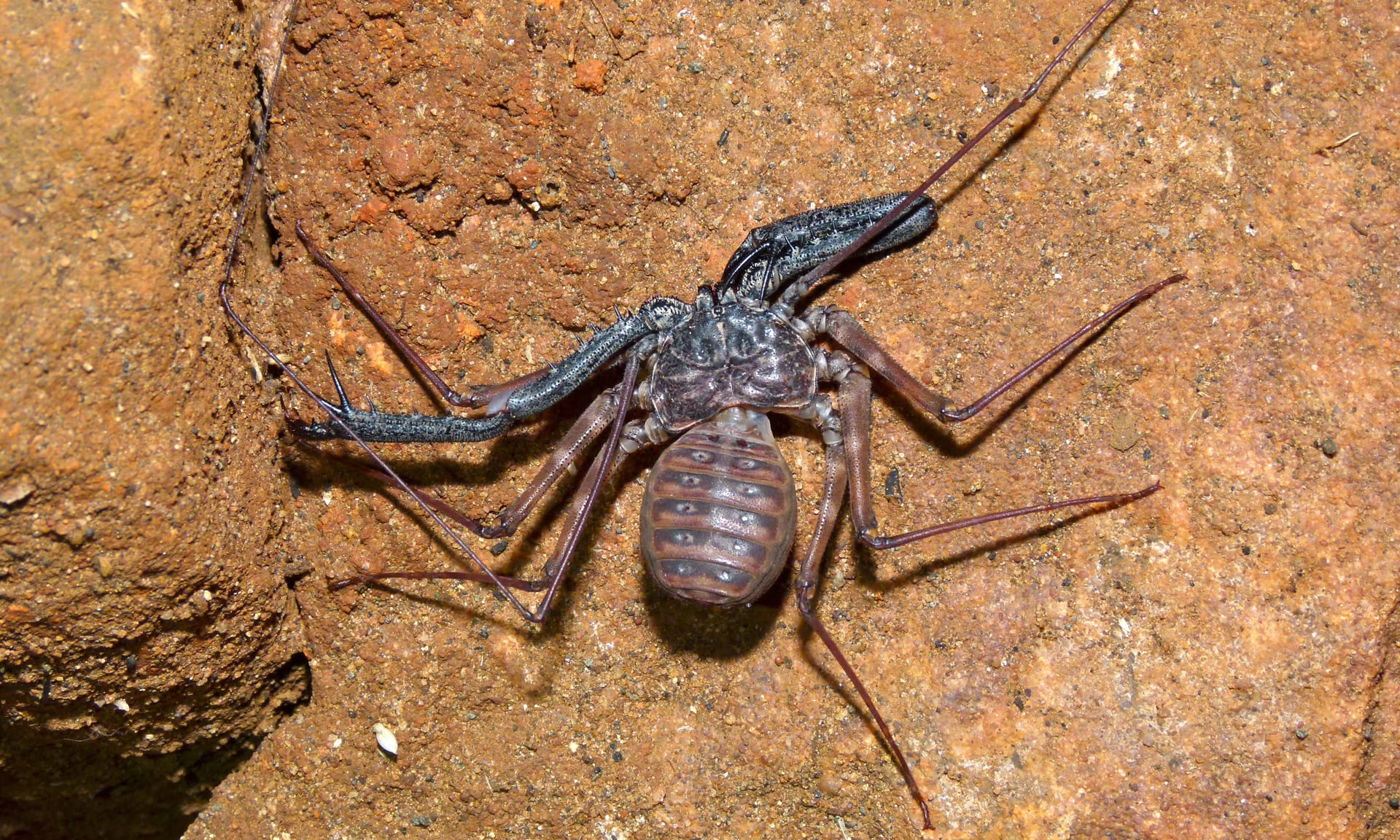
A small whip spider from southern Florida and the Caribbean islands. The body is under 2cm but the first legs reach 10cm. Venomless and rarely cannibalistic, it is regarded as the easiest amblypygid to breed.
Difficulty
Beginner
Temperature
23〜26℃
Size
Body up to 1.8cm, first legs up to 10cm
Humidity
75〜85%
Diet
House-fly sized prey such as small crickets and red runner roaches
About
Phrynus marginemaculatus is a phrynid whip spider found in southern Florida, the Bahamas, Cuba and Hispaniola. The body reaches only 18mm, yet the antenniform first legs can be 100mm long. The cephalothorax is wider than long and carries eight eyes, one pair in front and three pairs on each side. The species has no venom and captures prey with its grasping pedipalps and small chelicerae. It is nocturnal, hiding by day in tight retreats under bark or in rock crevices, and walks sideways on three pairs of legs like a crab. Individuals engage in ritualised agonistic displays, but cannibalism is uncommon, so several can share an enclosure, which is the species' main attraction. In breeding the male deposits a spermatophore that the female takes up; weeks to months later she carries a brood sac of 12 to 20 eggs beneath her abdomen. The eggs develop over about three months and the female then carries the first instars on her back. This combination makes it the easiest amblypygid to breed in the hobby.
Source: Wikipedia (CC BY-SA 4.0)
Size of the Florida Whip Spider
The Florida Whip Spider grows to Body up to 1.8cm, first legs up to 10cm.
Temperature & humidity for the Florida Whip Spider
The ideal temperature for the Florida Whip Spider is 23〜26℃. Ideal humidity is 75〜85%.
Basic Info
Origin
Southern Florida, the Bahamas, Cuba and Hispaniola
Size
Body up to 1.8cm, first legs up to 10cm
Temperature
Care Specifications
PeacefulGroupBreeding: Easy
Sources: Bugs in Cyberspace: Florida Whipspider Phrynus marginemaculatus / Wikipedia: Phrynus marginemaculatus / Insektenliebe: Damon medius (general amblypygid husbandry reference)
References & Sources
Edited & verified by: BreederDirect editorial team
The taxonomic, regulatory, and husbandry data on this page are compiled and verified against the authoritative primary sources below.
Taxonomy & Authority
Accepted name: Phrynus marginemaculatus C. L. Koch, 1840
Authority databases: GBIF
Nomenclature follows global taxonomic authority databases.
Regulations & Conservation Status
Not CITES-listed
Sources: CITES Appendices (species not listed)
Regulations may change. Always verify the latest information with the relevant authorities.
Florida Whip Spider Listings
Loading latest listingsFind listings for this species