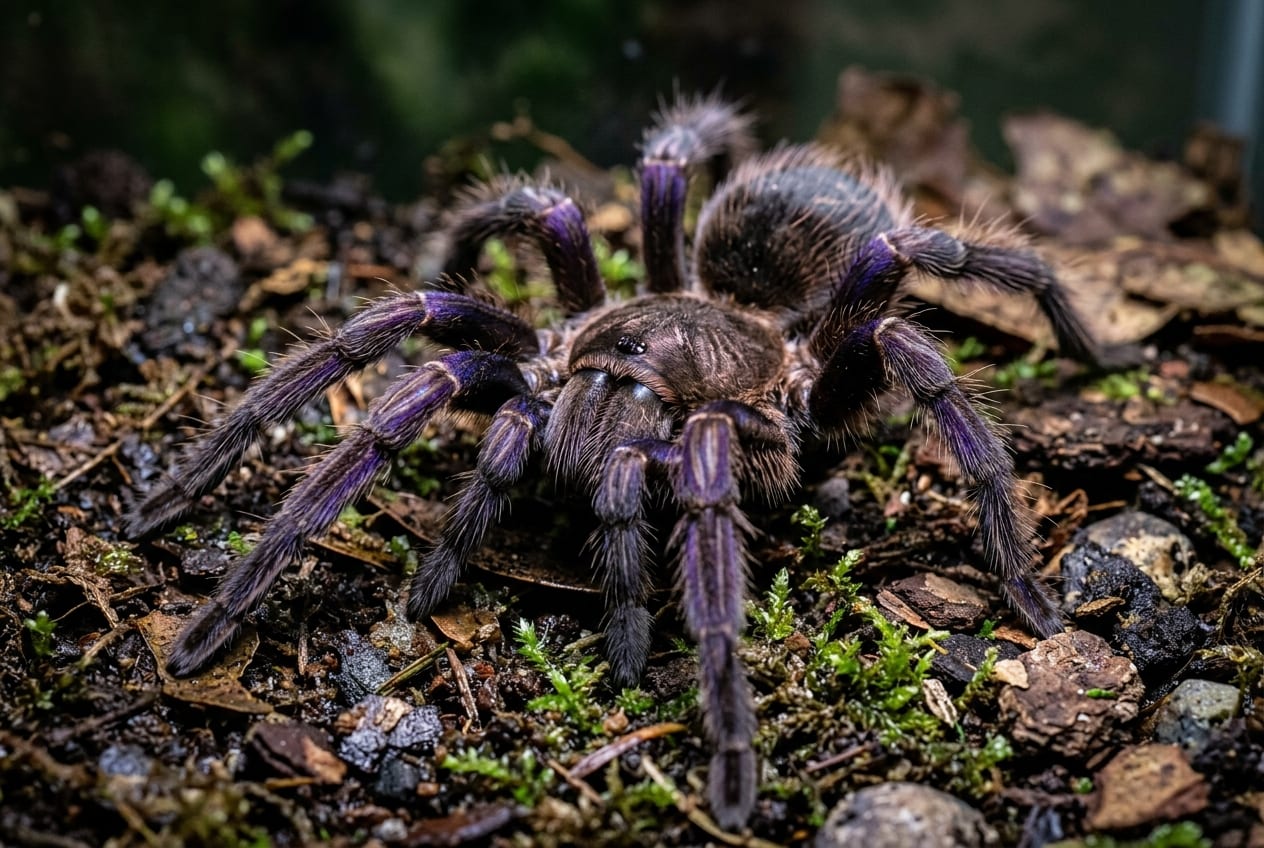
Common Pink Bloom
The Common Pink Bloom is a large, ground-dwelling tarantula native to South America, with a body that ranges from brownish black to blue-black and legs that can show a subtle purple sheen. As the type species of the genus Pamphobeteus, adults reach an impressive leg span of around 25 cm. Juveniles display a striking red-and-black pattern on the abdomen that mellows into calmer tones as they mature, making growth itself part of the appeal. Its bulky build and confident presence make it a favorite among keepers who want a tarantula with real visual impact. Because it's considered a species for intermediate keepers, it's best approached after some hands-on experience with easier tarantulas.
View Common Pink Bloom encyclopedia →0% commission on your first sales!Register by September 30, 2026 and your first 2 sales are commission-free!
Breeder Wanted!
List on BreederDirect and sell directly to customers nationwide!
5 Transparency Standards You Can Trust
When listing Exotic Invertebrates, Breeders disclose the following. We guarantee transparency on growth stage and breeding unit.
- Real Photos
- Breeding Unit
- Generation Info
- Body Length (mm)
- Country of Origin
Browse all 249 breeds
No listings match your filters
Adjust your filters, or get notified when new listings arrive.
Getting alerts is free with a member account. When new listings match your saved search, we'll notify you by email and in-app.
Browse other categories
Verified breeders (preview)
Are you raising exotic invertebrates?
Register as a breeder and connect with buyers directly.
Apply as a breederCommon Pink Bloom key facts
- Care level
- Intermediate
- Lifespan
- Females 10-15 years
- Size
- Body 7-8cm, leg span about 25cm
- Diet
- Large live insects such as crickets and roaches
- Temperature & Humidity
- Its habitat is northwestern South American rainforest, and conditions should approximate that.
- Enclosure
- It digs burrows, so use a horizontal enclosure sized to the spider with deep substrate, a hide and a water dish, keeping height low to prevent falls.
- Diet & Feeding
- Offer large live prey such as crickets and roaches. Growth is comparatively fast, so feed in proportion to its size.
- Temperament & Venom
- It flees first but, if cornered, responds with a threat posture, stridulation and urticating hairs. Its nervous nature makes it unsuited to handling.
- Notes
- Misidentified animals are reported in trade, and the juvenile abdominal pattern alone is not diagnostic. Check provenance and the basis of identification when buying.
About Common Pink Bloom
Common Pink Bloom is a large ground-dwelling tarantula with a blue-black body and purple-tinged legs, reaching about 25cm leg span as the type species of Pamphobeteus. A popular pick for intermediate keepers.
7 things to know before welcoming a Common Pink Bloom
1Space for a Large Species
With a leg span reaching around 25cm, this tarantula needs an enclosure with generous floor area rather than height. Since it's ground-dwelling, prioritize walking space over climbing features.
2Juveniles Look Different
Young specimens show a red-and-black pattern on the abdomen that fades into calmer tones as they mature. Keep in mind that appearance can vary a lot depending on the age you bring home.
3Somewhat Skittish Temperament
Pamphobeteus species tend to be sensitive to vibration and sudden movement, sometimes reacting with quick bursts of speed or a defensive posture. Keep the enclosure in a quiet spot and avoid frequent disturbance.
4Urticating Hairs Are Present
Like many New World tarantulas, it can kick barbed abdominal hairs (urticating hairs) as a defense when startled. Avoid bare-hand handling and use tools during enclosure maintenance.
5Why It Suits Intermediate Keepers
Its large size, somewhat defensive nature, and urticating hairs mean some prior tarantula-keeping experience is recommended before taking one on.
6Warm, Humid Conditions
As a South American native, it does best in an enclosure kept warm and humid. Use a moisture-retentive substrate and keep a water dish available to prevent the environment from drying out.
7Plan for the Long Haul
Females can live 10 to 15 years, so think ahead about whether you can commit to its care over that span before bringing one home. Expect reduced appetite and other changes around molting — give it space rather than handling it during this time.
Frequently asked questions about Common Pink Bloom
- Q.Can beginners keep this species?
- A.Common Pink Bloom is generally considered suitable for intermediate keepers. Some prior experience with easier tarantula species is recommended before taking one on as your first spider.
- Q.How large does it get?
- A.Adults reach a body length of about 7-8cm and a leg span of around 25cm, making it one of the larger species among exotic invertebrates kept as pets.
- Q.How long does it live?
- A.Females are known to live around 10 to 15 years, so this is a long-term commitment. It's worth thinking about your future lifestyle before bringing one home.
- Q.Can it be handled bare-handed?
- A.It has a somewhat skittish temperament and may kick urticating hairs in defense when disturbed, so bare-hand handling isn't recommended. Using tools during maintenance is the safer approach.
- Q.Are there any legal regulations?
- A.Common Pink Bloom is not subject to CITES.
Learn more about Common Pink Bloom in the encyclopedia
View Common Pink Bloom encyclopedia entry →
Care difficulty, lifespan, size and diet — all basics covered.
More in this category
Can't find the one you're looking for?
Post your wishes for free and breeders with matching animals will contact you with introductions.