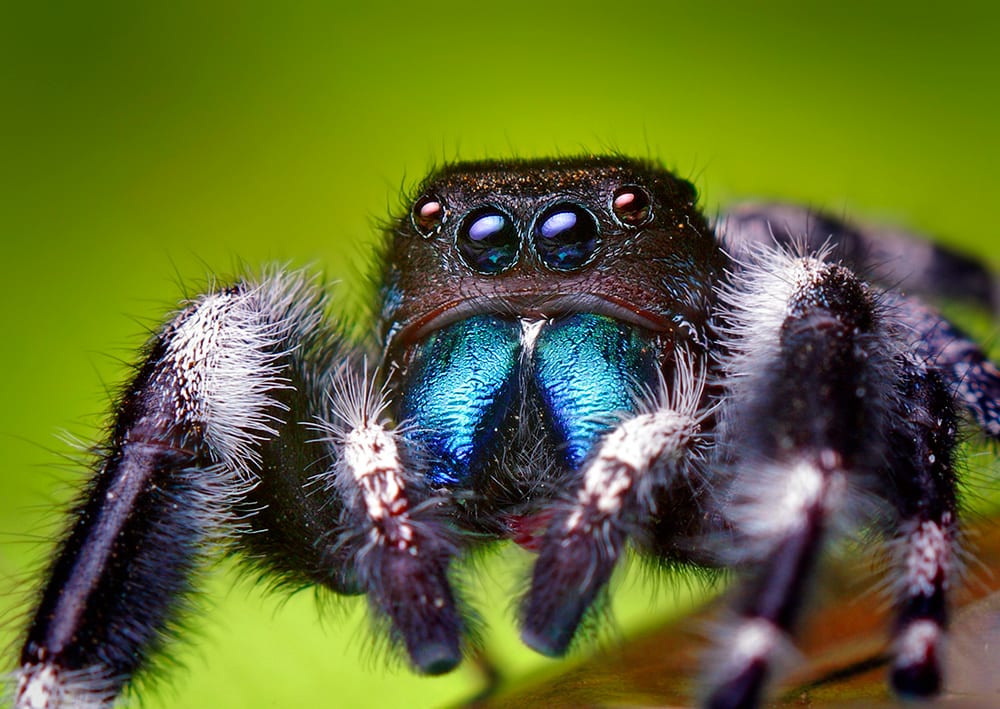
 © Thomas Shahan / CC BY 2.0
Bold Jumping Spider
The Bold Jumping Spider is a jumping spider species native to a wide range across North America. Its black body is dusted with fine white hairs, and a bold triangular marking sits at the center of the abdomen, while its chelicerae gleam with a metallic green sheen. Active and diurnal, it moves constantly and often turns its large forward-facing eyes toward observers in a way many keepers find endearing. Rather than spinning a web, it relies on sharp eyesight to stalk and pounce on prey, making feeding time genuinely fun to watch. Considered beginner-friendly, it is easy to keep and breed, making it a popular entry point into keeping exotic invertebrates.
View Bold Jumping Spider encyclopedia →0% commission on your first sales!Register by September 30, 2026 and your first 2 sales are commission-free!
Breeder Wanted!
List on BreederDirect and sell directly to customers nationwide!
5 Transparency Standards You Can Trust
When listing Exotic Invertebrates, Breeders disclose the following. We guarantee transparency on growth stage and breeding unit.
- Real Photos
- Breeding Unit
- Generation Info
- Body Length (mm)
- Country of Origin
Browse all 249 breeds
No listings match your filters
Adjust your filters, or get notified when new listings arrive.
Getting alerts is free with a member account. When new listings match your saved search, we'll notify you by email and in-app.
Browse other categories
Verified breeders (preview)
Are you raising exotic invertebrates?
Register as a breeder and connect with buyers directly.
Apply as a breederBold Jumping Spider key facts
- Care level
- Beginner-friendly
- Lifespan
- About 1 year
- Size
- Males about 1.3cm, females slightly larger
- Temperature
- 26〜28℃
- Humidity
- Diet
- Insects such as fruit flies, house flies and small crickets
- Temperature & Humidity
- 26-28 C. No humidity figure is published for this species, so the value follows the congeneric P. regius at around 70%. Ventilate well and mist lightly into one corner.
- Enclosure
- A small enclosure that uses height, with branches and bark for three-dimensional footing and a place to spin a moulting nest.
- Diet & Feeding
- Fruit flies, house flies and small crickets. It builds no prey web and hunts for itself, so offer live prey and remove leftovers.
- Temperament & Venom
- Diurnal and constantly observant, tracking movement with its eyes. Bites are rare, occurring only when threatened or mishandled, and are medically insignificant.
- Notes
- House singly. It seals itself into a nest before moulting; do not disturb or feed it then.
About Bold Jumping Spider
A North American jumping spider with a bold triangular abdominal marking and metallic green chelicerae. Diurnal and web-free, it hunts by sight, and is considered easy to keep and breed, making it ideal for beginners.
7 things to know before welcoming a Bold Jumping Spider
1Solitary Housing Only
These spiders are territorial and may cannibalize one another, so they must be housed one per enclosure. Avoid placing cages where individuals can see each other, as this can cause stress.
2A Skilled Jumping Escape Artist
This species can leap many times its own body length, so escapes during feeding or cleaning are a real risk. Choose an enclosure with a secure, well-fitting lid that still allows airflow.
3Diurnal and Highly Active
Unlike many nocturnal invertebrates, this spider is active during the day and moves around constantly. It often turns to face you with its large eyes, which makes it especially rewarding to simply watch.
4A Visual Hunter That Needs Live Prey
A visual hunter rather than a web-builder, it spots moving prey and pounces to catch it. Offer appropriately sized live feeders such as small crickets, and remove any uneaten prey promptly.
5Leave It Undisturbed During Molting
As it grows, this spider molts periodically; fading color or reduced activity can signal an upcoming molt. Avoid handling or disturbing the enclosure during and right after a molt.
6Provide Climbing Structures
Because it moves actively in all directions, including vertically, adding driftwood or artificial plants to climb and hide in helps it settle in. Choose a substrate that balances grip with moisture retention.
7Prepare Temperature and Humidity in Advance
Before bringing one home, it helps to have your setup's temperature and humidity settled in advance. While this species is considered beginner-friendly, daily observation and basic care such as light misting are still essential.
Frequently asked questions about Bold Jumping Spider
- Q.Is it venomous? Is a bite dangerous?
- A.Like other spiders, it has venom, but it's a calm species that rarely bites unless provoked. If you're ever concerned after a bite, consult a doctor.
- Q.Can multiple spiders be kept in one enclosure?
- A.No, these spiders may cannibalize each other, so single housing is the standard approach. Keep one spider per enclosure except during deliberate, supervised pairing.
- Q.Since it doesn't spin a web, what should go in the enclosure?
- A.Even without a web, the spider appreciates driftwood or artificial plants to climb and hide in. Keep the substrate lightly moist and use a ventilated but secure lid to prevent escapes.
- Q.What should it be fed, and how often?
- A.Appropriately sized live feeders such as small crickets are typically offered every few days, adjusted to how much the spider actually eats. Remove any leftover prey from the enclosure so it doesn't linger.
- Q.Are there any legal restrictions on keeping this species?
- A.This species is not subject to CITES.
Learn more about Bold Jumping Spider in the encyclopedia
View Bold Jumping Spider encyclopedia entry →
Care difficulty, lifespan, size and diet — all basics covered.
More in this category
Can't find the one you're looking for?
Post your wishes for free and breeders with matching animals will contact you with introductions.