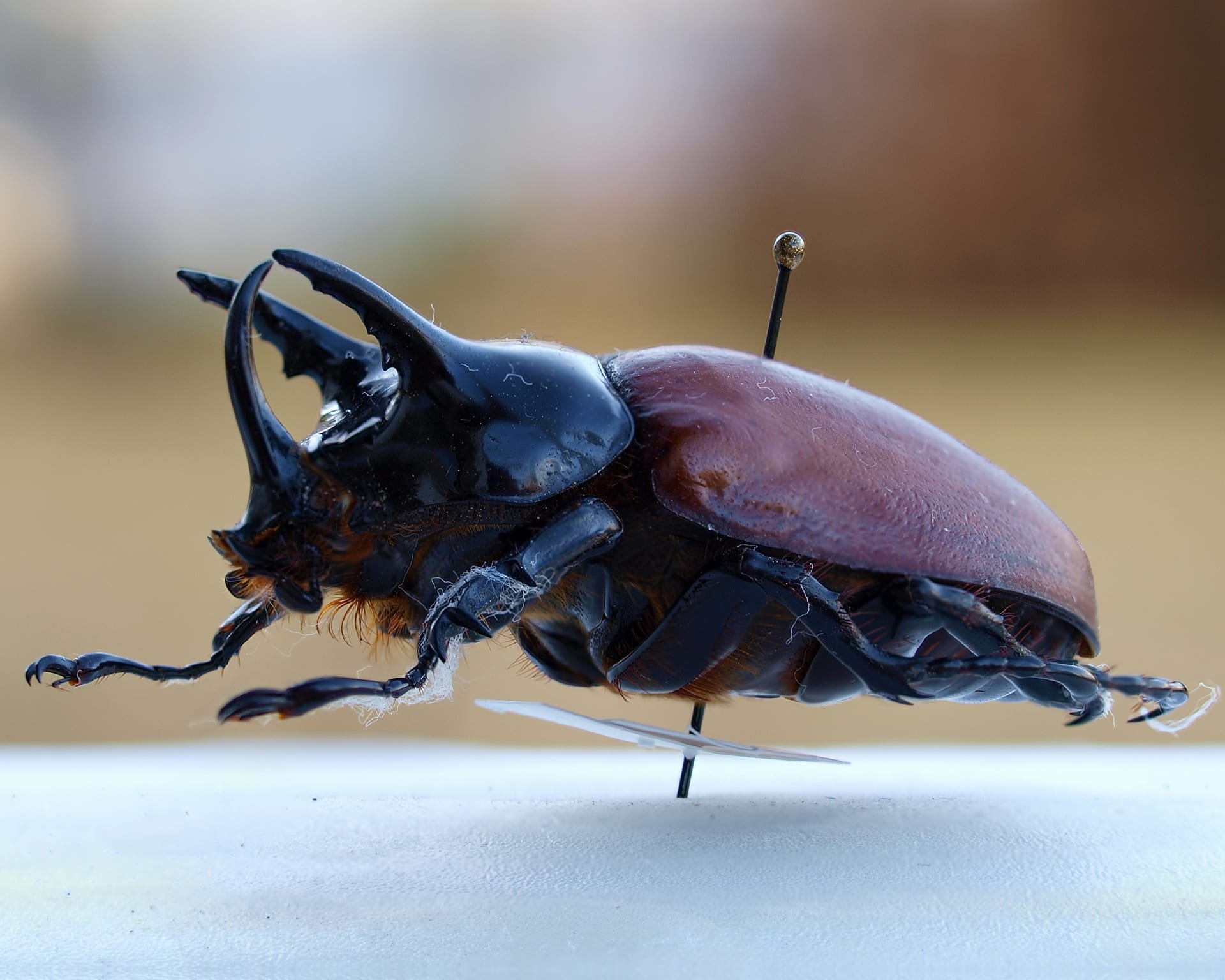
 © JohnSka / CC BY-SA 3.0
Beccari's three-horned beetle
Beccari's three-horned beetle is native to New Guinea and is the sole species in the genus Debeckius. It was formerly placed in the genus Beckius, and dealers still sometimes list it under that older name. Within its tribe, it sits in the same subtribe as the Atlas beetles (Chalcosoma) and the five-horned beetles (Eupatorus). Three subspecies are recognized — the nominotypical form, koletta and ryusuii — so it's important to confirm both the scientific and subspecies names when buying. Because it calls for a bit more husbandry know-how, it tends to suit keepers who already have some beetle-rearing experience.
View Beccari's three-horned beetle encyclopedia →Breeder Wanted!
List on BreederDirect and sell directly to customers nationwide!
BreederDirect's 6 Transparency Commitments
When listing Insects, Breeders disclose the following. We guarantee transparency on growth stage and breeding unit.
- Life Stage Clarity
- Generation Info
- Real Photos
- Breeding Unit
- Country of Origin
- Body Length (mm)
Browse all 336 breeds
No listings match your filters
Adjust your filters, or get notified when new listings arrive.
Getting alerts is free with a member account. When new listings match your saved search, we'll notify you by email and in-app.
Browse other categories
Verified breeders (preview)
Beccari's three-horned beetle key facts
- Care level
- Intermediate
- Size
- Captive record 78.1mm
- Diet
- Adults take beetle jelly; larvae eat fermented substrate
- Temperature & Humidity
- The ideal temperature is unclear, but many records come from the New Guinea highlands, so keep it away from places where summer heat builds up.
- Breeding & Egg-laying
- The detailed breeding conditions are unclear. Following relatives in the same subtribe such as Chalcosoma, provide a deep layer of fermented substrate for laying.
- Cohabitation
- Males fight with their horns, so keep adults singly and together only for mating.
- Lifespan & Rearing Period
- Larval duration and adult lifespan are unclear.
- Health & Notes
- It may be labelled under the old genus Beckius or under older placements in Chalcosoma or Eupatorus, so check the scientific name and subspecies. Importing foreign stag and rhinoceros beetles is regulated by the Plant Protection Act and the Invasive Alien Species Act (species-name certificate), with each species needing clearance from the Plant Protection Station, so domestically bred stock is the safe choice. Never release captive beetles.
About Beccari's three-horned beetle
Beccari's three-horned beetle is the only species in the genus Debeckius, found in New Guinea. Also sold under the old genus name Beckius and divided into three subspecies, it's a rewarding beetle for intermediate keepers.
7 things to know before welcoming a Beccari's three-horned beetle
1Suited to Intermediate Keepers
Beccari's three-horned beetle is considered a species for intermediate-level keepers. It calls for reasonably careful temperature and humidity management, so some prior experience with beetle keeping is helpful. First-time insect keepers should brush up on the basics before bringing one home.
2Mostly Recorded From the Highlands
This beetle is native to New Guinea, and most records come from highland areas. There's little numerical data on its temperature needs, so avoid places where summer heat builds up and aim for an environment without sudden temperature swings.
3Japanese Name Refers to Three Horns
Its Japanese name, meaning "three-horned," refers to its horns. Detailed information on horn shape and development is limited, and size varies between individuals. The BE-KUWA captive-bred record is 78.1mm.
4Variation Across Three Subspecies
The species is divided into three subspecies, with body shape and coloration varying slightly by region of origin. Paying attention to which subspecies you're getting can add another layer of enjoyment.
5Best Kept Individually
Horned males can be territorial and prone to fighting, so it's best to avoid housing multiple males together and to keep them individually. Cohabiting with a female is generally best reserved for breeding attempts.
6Limited Data on Lifespan
There isn't much published data on how long Beccari's three-horned beetle typically lives, since documented keeping records and research remain limited. After bringing one home, keep an eye on its day-to-day condition and activity level.
7Larval Care Matters Too
Beyond the adult beetle, how you manage the substrate and temperature during the larval stage matters just as much. Avoiding abrupt environmental changes and keeping the setup clean supports healthy development.
Frequently asked questions about Beccari's three-horned beetle
- Q.How difficult is it to keep?
- A.It's considered suitable for intermediate keepers. Since temperature and humidity management require some know-how, prior experience keeping beetles will help you feel more confident.
- Q.How large do adults grow?
- A.A record specimen of 78.1mm has been documented among kept individuals. Size varies depending on the individual and subspecies.
- Q.How long do they live?
- A.There isn't much detailed information available yet, so a clear lifespan hasn't been established. You'll need to observe the individual's condition as you keep it.
- Q.Is it listed under CITES?
- A.Beccari's three-horned beetle is not covered by CITES. Many live foreign Scarabaeoidea (stag beetles, rhinoceros beetles, flower chafers and relatives) are quarantine pests whose import is banned under Japan's Plant Protection Act, and even importable species require a species-name certificate from a foreign government body under the Invasive Alien Species Act (entry only via designated airports, never by international post). Whether a species may enter must be checked with the Plant Protection Station in advance, so choose domestically bred stock and never release captive beetles.
- Q.I've seen it listed under genus Beckius — is that a different species?
- A.No, it's the same species. It's currently classified under the genus Debeckius, but it was formerly placed in Beckius, so you may still see it listed under that older name.
Useful tools for Beccari's three-horned beetle care
Learn more about Beccari's three-horned beetle in the encyclopedia
View Beccari's three-horned beetle encyclopedia entry →
Care difficulty, lifespan, size and diet — all basics covered.
More in this category
Can't find the one you're looking for?
Post your wishes for free and breeders with matching animals will contact you with introductions.