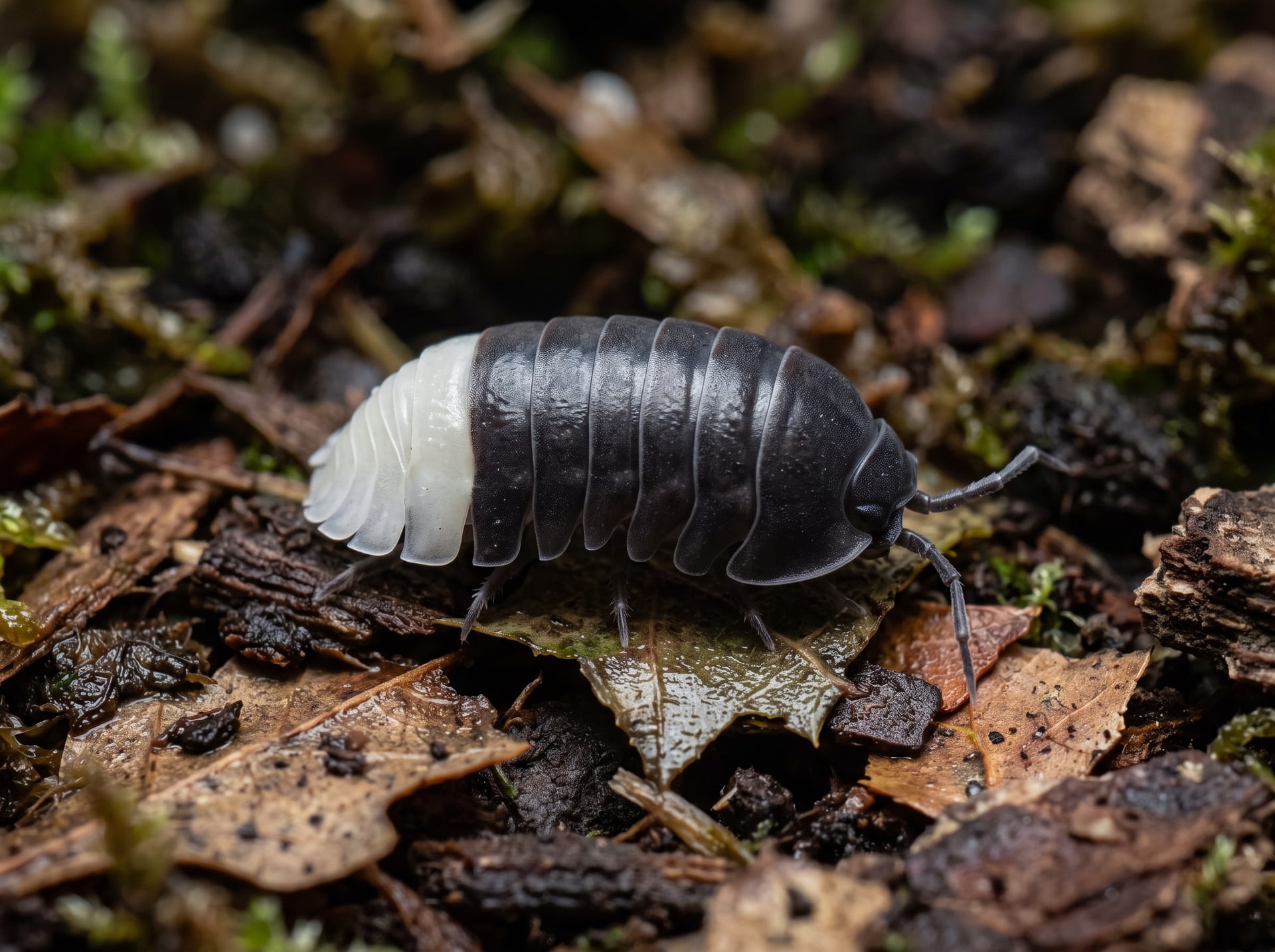
Panda King Isopod
The Panda King Isopod is a striking Cubaris-type isopod prized for its bold black-and-white pattern reminiscent of a panda. It has no formal scientific description yet and is traded under the provisional name "Cubaris sp." Reaching only about 1 to 1.3 cm as an adult, this small, calm species spends much of its time tucked away in hides. As a detritivore, it feeds on decaying leaves and wood, never bites, and carries no venom, making it a safe, low-stress choice for newcomers to invertebrate keeping. It thrives in high humidity with access to calcium sources, though breeding tends to progress slowly.
View Panda King Isopod encyclopedia →0% commission on your first sales!Register by September 30, 2026 and your first 2 sales are commission-free!
Breeder Wanted!
List on BreederDirect and sell directly to customers nationwide!
5 Transparency Standards You Can Trust
When listing Exotic Invertebrates, Breeders disclose the following. We guarantee transparency on growth stage and breeding unit.
- Real Photos
- Breeding Unit
- Generation Info
- Body Length (mm)
- Country of Origin
Browse all 249 breeds
No listings match your filters
Adjust your filters, or get notified when new listings arrive.
Getting alerts is free with a member account. When new listings match your saved search, we'll notify you by email and in-app.
Browse other categories
Verified breeders (preview)
Are you raising exotic invertebrates?
Register as a breeder and connect with buyers directly.
Apply as a breederPanda King Isopod key facts
- Care level
- Intermediate
- Lifespan
- About 2-3 years
- Size
- About 1-1.3 cm
- Temperature
- 21〜26℃
- Humidity
- 70〜85%
- Diet
- Mostly decaying leaves and wood, supplemented with vegetable scraps, a little protein, and calcium such as cuttlebone.
- Habitat
- Use a ventilated tub with leaf litter, rotten wood, and limestone to hold humidity.
- Temp & Humidity
- Maintain 21-26C and high humidity with a damp-to-dry gradient.
- Feeding
- Keep leaf litter available and supplement protein and calcium sparingly.
- Notes
- Slow to multiply; completely harmless with no venom or bite.
About Panda King Isopod
A striking black-and-white Cubaris isopod, scientifically undescribed and known as "Cubaris sp." Harmless and non-venomous, it favors high humidity and calcium, making it a popular pick for intermediate keepers.
7 things to know before welcoming a Panda King Isopod
1High Humidity Is Essential
Panda King Isopods need consistently high humidity to stay healthy, and they can quickly decline if their enclosure dries out. Mist regularly and use a substrate that retains moisture well.
2Offer a Calcium Source
These isopods actively seek out calcium to maintain their exoskeleton, such as cuttlebone or crushed oyster shell. Mixing limestone chips into the substrate or adding a dedicated calcium source helps keep them healthy.
3Breeding Takes Patience
Reproduction in this species tends to be slow compared to other isopods. If you're hoping to grow your colony, focus on maintaining stable conditions over the long term rather than expecting quick results.
4Harmless, No Bite or Venom
As detritivores, they don't bite and carry no venom, making them relatively safe to handle. That said, keep handling to a minimum since it can still stress the animals.
5Tends to Stay Hidden
They typically stay tucked under substrate or driftwood rather than staying out in the open, so you won't always see them. Nighttime or feeding time is often the best chance to observe activity.
6Small Adult Size
Adults reach only about 1 to 1.3 cm, so they don't require much space. Because they're so small, though, they're more sensitive to dryness and temperature swings.
7Best Suited to Intermediate Keepers
Balancing humidity, calcium, and ventilation takes some experience, which is why this species is generally recommended for intermediate keepers. First-time isopod keepers should get comfortable with the basics before taking one on.
Frequently asked questions about Panda King Isopod
- Q.Does the Panda King Isopod bite or carry venom?
- A.No, it's a detritivore that doesn't bite and has no venom. It's relatively safe to handle, though handling should be kept minimal to reduce stress.
- Q.How difficult is it to keep?
- A.This species is considered suitable for intermediate keepers. Some prior experience helps with managing humidity, calcium, and ventilation.
- Q.How big do they get?
- A.Adults reach only about 1 to 1.3 cm, making this a small species. They need less space, but their small size also makes them more sensitive to dryness and environmental changes.
- Q.What is their lifespan?
- A.They typically live about 2 to 3 years. Maintaining stable conditions helps them stay healthy for their full lifespan.
- Q.Are there any legal restrictions on this species?
- A.The Panda King Isopod is not subject to CITES.
Learn more about Panda King Isopod in the encyclopedia
View Panda King Isopod encyclopedia entry →
Care difficulty, lifespan, size and diet — all basics covered.
More in this category
Can't find the one you're looking for?
Post your wishes for free and breeders with matching animals will contact you with introductions.