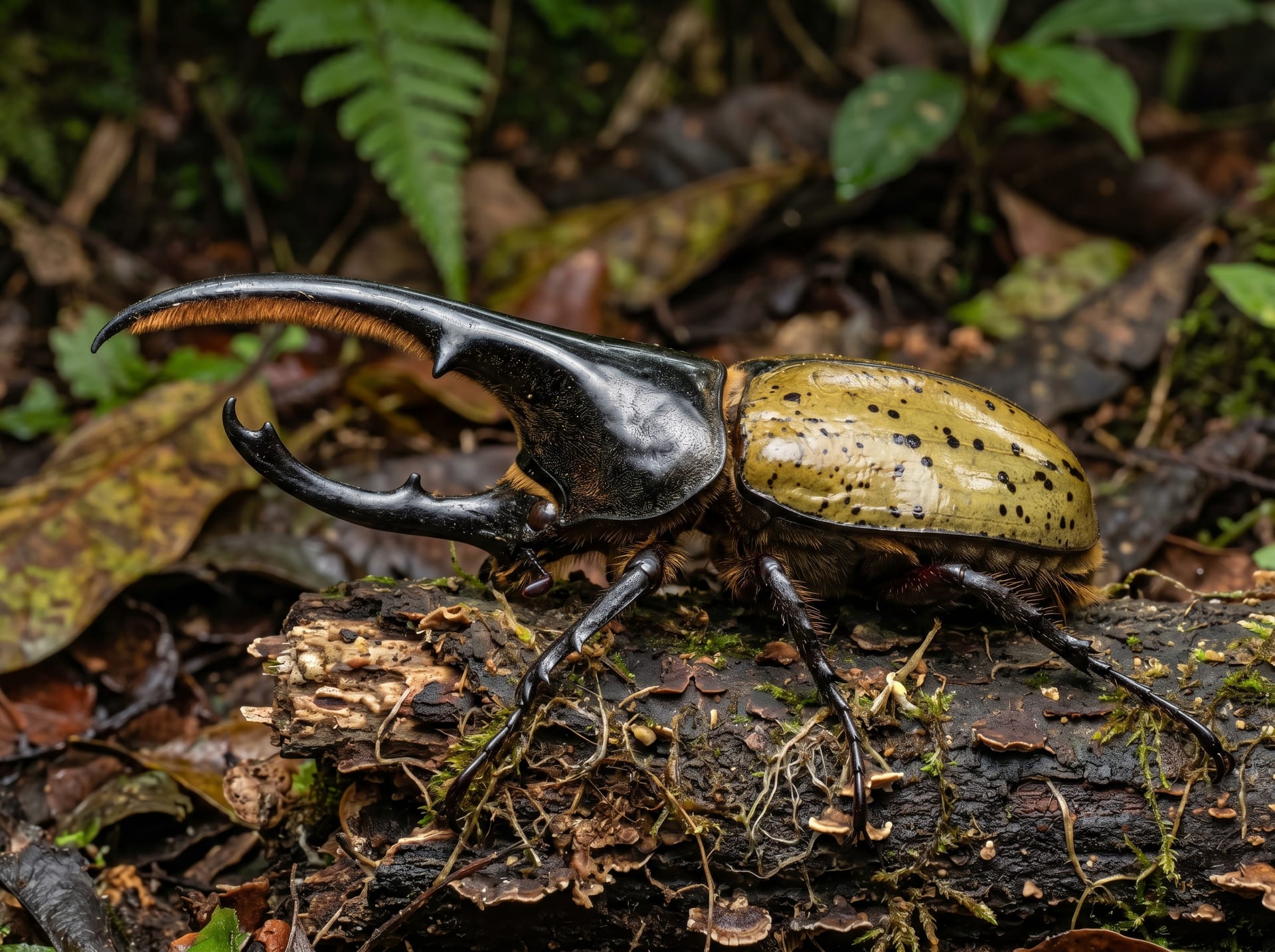
Hercules Beetle (Nominate Subspecies)
Hercules Beetle (Nominate Subspecies) is the original form of the Hercules beetle, one of the largest beetles in the world, native to the island of Guadeloupe. Males display a dramatically curved, elongated thoracic horn paired with a head horn, and adults can reach an impressive 100–180mm in body length. Their temperament is relatively calm, and with attentive care from the larval stage they can grow into truly large specimens — though maintaining the right temperature and humidity takes a careful touch. Adults typically live 6–12 months and feed on insect jelly. This is considered a beetle for experienced keepers, well suited to anyone ready to commit to close, ongoing care.
View Hercules Beetle (Nominate Subspecies) encyclopedia →0% commission on your first sales!Register by September 30, 2026 and your first 2 sales are commission-free!
Breeder Wanted!
List on BreederDirect and sell directly to customers nationwide!
6 Transparency Standards You Can Trust
When listing Insects, Breeders disclose the following. We guarantee transparency on growth stage and breeding unit.
- Life Stage Clarity
- Generation Info
- Real Photos
- Breeding Unit
- Country of Origin
- Body Length (mm)
Browse all 296 breeds
No listings match your filters
Adjust your filters, or get notified when new listings arrive.
Getting alerts is free with a member account. When new listings match your saved search, we'll notify you by email and in-app.
Browse other categories
Verified breeders (preview)
Hercules Beetle (Nominate Subspecies) key facts
- Care level
- Advanced
- Lifespan
- Adult 6-12 months
- Size
- 100-180mm
- Temperature
- 20〜25℃
- Diet
- Insect jelly
- Housing
- Use an extra-large case with at least 20cm of fermented substrate. As one of the world's longest beetles, adults also need ample space.
- Temperature & Humidity
- Ideally keep at 20-25°C and avoid heat above 28°C. In summer use a cool room or air conditioning to hold the temperature.
- Diet & Feeding
- Feed adults beetle jelly or banana. Adults live about 6-12 months, so keep jelly available at all times.
- Breeding & Egg-laying
- Eggs are laid in substrate, with 30-50 eggs from a single female. The larval period is about 12-24 months.
- Notes
- Largest subspecies. 150mm+ specimens are the goal
About Hercules Beetle (Nominate Subspecies)
The nominate subspecies of Hercules beetle, native to Guadeloupe. Adults reach 100–180mm and live 6–12 months. An advanced-level species prized for its dramatic horns — here are the key care points.
7 things to know before welcoming a Hercules Beetle (Nominate Subspecies)
1Long Larval Stage
Hercules Beetle (Nominate Subspecies) spends over a year as a larva, during which the substrate needs regular monitoring and replacement. The adult stage lasts only 6–12 months, so plan for the much longer larval period as part of your care commitment.
2Horn Size Is Set Early
A male's impressive thoracic and head horns are shaped largely by nutrition and conditions during the larval stage. Since horn size can't be improved once the beetle reaches adulthood, careful larval care matters most.
3Avoid Heat and Humidity
Excessive heat and humidity can quickly affect this species, so good ventilation and temperature control are essential. Keep the enclosure out of direct sunlight and adjust conditions with the seasons.
4Diet: Insect Jelly
Adults are fed insect jelly. Check regularly for leftover or dried-out jelly and keep the enclosure clean.
5House Males Separately
Housing two horned males together risks injury from fighting. As a rule, keep one beetle per enclosure.
6Deep Substrate for Pupation
Larvae need enough depth in the substrate to form a vertical pupal chamber before pupating. Make sure the substrate is deep enough for them to settle and pupate undisturbed.
7Built for Experienced Keepers
This large beetle is considered suitable for experienced keepers, requiring attention to temperature, humidity, and substrate management. It's best approached after gaining some experience keeping beetles.
Frequently asked questions about Hercules Beetle (Nominate Subspecies)
- Q.How big does it grow?
- A.Adults typically reach 100–180mm in body length. Individual size varies considerably depending on conditions during the larval stage.
- Q.How long does it live?
- A.As an adult, this beetle typically lives 6–12 months. The larval stage lasts much longer than that.
- Q.Is this beetle suitable for beginners?
- A.This species is considered suitable for experienced keepers. Because it requires careful attention to temperature, humidity, and substrate, it's best approached after some prior beetle-keeping experience.
- Q.What should I feed it?
- A.Adults are fed insect jelly. Check regularly for dried-out or leftover jelly and keep the enclosure clean.
- Q.Is this beetle covered by CITES?
- A.Hercules Beetle (Nominate Subspecies) is not covered by CITES.
Useful tools for Hercules Beetle (Nominate Subspecies) care
Learn more about Hercules Beetle (Nominate Subspecies) in the encyclopedia
View Hercules Beetle (Nominate Subspecies) encyclopedia entry →
Care difficulty, lifespan, size and diet — all basics covered.
Hercules Beetle (Nominate Subspecies) related articles
Insect Import Regulations and the Invasive Species Act|Restrictions on Japanese Rhinoceros Beetles, Stag Beetles, and Hercules Beetles and Legal Basics
A guide to insect import regulations (Plant Protection Law and Invasive Species Act). Covers restrictions on bringing in Japanese rhinoceros beetles, stag beetles, and Hercules beetles, precautions for international travel, how to legally enjoy foreign insects, and the importance of native species conservation.
Hercules Beetle Bloodline Management and Large Individual Production Guide | Practical System Recording, Selective Breeding, and Larval Management
A practical breeding guide for Hercules beetles (Dynastes hercules) focused on bloodline management, selective breeding, and larval growth optimization. This guide thoroughly explains how to maintain lineage records, selection criteria for parent beetles, and key points in larval weight management.
Complete Guide to Hercules Beetle Breeding and Larval Care | Egg Laying Setup, Bedding Changes, Eclosion
Comprehensive guide to breeding Hercules beetles. From setting up egg-laying containers to managing larval substrate, controlling temperature and humidity, and achieving successful eclosion—complete procedures covered.
Hercules Beetle Care Guide — Larval Period, Pupation, Eclosion & Adult Care
Complete Hercules beetle care guide covering the 12-18 month larval period and what affects it, the pupal stage timeline through eclosion, temperature control, substrate selection, and adult feeding.
Hercules Beetle Care Guide | Tips for Raising the World's Largest Beetle
A guide to caring for Hercules beetles, covering adult and larval rearing methods. This article introduces the necessary case size, temperature management, feeding, larval substrate replacement, and breeding tips.
Hercules Beetle Care and Breeding | From Larvae to Adult Emergence
Complete guide to Hercules beetle care and breeding from larval stage through adult emergence. Introduces large substrate materials, temperature management, and pupal chamber care.
More in this category
Can't find the one you're looking for?
Post your wishes for free and breeders with matching animals will contact you with introductions.