Hercules Beetle Care Guide — Larval Period, Pupation, Eclosion & Adult Care
Complete Hercules beetle care guide covering the 12-18 month larval period and what affects it, the pupal stage timeline through eclosion, temperature control, substrate selection, and adult feeding.
Key Takeaways
Complete Hercules beetle care guide covering the 12-18 month larval period and what affects it, the pupal stage timeline through eclosion, temperature control, substrate selection, and adult feeding.
Related Species
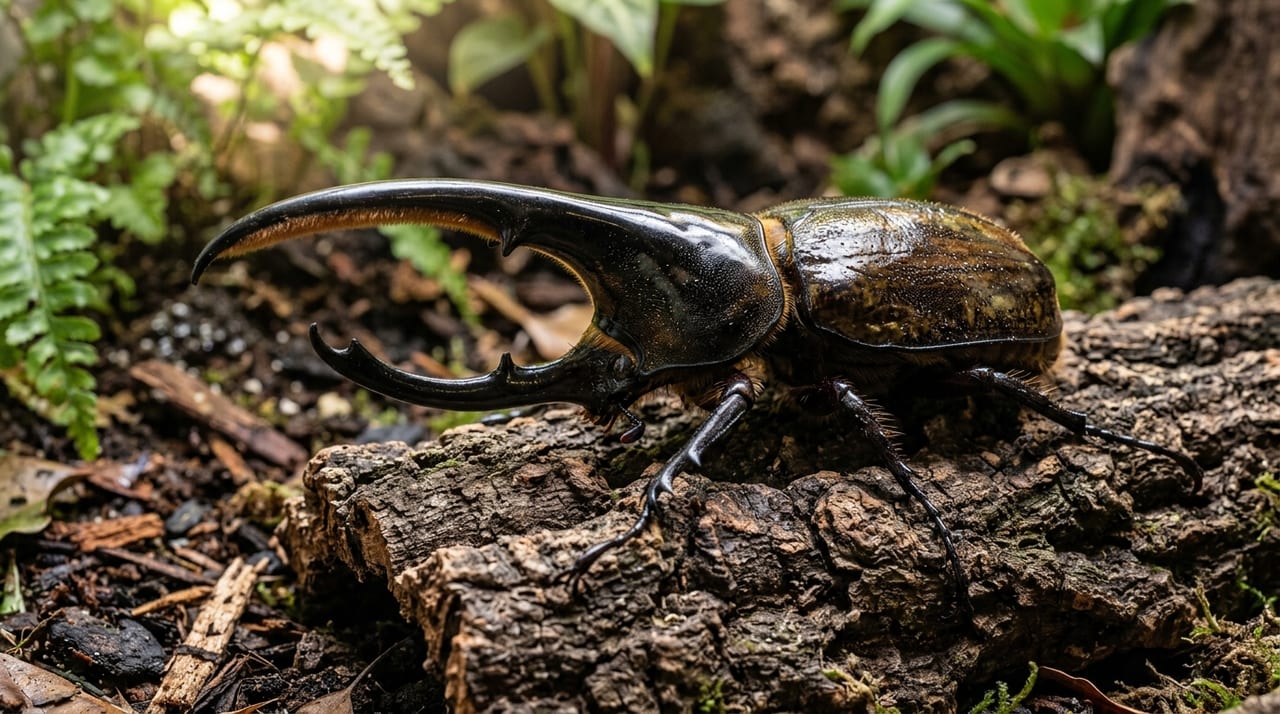
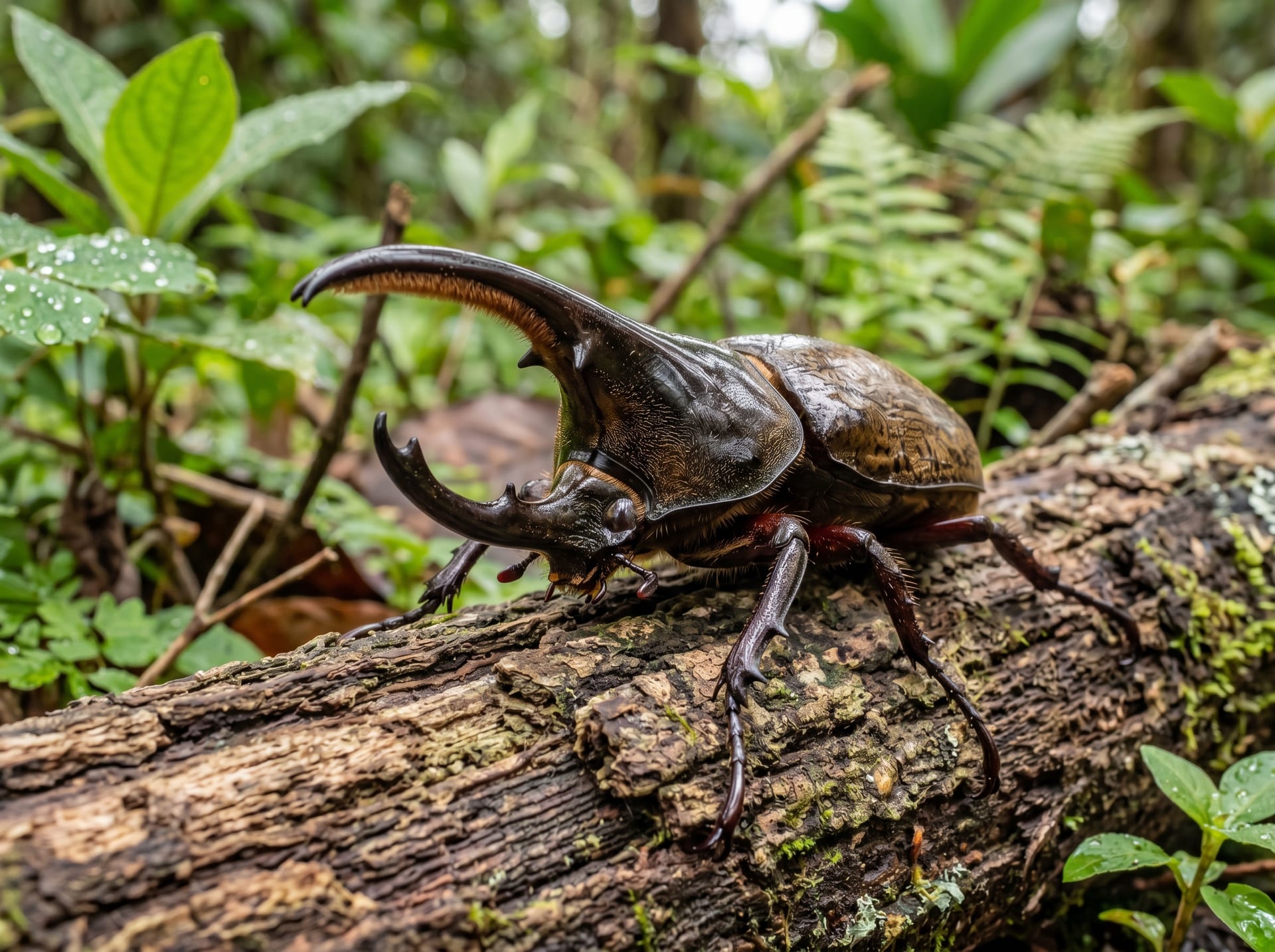
The Hercules beetle is the world's largest beetle and continues to captivate collectors and enthusiasts worldwide. With a maximum body length exceeding 180mm, male specimens with their long and powerful horns exude overwhelming presence. Native to Central and South America, this species is also prized for its beautiful coloration and the distinctive shape of each subspecies. While considered intermediate in difficulty to keep, the larval stage is extremely long, requiring patience and dedication. This article provides a thorough explanation from larval management to pupation and adult care, presented clearly so even beginners can successfully keep these beetles.
Basic Information and Subspecies Differences in Hercules Beetles
Several subspecies of Hercules beetles exist, each with differences in horn shape, coloration, and geographic distribution.
Hercules hercules (nominate subspecies): The largest subspecies and most commonly available. Characterized by black spots on the thoracic horn.
Hercules rickey: Found in Colombia and popular as a bloodline that tends to grow larger.
Hercules septentrionalis: Mexican subspecies with head horns that tend to grow longer.
Hercules ecuatorianus: Ecuadorian subspecies with distinctively curved horns.
Males have two horns: a head horn and a thoracic horn, with larger specimens displaying proportionally more impressive horns. Females lack horns and have a stockier body shape. Adult lifespan is 6-9 months for males and approximately 1 year for females, which is slightly longer. The larval stage typically lasts 12-18 months, though depending on temperature and nutritional conditions can extend beyond 2 years.
Timeline from Egg to Adult
Hercules beetles are a long-term rearing species requiring approximately 1.5-2 years from larva to adult. The following table outlines approximate durations for each stage (timing varies with temperature).
Stage
Approximate Duration
✍️
BreederDirect Editorial
The BreederDirect editorial team specializes in care information for animals, covering veterinary care and breeding to deliver beginner-friendly guides.
Find Insects on BreederDirect
Buy directly from verified breeders
Browse Related Listings
Find Insects listings related to this article on BreederDirect. Buy directly from verified breeders.
Related Tools
Related Articles
Browse by Category
🪸Coral
🐠Marine Fish
🐟Tropical Fish
🐡Goldfish
🐟Medaka
🦎Reptiles
Share
Egg → Hatching
Approximately 1-1.5 months
1st-2nd Instar Larvae
Approximately 2-4 months
3rd Instar Larva
Approximately 8-14 months (longest stage)
Pre-pupal Stage
Approximately 1-2 months
Pupa
Approximately 2-3 months
Adult Emergence → First Feeding (Maturation)
Approximately 1-2 months
The total larval period is 12-18 months; including egg to first feeding, the overall timeline is approximately 1.5-2 years. Rearing at lower temperatures (18-20°C) extends the period but promotes larger growth, while higher temperatures accelerate emergence but often result in smaller specimens.
Note on Exotic Insect Management: The Hercules beetle is an invasive species. If it were to escape, it could cause serious harm to Japan's ecosystem. Please practice responsible care by securing your enclosure, keeping it indoors, and never releasing it into the wild under any circumstances.
Larval Care | Substrate and Container Selection
The larval stage is the most critical period determining the beetle's final size. Providing proper environment and nutrition opens the pathway to producing large specimens.
Rearing Container Size
Growth Stage
Recommended Container Size
1st-2nd Instar
800ml-1,400ml
3rd Instar (Female)
5L or larger
3rd Instar (Male)
10L or larger
To raise large males, transitioning to a 15-20L container in the late 3rd instar stage is also effective. The larger the container, the more stress-free the larval growth.
Substrate Types and Moisture Management
The diet consists of fermented beetle substrate made from broadleaf trees (primarily chinquapin and sawtooth oak). Fully fermented substrate is reported to promote larger growth compared to lightly fermented substrate.
The ideal moisture level is when squeezing the substrate doesn't produce dripping water, yet the compressed shape barely holds together. Substrate that's too dry causes larvae to stop feeding, while excessive moisture reduces aeration and promotes mold and pests.
Substrate Change Timing
Change substrate approximately every 2-3 months. A sign of needed change is when frass comprises one-third or more of the total volume. When changing, retain about one-third of the old substrate and mix with new to minimize stress from sudden environmental changes. After adding the larva to fresh substrate, confirm it burrows naturally before sealing the container.
Temperature Management
The optimal temperature range for larvae is 20-25°C. Above 28°C, activity decreases, growth potential diminishes, and stress-related mortality increases. A wine cooler (set to 18-23°C) or air-conditioned room is essential during summer. Avoid temperatures below 15°C in winter. Install a thermometer in the rearing space and check daily.
Management from Pupation to Adult Emergence
Once the 3rd instar larva reaches sufficient size, it begins constructing a pupation chamber at the bottom of the substrate. An elliptical hollow visible from the side indicates pupation is beginning.
Important Points Before and After Pupation
Stop all substrate changes immediately
Avoid moving or vibrating the container
Minimize disturbance and observation (light and vibration cause stress)
If the pupation chamber is accidentally damaged, use an artificial pupation chamber. Purchase a horticultural water-absorbing foam (Oasis), carve out an elliptical cavity slightly larger than the larva's body length, and add water. Gently place the pupa inside lying on its side, and manage it without a lid while ensuring proper air circulation.
From Adult Emergence to First Feeding
The pupal stage lasts approximately 2-3 months. Immediately after emergence, the adult's body is soft and internal development is incomplete. First feeding (koushoku) typically begins 1-2 months after emergence. This period is called the "maturation phase" and is crucial for reproductive development.
Even if emergence is confirmed, resist the urge to excavate and wait for the beetle to emerge naturally from the substrate. Forced extraction risks body injury and impaired internal development.
Adult Care, Feeding, and Breeding Management
Once first feeding begins, true adult care can commence.
Rearing Enclosure and Environment Setup
Provide a large enclosure at least 30cm wide. Line the bottom with 5-8cm of broadleaf or coniferous beetle substrate and place multiple pieces of bark and perches to prevent overturning. Hercules beetles often cannot right themselves if flipped, leading to exhaustion and death. This is especially critical for males whose long horns make self-righting difficult, making anti-tip devices essential.
Feeding Method
High-protein, high-calorie jelly (with protein supplement) is recommended. Provide fresh 16g cups at a rate of one every 1-2 days, replacing old cups regularly. Using a jelly holder inside the enclosure helps maintain hygiene.
Optimal temperature: 22-26°C
Humidity: Maintain moderately high levels (60-70%) while ensuring adequate ventilation to prevent excess moisture
High temperature caution: Lifespan is significantly reduced above 30°C
Breeding and Egg-Laying
Breeding is done by placing males and females together in the same enclosure for direct mating. However, males may injure females with their horns, so separate them immediately after mating is complete. For the egg-laying setup, fill the container with fully fermented substrate and place the female alone inside. After 1-2 months, when you break apart the substrate, you should find white eggs and first-instar larvae.
How Long Is the Hercules Beetle Larval Period? Four Factors That Affect Duration
The standard Hercules larval period is 12–18 months, but actual duration varies widely depending on management conditions, ranging from under a year to over 2 years. "Why hasn't my specimen eclosed?" is most often explained by the following four factors.
Management Temperature
Larval Duration Target
Trend
18–20°C
16–24 months
Longer period but promotes larger size
20–23°C
14–18 months
Good balance between size and duration
24–25°C
12–14 months
Faster eclosion but small-size tendency
Temperature: As shown above, this is the largest factor determining larval period.
Sex: Females typically eclosure 2–3 months earlier than males. Siblings split from the same egg batch show "eclosion stagger," with females preceding males. For successive generations, breeders use a technique of keeping females at slightly lower and males at slightly higher temperatures to synchronize eclosion timing.
Bloodline: Large-size bloodlines tend to have extended 3rd-instar periods.
Substrate nutritional status: Neglecting deteriorated substrate halts growth and extends duration without adding size.
The Pupal Period and Eclosion Timeline
Here's a chronology from late 3rd instar onward. Even if pupation feels long, the following periods are normal.
Stage
Duration
Visual Indicators
Action
Wandering
2–4 weeks
Roaming substrate surface, body yellows
Stop substrate changes
Pre-pupation
1–2 months
Wrinkled appearance, immobile in pupal cell
Avoid vibrations
Pupal stage
2–3 months
Horns extend into beetle form
Minimize peeking
Immediately post-eclosion
1–2 months
Wing covers red-brown → harden black
Wait for self-emergence
The pupal period is long for beetles, extending further at ~20°C. Even if it exceeds 3 months, if the pupa shows no darkening, odor, or body fluid leakage, it likely remains alive—don't excavate. If the pupal cell is damaged, artificial pupal cell rescue (as described earlier) may be necessary.
Frequently Asked Questions
How long does it take from egg to adult eating (post-eclosion feeding)?
Approximately 1.5–2 years. The larval period alone is typically 12–18 months, extending further with low-temperature management.
My pupa hasn't eclosed after 2+ months. Did it fail?
Not necessarily. Hercules pupation is 2–3 months long, and cooler temperatures can extend beyond 3 months. If the pupa retains color and luster, it's likely normal. Disturbing it to check is the leading cause of eclosion failure—never do it.
Can I shorten the larval period?
Slightly higher management at 24–25°C reduces it to around 12 months, but this reduces size. For 150mm+ specimens, low-temperature rearing is more advantageous.
BreederDirect's Safety and Trust System
When raising large Hercules beetles, genetic quality is an extremely important factor. Even with identical rearing conditions, the adult size varies significantly depending on parent size and bloodline.
On BreederDirect, breeders who specialize in Hercules beetle rearing and breeding sell directly. Parent size and bloodline information are clearly listed, allowing you to select larvae based on specific data such as "sire 170mm × dam 68mm."
Only verified, trustworthy breeders are listed. You can continue messaging with the breeder after purchase for individual care advice on substrate brands, temperature management, pupation response, and more. Acquiring larvae from a large-size bloodline and providing proper care gives you a solid chance of raising specimens exceeding 150mm.
If you're interested in "raising a large specimen" or "unsure which bloodline to choose," please consult with a BreederDirect breeder to find your ideal beetle.