Why Bloodline Management of Hercules Beetles is Important
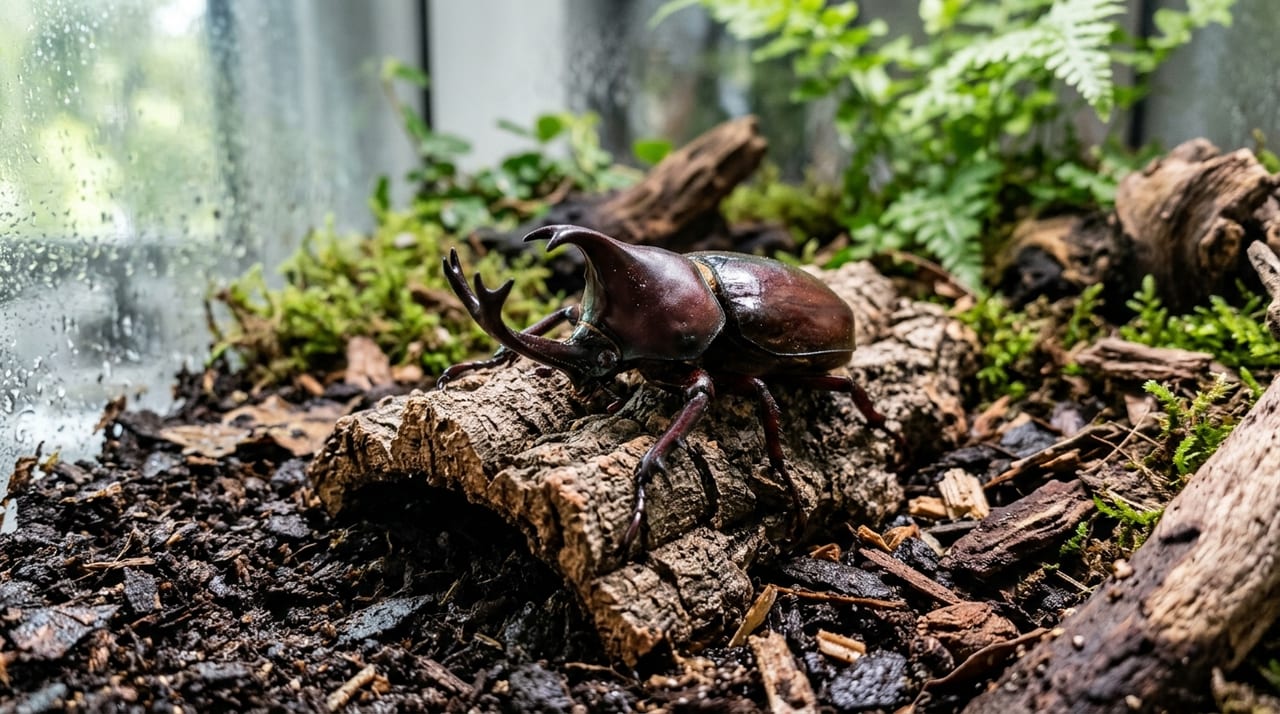
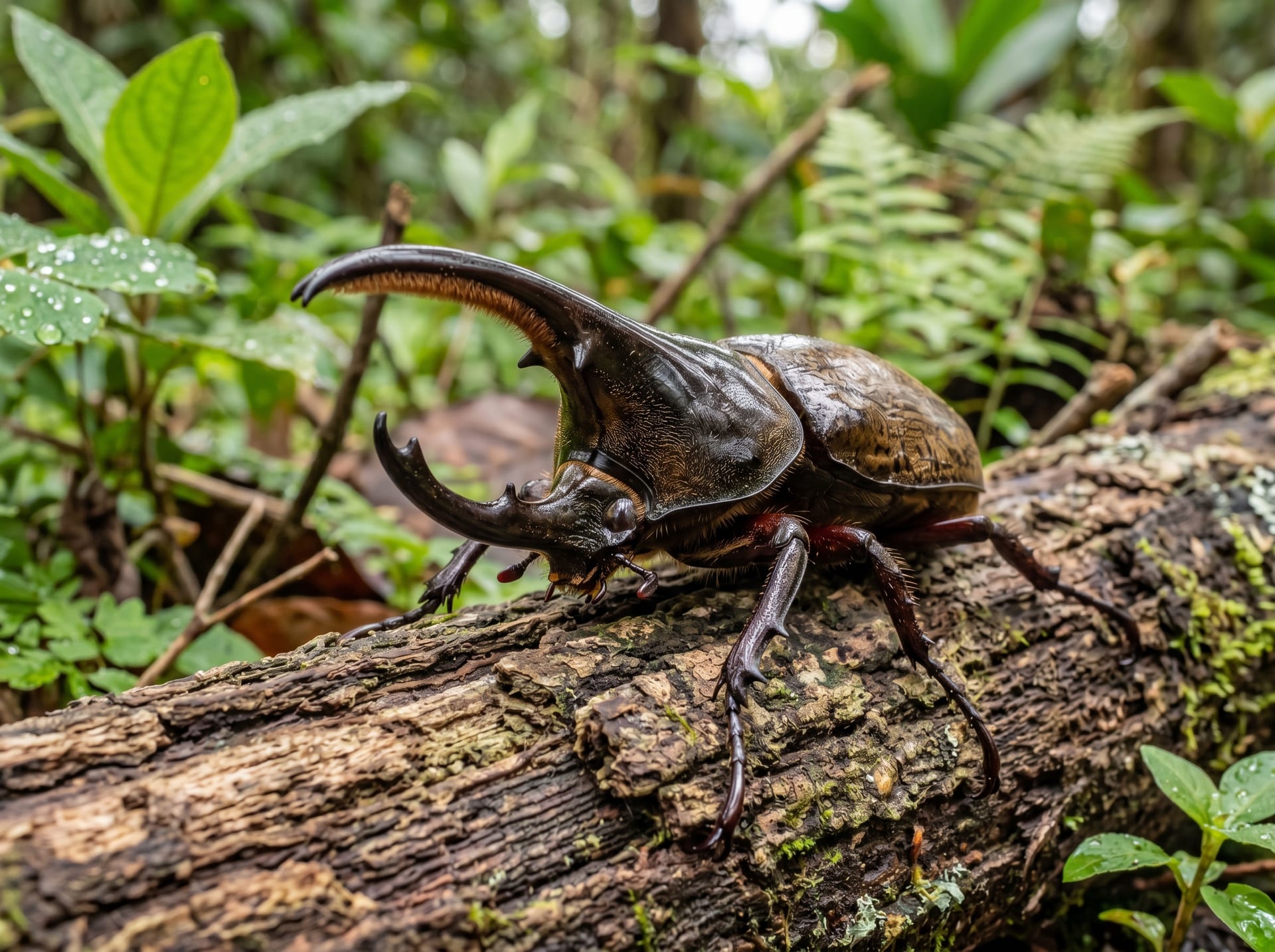
Hercules beetles (Dynastes hercules) are known as the world's largest beetles, with males reaching maximum total lengths (including horns) of over 170mm. Producing large individuals in captivity requires more than simply breeding from large parent beetles—it demands an integrated approach of continuous lineage recording, selective breeding, and environmental management working in tandem.
In Japan, among breeders, classification systems such as WF (wild-collected specimens), CBF1 (first generation captive-bred from wild-collected individuals), and CBF2 and beyond are particularly emphasized, and the purity of bloodlines and the presence or absence of inbreeding directly impact their value in direct sales markets like BreederDirect.
Foundations of Lineage Recording: What to Record
Essential Recording Items
| Record Item | Recording Notes |
|---|
| Parent beetle origin | Subspecies and collection location (Colombia, Guadeloupe, Hispaniola, etc.) |
| Parent beetle size | Male total length (horn tip to body end), horn length, weight (post-feeding) |
| Egg-laying and hatching dates | To understand the starting point of larval batches |
| Larval weight progression | Weight at end of 2nd instar, early 3rd instar, late 3rd instar (just before pupation) |
| Substrate replacement date and type used | Fermentation level, manufacturer, replacement interval |
| Eclosion date and post-feeding start date | For calculating adult lifespan and timing next-generation pairing |
| Inbreeding degree (CBF generation) | F1, F2, F3 management (external bloodline introduction recommended after F3) |
How to Create Bloodline Records (Breeder's Notes)
Maintain records on paper or in a spreadsheet using "batch numbers" (e.g., HC-2024-01), consolidating the above information into one line per batch. A format like "Hercules / Year / Sequential Number" is easy to manage. Assign separate IDs for males and females so you can track which pair produced each offspring.
Selection Criteria for Parent Beetles
To produce large individuals, discerning the "genetic potential" of parent beetles is essential.
Male (Father) Selection Points
- Prioritize body length over total length (body excluding thoracic horn): Horn length is easily influenced by growth environment, but body length has strong genetic factors
- Horn thickness and curve beauty: Aesthetic criteria for selecting high-quality individuals
- At least 3 months after post-feeding begins: Mature individuals have higher sperm quality
- Maximum larval weight of origin bloodline: If the parent's own weight records exist, over 80g is ideal
Female (Mother) Selection Points
- Body roundness and size: Larger body cavities tend to produce more eggs
- Individuals with egg-laying history are sometimes avoided: First-time females tend to lay more eggs
- 2-3 months after post-feeding: When ovaries are completely mature
Breeding Setup and Hatching Management
How to Prepare the Breeding Setup
Hercules beetles are substrate-spawning types that lay eggs in fully fermented leaf mold substrate (fully matured Hercules-specific substrate).
- Container: A 60L-class storage container (30cm depth or more)
- Substrate: Fully fermented Hercules substrate firmly packed (moisture level: slightly compacted when squeezed firmly)
- Temperature: 23-25°C is optimal for egg-laying
- Pairing period: House the pair together for 7-10 days, then move the female to a separate breeding container
Egg count varies greatly by bloodline and individual, ranging from 10 to 50. Excavate the container after 2 months and manage hatched larvae individually.
Management Methods for Producing Large Larvae
Larval Weight Guidelines (Large-Individual Production Line)
| Stage | Target Weight | Timing |
|---|
| Right after hatching | 0.1-0.3g | 2-4 weeks after hatching |
| Late 2nd instar | 15-25g | 2-4 months after hatching |
| Early 3rd instar | 50-70g | 6-9 months after hatching |
| Late 3rd instar | 90-130g+ | 12-18 months after hatching |
Males exceeding 160mm are more likely to eclose from larvae exceeding 130g. If larvae fail to reach 90g, there is room for improvement in substrate, temperature, or container size.
Three Key Elements for Producing Large Individuals
1. Selecting and Replacing High-Quality Substrate
Use fully fermented Hercules substrate (proven products like Eleaphus or similar brands), replacing it every 2-3 months before degradation (powdering, mold, fruit fly infestation) occurs. Always use fresh substrate; mixing old substrates accelerates degradation.
2. Long-Term Low-Temperature Maintenance (23-24°C)
While high temperatures (26-28°C) increase growth speed, they tend to result in smaller maximum size at eclosion. Managing at slightly lower temperatures (23-24°C) extends the larval period (18-24 months), allowing more individuals to reach maximum weight.
3. Individual Management in Large Containers
Late 3rd instar larvae require a minimum of 1-2L bottles, ideally 3-5L wide-mouth containers. Small containers cause larvae to self-limit growth (container effect).
Continuing the same bloodline (F2, F3) can cause "inbreeding depression," resulting in reduced hatching rates, increased larval mortality, and smaller final size. Generally, after F3, consider crossing with external bloodlines (from other breeders).
However, certain high-quality bloodlines (large-size lines from renowned breeders) may remain fixed within the same bloodline through F3 and F4, so it cannot be said universally that "introduce external bloodline at F3." Make decisions based on records and monitor hatching rate and larval growth rate each generation.
Summary
Producing large Hercules beetles is not achieved through a single technique but through comprehensive optimization of lineage recording, selection criteria, and larval environment. Breeding without records lacks reproducibility and offers no prospect of quality improvement. By utilizing breeder's notes to accumulate results from each batch and repeating trial-and-error, you can gradually establish bloodlines capable of consistently producing large individuals. The charm of Hercules beetles lies in their overwhelming size, and bloodline management is an essential skill for maximizing that appeal.