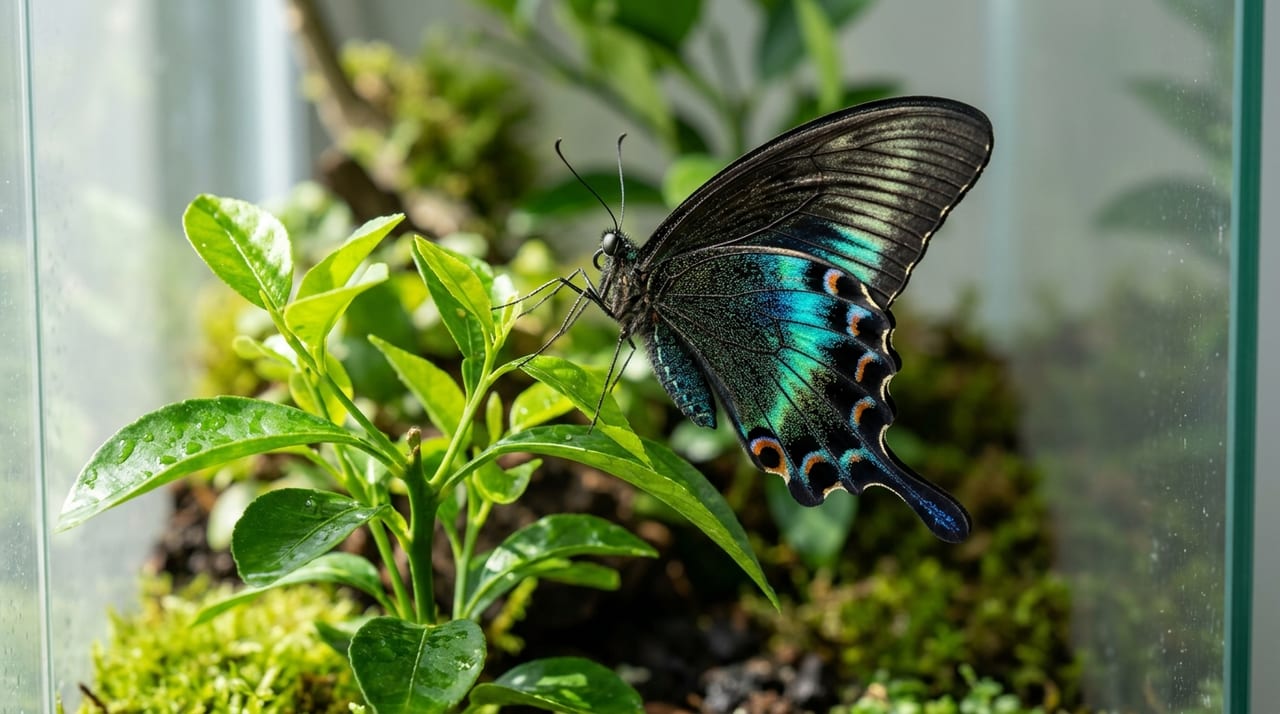
Butterfly Captive Breeding Guide: From Pairing Swallowtails, Brush-footed, and Blue Butterflies to Larval Management
A practical guide to captive breeding of butterflies. Explains specific procedures for managing host plants, inducing mating, managing eggs, and all developmental stages from larvae through pupation and emergence of Swallowtails, Brush-footed, and Blue butterflies.
Key Takeaways
A practical guide to captive breeding of butterflies. Explains specific procedures for managing host plants, inducing mating, managing eggs, and all developmental stages from larvae through pupation and emergence of Swallowtails, Brush-footed, and Blue butterflies.
The Appeal and Challenges of Butterfly Captive Breeding
✍️
BreederDirect Editorial
The BreederDirect editorial team specializes in care information for animals, covering veterinary care and breeding to deliver beginner-friendly guides.
Find Insects on BreederDirect
Buy directly from verified breeders
Browse Related Listings
Find Insects listings related to this article on BreederDirect. Buy directly from verified breeders.
Unlike beetles or stag beetles, butterfly captive breeding requires securing host plants and precise environmental control, making it one of the more challenging aspects of insect keeping. However, the incomparable experience of observing the complete lifecycle—from egg-laying and hatching through larval growth, pupation, and emergence—is truly rewarding.
Success depends on three critical factors: ①consistent supply of host plants, ②environmental conditions that induce oviposition, and ③individual management of each larva.
Selecting Butterfly Species Suitable for Rearing
For a first attempt at captive breeding, it is wise to start with hardy species whose host plants are easy to obtain.
Swallowtails (Papilionidae):
Asian Swallowtail: Host plants include citrus species such as mandarin oranges, bitter orange, and yuzu. The most common species and ideal for beginners
Old World Swallowtail: Host plants are parsley, carrot, and other Apiaceae. Compatible with home vegetable gardens
Common Mormon: Host plants are Rutaceae. Larger than the Asian Swallowtail with somewhat more challenging care requirements
Brush-footed Butterflies (Nymphalidae):
Indian Red Admiral: Host plants include ramie and nettles. Can utilize common garden weeds
Scarce Tortoiseshell: Host plants are hackberry and zelkova. An overwintering species requiring winter management of adults
Purple Emperor: Host plants are willows. Semi-arboreal, requiring a larger cage
Blues (Lycaenidae):
Pale Grass Blue: Host plant is wood sorrel. While considered a weed, it is easy to obtain and breeding is straightforward
Common Blue: Host plants include arrow vetch and clover and other Fabaceae species
Inducing Mating and Oviposition
In nature, butterfly mating occurs in flight, making induction in captivity challenging. Here are strategies to improve success:
Providing Sufficient Space: Butterflies will not mate in small plastic containers. A flight cage of at least 60cm × 60cm × 60cm is ideal. Net cages made of mosquito netting or mesh are practical.
Ensuring Adequate Light: Butterflies require bright light. Provide an environment with direct sunlight or plant grow lights outdoors. Some species respond to light containing ultraviolet radiation (UVB).
Placing Host Plants: Include both oviposition plants and nectar sources for adults within the cage. Keeping potted host plants intact encourages oviposition behavior.
Simulating Temperature and Season: Most butterflies enter breeding season at 20–28°C. For seasonal species, artificial adjustment of photoperiod (day length) can induce breeding mode (photoperiod manipulation).
Egg Management
Once eggs are confirmed, cut the leaf bearing the eggs and manage them in a sealed container.
Maintaining Humidity: Eggs are sensitive to drying, so place moistened paper towels at the bottom of the container to prevent excessive desiccation. However, direct water droplets on eggs can cause asphyxiation, so care is essential.
Temperature Management: Optimal hatching temperature varies by species, but 24–26°C is a common guideline for most butterflies.
Hatching Period: Swallowtails typically hatch in 4–10 days, brush-footed butterflies in 5–12 days. Higher temperatures accelerate hatching.
When the egg color begins to change (darkening or the larval form becoming visible), hatching is imminent. Newly hatched first-instar larvae are extremely small and require careful observation.
Larval Management: Care by Instar
Butterfly larvae grow through repeated molts (instar progression). Swallowtails typically develop through five instars before pupating.
Replenishing Host Plants: Larvae depend absolutely on their host plants. Without food, larvae die within hours to a half day. Always ensure a fresh supply and replace plants before leaves wilt. Host plants can be kept fresh longer by placing them in water bottles with sponges inserted.
Individual Management of Each Larva: Housing multiple larvae together can result in cannibalism, especially when first-instar larvae eat eggs or smaller larvae. Management in separate containers is recommended.
Cleaning Frass: Larvae produce large quantities of frass (droppings). Clean the container bottom daily to prevent frass from mixing with host plants. Accumulated frass promotes bacterial growth and can cause infections such as nuclear polyhedrosis virus (NPV).
Preparing for Pre-pupation: Final-instar larvae (fifth instar in swallowtails) leave their host plants and begin wandering on cage walls or ceilings. This is a sign of the pre-pupation stage. At this point, provide suitable pupation sites such as twine, wooden branches, or cork boards.
Pupal and Emergence Management
From pupation to emergence takes 7–14 days in summer for swallowtails, or through overwintering if pupating in autumn. Pupae can be moved, but reversing their orientation can result in emergence failure; move them in their original orientation.
Newly emerged butterfly wings are soft and require 1–2 hours to fully expand. During this time, ensure the butterfly can grasp cage walls or branches to prevent wing damage. Once wings are completely dry, offer flowers or diluted sugar water for nectar feeding.
To establish successive generations, mate the emerged adults and raise the next generation. Continued inbreeding tends to result in weakened offspring, so it is recommended to occasionally introduce wild-collected individuals or separate lineages to maintain genetic diversity.