Hercules Beetle Care and Breeding | From Larvae to Adult Emergence
Complete guide to Hercules beetle care and breeding from larval stage through adult emergence. Introduces large substrate materials, temperature management, and pupal chamber care.
Key Takeaways
Complete guide to Hercules beetle care and breeding from larval stage through adult emergence. Introduces large substrate materials, temperature management, and pupal chamber care.
Related Species
Hercules Beetle: Basic Information and Characteristics
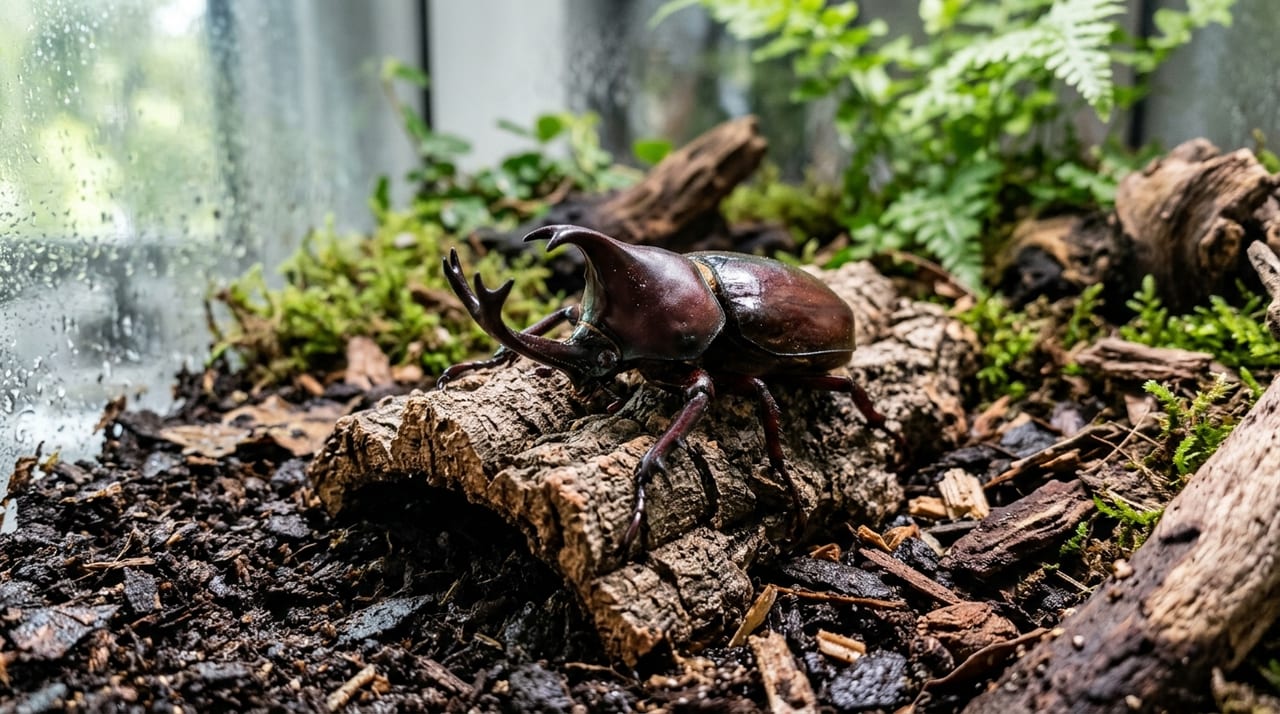
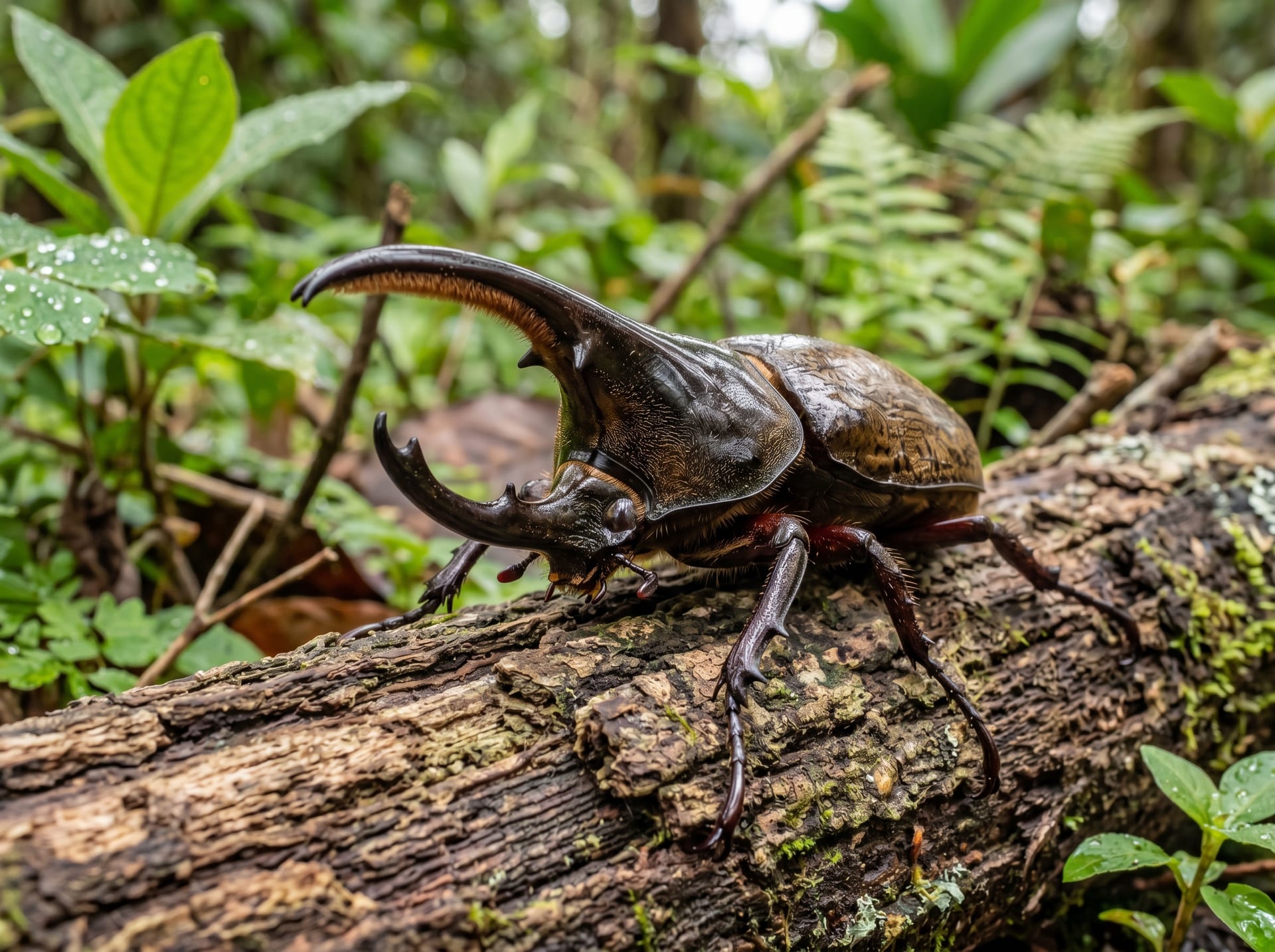
The Hercules beetle is an insect of the family Scarabaeidae, native to South American tropical rainforests, and is one of the world's largest beetles. Basic information is as follows.
- Body Length: Males reach an average body length of 120–150 mm, characterized by large horns rising from the head
- Lifespan: Approximately 2–3 years
- Behavior: Adults are nocturnal and hide in soil or leaf litter during the day
- Temperament: Extremely powerful; they often fight with other individuals in captivity, so single-beetle housing is essential as a rule
There are differences between wild and captive-bred specimens in terms of size, and the quality of the rearing environment significantly impacts the final body size. Females lack horns and can be distinguished from males by the shine and body shape of their exoskeleton. In the wild, they live by eating ripe fruit and tree sap, and recreating this diet in captivity is key to maintaining their health. The size of the horns and the shine of the body vary between individuals and change depending on the growth stage and nutritional status.
Setting Up Adult Beetle Housing
Hercules beetle adults require a 60 cm or larger enclosure. The wider the floor area, the less stress the beetle experiences from movement. Basic setup is as follows.
| Item | Details |
|---|---|
| Substrate | Fermented beetle substrate (such as Japanese oak or chinquapin), spread 15–20 cm deep |
| Hiding Places | Arrange bark or cork materials |
| Humidity | Adjust with misting 2–3 times per week, maintaining 40–60% |
| Temperature | 20–28°C is ideal. Avoid direct sunlight; air conditioning is recommended |
| Feeding | Provide beetle jelly or banana 1–2 times per week |
The active period is spring through autumn, when feeding appetite is robust. Place the enclosure in a well-ventilated indoor location, avoiding direct sunlight and high humidity. If multiple individuals are kept in the same enclosure, they will often engage in fierce battles using their horns, so the basic principle is one beetle per enclosure. When handling or observing, hold the beetle by the thorax or legs rather than the horns to reduce stress. If mold or insects appear in the substrate, replace it promptly and maintain cleanliness to help manage the beetle's health.
Setting Up the Breeding Container
To encourage egg-laying, use a dedicated breeding substrate. Use highly fermented substrate for beetles and fill a deep plastic container at least 30 cm deep. Pack the substrate firmly; pressing down 5–10 cm with a finger encourages laying marks. Place the female inside, and eggs should appear within 1–2 weeks. Newly laid eggs are deposited in the substrate rather than on wood, so excavate them carefully with a small shovel. An average clutch consists of about 20–50 eggs. During egg-laying, place the container in a quiet location away from vibrations and strong light. After laying, the female is exhausted, so avoid handling for a while and provide high-nutrition food to aid recovery. If the substrate surface dries out, mist gently with water to add moisture without damaging the eggs.
Larval Development Management
In larval rearing, change the substrate type according to the instar.
| Instar | Substrate Type |
|---|---|
| First instar | Fine-grain substrate (powdered). Used because feeding is delicate |
| Second instar | Standard fermented substrate |
| Third instar (final) | High-supplement substrate (insect substrate mixed with broad-leaf tree matter). Higher in nutrients and produces larger final-stage adults |
Maintain a temperature of 20–24°C and avoid large seasonal fluctuations. Check the substrate condition approximately once per month at each instar to ensure it is not overly dry. The rearing period lasts approximately 2 years. Rearing multiple larvae in the same container risks cannibalism and injury, so the basic practice is one larva per container. When changing substrate, gently scoop up the larva without gripping it forcefully by hand, and move it carefully. Healthy larvae have firmness in the body and move actively. If movement is sluggish or the body appears shrunken, this signals the need to review substrate conditions and temperature.
Pupation, Emergence, and Transition to Adulthood
Once a larva forms a pupal chamber, do not excavate it; let it spend the pupal stage undisturbed. Immediately after adult emergence, a hardening period is necessary, so keep the beetle in the enclosure without disturbance for at least 1–2 months. Once movement becomes active, begin initial feeding (beetle jelly or banana) and gradually introduce additional food types. Post-emergence care is key to raising high-quality adults. As pupation approaches, the larva becomes yellowish in color and enters the pre-pupal stage with reduced movement. This period is extremely delicate; damaging the pupal chamber or handling the larva risks incomplete emergence or death, so limit activity to observation only. Immediately after emergence, the adult's body is soft and the shell color is pale, so do not forcefully remove it; allow the body to harden naturally.
Care Tips and Precautions
Hercules beetle rearing requires effort, but is rewarding. Regular management of substrate humidity and temperature is most important. Larval rearing in particular lasts nearly 2 years, so maintaining a stable environment is the key to success. Excessively wet substrate promotes mold and fungus gnats, while overly dry substrate causes health issues in larvae and adults. At seasonal transitions, room temperature can change rapidly, so check the enclosure temperature frequently. When introducing a new individual, do not immediately house it with existing beetles; observe it separately for a while for safety.
Troubleshooting Rearing Problems
Larval death and failed pupal chamber formation are most often caused by poor environmental management. Check regularly that substrate is not overly dry and that temperature fluctuations are minimal. Even if a pupal chamber collapses, careful intervention may allow recovery. If white mold or small insects (such as mites) appear on the substrate surface, replace the substrate with fresh material and improve ventilation. An unusual odor indicates substrate deterioration, so consider replacing it promptly. If an adult stops eating or shows prolonged sluggish movement, the basic troubleshooting approach is to recheck temperature and humidity.
Preserving Adult Beetles and Continuing Generations
Even after an adult stops laying eggs, it is common to rear it for a few more months. During this time, provide regular feeding and water to maintain its health. With successive generations, increasingly large and high-quality individuals can be obtained. When planning future breeding, avoid pairing closely related individuals; combining individuals from different bloodlines is preferable to produce healthy offspring. As successive rearing continues, the keeper's own experience and records become increasingly valuable for individual management.