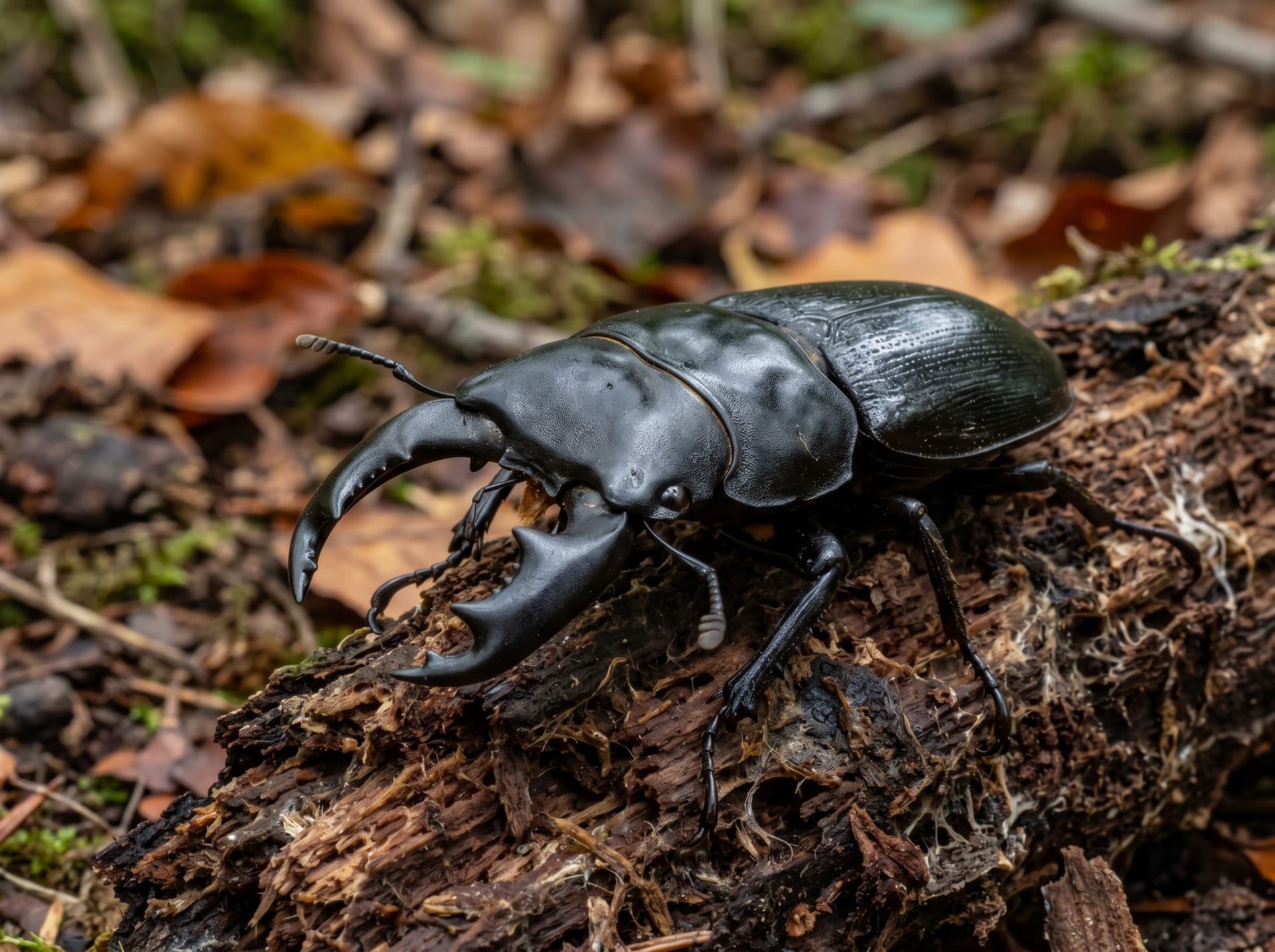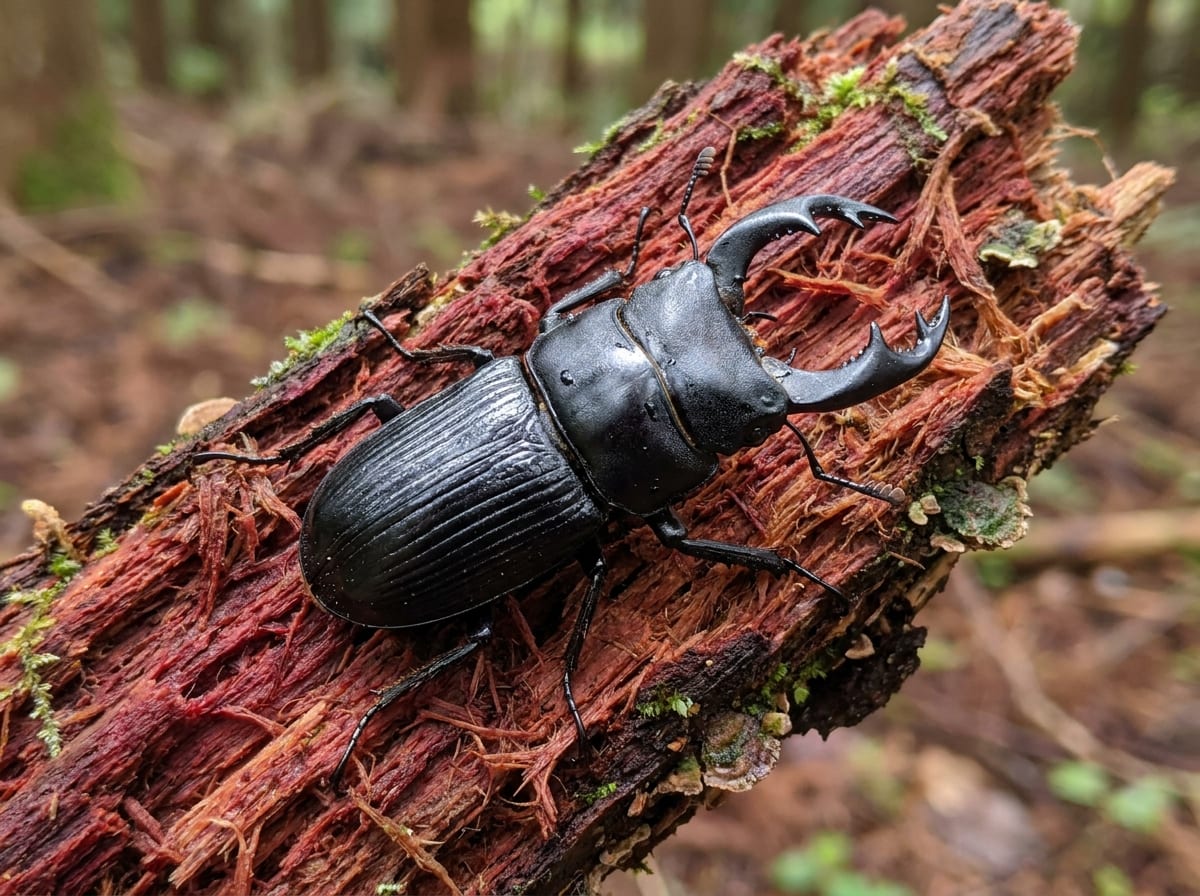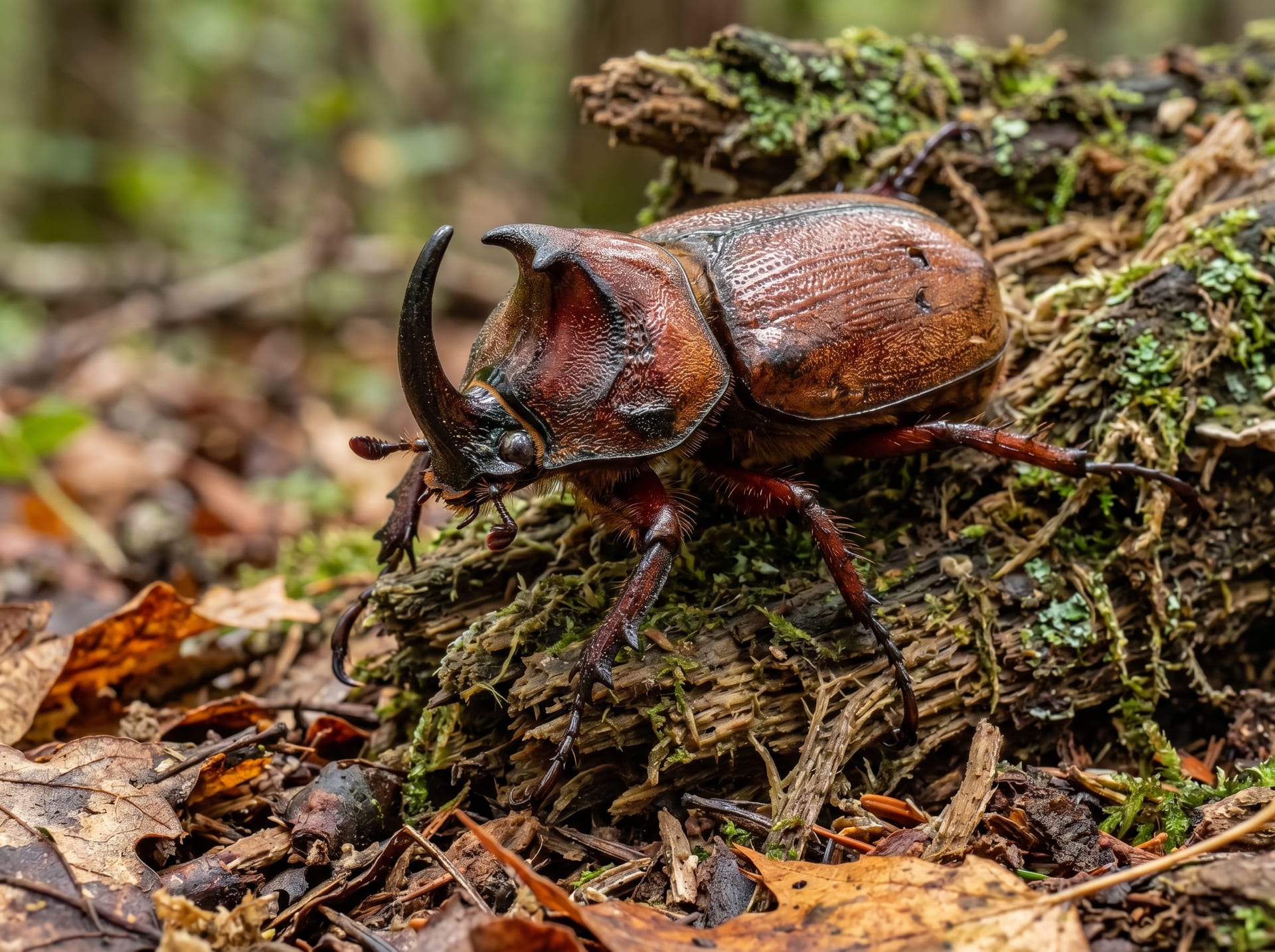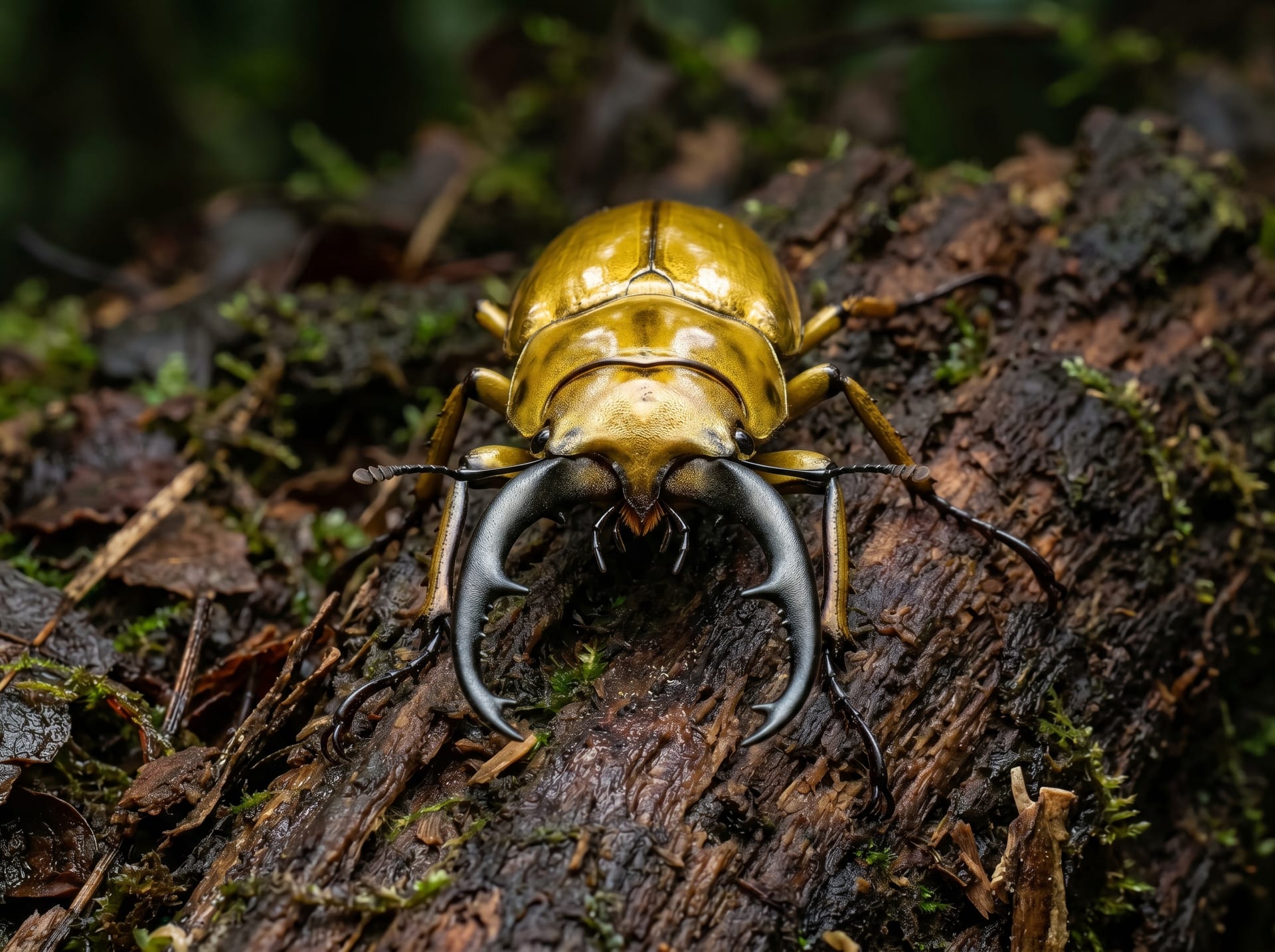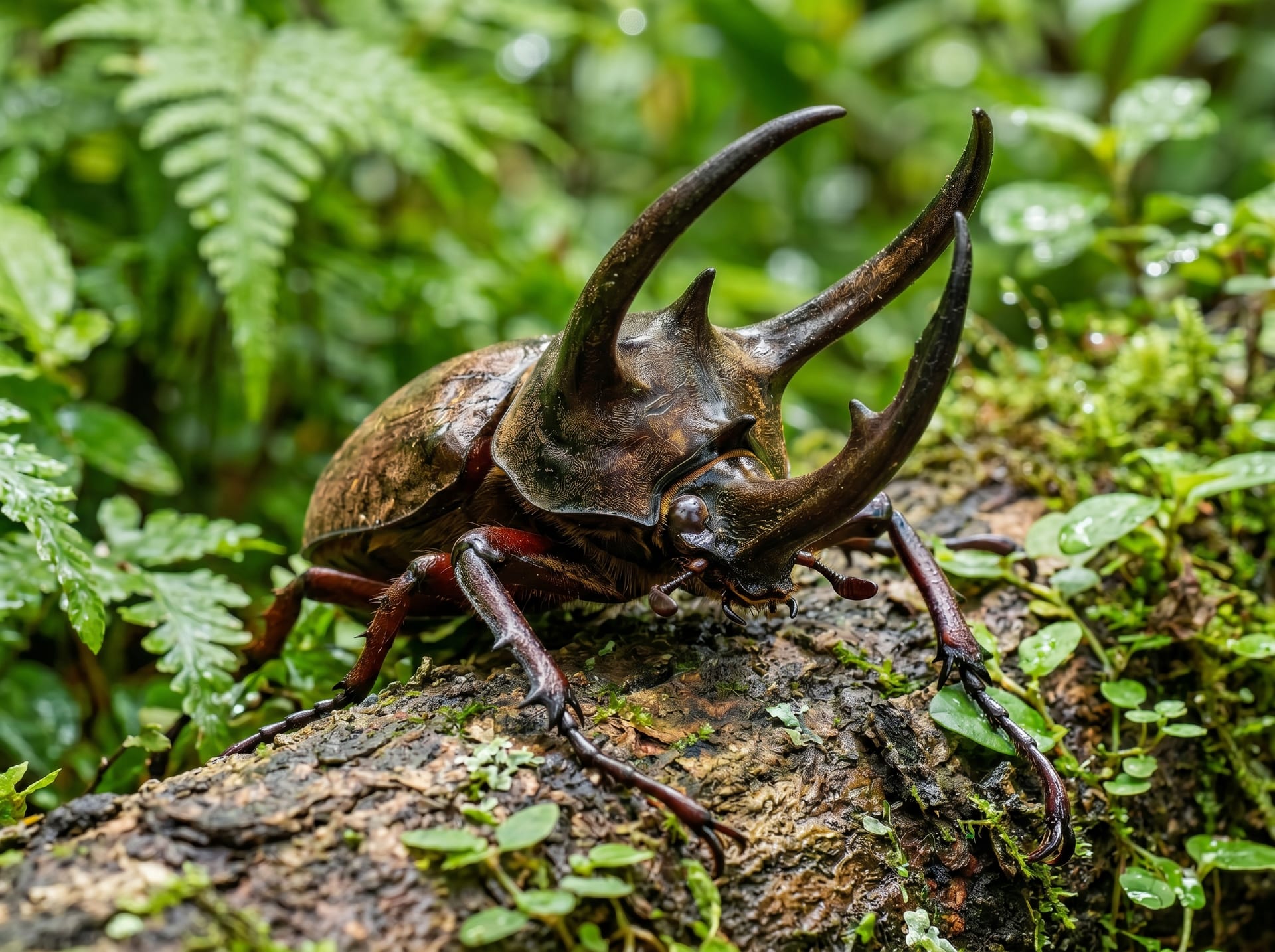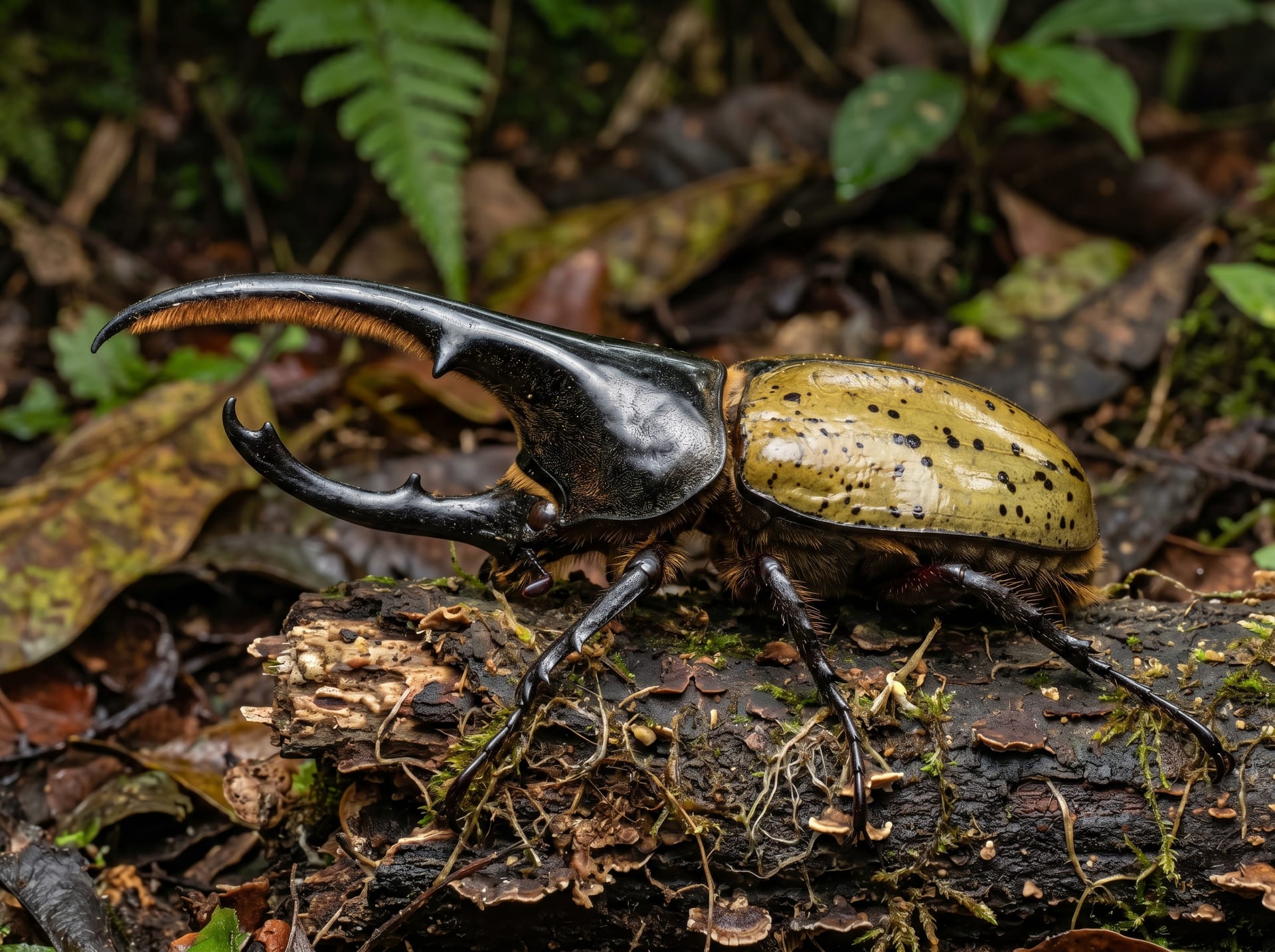
AI-generated image
Hercules Beetle Nominate
AdvancedDynastes hercules hercules
The nominate subspecies of king of beetles Hercules. From Guadeloupe, grows largest.
Difficulty
Advanced
Temperature
20〜28℃
Lifespan
Adult 6-12 months
Size
100-180mm
Humidity
60〜80%
Diet
Insect jelly
About
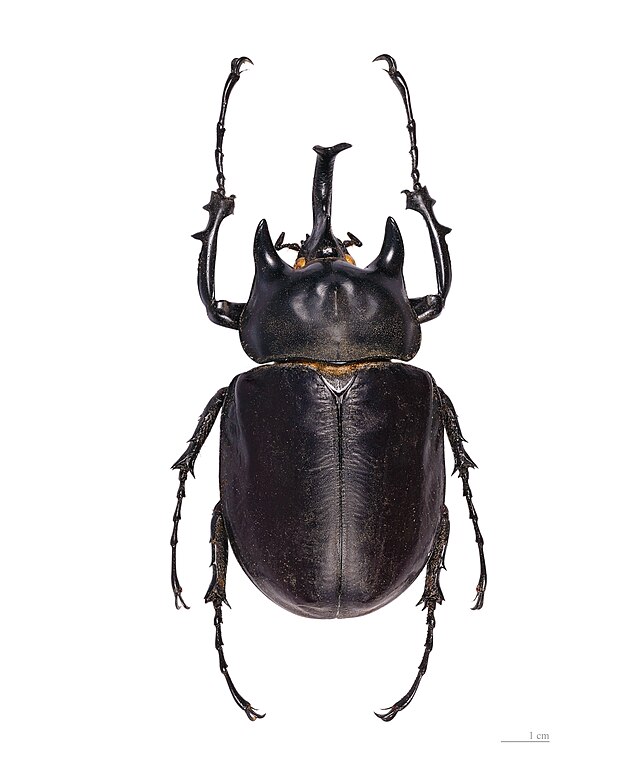
Dynastes hercules hercules, the nominate subspecies of the Hercules beetle, is native to the Lesser Antilles islands of Guadeloupe, Dominica, and adjacent islands in the Caribbean. Among all 17 recognized Hercules beetle subspecies, the nominate is the largest, with males reaching a maximum total length of 180 mm—making it the longest beetle species on Earth. The thoracic horn is notably long and straight, and elytra color shifts from yellowish-green to black with humidity. An extra-large enclosure with fermented substrate at least 20 cm deep is required. Females lay 30–50 eggs per clutch; larvae take 12–24 months to develop. Adults eat beetle jelly or banana and live 6–12 months. Due to its restricted island range, limited availability, and status as the largest and most prestigious Hercules subspecies, D. h. hercules commands the highest prices in the hobby and represents the ultimate achievement for Hercules beetle breeders.
Lifespan of the Hercules Beetle Nominate
The Hercules Beetle Nominate lives Adult 6-12 months.
Size of the Hercules Beetle Nominate
The Hercules Beetle Nominate grows to 100-180mm.
Temperature & humidity for the Hercules Beetle Nominate
Captive temperature must be maintained at 20–25°C; temperatures above 28°C are harmful.
Basic Info
Origin
Lesser Antilles islands of the Caribbean, including Guadeloupe and Dominica
Lifespan
Adult 6-12 months
Breeding Records & Localities
Captive record (♂)
184.3 mm
Record source: BE-KUWA 2025 edition (Hercules hercules, captive 184.3mm, Huang Sheng-Yao 2025, total length including horns)
Notable localities
GuadeloupeDominica
Nominate subspecies. Holds the captive record for the entire Hercules species (184.3mm), exceeding Rickey (180.7mm). Records include total length including horns. Captive breeding records are updated annually in BE-KUWA (Mushi-sha) contests. Individual value varies significantly based on locality, generation (CBF/WF/WD), and size.
Generation codes
- WD
- Wild-caught
- WF1
- Offspring of a wild-caught female
- F1〜
- Captive generations (same locality)
- CBF1
- Cross-locality captive-bred (reset)
Sources: BE-KUWA Certified Breeding Records (Mushi-sha, FY2025 edition, JA) / Hercules beetle, Dynastes hercules (subspecies list) — Wikipedia (JA)
References & Sources
Edited & verified by: BreederDirect editorial team
The taxonomic, regulatory, and husbandry data on this page are compiled and verified against the authoritative primary sources below.
Primary sources
Taxonomy & Authority
Accepted name: Dynastes hercules hercules (Linnaeus, 1758)
Synonyms: Dynastes hercules var. caribaea Stehlé & Stehlé, 1958, Dynastes hercules var. niger Endrödi, 1947, Scarabaeus hercules Linnaeus, 1758
Authority databases: GBIF
Nomenclature follows global taxonomic authority databases.
Regulations & Conservation Status
Not CITES-listed
Plant Protection Act: When importing live specimens of Scarabaeoidea (including rhinoceros beetles, stag beetles, flower beetles, etc.), a species identification certificate issued by the exporting country government agency or equivalent must be attached in accordance with the Invasive Species Act (import ports are limited to Narita, Chubu, Kansai, Fukuoka, and Kagoshima airports). This species itself is not a designated invasive species, and import is possible upon submission of the certificate.
Sources: Ministry of the Environment, Invasive Species Act: "Guidance for Those Importing Live Insects in Scarabaeoidea" / CITES Appendix (checklist.cites.org)
Regulations may change. Always verify the latest information with the relevant authorities.
Hercules Beetle Nominate Listings
Loading latest listingsFind listings for this species