Hercules Beetle Care Guide | Tips for Raising the World's Largest Beetle
A guide to caring for Hercules beetles, covering adult and larval rearing methods. This article introduces the necessary case size, temperature management, feeding, larval substrate replacement, and breeding tips.
Key Takeaways
A guide to caring for Hercules beetles, covering adult and larval rearing methods. This article introduces the necessary case size, temperature management, feeding, larval substrate replacement, and breeding tips.
Related Species
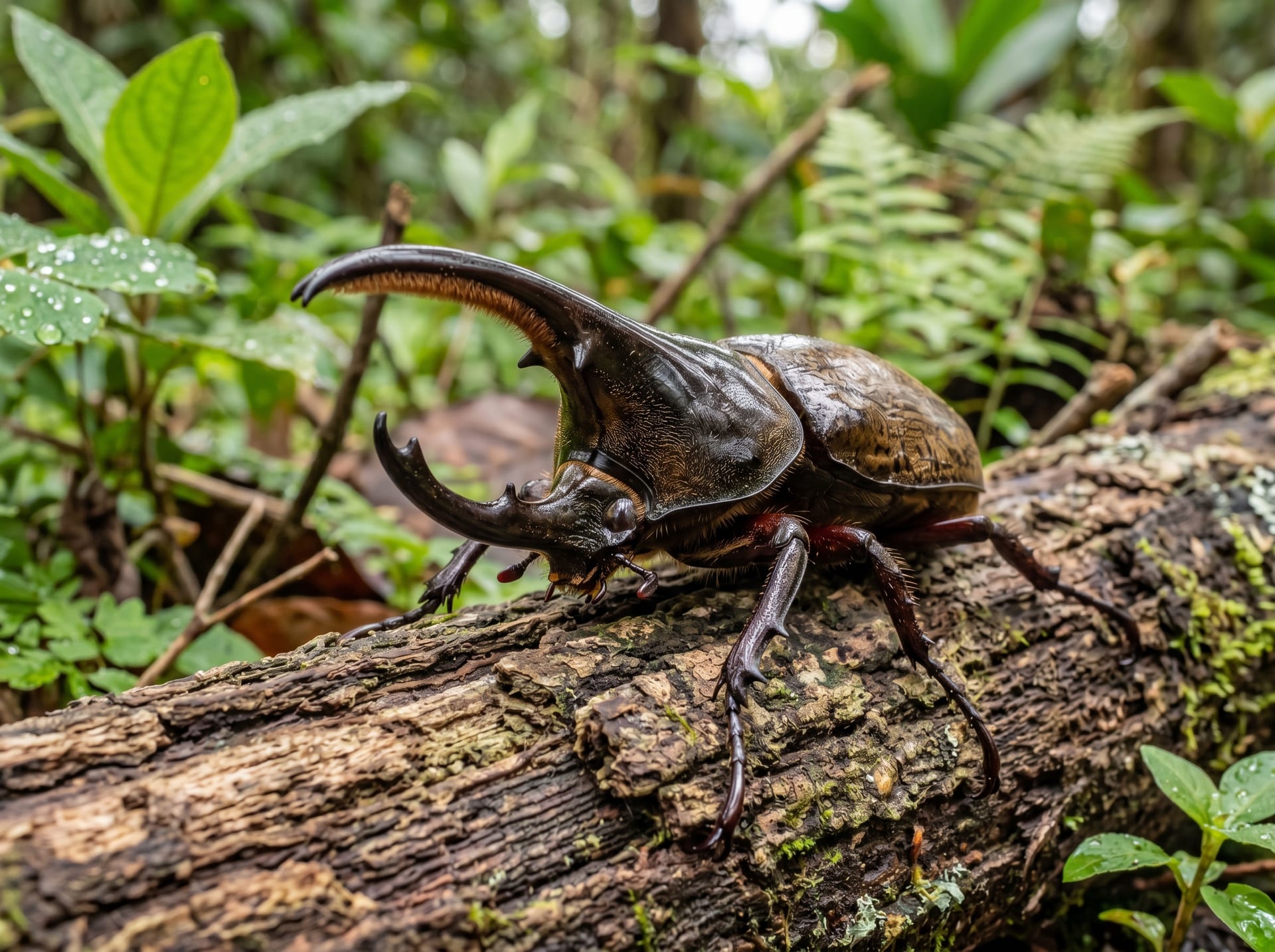
The Hercules beetle (Dynastes hercules) is the world's largest beetle, with some individuals exceeding 180 mm in body length, and is considered the ultimate dream of insect enthusiasts. The powerful appearance of males with their long horns is awe-inspiring, but their care requires knowledge and equipment different from domestic Japanese beetles. This article explains how to raise Hercules beetles from both adult and larval perspectives.
Hercules Beetle Subspecies and How to Obtain Them
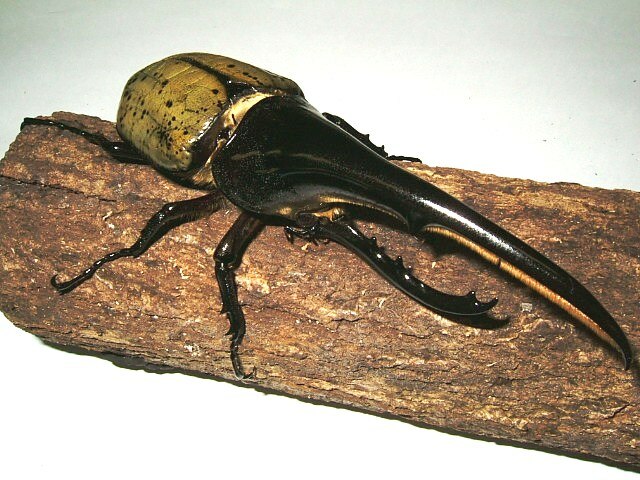
Thirteen subspecies of Hercules beetles are known, and those in circulation for breeding are primarily Hercules hercules (DHH: from Guadeloupe), Hercules rickey (from Colombia and Ecuador), and Hercules occidentalis. DHH is the largest subspecies, with records of individuals over 170 mm emerging in captive breeding. Rickey is the second-largest subspecies after DHH, with horn shapes that are somewhat more linear.
Obtaining them typically involves purchasing from specialty shops or breeders. They are sold as adult pairs, larvae, or eggs. For beginners, starting with third-instar larvae is recommended. Raising from adults has a limited lifespan (adult beetles live about 6 months to 1 year), so starting from larvae is advantageous if breeding is the goal.
As a precaution when purchasing, escape (letting them out) is strictly prohibited when raising foreign insect species. There is a possibility of negatively affecting Japan's ecosystem, so ensure that the cage lids are fully locked and avoid outdoor breeding. Make sure to practice responsible care, including what to do if they escape by accident.
Adult Beetle Housing and Environment
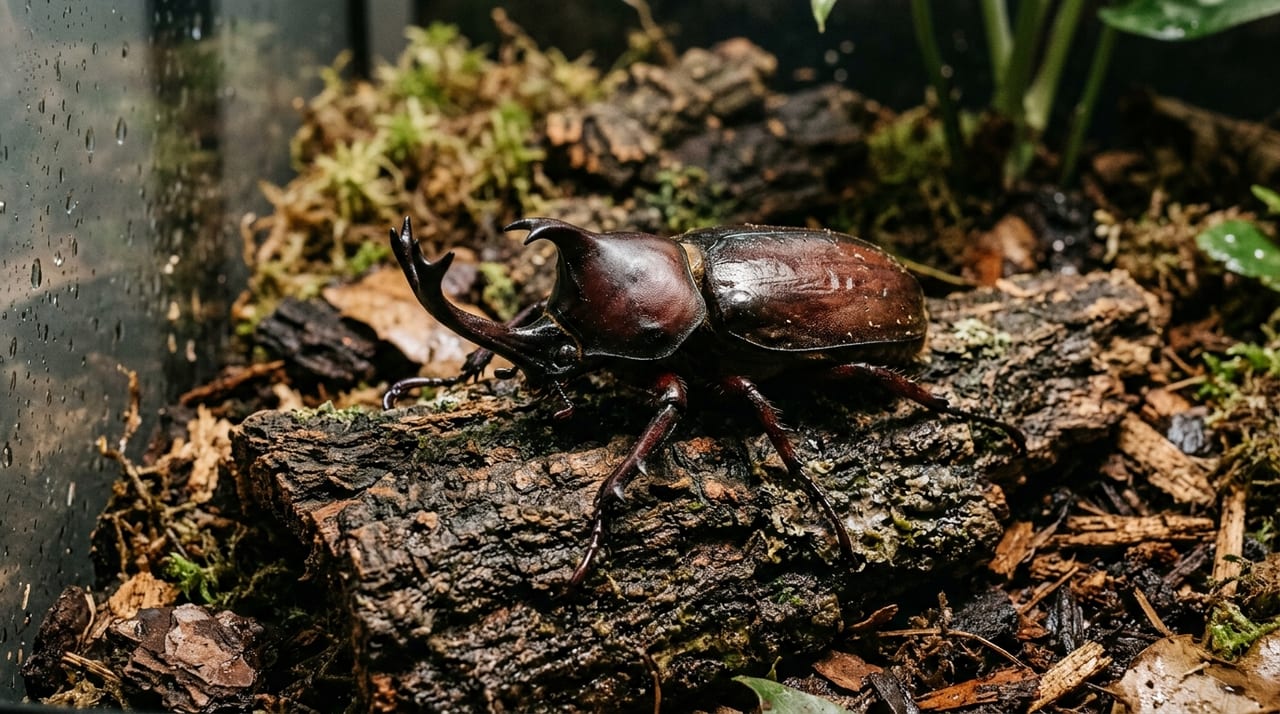
Adult Hercules beetles are extremely large, so a large-sized breeding case is necessary. Use a case at least L-sized (approximately 40 cm wide) or larger, and ensure sufficient height (25 cm or more) for the male's long horns to move freely. If the horns hit the ceiling and prevent the beetle from standing up properly, it can cause stress and damage to the horns.
Use broadleaf tree fermented substrate or coconut chips as bedding, layering 5–10 cm deep. If the substrate is deep enough for the adults to burrow into, it provides a sense of security during rest periods. Climbing wood to prevent overturning is essential. When Hercules beetles overturn, their long horns can prevent them from righting themselves on their own, and prolonged overturning exhausts their energy and shortens their lifespan. Install multiple thick pieces of wood or cork bark.