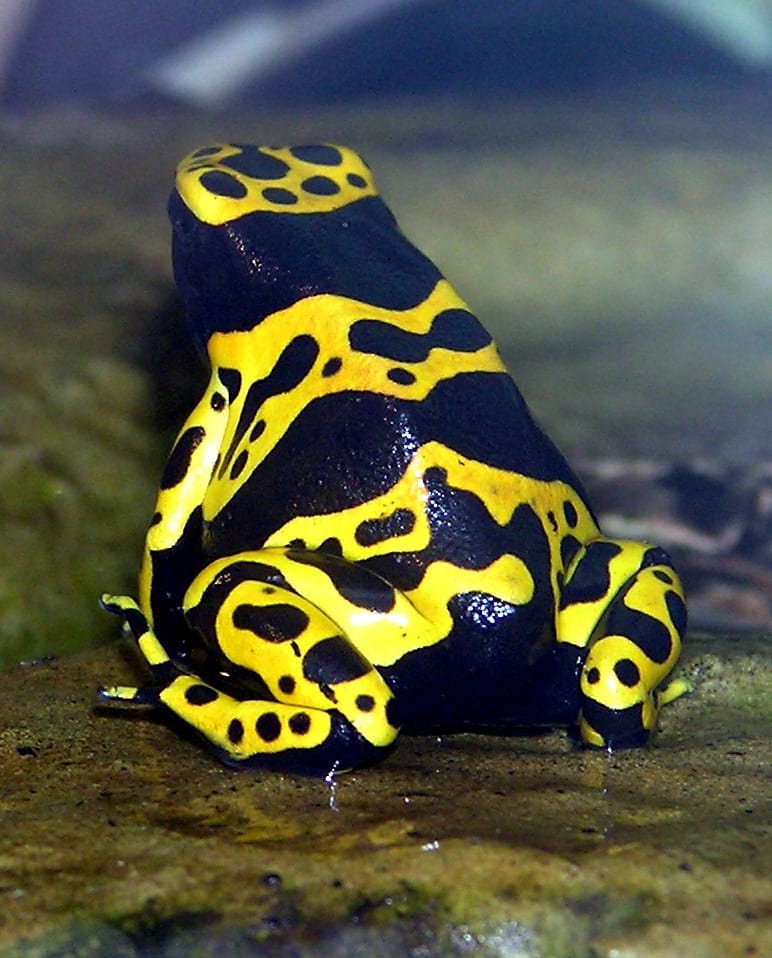
 © Arpingstone / Public domain
Yellow-Banded Poison Frog
The Yellow-Banded Poison Frog, native to northern South America, is one of the larger poison frog species, known for its bold yellow body marked with thick black bands — a pattern that has earned it the nickname "bumblebee frog." Compared with other dart frogs, it tolerates higher temperatures and drier conditions relatively well, making it a hardy species often recommended as a starting point for keepers new to poison frogs. As the frogs mature, their coloring grows even more striking, making them a real standout in a vivarium. Active and bold during the day, they're easy to observe going about their business without hiding much.
View Yellow-Banded Poison Frog encyclopedia →Breeder Wanted!
List on BreederDirect and sell directly to customers nationwide!
BreederDirect's 6 Transparency Commitments
Every Reptiles & Amphibians from verified Breeder breeders includes complete information: morph, genetics, feeding requirements, and temperament details.
- Morph Information
- Actual Photos
- Feeding Information
- Temperament Information
- Genetics Information
- Age (Months)
Browse all 319 breeds
Difficulty Level
Feeding Type
Temperament
No listings match your filters
Adjust your filters, or get notified when new listings arrive.
Getting alerts is free with a member account. When new listings match your saved search, we'll notify you by email and in-app.
Browse other categories
Verified breeders (preview)

Are you raising reptiles & amphibians?
Register as a breeder and connect with buyers directly.
Apply as a breederYellow-Banded Poison Frog key facts
- Care level
- Intermediate
- Lifespan
- 10-20 years
- Size
- 3-5cm
- Temperature
- 23〜28℃
- Humidity
- 70〜100%
- Diet
- Fruit flies, pinhead crickets, springtails
- Temperature & Humidity
- Tolerates 18-29 C but does best near 23-24 C; above 29 C is dangerous. Keep 70-100% humidity, though it copes with brief drops to 50% if water is available.
- Enclosure
- An 18 x 18 x 18 inch (45 cm cube) terrarium suits one to three frogs. Use coco fibre or leaf mould with a mesh top for ventilation, plus wood and plants as hides.
- Diet & Feeding
- Adults readily take D. hydei fruit flies and pinhead crickets; juveniles need the smaller D. melanogaster. Dust every feeding with supplement.
- Temperament
- Diurnal and bold, so it shows itself well. It suits group housing, but mature females can fight, so allow plenty of space per frog.
- Notes
- Captive-bred frogs are regarded as non-toxic, but avoid bare-handed handling. Because the species aestivates, severe drying can shut down activity.
About Yellow-Banded Poison Frog
The Yellow-Banded Poison Frog is a large, hardy dart frog from northern South America, prized for its bold yellow-and-black banding and relative tolerance of heat and dryness — a popular choice for those new to poison frogs.
7 things to know before welcoming a Yellow-Banded Poison Frog
1Enclosure Sized to Fit
Adults reach only about 3–5 cm, but these frogs are active and need a terrarium with plenty of floor space. Add live plants and driftwood to create footholds at different heights, since they climb onto low leaves as well as moving along the ground.
2Toxicity Comes From Diet
Wild frogs derive their toxins from alkaloid-containing prey like certain ants, but captive-bred frogs raised on standard feeder insects are generally considered non-toxic. Even so, it's good practice to wash your hands after handling them.
3Active During the Day
Unlike many frogs that hide away, this species is diurnal and stays visibly active during daylight hours, making it easier to watch than more secretive frogs. They also tend to grow reasonably comfortable with a keeper's presence nearby.
4Better Heat & Dry Tolerance
Among dart frogs, this species tolerates higher temperatures and drier conditions relatively well, which is part of why it's considered forgiving for newer keepers. That said, it's still a tropical species that needs consistent humidity management.
5Sociable Enough for Groups
Compared with many territorial dart frogs, this species is relatively mild-mannered and can often be housed with others in the same enclosure. Males may still call or spar occasionally, so watch group dynamics as they settle in.
6Diet of Small Insects
Their staple diet is small insects such as fruit flies and springtails. Since you'll need to culture or regularly source feeder insects, it's worth setting up a feeding routine before bringing a frog home.
7A 10–20 Year Commitment
With proper care, this frog can live 10 to 20 years, so it's a long-term companion rather than a short-term pet. Plan ahead for ongoing care, including who will look after it while you're away.
Frequently asked questions about Yellow-Banded Poison Frog
- Q.Are they suitable for beginners?
- A.This species is generally considered better suited to intermediate keepers rather than absolute beginners. That said, it's one of the hardier dart frogs, so anyone comfortable with basic humidity management can take it on as a starter species.
- Q.Is it safe to handle them?
- A.Captive-bred frogs are generally considered non-toxic, but their skin is thin and sensitive, so handling isn't recommended as a rule. These are best enjoyed as frogs to observe rather than hold, with contact kept to a minimum.
- Q.Should I keep one alone or in a group?
- A.Their relatively mild temperament makes them well suited to group housing. That said, males may call or spar with each other occasionally, so it's worth watching how a group settles in and adjusting numbers or pairings if needed.
- Q.How big do they get?
- A.Adults reach a compact 3 to 5 cm in length. Since they're still quite active despite their small size, it's best to give them a terrarium with more floor space than their body size alone might suggest.
- Q.How long do they live?
- A.With proper care, they can live around 10 to 20 years. That's a longer commitment than many small pets, so it's worth thinking through your long-term care plans before bringing one home.
Useful tools for Yellow-Banded Poison Frog care
Learn more about Yellow-Banded Poison Frog in the encyclopedia
View Yellow-Banded Poison Frog encyclopedia entry →
Care difficulty, lifespan, size and diet — all basics covered.
More in this category
Can't find the one you're looking for?
Post your wishes for free and breeders with matching animals will contact you with introductions.