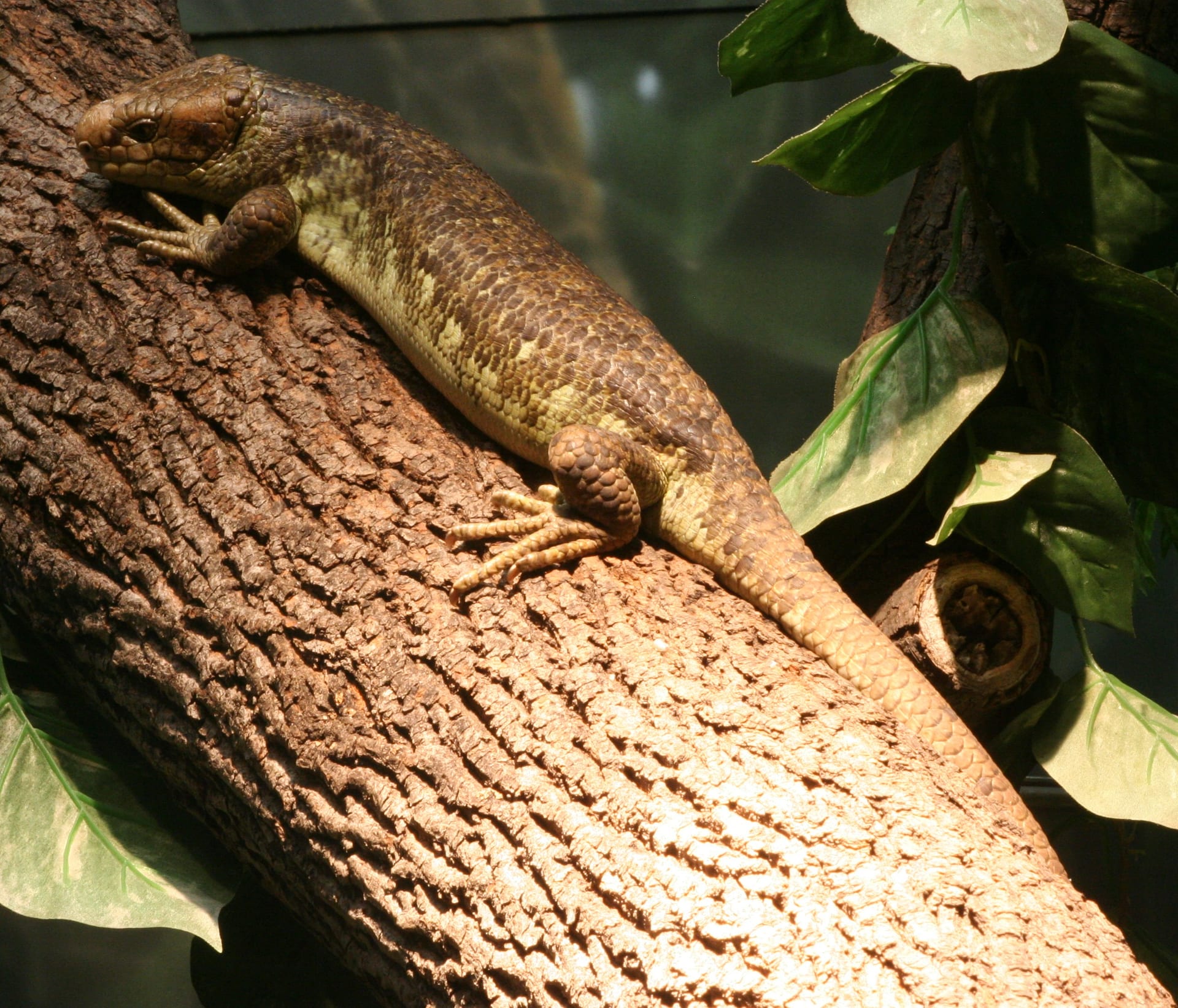
 © Dave Pape / Public domain
Monkey-Tailed Skink
The Monkey-Tailed Skink is a giant among skinks, reaching up to 80cm in total length. Its signature feature is a long, fully prehensile tail — the source of both its Japanese and English names — which it uses alongside sharp, hooked claws to move confidently through the trees. Unusually for a skink, it lives a fully arboreal, nocturnal, and herbivorous lifestyle. Many individuals are calm and can grow accustomed to handling, making them appealing to keepers who enjoy building a bond over time. Because of their size and specialized care needs, they're generally recommended for experienced reptile keepers.
View Monkey-Tailed Skink encyclopedia →0% commission on your first sales!Register by September 30, 2026 and your first 2 sales are commission-free!
Breeder Wanted!
List on BreederDirect and sell directly to customers nationwide!
6 Transparency Promises from Br-Choku
Every Reptiles & Amphibians from verified Breeder breeders includes complete information: morph, genetics, feeding requirements, and temperament details.
- Morph Information
- Actual Photos
- Feeding Information
- Temperament Information
- Genetics Information
- Age (Months)
Browse all 280 breeds
Difficulty Level
Feeding Type
Temperament
Verified breeders wanted for Reptiles & Amphibians
Breeders are signing up now ahead of launch. Subscribe to be notified when new listings go live.
Getting alerts is free with a member account. When new listings match your saved search, we'll notify you by email and in-app.
Browse other categories
Verified breeders (preview)
Are you raising reptiles & amphibians?
Register as a breeder and connect with buyers directly.
Apply as a breederMonkey-Tailed Skink key facts
- Care level
- Advanced
- Lifespan
- 15-25 years
- Size
- 80cm total length
- Diet
- Herbivorous: leaves, especially of aroids, and fruit
- Temperature & Humidity
- It is very intolerant of cold. In winter use a non-light-emitting heat source at night or heat the whole room the enclosure stands in. As a nocturnal animal of tropical forest the priority is to avoid letting it get cold.
- Enclosure
- Large and fully arboreal, it needs a big, tall enclosure; keepers sometimes repurpose bird or mammal cages or plant greenhouses for large animals. Build activity space and hides from branches, driftwood and living plants, fixing branches firmly because the animal is strong. A nest box can serve as a hide. Choose a water container broad enough to submerge in and heavy enough not to be tipped over.
- Diet & Feeding
- Entirely herbivorous, feeding in the wild on leaves, especially of aroids, and fruit. In captivity offer vegetables and fruit; animals also take commercial diets for herbivorous reptiles, and there are records of individuals eating crickets. For animals that feed poorly or are out of condition, vegetables and fruit are sometimes blended and offered as a purée.
- Temperament
- Usually slow-moving but capable of sudden bursts of speed. In threat it gapes and vocalises, and bites if the intruder does not back off. Its teeth and claws can cause unexpected injury, so handle it with leather gloves rather than bare hands. Males and females that have just given birth are especially short-tempered. It forms family groups and is hostile to animals from outside them.
- Notes
- Listed on CITES Appendix II since 11 June 1992; being Appendix II it needs no Japanese registration certificate. Export from the Solomon Islands is now restricted. The IUCN assesses it as Near Threatened, with logging, hunting for food and pet-trade exports cited as threats. It does not appear on the schedule of designated dangerous animals under the Order for Enforcement of the Act on Welfare and Management of Animals. At 80 cm it is a large animal, and keeping one for life requires large housing and a long-term feeding plan.
About Monkey-Tailed Skink
The Monkey-Tailed Skink is the largest skink species, reaching 80cm long. Fully arboreal, nocturnal, and herbivorous, it grips branches with a prehensile tail and hooked claws, and suits experienced keepers.
7 things to know before welcoming a Monkey-Tailed Skink
1Large arboreal enclosure needed
Reaching up to 80cm in length, this species needs a tall, spacious enclosure with plenty of climbing room. Provide sturdy branches and multiple perches so it can move three-dimensionally through the trees.
2A fully herbivorous diet
Unusual for a skink, this species eats an entirely plant-based diet of vegetables, fruit, and leafy greens. Rotate a variety of foods to keep the diet nutritionally balanced.
3Nocturnal activity pattern
It rests quietly in hiding during the day and becomes active at night. Not seeing it move during daylight hours is normal, not a cause for concern.
4Mind the sharp, hooked claws
Its claws are sharply hooked for gripping tree bark and branches. They can easily catch on skin during handling, so take care and go slowly until the animal is accustomed to you.
5Keep it warm and humid
As a tropical species, it needs consistently warm temperatures and high humidity in its enclosure. Monitor conditions with a thermometer and hygrometer and adjust for seasonal changes.
6Calm, people-friendly nature
Many individuals are fairly calm and can grow accustomed to being handled over time. Temperament varies between individuals, so build trust gradually rather than rushing.
7Plan for long-term care
As a large species suited to experienced keepers, think carefully about space, cost, and time commitment before bringing one home. Make sure you can provide consistent care for the long term.
Frequently asked questions about Monkey-Tailed Skink
- Q.Is this species suitable for beginners?
- A.Because of its large size and specialized care needs, it's generally considered a species for experienced keepers rather than beginners.
- Q.How big do they get?
- A.Adults reach up to 80cm in total length, making this one of the largest species in the skink family.
- Q.What do they eat?
- A.They are fully herbivorous, eating mainly vegetables, fruit, and leafy greens — an unusual diet for a skink.
- Q.Are they inactive during the day?
- A.Yes, they're nocturnal and typically rest in hiding during the day, becoming active after dark.
- Q.Is this species subject to CITES?
- A.Monkey-Tailed Skink is listed in CITES Appendix II. International trade requires a permit from the exporting country, but as far as CITES is concerned, no registration is needed to buy or sell individuals already legally in Japan.
Useful tools for Monkey-Tailed Skink care
Learn more about Monkey-Tailed Skink in the encyclopedia
View Monkey-Tailed Skink encyclopedia entry →
Care difficulty, lifespan, size and diet — all basics covered.
More in this category
Can't find the one you're looking for?
Post your wishes for free and breeders with matching animals will contact you with introductions.