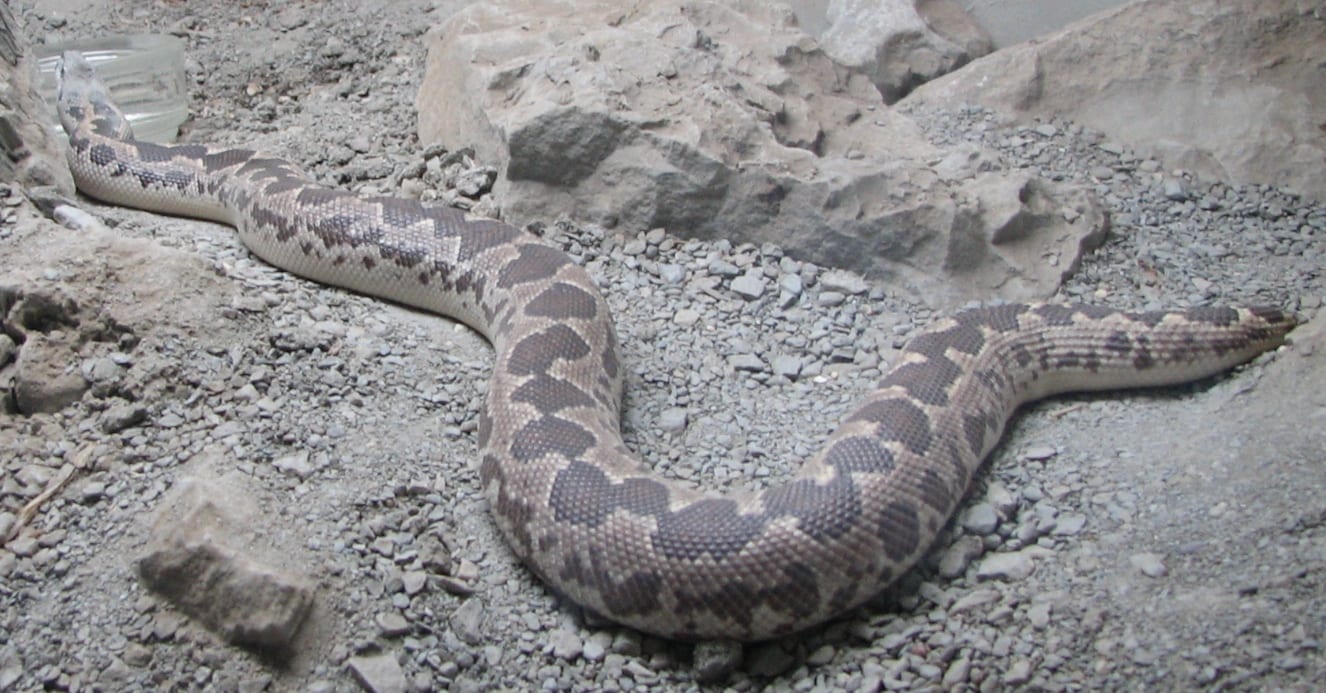
 © Ltshears / Public domain
Rough-Scaled Sand Boa
The Rough-Scaled Sand Boa is a small boa species native to the dry regions of India and northern Sri Lanka, reaching just under a meter in length. Its sharply keeled dorsal scales and zigzag pattern—reminiscent of the venomous Russell's viper—give it a distinctive, almost armored look, likely serving as a deterrent to predators. True to its fossorial nature, it spends most of the day buried in sand, emerging mainly at dusk or to feed. Combined with its famously calm temperament, this makes it a popular choice for keepers new to snakes, prized for its stocky build and striking markings.
View Rough-Scaled Sand Boa encyclopedia →0% commission on your first sales!Register by September 30, 2026 and your first 2 sales are commission-free!
Breeder Wanted!
List on BreederDirect and sell directly to customers nationwide!
6 Transparency Promises from Br-Choku
Every Reptiles & Amphibians from verified Breeder breeders includes complete information: morph, genetics, feeding requirements, and temperament details.
- Morph Information
- Actual Photos
- Feeding Information
- Temperament Information
- Genetics Information
- Age (Months)
Browse all 280 breeds
Difficulty Level
Feeding Type
Temperament
Verified breeders wanted for Reptiles & Amphibians
Breeders are signing up now ahead of launch. Subscribe to be notified when new listings go live.
Getting alerts is free with a member account. When new listings match your saved search, we'll notify you by email and in-app.
Browse other categories
Verified breeders (preview)
Are you raising reptiles & amphibians?
Register as a breeder and connect with buyers directly.
Apply as a breederAbout Rough-Scaled Sand Boa
A small sand boa native to the dry regions of India and northern Sri Lanka, known for its viper-like zigzag pattern and keeled scales. This burrowing, sand-dwelling species is calm and beginner-friendly.
7 things to know before welcoming a Rough-Scaled Sand Boa
1Needs Deep Burrowing Substrate
As a fossorial species, provide a soft, deep substrate it can burrow into—vermiculite or reptile-safe sand work well. Shallow substrate can leave it feeling exposed and stressed.
2Rarely Seen During the Day
This snake spends most daylight hours buried in sand, so don't expect much daytime activity. It's most active around dusk and at feeding time.
3Keep It Dry, With a Warm Spot
Coming from arid habitats, it doesn't tolerate high humidity well. Keep the enclosure on the dry side with a temperature gradient and a dedicated warm spot, since excess moisture can lead to mold or skin problems.
4Zigzag Pattern Is Mimicry
The zigzag dorsal pattern is thought to mimic the venomous Russell's viper, helping deter predators. In reality, this species is completely non-venomous and easygoing.
5Calm, Easy-Going Temperament
True to its beginner-friendly reputation, it rarely bites and tolerates handling well. That said, if startled it may coil defensively, so approach calmly and avoid sudden movements.
6Stays Compact Even as an Adult
Adults reach at most about 99cm, making this one of the smaller boas you can keep. Its manageable size is part of why it's a popular pick for first-time snake owners.
7Feeds on Small Rodents
Its staple diet is small rodents such as frozen-thawed mice. Because it's a burrowing species, offering food on or lightly buried in the substrate encourages more natural feeding behavior—just be sure prey size matches the snake's size.
Frequently asked questions about Rough-Scaled Sand Boa
- Q.Is this snake suitable for beginners?
- A.Yes — it's classified as beginner-friendly and has a calm temperament, making it approachable for first-time snake keepers. That said, it's worth learning its specific care needs, like its preference for dry conditions, before bringing one home.
- Q.How big does it get?
- A.Adults reach at most about 99cm, making it one of the smaller boa species. This compact size means it doesn't need a huge enclosure.
- Q.Is it venomous?
- A.No, it's completely non-venomous. Its zigzag pattern resembles the venomous Russell's viper, but this is believed to be mimicry that helps deter predators rather than any actual danger.
- Q.Where does it spend its time during the day?
- A.Being a fossorial species, it spends most of the day buried in sand. It's typically only visible around dusk, at night, or during feeding.
- Q.What substrate should I use?
- A.Since it likes to burrow, a soft, deep substrate such as vermiculite or reptile-safe sand works well. As it comes from arid regions, avoid keeping the substrate too moist.
Useful tools for Rough-Scaled Sand Boa care
Learn more about Rough-Scaled Sand Boa in the encyclopedia
View Rough-Scaled Sand Boa encyclopedia entry →
Care difficulty, lifespan, size and diet — all basics covered.
More in this category
Can't find the one you're looking for?
Post your wishes for free and breeders with matching animals will contact you with introductions.