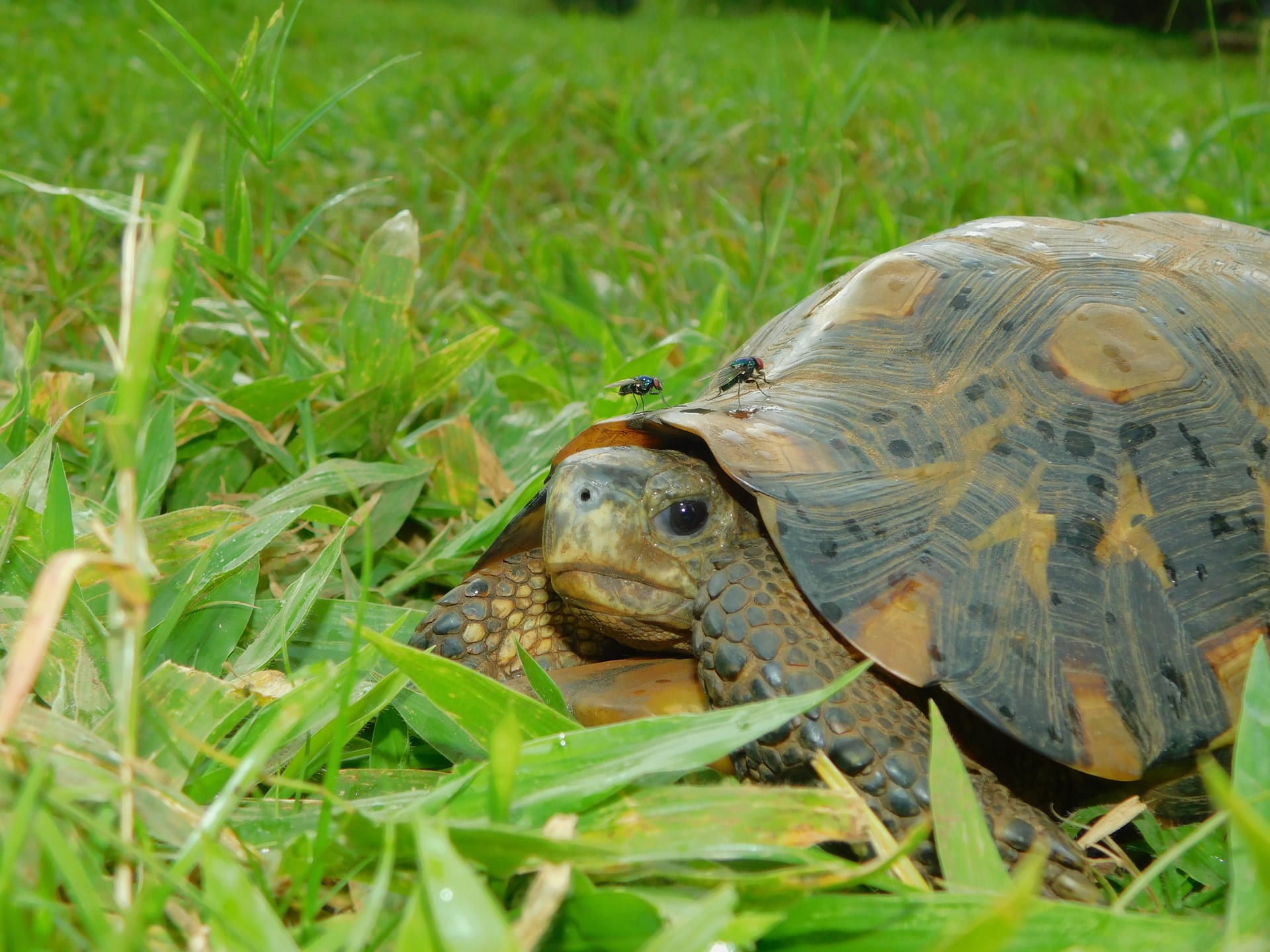
 © Tommy Andriollo / CC BY 4.0
Bell's Hinge-Back Tortoise
Bell's Hinge-Back Tortoise is best known for the hinge at the rear of its shell, which it can fold down to shield its hind legs and tail — the very feature that gives the hinge-back tortoises their name. Within its genus, this species tends to have an especially domed shell, and adults typically reach a maximum shell length of about 22 cm, with females growing larger than males. Many individuals have a calm, easygoing temperament, spending their days moving slowly across the ground, which many keepers find quietly captivating. That said, this species calls for careful attention to temperature, humidity, and diet, making it a tortoise best suited to experienced keepers rather than first-time reptile owners.
View Bell's Hinge-Back Tortoise encyclopedia →0% commission on your first sales!Register by September 30, 2026 and your first 2 sales are commission-free!
Breeder Wanted!
List on BreederDirect and sell directly to customers nationwide!
6 Transparency Promises from Br-Choku
Every Reptiles & Amphibians from verified Breeder breeders includes complete information: morph, genetics, feeding requirements, and temperament details.
- Morph Information
- Actual Photos
- Feeding Information
- Temperament Information
- Genetics Information
- Age (Months)
Browse all 280 breeds
Difficulty Level
Feeding Type
Temperament
Verified breeders wanted for Reptiles & Amphibians
Breeders are signing up now ahead of launch. Subscribe to be notified when new listings go live.
Getting alerts is free with a member account. When new listings match your saved search, we'll notify you by email and in-app.
Browse other categories
Verified breeders (preview)
Are you raising reptiles & amphibians?
Register as a breeder and connect with buyers directly.
Apply as a breederBell's Hinge-Back Tortoise key facts
- Care level
- Advanced
- Lifespan
- Maximum recorded longevity in captivity is 26 years, with some sources giving 25-60 years
- Size
- Carapace up to 22cm; males up to 20.6cm
- Humidity
- 85%
- Diet
- Grasses, fruit, succulents, mushrooms, insects and land snails
- Temperature & Humidity
- For hinge-back tortoises, holding light levels low with humidity above 85 per cent and temperatures around 28 C has been reported to stabilise animals quickly. Newly acquired animals in particular should be kept fairly warm and humid without being stuffy.
- Enclosure
- Keep it in a terrarium with a moisture-retaining substrate deep enough to burrow into and a water dish the tortoise can sit in completely. Its UV requirement is low, but some individuals bask, so a low-output UVB lamp is worth providing.
- Diet & Feeding
- Omnivorous, eating grasses, fruit, succulents and mushrooms along with insects and land snails. Do not feed plants alone; include a small amount of animal food.
- Temperament
- Placid overall, but at the start of the rains males ram one another until a rival is overturned or flees. Imported animals often carry infections and internal parasites, which makes settling them in difficult.
- Notes
- The family Testudinidae was listed on CITES Appendix II in 1977, the current listing effective 2 January 2017. Appendix II species need no individual registration certificate in Japan, and the tortoise is neither a designated dangerous animal nor an invasive alien species. The western form from Ghana, Togo and Benin has long been the cheaper animal in the Japanese trade.
About Bell's Hinge-Back Tortoise
Bell's Hinge-Back Tortoise is known for the hinge on its rear shell, growing up to 22 cm with females larger than males. An advanced-level species valued for its calm temperament.
7 things to know before welcoming a Bell's Hinge-Back Tortoise
1A Shell With a Hinge
The defining trait of this species is the hinge at the back of its shell, which it can fold down to cover its hind legs and tail. This flexible shell structure is also the origin of the hinge-back tortoise group's name and is rarely seen in other tortoises.
2Best Suited to Experienced Keepers
This species is considered an advanced-level tortoise, requiring careful management of temperature, humidity, and diet. It's best suited to keepers who already have experience with tortoise care and are ready for a next step.
3A Long-Term Commitment
The longest recorded captive lifespan is 26 years, though some sources cite a range of 25 to 60 years. Before bringing one home, consider whether you can provide a stable environment for potentially decades of care.
4Females Grow Larger
Adults reach a maximum shell length of about 22 cm, with males topping out around 20.6 cm. Since females tend to grow larger than males, plan your enclosure size around their eventual adult size.
5A Calm, Quiet Temperament
Many individuals have a calm and quiet disposition and rarely show aggressive behavior. That said, personality varies between individuals, so take time to get to know your tortoise after bringing it home.
6Prepare the Enclosure First
A temperature and humidity gradient, along with multiple hiding spots, helps the tortoise settle in comfortably. Substrate and UV lighting should be fully set up before your tortoise arrives.
7Make Health Checks a Habit
Appetite, waste, and shell condition are good early indicators of changes in health. Build a habit of daily observation, and consult a reptile-experienced vet promptly if anything seems off.
Frequently asked questions about Bell's Hinge-Back Tortoise
- Q.How difficult is it to keep a Bell's Hinge-Back Tortoise?
- A.It's considered an advanced-level species. Keeping one well requires careful management of temperature, humidity, and diet, so it suits keepers with prior tortoise experience.
- Q.How big does this tortoise get?
- A.Adults reach a maximum shell length of about 22 cm. Males top out around 20.6 cm, and females tend to grow larger than males.
- Q.How long do they live?
- A.The longest recorded captive lifespan is 26 years. Some sources cite a range of 25 to 60 years, so plan for a long-term commitment.
- Q.What is the hinge on its shell for?
- A.The hinge at the back of the shell can be folded down to cover the hind legs and tail. This feature is also the origin of the hinge-back tortoise group's name.
- Q.Is this species subject to any regulations?
- A.Bell's Hinge-Back Tortoise is listed in CITES Appendix II. International trade requires a permit from the exporting country, but as far as CITES is concerned, no registration is needed to buy or sell individuals already legally in Japan.
Useful tools for Bell's Hinge-Back Tortoise care
Learn more about Bell's Hinge-Back Tortoise in the encyclopedia
View Bell's Hinge-Back Tortoise encyclopedia entry →
Care difficulty, lifespan, size and diet — all basics covered.
More in this category
Can't find the one you're looking for?
Post your wishes for free and breeders with matching animals will contact you with introductions.