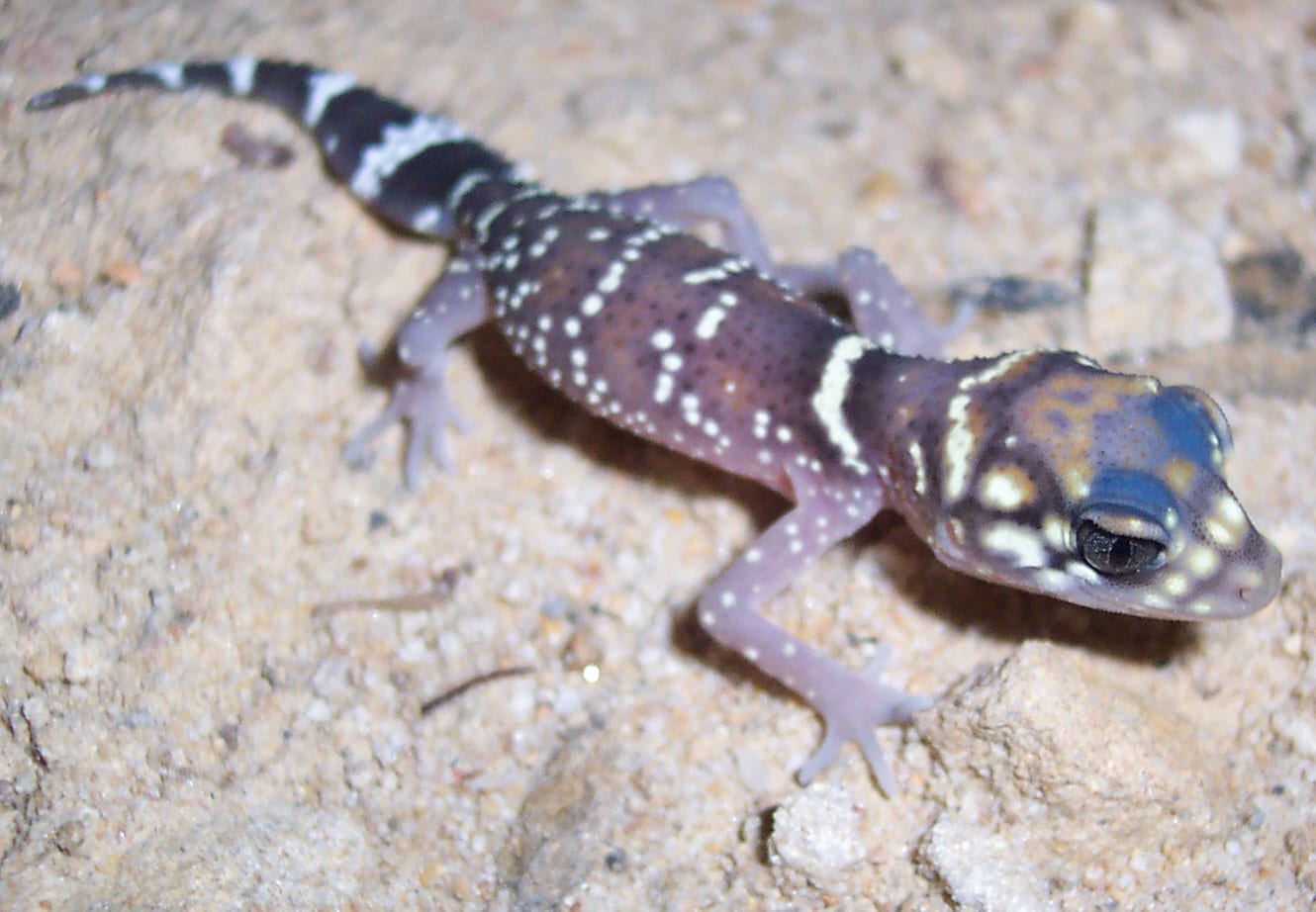
 © Tnarg 12345 at English Wikipedia / CC BY-SA 3.0
Thick-Tailed Gecko
The Thick-Tailed Gecko, also known as the barking gecko, is a ground-dwelling species with reddish-brown to orange-brown skin scattered with white or yellow bumpy tubercles and banded patterns across its head and tail. Its common name comes from its thick tail, while its other trait—a sharp, bark-like call given off when startled or threatened—gives it a personality unlike most other geckos. Many individuals are calm and easygoing, and since they live on the ground rather than climbing, their enclosures can focus on hides and substrate rather than vertical space. Hardy and tolerant of cooler temperatures, they typically live 10 years or more in captivity and reach an adult size of about 12–15 cm and 14–20 g, making them an approachable choice for anyone new to reptile keeping.
View Thick-Tailed Gecko encyclopedia →0% commission on your first sales!Register by September 30, 2026 and your first 2 sales are commission-free!
Breeder Wanted!
List on BreederDirect and sell directly to customers nationwide!
6 Transparency Promises from Br-Choku
Every Reptiles & Amphibians from verified Breeder breeders includes complete information: morph, genetics, feeding requirements, and temperament details.
- Morph Information
- Actual Photos
- Feeding Information
- Temperament Information
- Genetics Information
- Age (Months)
Browse all 319 breeds
Difficulty Level
Feeding Type
Temperament
Verified breeders wanted for Reptiles & Amphibians
Breeders are signing up now ahead of launch. Subscribe to be notified when new listings go live.
Getting alerts is free with a member account. When new listings match your saved search, we'll notify you by email and in-app.
Browse other categories
Verified breeders (preview)
Are you raising reptiles & amphibians?
Register as a breeder and connect with buyers directly.
Apply as a breederThick-Tailed Gecko key facts
- Care level
- Beginner-friendly
- Lifespan
- Over 10 years in captivity
- Size
- 12-15cm total length (14-20g)
- Temperature
- Diet
- Carnivorous: arthropods such as crickets and roaches, and smaller geckos
- Temperature & Humidity
- Keep the floor of the warm side at about 27-29 C and the cool side at about 21-23 C. It is cold-tolerant and has been recorded active in the field at 9 C in winter. Mist a corner of the cool side two or three times a week to keep it slightly damp. Animals do not always drink from a bowl, so let them lick droplets from the walls.
- Enclosure
- Terrestrial and unable to climb smooth walls. Allow roughly 30 x 30 cm of floor area per adult; 25-30 cm of height is enough. Use 2-5 cm of substrate mixing fine sand with sifted peat moss in equal parts, and place a cave-like hide on the warm side.
- Diet & Feeding
- It eats arthropods and will also take smaller geckos. In captivity offer crickets and roaches. Feed hatchlings two to four small crickets every one to two days until they reach about 5 cm, then move up in prey size and feed every two or three days. Growth is complete at 12-18 months.
- Temperament
- Placid and easy to work with, though when startled it arches its back, raises its tail and barks. In the wild several adults and juveniles share a retreat. Males will fight and injure each other, so never house them together; one male with several females, or females alone, can be kept as a group. Do not mix adults with juveniles or with other species.
- Notes
- Listed on CITES Appendix III as Underwoodisaurus spp. at Australia's request, effective 22 June 2022. Appendix III requires an export permit from the listing state and a certificate of origin from other states; no Japanese registration certificate is needed. Australia bans the export of its native wildlife, so traded animals are captive-bred. The IUCN assesses it as Least Concern. Shed skin can be retained on the toes; soak the feet in warm water and roll it off with a cotton swab.
About Thick-Tailed Gecko
The Thick-Tailed Gecko is a hardy, ground-dwelling species known for its barking call and thick tail—an easy-care beginner gecko that lives 10+ years in captivity.
7 things to know before welcoming a Thick-Tailed Gecko
1Substrate Over Climbing
As a ground-dwelling species, Thick-Tailed Geckos do best with a setup focused on hides and substrate rather than climbing branches. Providing both a dry area and a slightly moist one creates a humidity gradient that helps prevent incomplete sheds.
2Barking Is Normal
When startled or picked up, this gecko may let out a sharp, bark-like sound as a defensive or warning behavior. It's a normal trait of the species, not a sign of illness or distress.
3Tail Drop Risk
Like many geckos, this species can drop its tail if grabbed firmly or startled. The tail will regrow but won't look quite the same, so always support the body gently when handling.
4Tolerates Cooler Temps
This gecko tolerates cooler conditions better than many tropical gecko species, which is part of why it's considered easy to keep. Still, avoid sudden temperature swings—use an under-tank heater to maintain a gentle gradient.
5Nocturnal, Hides by Day
This gecko is active at night and tends to stay tucked in its hide during the day. Let it keep its natural rhythm rather than disturbing it for interaction in daylight hours.
6Best Kept Solitary
Some individuals are territorial, and housing two together can lead to conflict. Keep one gecko per enclosure as a rule, and watch closely if you ever consider housing more than one.
7Feeding Routine Matters
This is an insectivorous species that eats live prey such as crickets. Dusting feeders with a calcium supplement and adjusting feeding frequency to its life stage supports long-term health.
Frequently asked questions about Thick-Tailed Gecko
- Q.Is this gecko suitable for beginners?
- A.Yes—its hardiness and tolerance for cooler temperatures make it a popular starter species for reptile keeping. With basic substrate, hides, and temperature control in place, it's a manageable gecko to care for long-term.
- Q.Is the barking sound a sign of illness?
- A.No, barking is a natural defensive behavior this species shows when startled or threatened. It's actually the trait the gecko is named for, so there's no need to worry.
- Q.What happens if the tail drops off?
- A.The tail will regrow over time, though it typically won't match the original thickness or pattern exactly. Keep the area clean afterward and handle the gecko gently while it heals.
- Q.How big does it get?
- A.Adults typically reach about 12–15 cm in length and weigh 14–20 g. That makes it a fairly compact gecko compared to many other species.
- Q.How long do they live?
- A.In captivity, Thick-Tailed Geckos are known to live 10 years or more. Consistent temperature management and feeding help support a long lifespan.
Useful tools for Thick-Tailed Gecko care
Learn more about Thick-Tailed Gecko in the encyclopedia
View Thick-Tailed Gecko encyclopedia entry →
Care difficulty, lifespan, size and diet — all basics covered.
More in this category
Can't find the one you're looking for?
Post your wishes for free and breeders with matching animals will contact you with introductions.