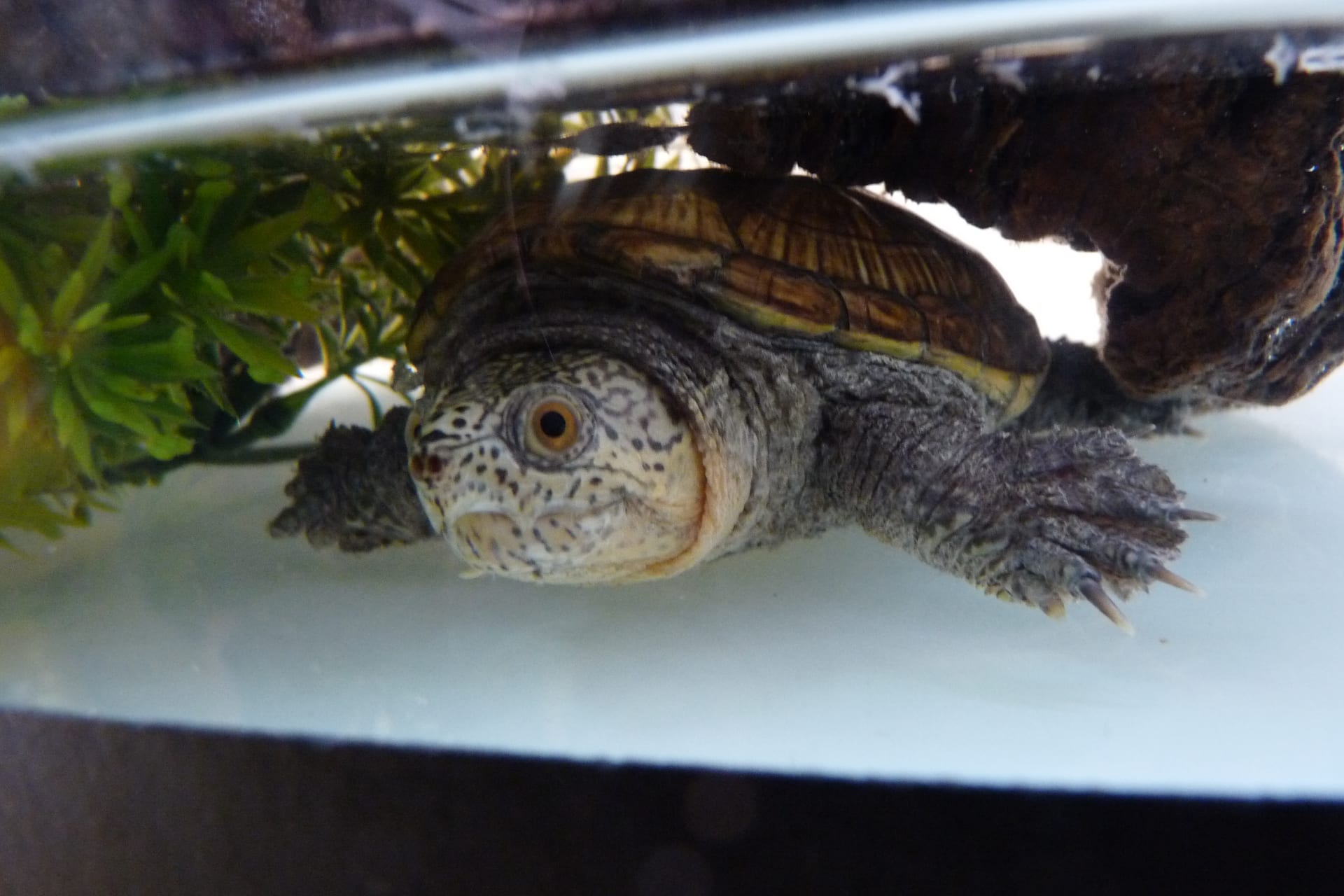
 © Goodshort / CC BY-SA 3.0
Narrow-bridged Musk Turtle
The Narrow-bridged Musk Turtle gets its Japanese name — which translates to "apron-shell turtle" — from its unusually small plastron, which looks almost like a tiny apron strapped onto its belly. With an oversized head, a sharp hooked beak, and three prominent ridges running down its carapace, it has a look unlike almost any other turtle. It's also the sole living member of its genus, making it a true taxonomic one-off. Its temperament can be bold, and it may bite hard when startled, so confident handling matters. For these reasons, it's generally considered a species better suited to keepers with some prior turtle-keeping experience rather than absolute beginners.
View Narrow-bridged Musk Turtle encyclopedia →Breeder Wanted!
List on BreederDirect and sell directly to customers nationwide!
BreederDirect's 6 Transparency Commitments
Every Reptiles & Amphibians from verified Breeder breeders includes complete information: morph, genetics, feeding requirements, and temperament details.
- Morph Information
- Actual Photos
- Feeding Information
- Temperament Information
- Genetics Information
- Age (Months)
Browse all 319 breeds
Difficulty Level
Feeding Type
Temperament
Verified breeders wanted for Reptiles & Amphibians
Breeders are signing up now ahead of launch. Subscribe to be notified when new listings go live.
Getting alerts is free with a member account. When new listings match your saved search, we'll notify you by email and in-app.
Browse other categories
Verified breeders (preview)

Are you raising reptiles & amphibians?
Register as a breeder and connect with buyers directly.
Apply as a breederNarrow-bridged Musk Turtle key facts
- Care level
- Intermediate
- Lifespan
- Few data on lifespan in captivity
- Size
- Maximum carapace length about 18 cm (females up to about 15 cm)
- Diet
- Mainly carnivorous (aquatic invertebrates, carrion)
- Housing
- Almost fully aquatic and walks along the bottom rather than swimming. Use a fairly shallow, planted tank with a haul-out area.
- Diet & Feeding
- Wild animals eat aquatic insects, other invertebrates and carrion; in captivity combine pellets with shrimp, snails, small fish and insects.
- Temperament
- With its large head and sharp beak it can bite, so hold it by the rear of the shell.
- Health & Cautions
- It can release foul-smelling musk from glands under the shell, and older animals readily grow algae on the shell.
- Notes
- Unlike most turtles, sex is thought to be determined genetically rather than by incubation temperature. Never release a captive animal into the wild.
About Narrow-bridged Musk Turtle
Meet the Narrow-bridged Musk Turtle, the sole species in its genus, named for its tiny apron-like plastron. Discover the appeal and key care points of this sharp-beaked, triple-keeled, one-of-a-kind turtle.
7 things to know before welcoming a Narrow-bridged Musk Turtle
1Named for Its Tiny Plastron
The Narrow-bridged Musk Turtle owes its Japanese name to its unusually small plastron, which looks like a little apron strapped onto its belly. It also has an oversized head, a sharp beak, and three ridges running the length of its carapace. It's the only living species in its genus, making it a genuine one-of-a-kind turtle.
2A Feisty Temperament
This turtle tends to be bold rather than shy, and it can deliver a surprisingly strong bite when startled. Keep handling to a minimum, and be careful when reaching into the tank for cleaning or rearranging decor. Even once it settles in, it's best to maintain a respectful distance rather than assume it's tame.
3A Bottom-Walking Aquatic Life
This species is almost entirely aquatic, but it walks along the bottom rather than swimming. Provide a fairly shallow, well-planted tank with a place to climb out, plus driftwood or branches for cover. Reliable filtration is also essential to keep the water clean.
4Best Suited to Experienced Keepers
The Narrow-bridged Musk Turtle is generally considered an intermediate-level species. Between its feisty temperament and the attention water quality demands, it can be a challenging first turtle, so prior turtle-keeping experience is recommended before bringing one home.
5Limited Lifespan Data
There isn't much documented data yet on how long this species lives in captivity. Because a long-term commitment is a real possibility, it's worth thinking carefully in advance about whether you can provide lifelong care.
6Plan for Its Adult Size
Adults reach a maximum carapace length of about 18 cm in males and about 15 cm in females. Setting up a tank sized for its eventual adult dimensions from the start can save you from having to upgrade later.
7Get Your Setup Ready First
Before bringing one home, it helps to have filtration in place that makes water quality easy to manage, along with a layout that includes hiding spots. The species is also listed under CITES Appendix II.
Frequently asked questions about Narrow-bridged Musk Turtle
- Q.Is this turtle suitable for beginners?
- A.The Narrow-bridged Musk Turtle is generally considered an intermediate-level species. Given its feisty temperament and water-quality demands, prior turtle-keeping experience is recommended before taking one on.
- Q.What kind of temperament does it have?
- A.It tends to be bold rather than shy and can bite hard when startled. Handling should be kept to a minimum, and care is needed whenever you reach into the tank.
- Q.How big does it get?
- A.Adults reach a maximum carapace length of about 18 cm in males and about 15 cm in females. It's worth setting up a tank sized for its adult dimensions from early on.
- Q.How much time does it spend in water?
- A.It's almost entirely aquatic and spends its time walking along the bottom rather than swimming. Provide a fairly shallow, well-planted tank with a place to climb out and somewhere to hide.
- Q.How long does it live?
- A.There isn't much documented data yet on captive lifespan for this species. It's best to plan ahead on the assumption that long-term care may be needed.
Useful tools for Narrow-bridged Musk Turtle care
Learn more about Narrow-bridged Musk Turtle in the encyclopedia
View Narrow-bridged Musk Turtle encyclopedia entry →
Care difficulty, lifespan, size and diet — all basics covered.
More in this category
Can't find the one you're looking for?
Post your wishes for free and breeders with matching animals will contact you with introductions.